Feeds:
Posts
Comments

Archive for the ‘Travel’ Category

 “The trouble with weather forecasting is that it’s right too often for us to ignore it and wrong too often for us to rely on it.” — Patrick Young
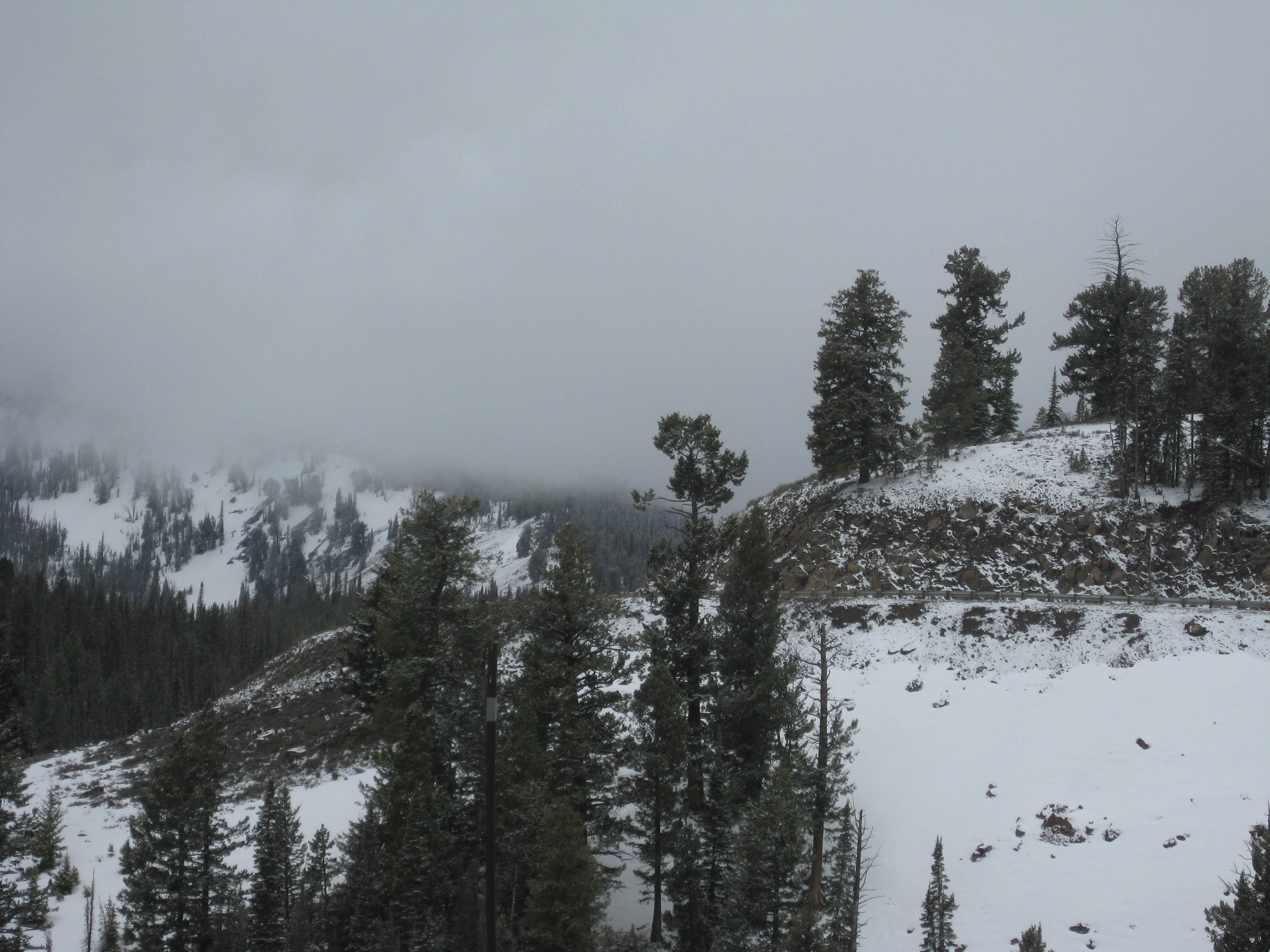
Snow was plentiful on my journey up and over 8,700-foot Galena Pass, but thankfully the roadway was dry. ... Photo by Pat Bean

Dodging Storms

After leaving Lake Walcott, my travels took me up Highway 75 to Ketchum, which sits in full view of the awesomely ragged Sawtooth Mountains. I checked into the Meadows RV Park on the outskirts of town for one night, expecting to travel on the next morning. I awoke, however, to four inches of snow on the ground beside my RV.

Staying in Ketchum had more appeal to me than meandering on down the road, so that’s exactly what I did.

The next morning, thankfully, I awoke to a clear sky, which soon had me packing up my RV. These pre-road chores include unhooking water and electricity land connections, kicking the tires and walking around the RV on the outside, then making sure everything is in its proper confined space on the inside. The last thing I looked around for was my coffee cup. It’s been know to escape my attention and the result isn’t pretty.

My grand drive this day took me up and over 8,700-foot Galena Pass. I saw plenty of snow along the way, but thankfully none of it was on the road. Arriving early afternoon in Salmon, the gateway for rafters going down “The River of No Return,” I decided to treat myself to a late lunch in a restaurant.

Bertram’s Pub and Brewery looked the most inviting. It was a good choice,I decided as I drank down the last swallow of the dark, award-winning Sacajaweja beer I had ordered to go with my Belly Buster hamburger, two thirds of which went back to the RV with me in a doggie bag. Maggie did get a bite, but the burger also made a filling dinner for me.

The Salmon River, also known as "The River of No Return." For the record, one can return up it. I did. After a five-day white-water rafting trip, a jet boat took two hours to return me to my starting point at Corn Creek near Salmon. ... Photo by Pat Bean

I awoke the next morning to rain, and a forecast of snow about 5,000 feet. Some of the passes I needed to cross were above 7,000 feet. I decided it was yet another good day to stay put here at Salmon’s Century RV Park. And so I did, feeling as if someone had hit the replay button.

Copyrighted by Pat Bean
Read Full Post »

          “The only people for me are the mad ones, the ones who are mad to live, mad to talk, mad to be saved, desirous of everything at the same time, the ones who never yawn or say a commonplace thing, but burn, burn, burn, like fabulous yellow roman candles exploding like spiders across the stars and in the middle you see the blue centerlight pop and everybody goes “Awww!” — Jack Kerouac

Back on the Road

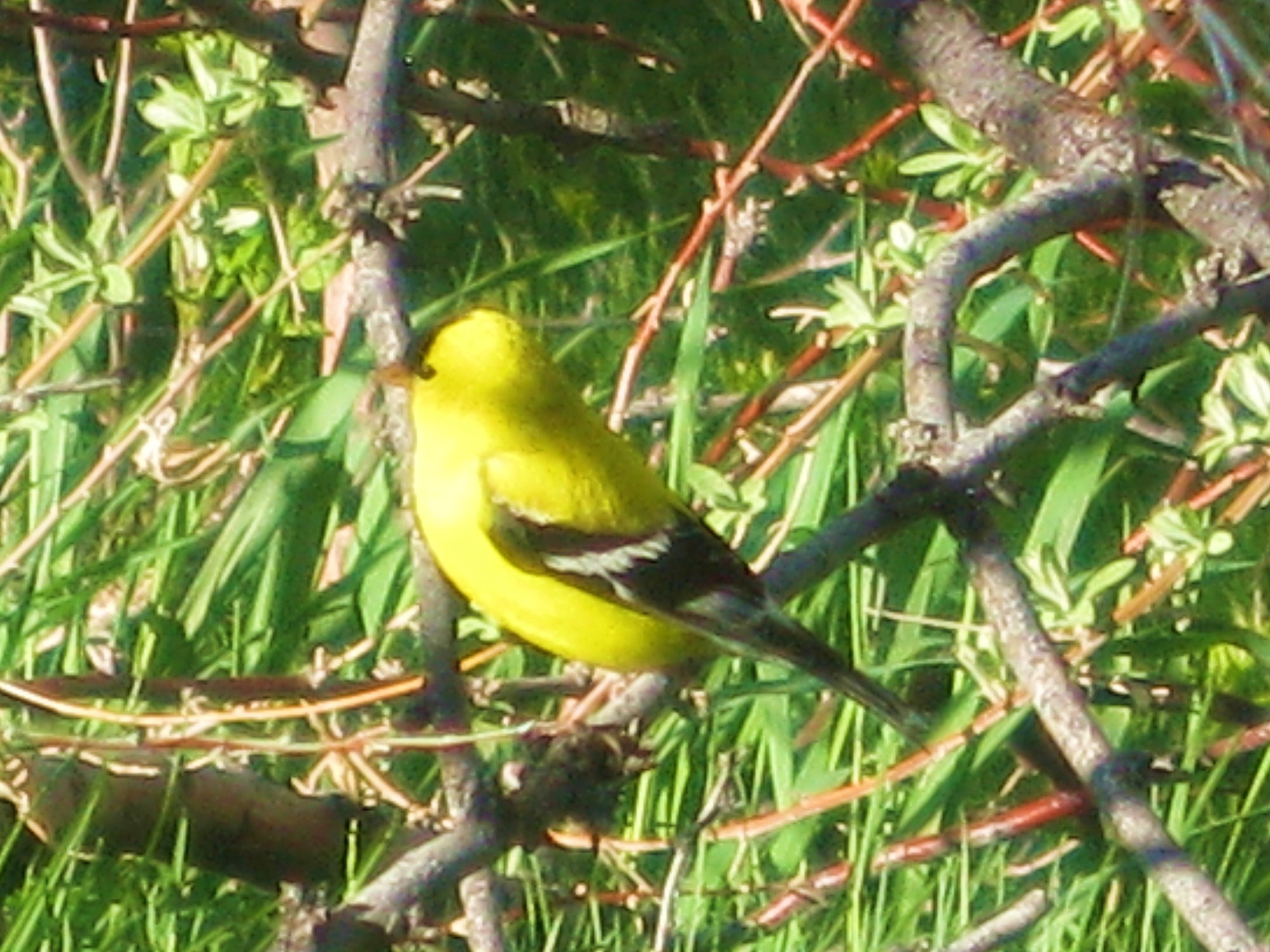
American goldfinch wearing yellow feathers to rival the sun ... Photo by Pat Bean

Lake Walcott State Park, adjacent to the Minidoka National Wildlife Refuge in southeast Idaho, is one of those nature treasures I’m always hoping to discover. While I lived a mere 150 miles away from it for over 20 years, I didn’t find it until I had started RV-ing and began scrutinizing maps.

Since it sat directly along my path on this journey, there was no way I would have passed it by without stopping – even if I hadn’t needed to do so to fill out some paperwork in anticipation of my returning to the park as a volunteer in August.

I arrived at the park in time for a hike with Maggie down to the lake, where I watched Canada geese shepherd half a dozen goslings. They trailed across the water with one parent in front leading the way and one parent in the rear making sure there were no laggards.

Across the way from the lake, where the Snake River ran free of the dam that backed up the water for the lake, white pelicans sat in a row on a line of island rocks.

Bullock’s orioles, meanwhile, clamored for my attention, their bright yellow-orange feathers

White pelican on a rock island in the middle of the Snake River ... Photo by Pat Bean

dancing among the green foliage like twinkling Christmas tree lights. But even their glory was dimmed by the American goldfinch that perched just outside my RV.

Yellow has always been one of my favorites colors, and these small birds wore such sunlight as dazzled the eyes.

Although I knew I would miss the friends I left behind in Ogden, my stop at Lake Walcott made being on the road again feel right.

Copyrighted by Pat Bean

Read Full Post »

Chitters ... Photo by Pat Bean

“I remember a hundred lovely lakes, and recall the fragrant breath of pine and fir and cedar and poplar trees.  The trail has strung upon it, as upon a thread of silk, opalescent dawns and saffron sunsets.  It has given me blessed release from care and worry and the troubled thinking of our modern day.  It has been a return to the primitive and the peaceful.  Whenever the pressure of our complex city life thins my blood and benumbs my brain, I seek relief in the trail; and when I hear the coyote wailing to the yellow dawn, my cares fall from me – I am happy.”  ~Hamlin Garland

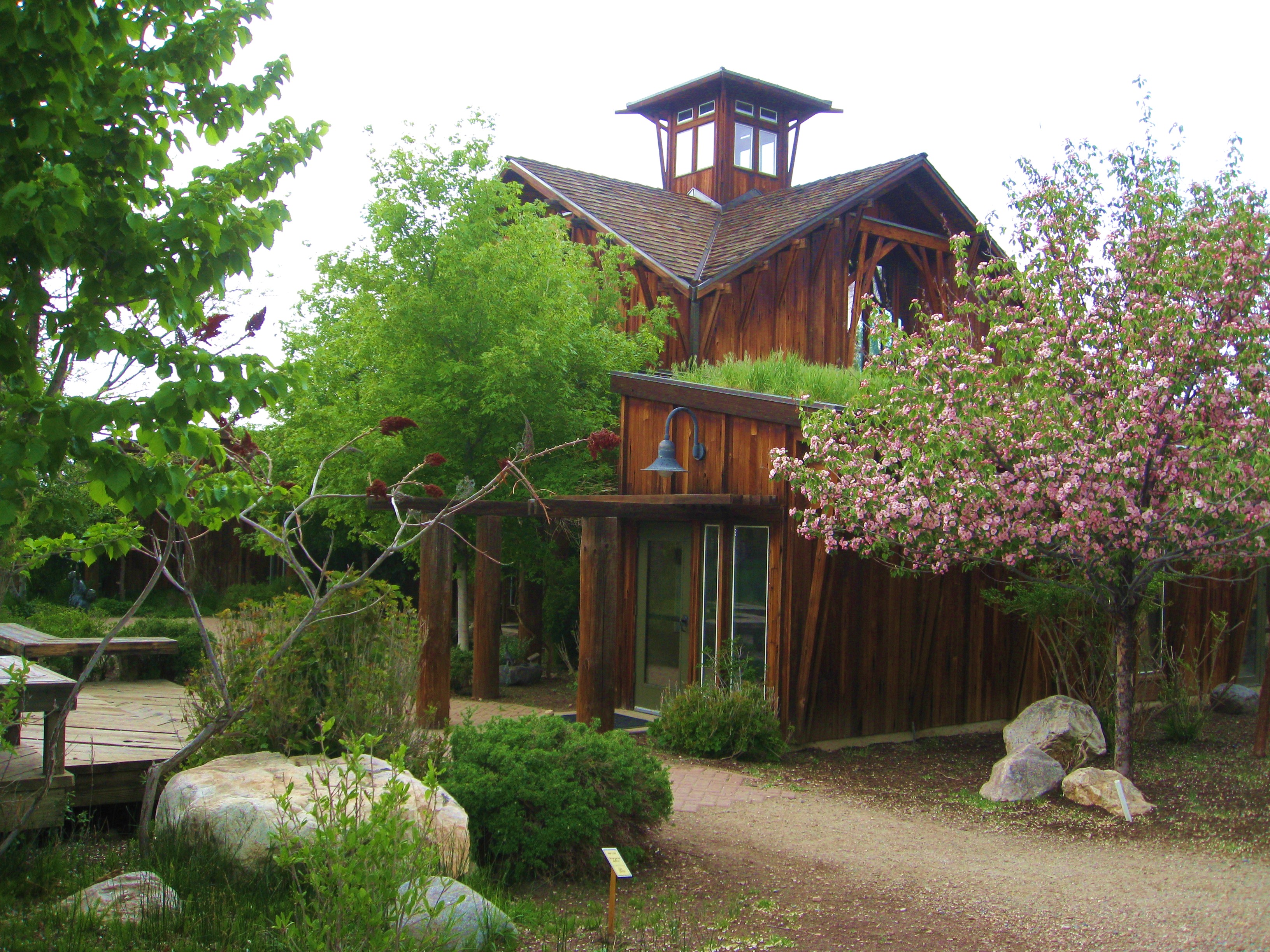
I remember the Ogden Nature Center when an old farm house served as its visitor center instead of this nature-friendly structure. ... Photo by Pat Bean

Ogden Nature Center

Before I left Ogden to continue on my journey to Idaho’s panhandle, I visited a couple of old friends at the Ogden Nature Center. The human one was my biker-chick friend Susan Synder, who teaches school children all about the magic of Mother Nature.

I bet she wished she had her bicycle with her during my visit because I walked her butt off – her words to our mutual friend Charlie Trentelman – on the center’s trails.

It was a fantastic hike in which we saw warblers, grosbeaks, chickadees and evidence of a bold beaver. He had built a dam and was chawing down trees – big ones. We both worried that the critter’s days at the nature center are numbered – and we both hoped he is moved to another location and not treated as the varmint wildlife officials classify his kind. You hear me guys. Make it so!

The Nature Center and I go back a long way. I moved to Ogden the first time shortly after it had been created. The transformation of its 152 acres of plowed farmland into a center-of-town wildlife and nature sanctuary is a miracle accomplished by many willing hands. It’s a perfect place to go to stress down from today’s crazy world.

Entries from the Ogden Nature Center's annual birdhouse competition can be seen along the entry trail through August. This unique birdhouse, built by my friend Susan to show her love of bicycling, is part of the permanent collection. ... Photo by Pat Bean

The non-human friend I visited this day was Chitters, a great horned owl that had been imprinted on humans at a young age and couldn’t survive in the wild. He’s the nature center’s mascot, and it was with delight that I told Susan about the time, in the early 1980s, when Chitters had escaped to dally with a female great horned who had been hanging around his cage.

I wrote a newspaper story about the love affair. But poor Chitters almost starved before he showed back up at the nature center a week later. Male great horns are supposed to feed their mates to show they are worthy of fathering children. Poor Chitters couldn’t even feed himself. The optimist in me wants to believe the female took pity on him and loved him anyway. If so, his offspring might just be one those great horns birders see around Ogden. I  hope so.

Chitters has passed the age that most wild great horned owls live. But his pampered life has left him still hale and hearty. Susan said she was delighted to know that zoo great horned owls can live into their fifties. Make it so Chitters!

Read Full Post »

Western tanager -- Wikipedia photo

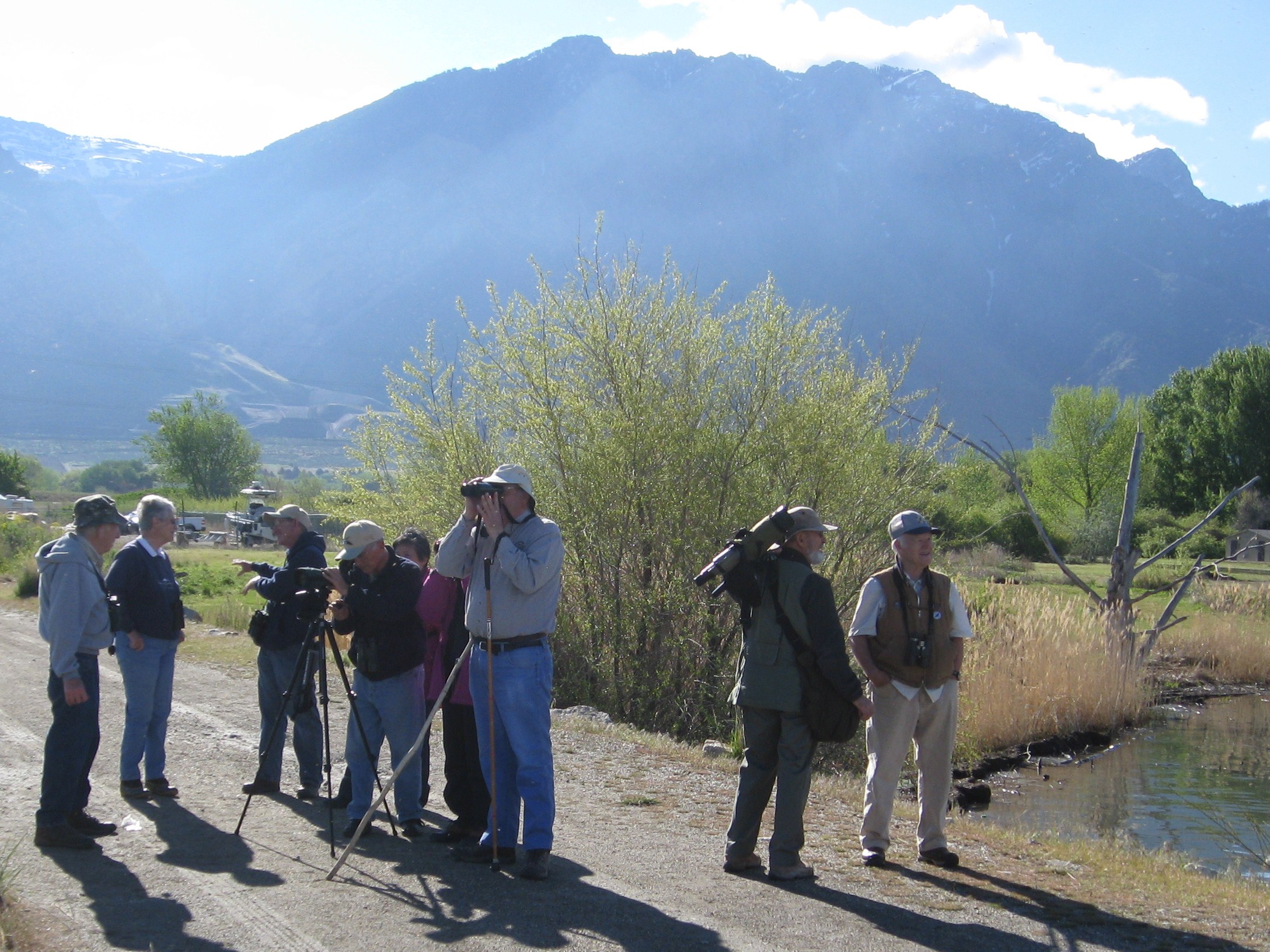
Looking for birds -- Photo by Pat Bean

“The tender friendships one gives up, on parting, leave their bite on the heart, but also a curious feeling of a treasure somewhere buried.” – Antoine de Saint-Exupery

When I return to Ogden, the delight of my Wednesday mornings is to go on the weekly come-rain-come-shine-come heat-come-cold bird walk sponsored by the Wasatch Audubon Chapter and herded along by the always-eager-to-see-the-next-bird Mort Somer. It was this group of birders that mentored me when I couldn’t tell a duck from a goose or a sparrow from a woodpecker.

California quail -- Photo by Pat Bean

 I’ve never met another Audubon group — and I’ve birded with many in my travels – so generous with their knowledge and whose members are so delightful to walk beside. It’s a diversified group so along with learning about birds, I also learn the names of new wildflowers and trees and lots of other nature trivia.

 Willard Bay State Park north of Ogden was where we headed for yesterday’s outing. We found the birds waiting for us. The first bird I saw on getting out of our vehicle was a western tanager, a stand-out red, orange-yellow and black bird that tends to stay hidden among the leaves.

By the time we left the park, I had seen more of these delightful birds, including a quick coupling between one of the bright males and a paler female, than I had on previous bird outings put together. I never thought I would hear myself say: “Oh, it just another tanager.” But that’s what all of us were saying after an hour of birding, even though we saw 47 different species of birds.

 The sweetness of each bird sighting was almost as delectable as birding once again with my Wasatch Audubon friends. But not quite.

Read Full Post »

Maggie leads the way during our Ogden Mountain bench trail hike ... Photo by Pat Bean

“True friends are the ones who never leave your heart, even if they leave your life for awhile.” Author unknown

Days 22-25

Catching up with the lives of old friends and renewing my bond with the Wasatch Mountains has kept me busy the past few days.

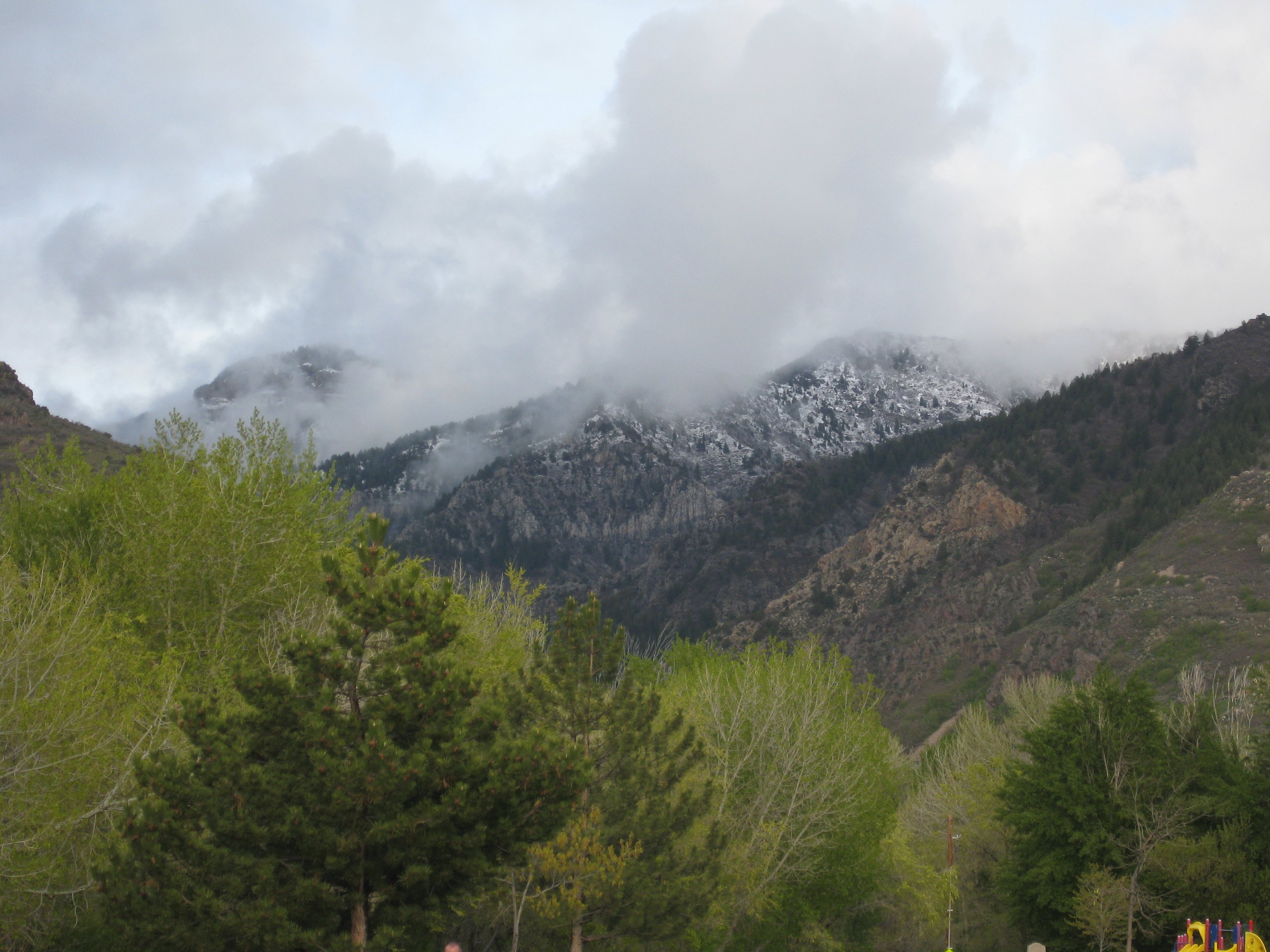
The Wasatch Mountains wore a misty hat the day we hiked the Ogden River Parkway ... Photo by Pat Bean

On my first full day in town, my friend Kim and I hiked an Ogden Mountain bench trail, one that held many memories for me. The mile and three-quarter loop was one I walked many afternoons to shake off the stress of my city editor job at the Standard-Examiner. 


Yellow and purple wildflowers brightened the trail this day, while scrub jays, black-headed grosbeaks and western kingbirds followed our passage. The scrub jay and grosbeak were the first for my annual bird list. Western kingbirds had followed me all the way from Texas to Utah.

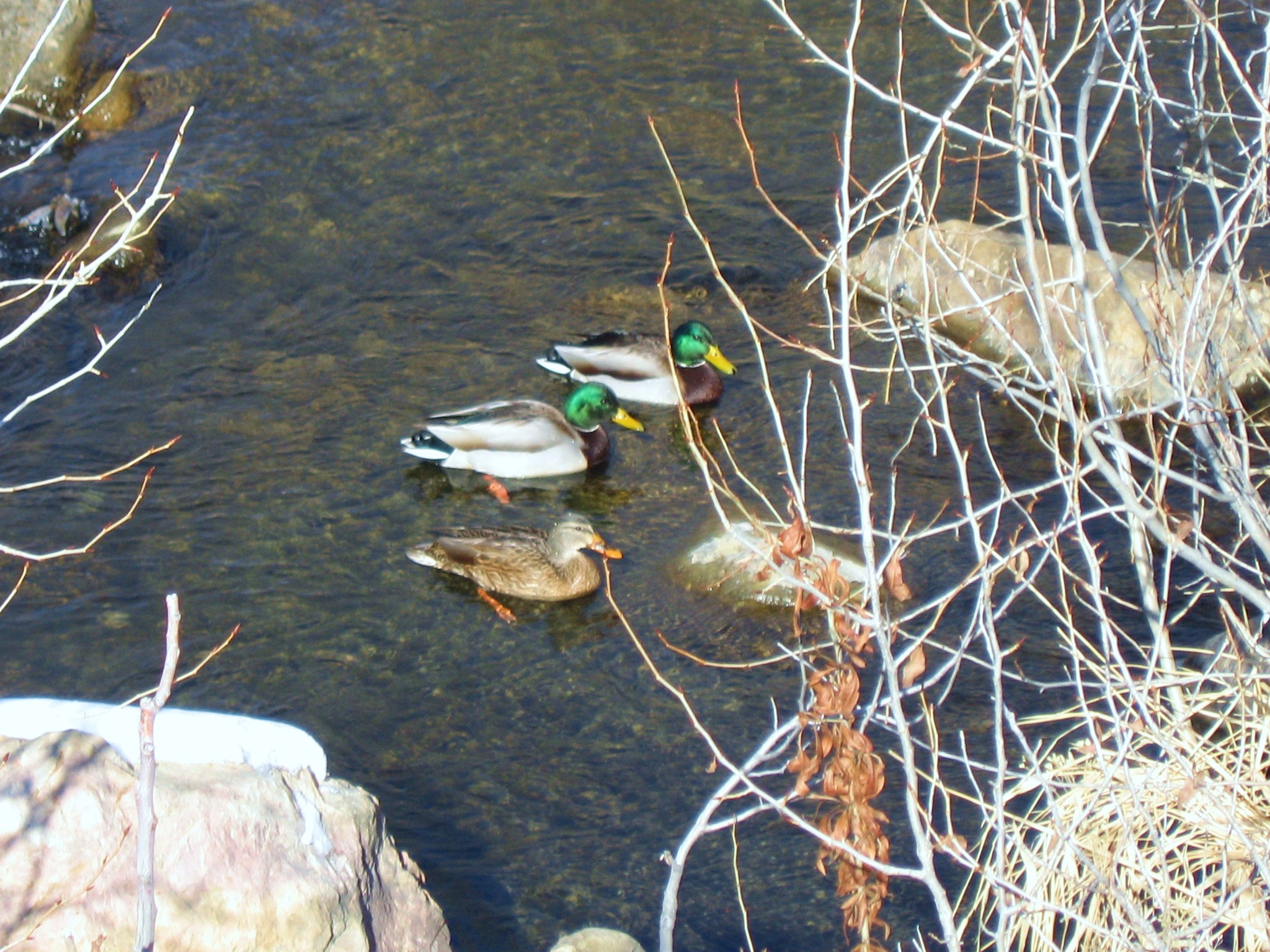
A couple of days later, after a rainy day that left the mountain trails muddy, Kim and I hiked the Ogden River Parkway. We began the paved trail at Monroe Boulevard and followed it for a mile and a half to the mouth of Ogden Canyon. Western bluebirds, western kingbirds and mallards trailed along beside us.

Mallards along the Ogden River Parkway ... Photo by Pat Bean

Rainbow Gardens, both a gift shop and a restaurant, marked the end of the parkway, enticing us to stop awhile to browse and eat  before walking back to our vehicle. When my mother had been alive, this was her favorite place in Ogden to eat.  She always ordered the Gabby Crabby. I ordered the same in her memory.

From hiking, to staying up late one night drinking Jack Daniels and chatting in rapid pace with my friend Kim, to revisiting the newspaper where I worked for 25 years, to eating at familiar places, this visit seemed to be all about memories.

I’m glad I’m still making them. The past can be a pleasant place to revisit, but it’s not a place to live.

Copyrighted by Pat Bean

Read Full Post »

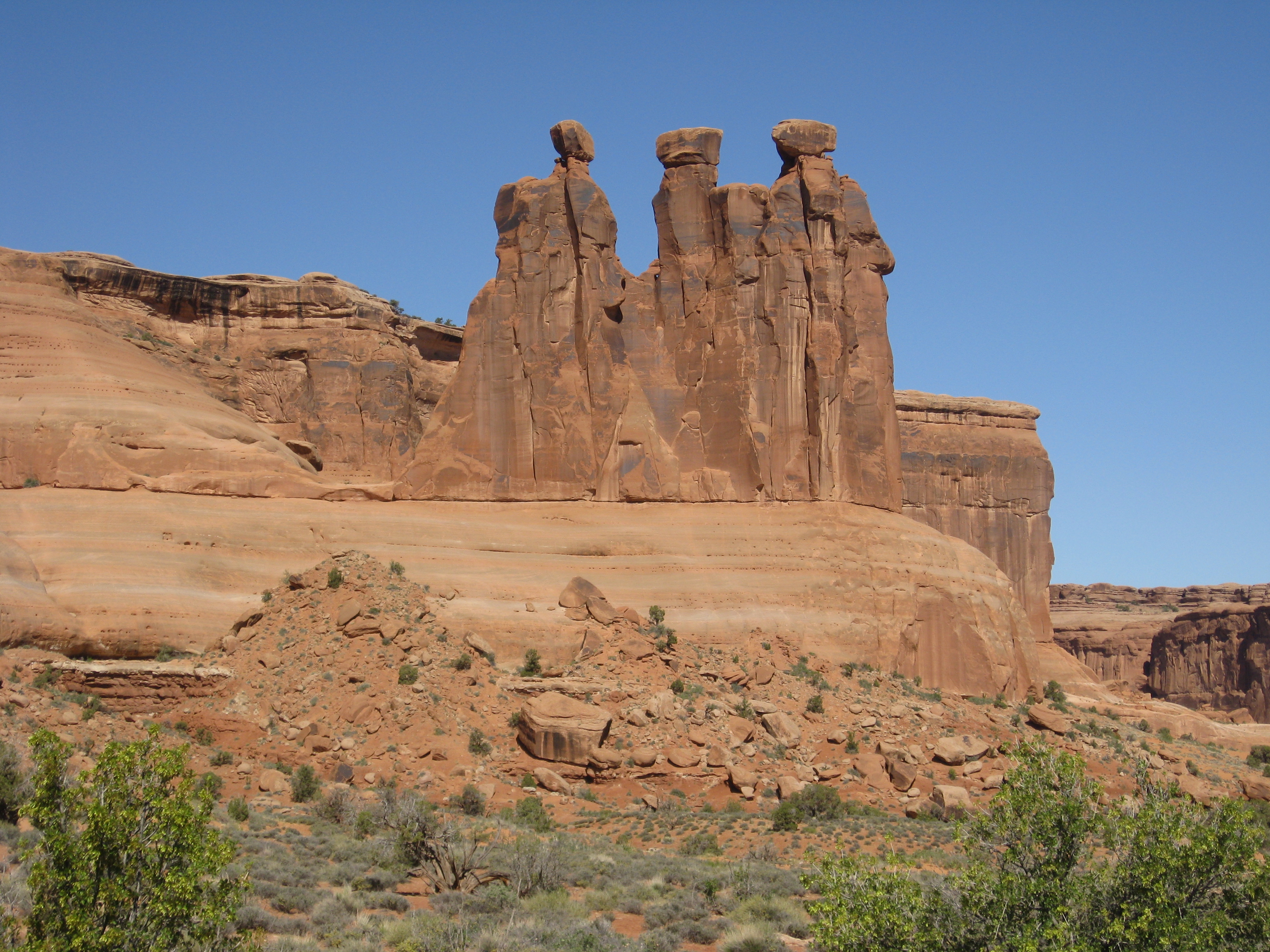
The Three Gossips at Arches National Park -- Photo by Pat Bean

 “Nature is not only all that is visible to the eye … it also includes the inner pictures of the soul.” — Edvard Munch

 Day 21

At this point in my journey, I had traveled 1,546 miles toward my destination – plus several hundred more miles in side trips. As always seems to happen to me in my dawdling journeys, I was now faced with a deadline. Because of commitments, I needed to be in Ogden, Utah – 260 miles away – today. It left me with too little time to visit Arches National Park.

I did so anyway.

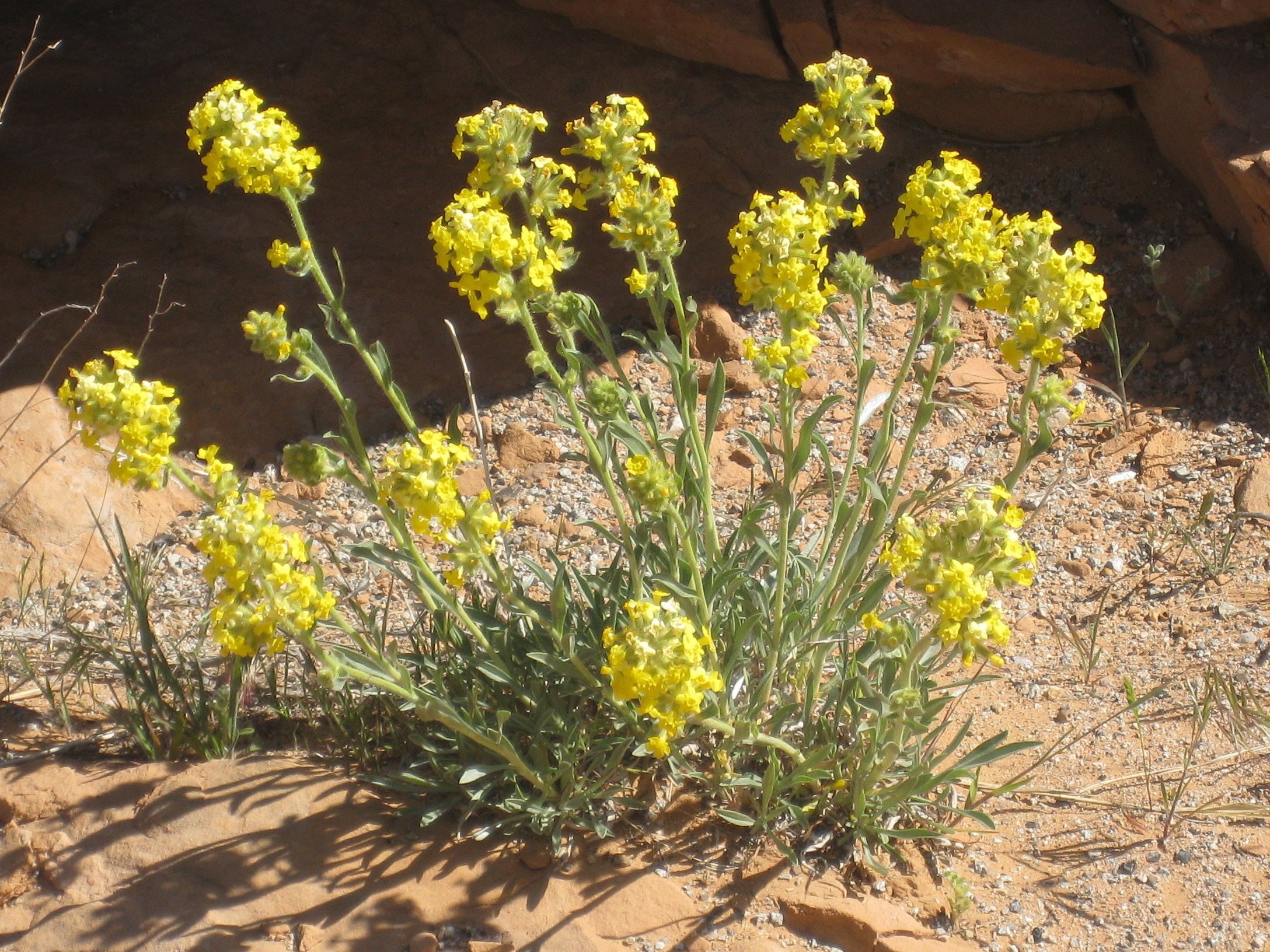
Even if it was to be just a quick run-through, there was no way I was going to miss this spectacular place where wind, water and time have carved out a fantasy landscape. Just from the road, one can see arches, bridges, potholes, hoodoos and precarious balancing rocks. This day, roadside wildflowers added yet another dimension to this red-rock

Roadside flowers added yet another dimension to the wonders of Arches -- Photo by Pat Bean

 architect of nature.

Arches is a place I visited many times when I lived in Utah. It was where I always took visiting friends and relatives, knowing that they couldn’t help but be awed – as once again I was this day. When it comes to fantastic scenery, this braggart Texan is always forced to admit that in this category Utah wins the Oscar, Pulitzer, America’s Cup and all the other awards out there rolled into one.

 My few hours spent this day in Arches stayed etched on my senses all the way to the Wasatch Mountains, which cast their pleasant shadow on my life for the 25 years I lived in Ogden. I was eager to renew my acquaintance with these serene giants; and because my trip would include a 10-day stopover in Ogden, I rejoiced that I would have time to do just that.

 I have a fickle heart when it comes to Mother Nature’s wonders.

Read Full Post »

“To my mind, the greatest reward and luxury of travel is to be able to experience everyday things as if for the first time, to be in a position in which almost nothing is so familiar it is taken for granted.” — Bill Bryson

Day 20 

My drive today took me onto the Devil’s Highway, a route whose New Mexico portion includes steep, twisting sections. The high number of fatalities along the southern portion — along with the road’s original, satanic-mark-of-the-beast 666 numbered designation — earned it the nickname.

In 2003, transportation officials came up with the bright idea of renaming it Highway 491, their thinking being to end its cursed reputation. I guess they never read Shakespeare’s “… that which we call a rose by any other name would smell as sweet.”

The 53-mile section I drove – from Cortez, Colorado, to Monticello, Utah – was not devilish at all, just hilly and lonely, giving one ample opportunity to drink in the high desert landscape from various vantages. I’ve driven it many times and always have found it a relaxing stretch of road.

At Monticello I turned north onto Highway 191, which I would follow this day into Moab. Western kingbirds and kestrels watched me go past as the drive took me through a landscape of red rock gardens set off by the snow-covered peaks of the La Salle Mountains in the background.

That night, from my RV window, I watched those same snow-clad mountain fade into pink as the sun set opposite them behind yet more red rocks.

It was yet another perfect day.

Wilson's Arch as seen from Highway 191 20 miles south of Moab -- Photo by Pat Bean


Read Full Post »

Pueblo cliff dwellers left a mysterious legacy for us to unravel. Where did they go from here? Photo by Pat Bean

 “If the sight of the blue skies fills you with joy, if a blade of grass springing up in the fields has power to move you, if the simple things in nature have a message you understand, rejoice, for your soul is alive.” Eleanora Duse

While I know the landscape will eventually recover, the extent of scenes such as this saddened me. -- Photo by Pat Bean

Day 19

 The 15-mile twisting, steep drive up to Mesa Verde’s Farview Visitor Center was a cruel lesson about the destructive nature of fire. In the year 2000, over one-third of the park’s 52,000 acres burned. Unlike the Yellowstone fires, this Colorado park’s pinyon pine landscape has not done much visible recovery.

As one who had visited the park before the lightning caused fire, I was devastated to see the drastic changes. And I had plenty of time to look as my drive up was often interrupted by road construction crews. I saw one lone squirrel in a burned out tree surrounded by a forest of burned out trees and wondered about its survival, and about those animals that didn’t survive.

 A view from Park Point, at 8,572 feet and the highest spot in the park, showed the immensity of the lifeless, black devastation. I would have gasped in pain at the sight if the short hike up to the fire lookout hadn’t left me without gasping air.

 The up side – I’m always looking for one – is that the fires were kept away from the park’s other treasures. Mesa Verde protects hundreds of 12th and 13th century Pueblo cliff dwellings. I also know that fire plays a role in the environment and that eventually, like Yellowstone after its fires, Mesa Verde will recover. It’s just doing it much slower.

An RV neighbor in the valley below where I was staying said he watched the huge 2000 fires. “You could see the flames and feel the heat. ” He also noted that the fires that had scarred the landscape revealed hundreds of additional Pueblo historical sites.

Meanwhile, as if to say she was sorry for the devastation,  Mother Nature made it a blue bird day for me. In areas where green still ruled the day, I saw a Steller jay, a pinyon jay and a western bluebird, each wearing its brightest and unique shade of blue.

Read Full Post »

I arise in the morning torn between a desire to improve the world and a desire to enjoy the world. This makes it hard to to plan the day.” — E.B. White

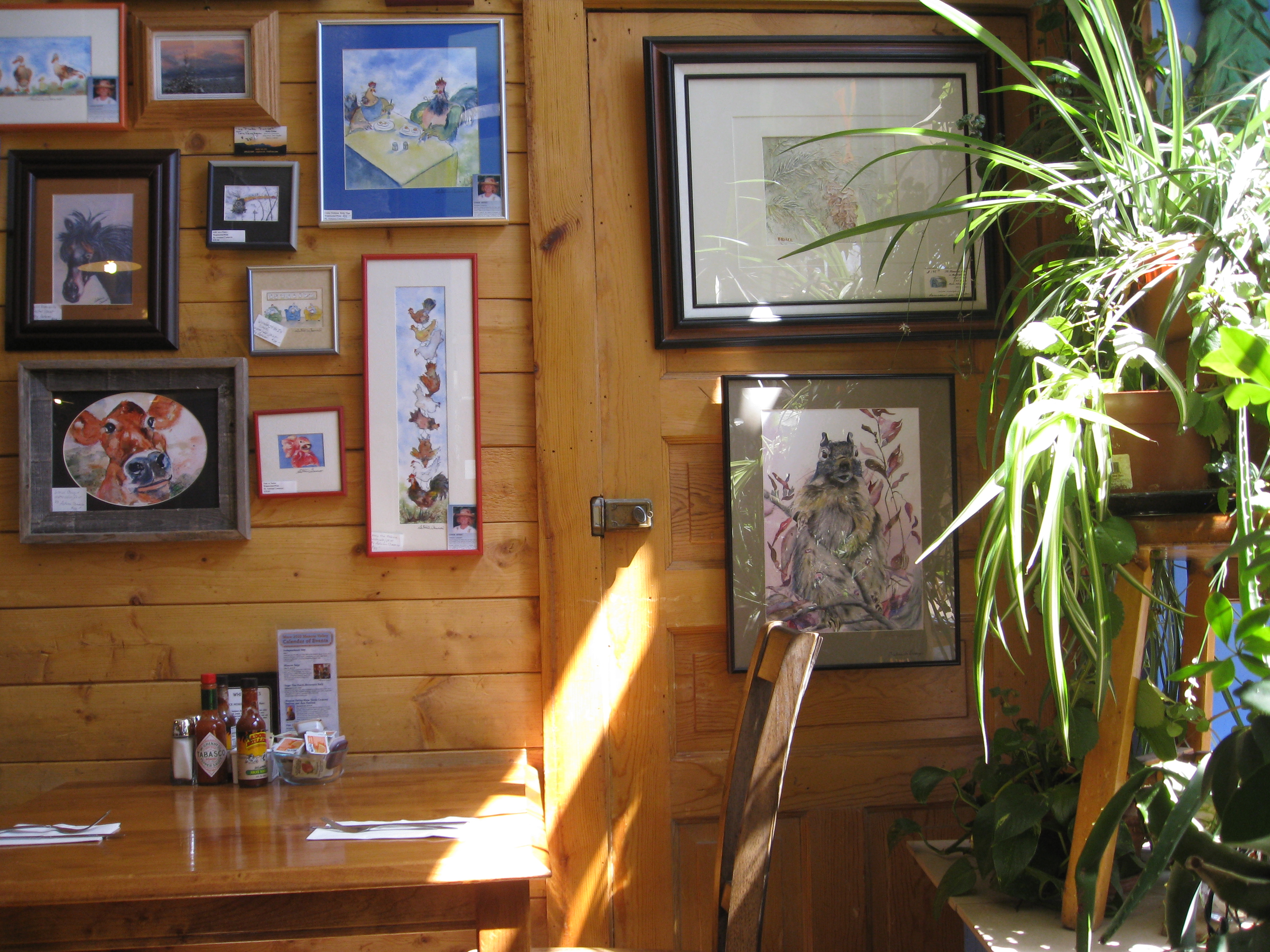
A cheery cafe to go with a dawdling morning. -- Photo by Pat Bean

A cheery cafe to go with a dawdling morning -- Photo by Pat Bean

 Day 18

It was going to be a short drive today, so I got a late start and then stopped for a late breakfast in the little town of Mancos. It’s the kind of town I imagine Park City as once being. With just a little over 1,000 residents, it plays host to those visiting nearby Mesa Verde National Park for sight-seeing, Jackson Gulch Reservoir for fishing, Mancos State Park for mountain biking, or Chicken Creek resort for skiing.

 I visited the co-op gallery located on its funky main street. Called Artesians of Mancos, the shop features the work of 17 local artists. My favorite pieces were Jan Wright’s watercolors. Sadly, there’s no room in my RV for such luxuries.

 I actually walked into the gallery by mistake. I was looking for the cafe, which was in back of the former bank building, a bit of trivia I guessed from a sign at the top of the building. It was a delightful mistake.

The Absolute Cafe and Bakery in the rear of the building was a good choice. The walls were full of art, and the décor included shelves full of used books for sale – which I perused while waiting for my food – and live plants. There’s something very sad about plastic greenery.

My sausage, egg and hashbrown breakfast was superb, with enough to take back to my RV for the next morning. Before I left, I also bought a blueberry-lemon bar that was to die for. I had it for dinner. I seldom eat out, but this experience left me wanting to do it more.

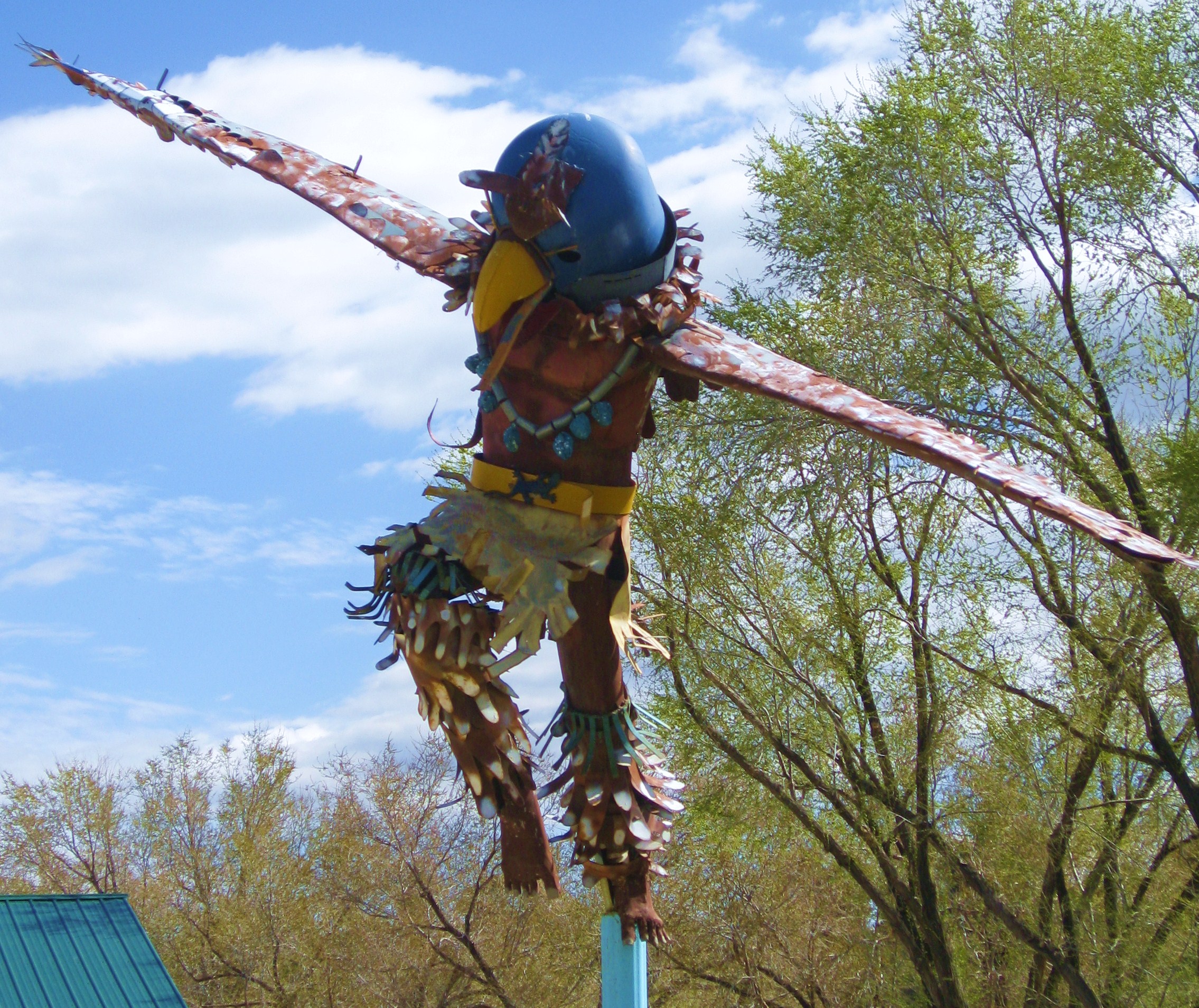
Native American scupture at the entrance to Mesa Verde RV Park -- Photo by Pat Bean

Later that day, at Mesa Verde RV Park, I saw my first magpie of the year. It’s my favorite bird but not one that can be seen in Texas. . I also watched the brightest yellow-rumped warbler I have ever seen playing around in the window beside my motor home.

 Have I told you lately that life is good?

Copyrighted by Pat Bean
Read Full Post »

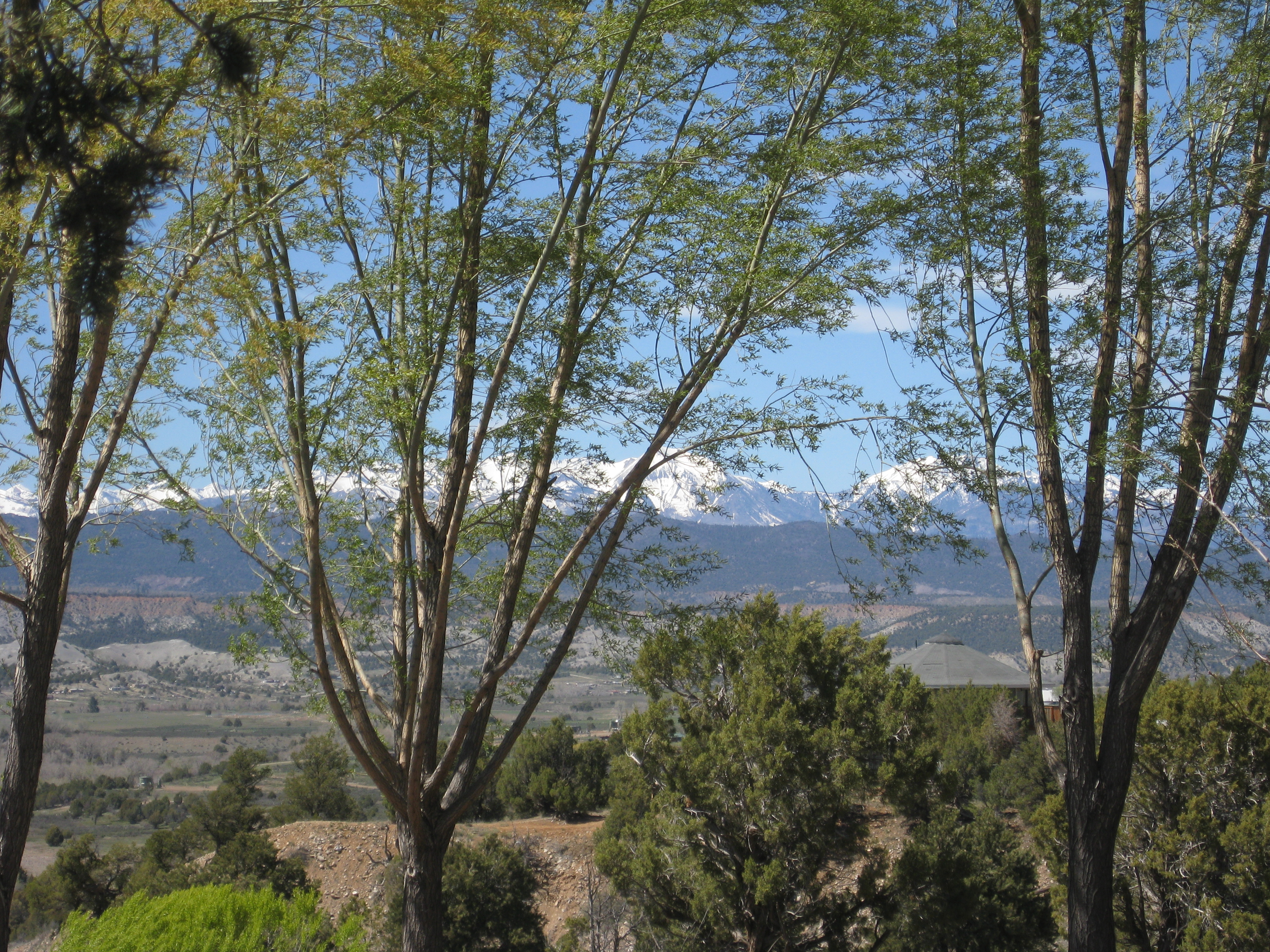
Through the window of my RV, which was parked about 10 miles south of Durango, Colo., I had a magnificent view of the Rocky Mountains' San Juan Range. -- Photo by Pat Bean

Be your name Buxbaum or Bixby or Bray or Mordecai Ali Van Allen O’Shea, you’re off to Great Places. Today is your day! Your mountain is waiting. So … get on your way.” — Dr. Seuss


Day 17

It was with eagerness that I finally said good-bye to the dreaded Interstate 40, which I would never have driven except for Mother Nature’s tantrums. Not knowing when I would have to stop because of her semi-toppling winds, I wisely, if sorrowfully, chose to avoid my usual backroad routes where RV parks were few and far between.

But today I left Albuquerque, New Mexico, and its gentle Sandia Mountains behind me as I traveled down Highway 550 toward Durango, Colorado — and the more rugged Rockies. These are the mountains that stir my soul to exhilaration.

 Highway 550 is a easy-going four-lane, lightly traveled road that passes through the Santa Ana, Jemez, Zia, Jicarilla Apache, and Southern Ute Indian reservations. It took me from Albuquerque’s 5,314 feet to above 7,300 feet, and across the Continental Divide a couple of times. Sagebrush, juniper and oil wells dotted the landscape. If not for the shape of the landscape, steep hills and high mesas, it would have echoed my drive through West Texas.

I stopped for the night about 10 miles south of Durango, and drooled for awhile out my RV window at my first impressive sight of the Rockies. Corny as it may sound, tears come to my eyes every time I meet them again after an absence.

Read Full Post »

« Newer Posts - Older Posts »