Feeds:
Posts
Comments

Archive for the ‘Travel’ Category

On Travel Writing

“A traveler without observation is a bird without wings.” – Moslih Eddin Saadi

I took this photo last year when wanderlust had me driving to the North Rim of the Grand Canyon just to see the aspen trees in their autumn colors. — Photo by Pat Bean

Observe, Observe, Observe!

While I was a journalist for 37 years of my life, I now think of myself as a travel writer. The fact that I wrote a travel blog for American Profile magazine for a couple of years, have freelanced a few travel articles, blogged frequently about travel, and recently published a travel book, entitles me, I’ve decided, to the title.

Actually, this decision was easier than finally calling myself a writer, which I’ve discovered is often hard for writers to do. But whether one is a journalist, or a writer, these titles have made me a better observer.

Good travel writers don’t just write about a place. The best travel writers know that travel stories are also about the people, the landscape, the weather, the flora and fauna, a place’s history, its politics and culture, and its legends. The magic ingredient that pulls it all together is what a travel writer makes of what he sees, feels, hears, tastes and smells. And trying to pull all this together has educated me way beyond what I was ever taught in classrooms.

Traveling is also as much about discovering oneself as it is about seeing new places. I believe what Saint Augustine wrote over 1,000 years ago. “The world is a book, and those who do not travel, read only one page.”

But I also believe that one’s own backyard, if looked at with new eyes, can also be a way of traveling. I realized this on meeting people in my travels who, often I discovered, hadn’t traveled 10 miles to see a site that people from all around the world came to see.

Meanwhile, while far away wandering to see new places has become less often these days, I hope I will never stop trying to see familiar places with new eyes. Which, I believe, allows me to continue being a wondering-wanderer – and a travel writer.

            Bean Pat: Contractors Contractions http://tinyurl.com/y9lwdsbl If you’re as old as I am, you already know the language. But Diane gave me some laughs, but only because I live in an apartment complex, whose managers have their own language, and no longer am a home owner.

Pat Bean is a Lonely Planet Community Pathfinder. Her book, Travels with Maggie, is now up on Amazon at http://tinyurl.com/y8z7553y You can contact her at patbean@msn.com

Read Full Post »

Mockingbirds

Northern mockingbird — Wikimedia photo

I don’t ask for the meaning of the song of a bird or the rising of the sun on a misty morning. There they are, and they are beautiful.” — Pete Hamill

I Brake for Birds

Galapagos mockingbird … Wikimedia photo

I was sitting outside with two friends in a small fenced-in park Sunday, drinking coffee and watching our three dogs have a play date. As usual, I was keeping my eye out for birds. Before 1999, when I got bit by the birding bug, I rarely noticed the winged creatures that share the outdoors with us. Today, I can’t not notice birds.

Mourning and white-winged doves were the most prolific this day, along with a flock of rock pigeons that flew together and landed on a utility line. But it was the lone gray bird with white flashing on its wings as it flew past that grabbed my attention.

“Look,” I said “A northern mockingbird.”

Hood mockingbird, which species I saw in the Galapagos, where birds are not afraid of humans. One landed on my foot and tried to get  at my water bottle. — Wikimedia photo

“Umhuh,” said one of the women, while the other one didn’t seem to hear me. They kept on talking, but my mind stayed on the bird, and flashed back to a Christmas Bird Count in 2003, when I was with a group of Audubon birders and we saw the first-ever northern mockingbird spotted in Ogden, Utah, on a Christmas bird count.

The expert birder who was leading the group asked for my confirmation of the ID, doing so because he knew I was a native Texan, and the northern mockingbird is Texas’ state bird. Since I was the newbie birder in the group, I felt honored.

The mockingbird was one of only about three birds I could identify growing up, and then only because all school children were taught about it being the state bird. The first mockingbird on my life list of birds, which I started keeping 18 years ago, was one I saw in Killeen, Texas, in 2001.

I added the hood and Galapagos mockingbirds to my life list in 2005, after seeing them during a trip to the Galapagos Islands in June of 2005, and the Bahama mockingbird was added to my list in 2008 during a visit to the Ding Darling National Wildlife Refuge in Florida.

Shortly after I began watching and listing birds, my kids kidded me that I was better at remembering when and where I had seen a specific bird than I was at remembering family birthdays. I think they were right.

      Bean Pat: mybeautifulthings http://tinyurl.com/ya86h9e7 Simple daily things and a poem for lovers of words, like me.

Pat Bean is a Lonely Planet Community Pathfinder. Her book, Travels with Maggie, is now up on Amazon at http://tinyurl.com/y8z7553y  You can contact her at patbean@msn.com

Read Full Post »

“Every day is a journey, and the journey itself is home.” –Matsuo Basho

A view of Texas Canyon on the South side of Highway 10 — Photo by Pat Bean

Coming and Going

Since moving to Tucson in 2013, I’ve made annual trips to visit my native Texas, where the majority of my children and grandchildren live. Since I can’t take Pepper, my canine companion on a plane with me, and also because I want to watch the passing landscape, I drive.

I divide the journey into two days, stopping overnight in Van Horn, Texas, because it’s close to the halfway point of my drive, and because there’s not much else 100 miles in either direction.

          Since my dog needs potty breaks, and this old-broad body needs them, too — and leg-stretching breaks as well, I rarely pass up a rest stop – even if it’s only about 60 miles from where I started the journey or 60 miles from home on the return to Tucson.

I mention that distance because that’s the location of the Texas Canyon picturesque rest stop on Highway 10 in the Dragoon Mountains, which are known for their giant granite boulders.

Curious about why there is a Texas Canyon, I did some quick research. The explanation I found on Wikipedia was: “In the mid to late 1880s David A. Adams arrived from Texas, soon to be followed by other family members. The family became the namesake of Texas Canyon, as word begin going around that there were ‘a bunch of damned Texans up there.’ Descendants still live and raise cattle on the old family ranch.”

There are rest stops on both the north and south sides of the highway, and every time I stop at them, the landscape always impresses me. The rocks that dominate the landscape are definitely Texas-sized.

Bean Pat :Best Bird of the Week http://tinyurl.com/ybhpy34z A Lincoln sparrow. I, too, like to keep track of the best bird of the week. Mine was a magpie, my favorite bird, which I saw on the roof of my friend Kim’s house in Ogden, Utah. It was the first magpie for me this year.

Pat Bean is a Lonely Planet Community Pathfinder. Her book, Travels with Maggie, is now up on Amazon at http://tinyurl.com/y8z7553y You can contact Bean at patbean@msn.com

Read Full Post »

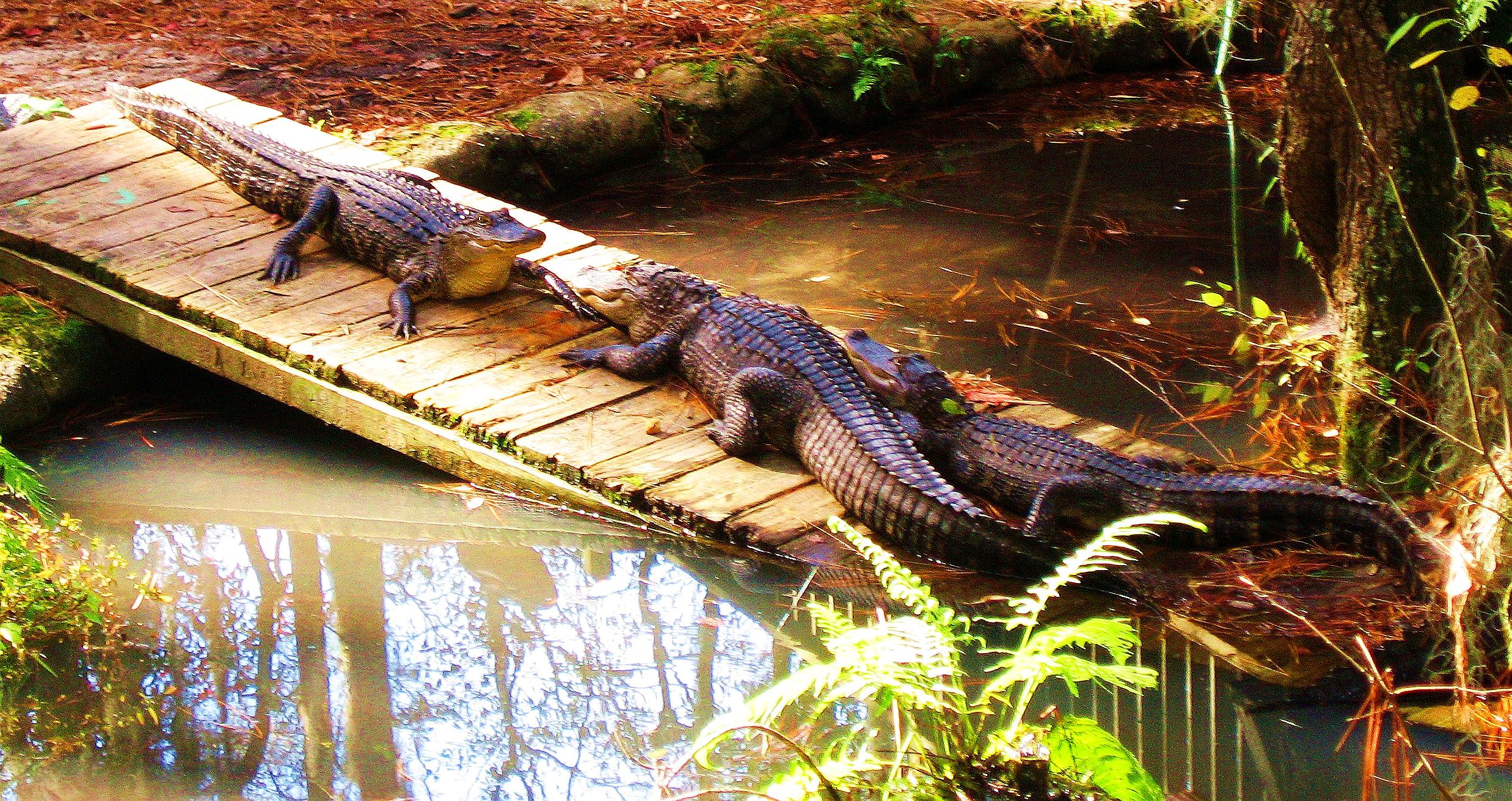
The bridge stand-off at Okefenokee Swamp in Georgia, one of the many places I visited during my RV-ing adventures. — Photo by Pat Bean.

“Remember your dreams and fight for them. You must know what you want from life. There is just one thing that makes your dream become impossible: the fear of failure.” — Paulo Coelho

Tell Me Your Stories

Now that Travels with Maggie has finally been released to the world, the next step, my friend Debra tell me, you have to market the book. And one of the things you need to do is put together a 30-minute PowerPoint presentation so you can give talks.

A trail at Laura S. Walker State Park in Georgia, one of the many trails I hiked after the age of 65. Halfway along this two-mile trail, I came across a sign that said Beware of Bears. Needless to say the second leg of the hike was done in record time. — Photo by Pat Bean

“I have dozens of photographs from the journey, but I’ve never put together a PowerPoint presentation,” I told her. But that problem was quickly solved when I mentioned this to my youngest daughter, T.C., here in Tucson. She said she uses PowerPoint almost daily at work, and that she would put a presentation together for me on my computer, which already has all the necessary tech ingredients.

One problem solved. The next, I realized, was that I needed a script. But after a night of lost sleep, pondering what to talk about, I came up with a theme: Never Too Late. It was a no-brainer.

My wanderlust began when I was 10 years old, after reading Osa Johnson’s book I Married Adventure, which was about photographing and documenting lions in Africa. The book was the best non-fiction seller of 1940, the year after I was born. Traveling across America full-time became a specific dream after I read William Least Heat Moon’s Blue Highways in 1983.

By this time, I had become addicted to reading travel books, but 1983 was also when I was in the midst of my 37-year journalism career, and was struggling to keep the wolf from the door. It wasn’t until 2004, at the age of 65, that I was finally free to pursue my dream.

I sold my home, bought an RV and spent the next nine years wandering this beautiful country we live in, fulfilling a dream that spanned over half a century of dreams. It truly never is too late.

I would love to hear the stories of my readers about how they finally fulfilled longtime dreams. Please share them with me. I am sure they will help inspire me in writing the script so my friend, Debra Winegarten, whose book, There’s Jews in Texas, won the 2011 Poetica Magazine National Contest and who is the founder of Sociosights Press, and whom I adore, will stop nagging me.

Bean Pat: Joy Loves Travel http://tinyurl.com/ycjqq3dc An epic tale of England, a great armchair viewing of an outdoor spectacle.

Pat Bean is a Lonely Planet Community Pathfinder. Her book, Travels with Maggie, is now up on Amazon at http://tinyurl.com/y8z7553y You can contact Bean at patbean@msn.com

Read Full Post »

This photograph represents a magical moment in time that I relived when I came across this picture earlier today. — Photo by Pat Bean

“I have always been delighted at the prospect of a new day, a fresh try, one more start, with perhaps a bit of magic waiting somewhere behind the morning.” – J.B. Priestly

Reliving a Magical Moment

Bridge to an island in the lake at Frank Jackson State Park in Alabama. — Photo by Pat Bean

There are magical moments in your life that you hold dear, and always want to remember. For me, those memories include the feeling I had when I held each of my five children for the first time, moments of watching them grow up and achieve, my own sense of achievements during my 37 years as a journalist, and the feeling I get at the end of any day in which I feel I accomplished something good.

Beyond this stuff of everyday life, however, there are the moments of joy and wonder that I’ve experienced in nature, experiences that I have had, and still do have, that keep me sane in a chaotic world that does not always make sense.

There are hundreds of such moments, but the one I will tell you about today took place at Frank Jackson State Park in Alabama.

My camping site at the park. — Photo by Pat Bean

“Wow,” I wrote in my journal when I came across this place. While southern state parks usually impressed me when I came across them while traveling this country in a small RV with my canine companion, Maggie, this one outdid itself. I had a tree-shaded site with full hookups that backed up to the 1,000-acre W. F. Jackson Lake – and a cable TV outlet, a first for me at a public park.

The one night I had planned to stay turned into three, during which I took daily hikes across a wooden walkway to an island in the middle of the lake. One day I hiked it twice, first to catch the reflecting pink and soft orange glow over the lake as a sunrise welcomed the day, and a second to see bolder orange and red rays of the sunset that ended it.

A photograph I snapped at the perfect moment, after the sun had set and the glow had faded, captured a couple of fisherman silhouetted in a small boat floating on a lavender lake beneath a darkening sky.

This was the magical moment I relived this morning when I was looking through

my photos. Looking at the peaceful scene left me feeling as if I had captured a whole life time of living and reduced it to a single memory.

Bean Pat: The Path of the Spirit http://tinyurl.com/htrh8e5 Unweeded Edges

Frank Jackson State Park: 100 Jerry Adams Drive, Opp, Alabama (334) 493-6988. A 2,050-acre park with a 1,000-acre lake and three plus miles of trails. Entrance fee: $2-$4, Camping fee: $19 to $36 nightly, cabins $85 and up. Activities include boating ($4 launch fee), hiking, birdwatching, fishing. For more information go to: http://alapark.com/frank-jackson-state-park

Pat Bean is a Lonely Planet Community Pathfinder. Her book, Travels with Maggie, is soon to be released. You can contact her at patbean@msn.com


Read Full Post »

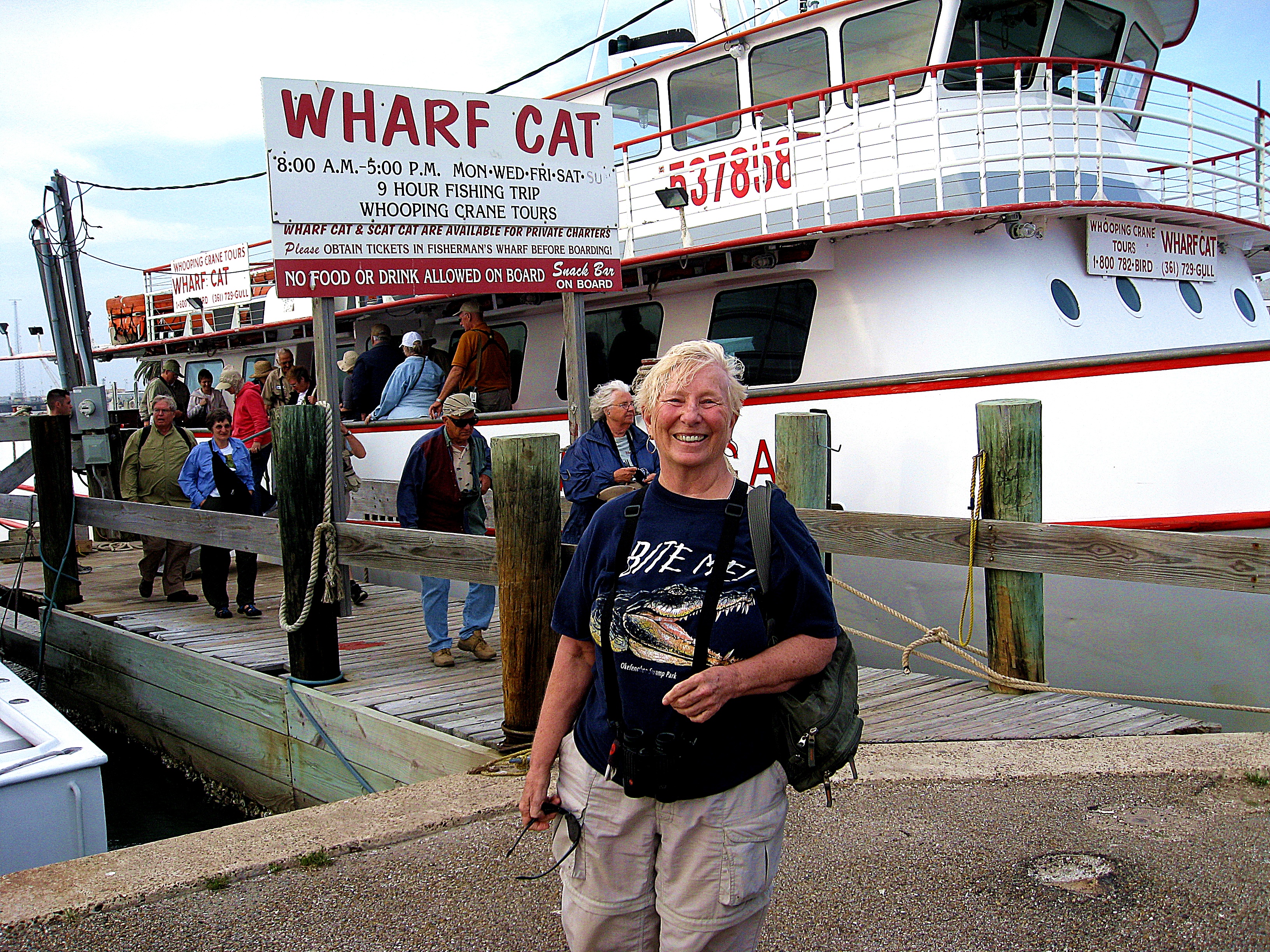
George Archibald took this photo of me at the end of our tour to see whooping cranes on the Texas Gulf Coast. I’m smiling because I saw these awesome endangered cranes. — Photo by George Archibald

To find the universal elements enough; to find the air and the water exhilarating; to be refreshed by a morning walk or an evening saunter… to be thrilled by the stars at night; to be elated over a bird’s nest or a wildflower in spring – these are some of the rewards of the simple life. John Burroughs

The Man Who Danced with One

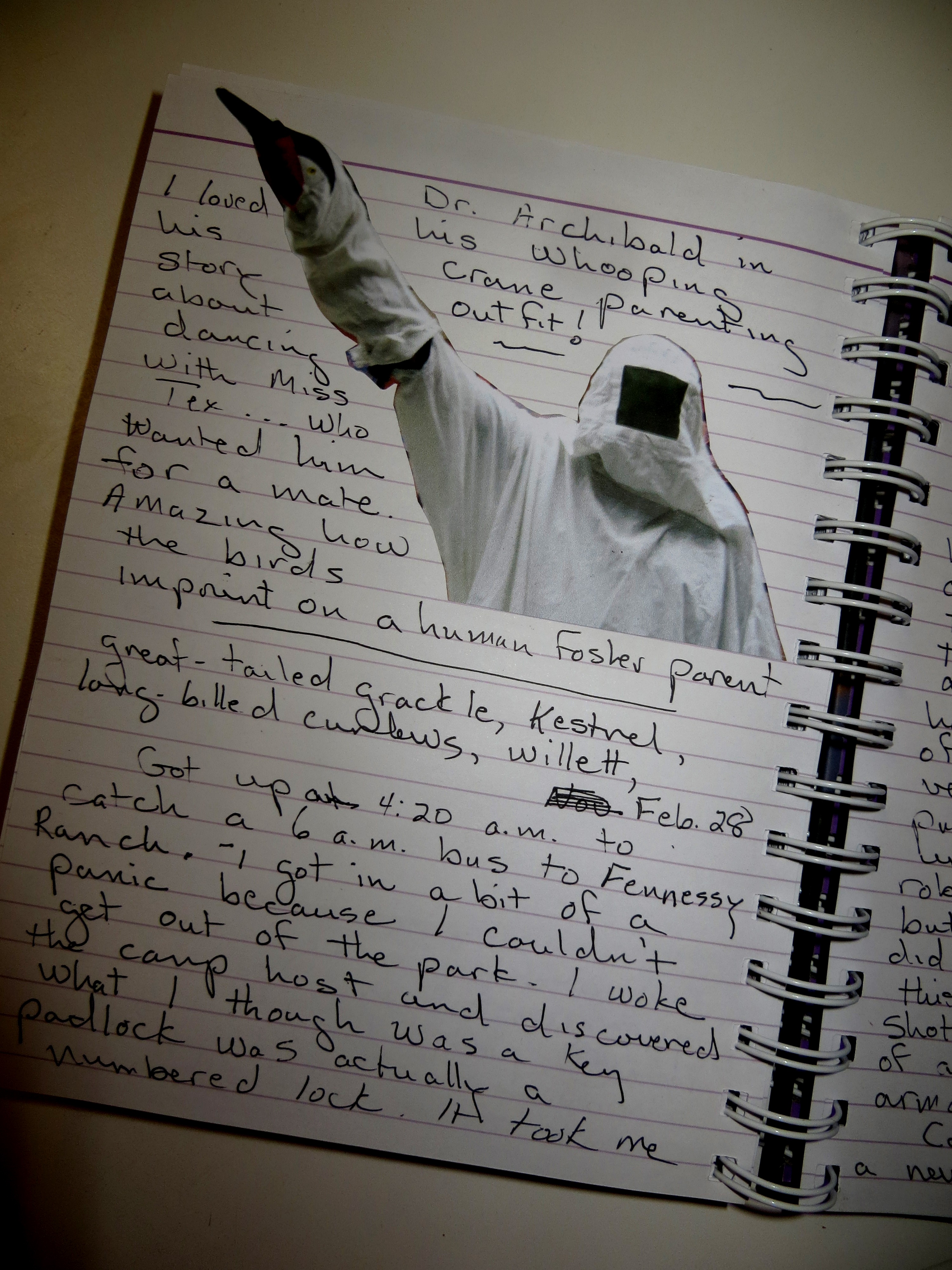
A page from my journal with a cutout of George Archibald in his whooping crane outfit.

I just finished reading To See Every Bird on Earth by Dan Koeppel. In it he mentioned George Archibald, a conservationist and co-creator of the International Crane Foundation. A day later, I read another mention about George, this time from one of my own journals. I had met George during a birding festival in Port Aransas in 2009, at which time he talked about the endangered whooping cranes that winter on the Texas Gulf Coast near Port Aransas.

In the 1940s, there were fewer than 25 whooping cranes left in the wild, and only a couple of these giant birds in captivity. Today, because of the efforts of Archibald and others like him, over 300 whoopers are now flying free, migrating between Canada and the lower U.S each year.

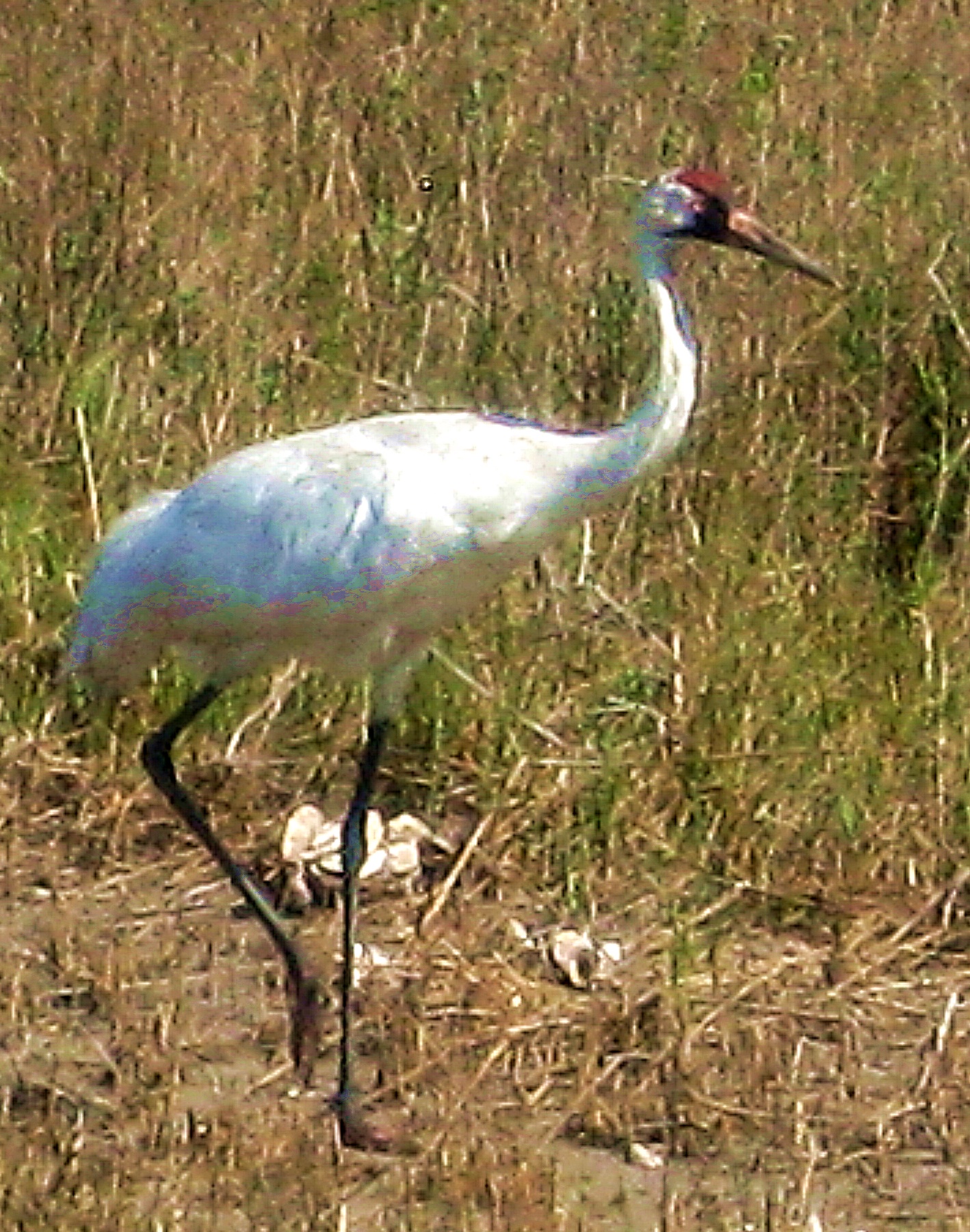
Whooping crame on Matagorda Island. — Photo by Pat Bean

During a workshop talk, George put on his crane costume and demonstrated how he danced with an orphan whooping crane chick as a way to teach it to dance the way whooping cranes do to attract and bond with a mate. Whooping cranes have to be taught this, as well as their migration paths, by their parents. Mom and Dad make their first winter migration flight with them.

I took pictures of George in his crane suit, and put some of them in my journal. Then the next day, I took the whooping crane tour aboard the Wharf Cat out to Matagorda Island to see the real whooping cranes. George was aboard and we had a nice long chat about the whoopers, and the work he and others are doing to save the cranes. It was a fascinating couple of days, and I’m glad both the book I was reading and my journals let me relive it.

Blog pick of the Day. Check it out.

Bean Pat: Interesting Literature http://tinyurl.com/y8casam5 Edward Allan Poe’s The Raven. I first read this when I was nine or 10 years old. Although it was another 15 years before I knew I wanted to be a writer, this poem certainly helped me fall in love with the sound of words, even though I didn’t know what they all meant at the time.

Read Full Post »

The ferry from Aransas Pass to Port Aransas on Mustang Island on the Texas Gulf Coast. — Wikimedia photo

“I can’t change the direction of the wind, but I can adjust my sails to always reach my destination.” — Jimmy Dean

And a Journey to Mustang Island

As one who loves road trips, and one who believes the journey is even more important than the destination, I was in high spirits as I drove Gypsy Lee, my 21-foot home on wheels, down Texas’ Highway 35 on a late February day. It was 2009, and my first sojourn after spending the nastier days of winter hanging out in my children’s driveways.

A great egret sat by a small pond near the entrance to Mustang Island State Park. — Photo by Pat Bean

The sun was shining brightly but the day was quite windy. Through my windshield, I could see turkey vultures wobbling in flight and kestrels swaying on roadside wires. Have you ever noticed that these high-wire-loving falcons always seem to face the road and not away from it?

The gray feathers of a mockingbird, the only other bird that seemed to be defying the wind this day, were blown up like a skirt, exposing white feathers as if they were a petticoat. As this Texas state bird winged its way inch by inch into the howling wind. I felt like I was watching a slow-motion vignette.

I sympathized, as I had to keep my hands tightly placed on Gypsy Lee’s steering wheel to keep sudden gusts of winds from blowing her sideways. I gave myself a break from driving by stopping for a bit at Aransas National Wildlife Refuge, where I got a distant look at a couple of whooping cranes. I would see these endangered birds up much closer later in the week when, I took a tour boat out of Port Aransas.

A brown pelican and a laughing gull near Port Aransas. Photo by Pat Bean

Back on the road, the wind was still singing loudly, but soon, although many mind musings later, I found myself in Aransas Pass, where I would catch a ferry to take me across to Mustang Island. The ferry docked in Port Aransas, which sits on the northern end of this narrow stretch of water-enclosed land. My destination for the day was Mustang Island State Park on the southern end of the island.

Once hooked up, I enjoyed the remains of the windy Texas day, ending it with a sunset stroll on the beach beneath cackling laughing gulls, and beside white-capped waves rolling up beneath my sandaled feet.

Bean Pat: A slice of life http://tinyurl.com/y9rq4uxv This blog makes me feel gratitude for still being able to enjoy the little things in life.

Read Full Post »

“People often say that beauty is in the eye of the beholder, and I say that the most liberating thing about beauty is realizing that you are the beholder. This empowers us to find beauty in places where others have not dared to look, including inside ourselves.” – Salma Hayek

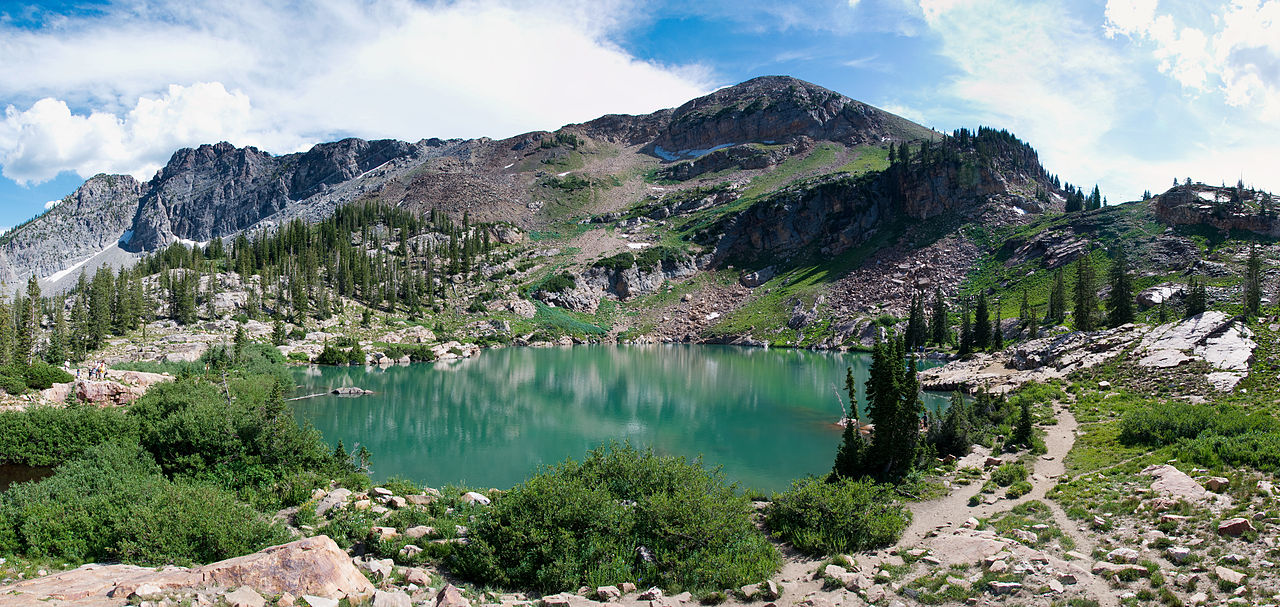
Secret, also know as Cecret, Lake in Albion Basin at the top of Cottonwood Canyon in Utah. — Wikimedia photo

A Day to Remember

I’m organizing photos that I removed from albums and put in a box when I got rid of or condensed everything so all my belongings would fit into a small RV back in 2004. Lately, I’ve been rummaging through that box.

Kim and me looking out over Secret Lake. I’m not sure who took the photo, most likely Cory, Kim’s son.

Of the many photos, my favorites are the ones of me enjoying Mother Nature’s outdoor wonders. My long-time friend Kim is there with me in many of these memories, like the one recaptured by the photograph on the right, which was taken at Secret, or Cecret as some people call it, Lake at the top of Albion Basin up Cottonwood Canyon in Utah.

As I recall it was an early July day, which is when spring wakes up in this high country, Notice the snow still visible in the background of the photo. I recall that the meadow at the trailhead, where Kim and I started our hike, as being saturated with wildflowers, Indian paintbrush, columbine, lupine, Jacob’s ladder, beard’s tongue, and elephant’s head (my favorite), just to name a few.

I can’t remember ever seeing so many different wildflowers crowed into one place as I did this day. I do remember trying, unsuccessfully, to name them all. The profusion of wildflowers accompanied Kim and I all the way up to Secret Lake, where we sat for a while enjoying the warm sun.

I’m not sure when this photo was taken, but since I don’t recall bird watching on the hike, I’m pretty sure it was before 1999. That’s when I got addicted to birds, and from that time forward, I was always looking for them. In fact, after that year, I couldn’t not see birds.

Bean Pat: A Slice of Life http://tinyurl.com/kjyblf8 The beauty of a garden, and one magnificent radish

Read Full Post »

“Joy in looking and comprehending is nature’s most beautiful gift.” – Albert Einstein

A male Baltimore oriole. — Wikimedia photo

My 477th Bird

Back in 2006, when I was still a full-time RV-er traveling across America, I found myself camped beside Grand Lake o’ the Cherokees at Bernice State Park in Oklahoma. On my second day there, I was up by 6 a.m., and after a quick cup of cream-laced coffee and a short walk with my canine traveling companion Maggie, I took off alone to explore the park’s nature trail. It was summer-hot and humid, and Maggie had seemed quite agreeable to be left behind to sit in her favorite perch in front of the air conditioner.

View of Grand Lake that I had through the window of my RV at Bernice State Park in Oklahoma. — Photo by Pat Bean

Several bird feeders set out near the trailhead were bustling with Carolina chickadees and American goldfinches, and as I watched, a nearby downy, North America’s most common and smallest woodpecker, drummed its own attention-getting beat. It was going to be a good day, I decided.

As I continued on down the path, I took plenty of time to breathe in the simple beauty around me: a yellow patch of wall flowers, the artistic composition of a small dead tree reclaimed by vines, and an occasional peek of a glistening, sun-speckled lake through thick foliage

I’ve often wondered how people who don’t take nature breaks stay sane in today’s fast-paced world? I suspect that the angry psychopaths who do evil and harm are among the deprived.

My thoughts were interrupted when a doe and her freckled fawn came into sight around a curve in the path. I froze, as did the two deer. We all stared intently. When I finally took a step forward, mom stepped into the woods. Her baby gave me one last look of interest then quickly followed. It amazes me how fast wildlife can disappear from sight.

A male Bullock’s oriole — Wikimedia photo

My thoughts were still on the deer when a flash of orange drew my attention. With eyes glued to my binoculars, I followed the color through the tree branches, and realized I was most likely looking at a Baltimore oriole. While common in the East, these orioles don’t visit the West, where I had lived when I took up birdwatching.

Out West, the Baltimore’s look-alike cousin is the Bullock oriole. I had seen hundreds of Bullocks, but this was my first Baltimore. It was what we birders call a lifer. While I rejoiced, I lamented the too brief view I had before the bird disappeared amongst the trees. I had identified the bird more because of its color and location than because of specific field marks.

Later in the day, as I was sitting at my table writing, the omission was rectified. A Baltimore oriole flew right outside my RV window, and then lingered in the area. It was a breeding male with a black head atop a bright orange body that had thin white streaks on black wings. A Bullock wears only a black cap atop its head and its black wings have prominent white patches on them.

After the oriole flew away, I got out my world bird list and added the Baltimore oriole to it. It was bird 477. I had been hesitant to put it on the list earlier because of the poor sighting. Life is good, I thought, as I added the date and place of its sighting beside the bird’s name.

As I had suspected, it turned out to be a very good day.

Bean Pat: Houston Art Car Parade http://tinyurl.com/mqug4ef For people watchers, too. As a writer, these photos are good examples of interesting characters.

Read Full Post »

“Nature always wears the colors of the spirit.” – Ralph Waldo Emerson

One Colorful Bird. No, Make That Two Birds

Elegant trogon. — Wikimedia photo

at Two

I hunted for the elegant trogon twice in Madera Canyon here in Southeastern Arizona – and did not find it. For my third try, a detour on one of my annual trips from Utah to Texas, I hired a bird guide out of Sierra Vista, and made a reservation at a Sierra Vista hotel to spend a couple of nights.

Three days before my trip was to begin, I bought Gypsy Lee, the small RV in which I would soon live in and travel in for nine years. I then switched my hotel reservation to an RV park reservation, which is how Sierra Vista became the first place I hooked up my RV. I still remember the trepidation I felt about that virgin event. I had to purchase a special sewer connection sold by the park. It was a connection that I never had to use again, and once I had the hang of it, I could hook up the water, electricity and sewer to my RV in just a couple of minutes.

I found my elegant trogon up Garden Canyon in Huachuca Mountains, just an hour and a half away from Tucson. . — Wikimedia photo

But back to that elegant trogon, which at the time was just as important to me as getting familiar with my new home on wheels.

The guide took me and two other birders onto Fort Huachuca in his VW Camper, and then on a hike up Garden Canyon. We hadn’t gone far when he pointed out an elegant trogon quietly sitting on a branch above a small stream. I could hardly breathe. This is one colorful bird.

I was the one, meanwhile, who saw the second trogon, and pointed it out. As our quartet of gazes shifted between the two birds, the first flew over to the second, and mated with her. It was all over in a matter of seconds.

I thought about this sighting, which took place on May 9, 2004, because I’m been thinking of a return trip to Garden Canyon, which I have never visited again. Nor have I seen another trogon.

Blog pick of the Day. Check it out.

Bean Pat: Mammoth Cave http://tinyurl.com/kap7kxd For the armchair traveler – and my bucket list.

Read Full Post »

« Newer Posts - Older Posts »