Feeds:
Posts
Comments

Archive for the ‘Travel’ Category

Cumbres Pass on an autumn day. — Photo by Pat Bean

“I may not have gone where I intended to go, but I think I have ended up where I intended to be.” — Douglas Adams

Aging My Way

Some of my best travel moments have been the result of a wrong turn. One example is the day I did just that in Chama, New Mexico. By the time this directionless-nitwit figured it out, I was driving through a scenic landscape that kept me going forward with no intention of turning back.

Facebook, with its post and photos from the past, brought back all the good memories of that 2009 day, which had me driving through the 10,000-foot Cumbres Pass in Colorado’s San Juan Mountains. It was a colorful autumn day, traffic was almost non-existent, and my then canine companion Maggie and I took a walk and breathed it all in.

Of course, I was driving and living in a small RV at that time, and had no daily deadline to meet.

 In a way, that’s kind of how I’m still living my life in retirement — although without an RV. And by the way, I cuss out myself often for selling it, especially since a recent road trip had me realizing how much I loved traveling.

But the bonus of that trip was I came home energized, ready to get this arthritic old body out into the world more, something I was actually still doing until Covid hit and isolation and staying home became a habit.

It’s time to get on the road again, even if it’s just day trips around Tucson. To misquote Dr. Seuss, I have brains in my head, shoes on my feet — and I should know where to go. Maybe I’ll even be lucky and take a wrong turn.

Pat Bean is a retired award-winning journalist who lives in Tucson with her canine companion, Scamp. She is an avid reader, an enthusiastic birder, the author of Travels with Maggie available on Amazon (Free on Kindle Unlimited), is always searching for life’s silver lining, and these days aging her way – and that’s usually not gracefully.

Read Full Post »

As a kid, I gathered up these berries as ammunition for the neighborhood kid wars. Today I wonder why kids engage in war games? What does it say of the human species?

 “Courage is knowing what not to fear.” — Plato

Every time I pass the chinaberry tree that grows in a neighbor’s yard, it takes me back in time to when I was a young girl joyfully climbing the one that grew in my grandmother’s backyard. The tree was located in a fenced area behind the house where my grandmother raised chickens, rabbits and pigs that eventually found their way to the dinner table.

Beyond this area stood a wild blackberry field that stretched for several football fields down to train tracks. It was in this tree that I often watched the Texas Zypher fly past. The sight of that silver streak may have been the beginning of my lifelong wanderlust, as I always wondered where that train had been and wished I had been there.

And as the zypher passed, I always waved at the engineer, imagining that the whistle that blew in response was just for me. Adulthood eventually inflicted me and I realized that the whistle was blown because of the nearby railroad crossing and not for me. It’s not easy growing up.

Anyway, one day when I went out to climb that chinaberry tree – and to collect its hard green berries for a neighborhood kid’s fight – there was a huge rattlesnake sunning itself on the large rock I used to reach the first limb. I screamed and ran back into the house and never climbed that tree again.

But, without nary another thought about snakes, I continued collecting blackberries, my child’s mind not connecting the fact that field was where that big rattlesnake surely had come from, and had relatives as well.

Instead, I continued enjoying those blackberries with a little sugar and milk

in a bowl, and in the blackberry pies or cobbler my grandmother baked.

It’s kind of funny thinking about that now, which I did during the big monsoon storm that shook up Tucson this past week. There is nowhere Mother   Nature, with her hurricanes, tornadoes, fires, avalanches, hail storms, floods, deadly winds or just a lightning bolt out of the blue, can’t get at you.

I eventually overcame my fear of snakes, although I still keep my distance, and I learned not to let fear of what might happen keep me from living a full life. Growing up is not all bad.

Pat Bean is a retired award-winning journalist who lives in Tucson with her canine companion, Scamp. She is an avid reader, an enthusiastic birder, the author of Travels with Maggie available on Amazon (Free on Kindle Unlimited), is always searching for life’s silver lining, and these days aging her way – and that’s usually not gracefully.

Read Full Post »

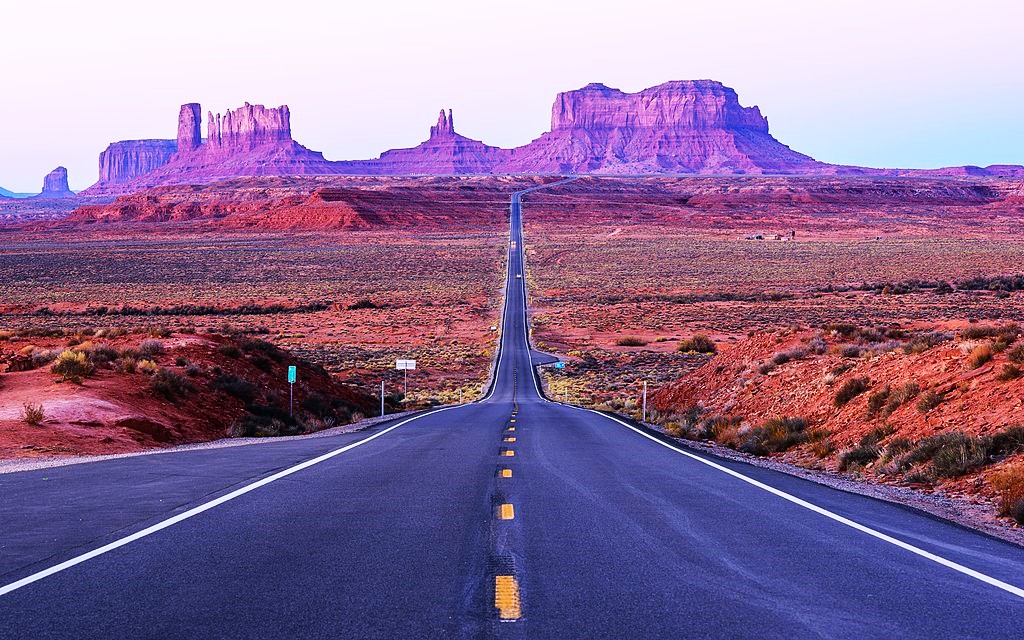
Forest Gump Point — Monument Valley from Scenic Byway 163

“There is an eternal landscape, a geography of the soul; we search for its outlines all our lives.” — Josephine Hart  

You know how you see something, and your mind gets stuck on it, and then you keep seeing the same thing over and over again.

That happened to me this past month. It started when I read an Atlas Obscura story about Forest Gump Point. The story was accompanied by a photo which showed a scene I had passed by at least a dozen times and had even stopped to explore a few of those times.

The Point, illustrated in the article, is the view one gets when traveling the 64 miles of Scenic Highway163 through Arizona and Utah, 44 miles of which goes through Navajo Nation land and Monument Valley. I purposely took this route many times — simple because the magnificence of the views awed me.

The red-rock mesas, buttes and spires are the remnants of rock formations that were over 25-million years in the making, according to geologists. Some of these wonders can be seen in the background where Forest Gump stopped running.

But long before Tom Hanks portrayed Forest Gump in the 1994 movie, Monument Valley was a favorite of movie directors. Probably the most famous use of the spectacular scenery was in the 1939 film Stagecoach starring John Wayne. It can also be seen in movies like The Searchers, The Eiger Sanction and Easy Rider and has even been featured in the popular television series Dr. Who.

In recent weeks, I’ve seen images of the scenic valley more than half a dozen times. Each time made me want to take a road trip – enough so that I looked at a map and discovered that it’s only 462 miles away from my home in Tucson.

Pat Bean is a retired award-winning journalist who lives in Tucson with her canine companion, Scamp. She is an avid reader, an enthusiastic birder, the author of Travels with Maggie available on Amazon (Free on Kindle Unlimited), is always searching for life’s silver lining, and these days aging her way – and that’s usually not gracefully.

Read Full Post »

Don’t Wait – Dive In

Passing scenery while floating down the Black River in Jamaica, just one of the many places my wanderlust has taken me. — Photo by Pat Bean

The older I get the more I realize that it’s not the big events in one’s life that give meaning to our lives, but the small ones. Hugs from a great-grandchild can be as precious as a pay raise at work, or getting down on one’s knees and closely observing draba blossoms that sparkle in the morning dew as delightful as floating unscathed through a Colorado River roaring rapid at the bottom of the Grand Canyon.

That’s not to say I would have wanted to miss a pay raise, or those Grand Canyon rapids, but those things are not everyday occurrences and their excitement wanes, especially when you’re 83, the milestone birthday I passed this year.

I came across a quote this morning that got me thinking. It was: “Don’t wait for your ship to come in, swim out to it.” With a bit of online research, I learned the quote could most likely be attributed to the prolific English author Kathy Hopkins, but then I also learned there is also a book by Gary Wood with the title Don’t Wait for Your Ship to Come In … Swim out to Meet it.”

When I went back in my own memory, the quote reminded me of what my grandmother would tell me when I expressed a want for something. “Well, I guess you’ll just have to wait for your ship to come in because we don’t have the money for that foolishness,” she would say.

Of course, that never sat well with me. Perhaps that is why, when I suddenly found myself in a new place where I knew nobody, and nobody knew me, I decided I wouldn’t wait for the world to come to my door.

What I truly wanted was to be doing exciting things in the outdoors. But activities like that, well at least the way I was brought up, were always associated with having a male partner by your side. That was also the way it was in one of my favorite books, I Married Adventure by Osa Johnson, which I read when I was only 10, and which was the start of my lifelong wanderlust.

One of the biggest steps in my life was buying a canoe –, something I considered a man toy — and then inviting others to go canoeing with me.

From that simple step, I then bought a raft, a sailboat and a few other man-toys, and there were always people excited to join me in my outings, especially women who admitted they would never have gotten out on their own.

I think swimming out to meet your ship is a very good idea.

Pat Bean is a retired award-winning journalist who lives in Tucson with her canine companion, Scamp. She is a wondering-wanderer, avid reader, enthusiastic birder, Lonely Planet Community Pathfinder, Story Circle Network board member, author of Travels with Maggie available on Amazon (Free on Kindle Unlimited), and is always searching for life’s silver lining

Read Full Post »

The Possum Monument in Wausau, Florida, the Possum Capital of the world.

Quite Tasty

These days I often scratch the itch of my wanderlust soul from the comfort of my living room recliner, but it’s large enough so that my canine companion Scamp — who thinks 45 pounds is the perfect size to be a lap dog — can curl up with me.

 From this seat, books and the internet take me all over the world. This morning it was to Wausau, Florida, a small town of only 400 where possums supposedly outnumber humans, and which is home to the Possum Monument.

Erected in 1982, the monument’s inscription reads: “…in grateful recognition of the role the North American possum — to be technical correct possums only live in Australia, America has the opossum — played in furnishing both food and fur for early settlers and their successors.

 Possums were also a great source of protein for residents during the Great Depression, the article said.

On reading that, I remembered the time in the early 1940s when my dad went hunting and brought home a possum for dinner. My grandmother cooked it with sweet potatoes, and as I recall the meal was pretty tasty.

If you want to taste for yourself, you should visit Wausau on the first Saturday in August, which is the day the Florida Legislature designated as Florida Possum Day when possum and sweet potatoes will be on the menu.

Pat Bean is a retired award-winning journalist who lives in Tucson with her canine companion, Scamp. She is a wondering-wanderer, avid reader, enthusiastic birder, Lonely Planet Community Pathfinder, Story Circle Network board member, author of Travels with Maggie available on Amazon (Free on Kindle Unlimited), and is always searching for life’s silver lining.

Read Full Post »

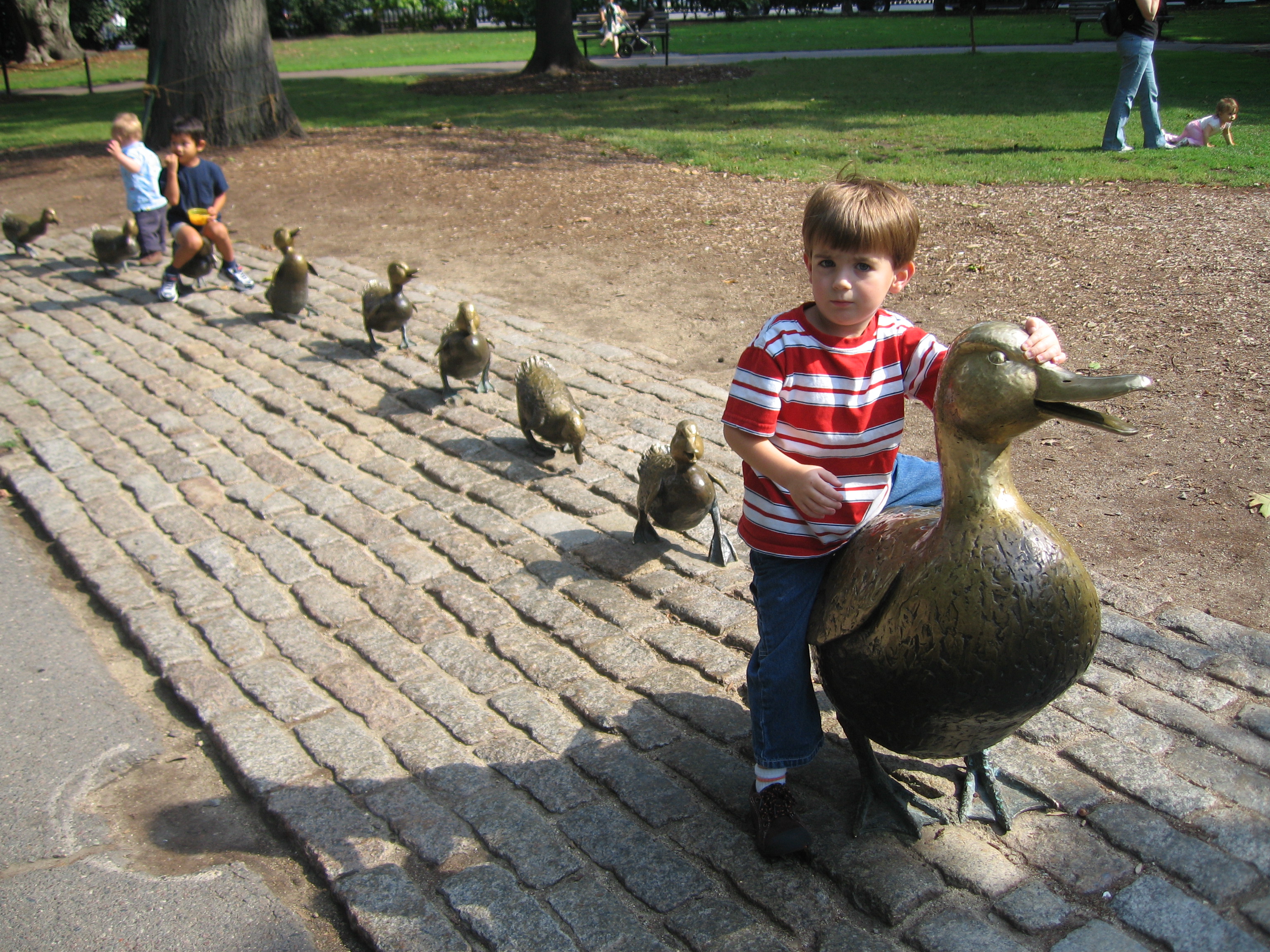
Ducklings Dressed for the Winter

Winter Fun

It’s cold this morning in Tucson, and colder elsewhere say the weather men. But Boston’s ducklings have been dressed for it, as you can see in the above photo, which I came across while reading my email.

I spent a couple of days at the ducklings’ home on the Boston Commons back in 2006 during my RVing days. I parked my RV in a small town an hour’s drive from the city, and took the commuter train into town for a week of sight-seeing of historical sites like The Old North Church and Paul Revere’s home. I wrote about all this in Travels with Maggie. 

I found everything quite educational and interesting, but nothing charmed me as much as the bronze Mallard Family statues, created in honor of the 1941 classic children’s book, Make Way for Ducklings.

Designed by Nancy Schön in honor of the book’s author, Robert McCloskey, the ducklings were installed in the gardens in 1987. The book tells the story of how Mr. and Mrs. Mallard came to Boston looking for a home, and eventually settled in the gardens.

 Daddy Mallard, however, is missing, for the statues only consist of Mother Mallard and her eight babies: Jack, Kack, Lack, Mack, Nack, Ouack, Pack and Quack.

The family is often dressed for holidays and the weather, but they were only in their birthday suits when I visited Boston. Because I was so charmed, I guess I’m still a child at heart – and thankful for it.

The ducklings were being enjoyed by kids like me when I visited them. — Photo by Pat Bean,

Pat Bean is a retired award-winning journalist who lives in Tucson with her canine companion, Scamp. She is a wondering-wanderer, avid reader, enthusiastic birder, Lonely Planet Community Pathfinder, Story Circle Network board member, author of Travels with Maggie available on Amazon (Free on Kindle Unlimited), and is always searching for life’s silver lining.

Read Full Post »

The Gift of Books

Someone’s idea of the perfect library.

Paul Theroux and Dorothy Gilmore  

Travel writer Paul Theroux, in his book Deep South, said few people he met while traveling to such places as Greensboro – Catfish Capital of Alabama – knew his name. But the unlettered person, he added, “has other refined skills and is often more watchful, shrewd, and freer in discussion than the literate person.”

But when he met up with a reader like himself, he noted that “a reader meeting another reader is an encounter of kindred spirits.”

How true, I thought, remembering how delighted I always am when I meet someone who has read some of the same books as I have. We end up having what I call the best kinds of conversation. We talk about ideas, writing, characters, human traits and differences of opinions about what we read, among other things. The talk is almost always interesting and exciting.

I recently got my best friend reading the Mrs. Polifax books by Dorothy Gilmore, which I’m currently rereading, and that has resulted in interesting texts back and forth about her upbeat philosophy. I have many a quote from Mrs. Polifax, as written by Gilmore, in my journals.

As an old broad myself, I especially like these: “I have a flexible mind – I believe it’s one of the advantages of growing old. I find youth quite rigid at times,” and “It’s terribly important for everyone, at any age, to live to his full potential. Otherwise, a kind of dry rot sets in, a rust, a disintegration of personality,”

Meanwhile, when I first started reading Deep South, which is about Theroux’s travels on backroads through small towns, many of which were dying, I thought he was writing about a bygone area. But I began to see things different as he wrote about the gun shows and Black churches he visited — two extremes of Southern ongoings. I then realized the author was writing about the background of what’s going on in the world today. I’m being educated as I read.

I’ve been a reader all my life, having begun by reading everything in my late grandfather’s library, which was all stuffed into a chest at my grandmother’s home. He had had many classics, including the complete works of Robert Louis Stevenson, Edgar Allen Poe and Charles Dickens. I even read Forever Amber by Kathleen Winsor before I understood it was all about an unmarried woman having sex. It’s actually quite tame compared to what’s written in many non-erotic books today, in which the author forgot to close the bedroom door.

When I was in junior high school, I heard some girls talking about the “naughty” book, Forever Amber, and so I went back and reread it. I was still too naïve to understand what the fuss was all about.

But being a reader is one of the greatest gifts of my life.

Pat Bean is a retired award-winning journalist who lives in Tucson with her canine companion, Scamp. She is a wondering-wanderer, avid reader, enthusiastic birder, Lonely Planet Community Pathfinder, Story Circle Network board member, author of Travels with Maggie available on Amazon (Free on Kindle Unlimited), and is always searching for life’s silver lining.

Read Full Post »

Jellyfish at the Monterey Bay Aquarium. — Photo by Pat Bean

Connections

I just learned that when the Arizona Sonora Desert Museum renovated its hummingbird aviary in 1992, the new hummingbird nests kept falling apart. Museum workers scratched their heads for a while, but finally realized why this was happening.

 During the renovation, all the old vegetation inside the aviary was   removed, and replaced by new plants. The removal took away any spiders that inhabited the vegetation and the hummingbirds needed the web spiders produced to hold their nest materials together. The problem was solved by workers gathering branches that held such webs, and placing them inside the aviary until the spiders could reestablish their presence.

While digesting this bit of information, I came across a mindfulness tip about how to stay calm during these chaos-filled days when the news is all about Covid, political shenanigans and tornado deaths. It came from TV writer Cord Jefferson, who said traditional meditation didn’t work for him. What did, he said, was to just get lost in the gentle pulses of jellyfish for a short mindfulness break during his workday,” Cord then noted that Monterey Bay Aquarium has a jellyfish cam that can be bookmarked on a phone or laptop browser.

I’ve watched hummingbirds at the desert museum and the jellyfish at the aquarium in person, and found both these things calming. I think it’s just letting ourselves get out of our heads a bit that does the trick.

But reading these two stories back-to-back, made me realize how interconnected we beings on this world are. And by beings, I don’t just mean we two-legged sapiens. It’s certainly something to think about. Meanwhile, if you’re in Tucson or Monterey, you might want to check out the desert museum and the aquarium. Both are great places to visit.

Pat Bean is a retired award-winning journalist who lives in Tucson with her canine companion, Scamp. She is a wondering-wanderer, avid reader, enthusiastic birder, Lonely Planet Community Pathfinder, Story Circle Network board member, author of Travels with Maggie available on Amazon (Free on Kindle Unlimited), and is always searching for life’s silver lining.

Read Full Post »

Great Horned Owl — Art by Pat Bean

          The western sky was glowing orange and purple as I walked down the stairs from my third-story apartment to give my canine companion Scamp his last walk of the day. I stopped to watch — while Scamp watered a couple of trees — as the fiery scene slowly vanished below the horizon. Never have I lived where such a late evening sight happens most nights of the year.

          And just as the colors coalesced into the dark hues of night, our resident female Great Horned Owl silently swooped across the courtyard to land in the giant Ponderosa where she often sits for hours. She and her mate have raised chicks here in the apartment complex all but one year since I moved here in 2013. It’s easy to tell the genders of the pair because the female is about a third larger than the male, a common trait of raptors.

          The night felt magical, as if the Sun and the Owl had put on a special performance for my eyes only. Such moments seem to happen to me a lot, but I never tire of them. While I still have itchy feet that wants to explore all the places I’ve never been, I’m glad my own backyard can still thrill me.

          Richard Bode, author of First You Have to Row a Little Boat, said he once met once met a man who had visited every exotic place from the Grand Canyon to the Great Wall, but then admitted he hadn’t seen the songbirds in his own backyard.

          I met quite a few people like that when I was traveling this country in a small RV. People, like me, came from all over to visit some waterfall, cave, or other wonder of nature, and the person who lived just 10 miles away had never taken the time to view it. How sad.

          If ever there was a time that we needed to be given proof that beauty and wonder can exist amongst chaos, these days are it. I need sunsets and owls, and colorful flowers and fall leaves, and hummingbirds and coyotes to keep me sane.

And thankfully, they’re all just outside my apartment door.

          Pat Bean is a retired award-winning journalist who lives in Tucson with her canine companion, Scamp. She is a wondering-wanderer, avid reader, enthusiastic birder, Lonely Planet Community Pathfinder, Story Circle Network board member, author of Travels with Maggie available on Amazon (Free on Kindle Unlimited), and is always searching for life’s silver lining.

Read Full Post »

A view of the Grand Canyon and the Colorado River below from one of the many view points. The canyon is too big, and awesome, to be captured from a single point. — Photo by Pat Bean

          My latest travel book read is To Timbuktu by Mark Jenkins, an author I came to love over 20 years ago because of his articles in Outside Magazine, of which I’m a great fan.  

 Mark has a great way with words, such as his description in To Timbuktu of an equatorial mountain range: “…rumpled geology smothered by the octopus of botany,” he wrote.

As usual when reading, having one thought often cycles me to a related thought. This morning, I wondered how writers would describe the Grand Canyon, which I revisited for about the dozenth time this past week. So, I went searching for just such descriptions.

Most quotes that I found about the Grand Canyon echoed, in one way or another, the phrase that the author didn’t have the words to describe it.

But as I kept searching, I came across what John Wesley Powell, the first man to go down the entire length of the Colorado River through the entire Grand Canyon in 1869, had to say about this Arizona hole that was carved out over six million years ago. He wrote:

“The glories and the beauties of form, color, and sound unite in the Grand Canyon – forms unrivaled even by the mountains, colors that vie with sunsets, and sounds that span the diapason from tempest to tinkling raindrop, from cataract to bubbling fountain … The elements that unite to make the Grand Canyon the most sublime spectacle in nature are multifarious and exceedingly diverse.”

Another of my favorite authors, Ann Zwinger, whose trip through the Grand Canyon is described in her book Downcanyon, had this to say: “The astonishing sense of connection with that river and canyon caught me completely unaware, and in a breath, I understood the intense, protective loyalty so many people feel for the Colorado River in the Grand Canyon. It has to do with truth and beauty and love of this earth, the artifacts of a lifetime and the descant of a canyon wren at dawn.”

Having paddled through the Grand Canyon on the Colorado River twice, I well understood Ann’s words, especially about the impact of hearing canyon wrens welcome the day.

If you haven’t visited the Grand Canyon, above or below, you might want to add it to your bucket list, or at least read about it in books such as Zwinger’s Downcanyon or Powell’s journals of his epic 1869 and 1871 adventures.

Meanwhile, I’m going to get back to Jenkins’ Timbuktu adventure.

Pat Bean is a retired award-winning journalist who lives in Tucson with her canine companion, Scamp. She is a wondering-wanderer, avid reader, enthusiastic birder, Lonely Planet Community Pathfinder, Story Circle Network board member, author of Travels with Maggie available on Amazon (Free on Kindle Unlimited), and is always searching for life’s silver lining.

Read Full Post »

« Newer Posts - Older Posts »