Feeds:
Posts
Comments

Archive for the ‘Nature’ Category

Two artistic horse sculptures stand in front of the Custer County Candy Company -- Photo by Pat Bean

  Come journey with me through South Dakota for awhile as I relive my explorations of the state during the fall of 2008.

“Research tells us fourteen out of any ten individuals likes chocolate.” — Sandra Boynton

Travels With Maggie

It calls itself the sweetest spot in the Black Hills. I’m talking about the Custer County Candy Company. While I won’t go so far as to agree, I will tell you I’m glad I visited them during my visit to this small town.

I recommend the hand dipped chocolates.

Read Full Post »

Custer

And the Indian


An inch of time is an inch of gold, but you can’t buy that inch of time with an inch of gold.” — Chinese Proverb

Travels With Maggie

When it comes to portraying history accurately or making a living, Custer businessmen lean toward the latter, beginning with fudging on the actual site where gold was first discovered in the Black Hills to recreations of Bedrock, home of television’s Flintstones, at the city’s Bedrock theme park and campground.

The small city reminded me a bit of Hannibal, Missouri, which takes full advantage of its native, Samuel Clements, alias Mark Twain, to attract the gold of tourists. Custer, has a lot to exploit, beginning with its namesake, the ill-fated Lt. Col. George Armstrong Custer to its beautiful location in the heart of the Black Hills.

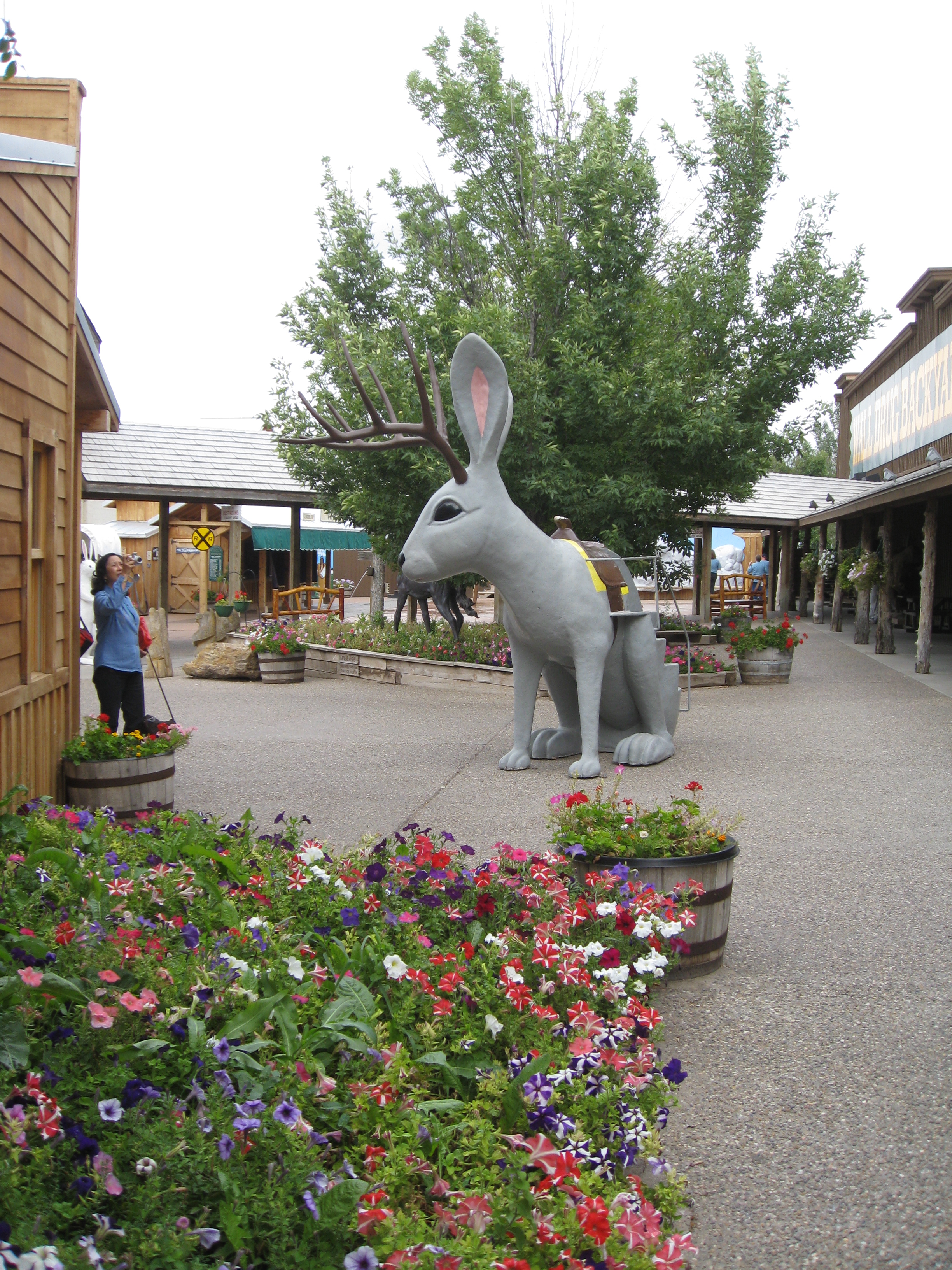
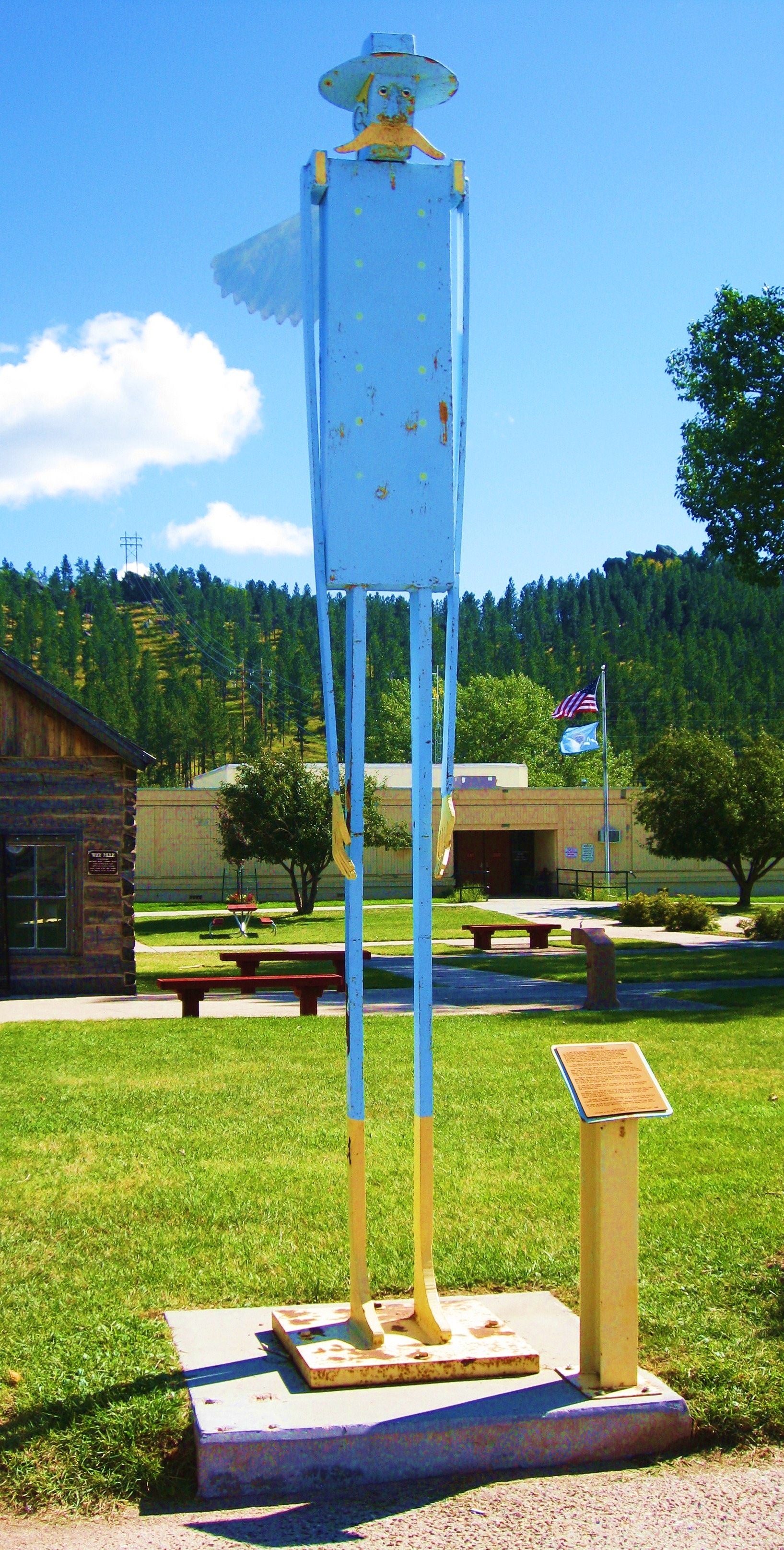
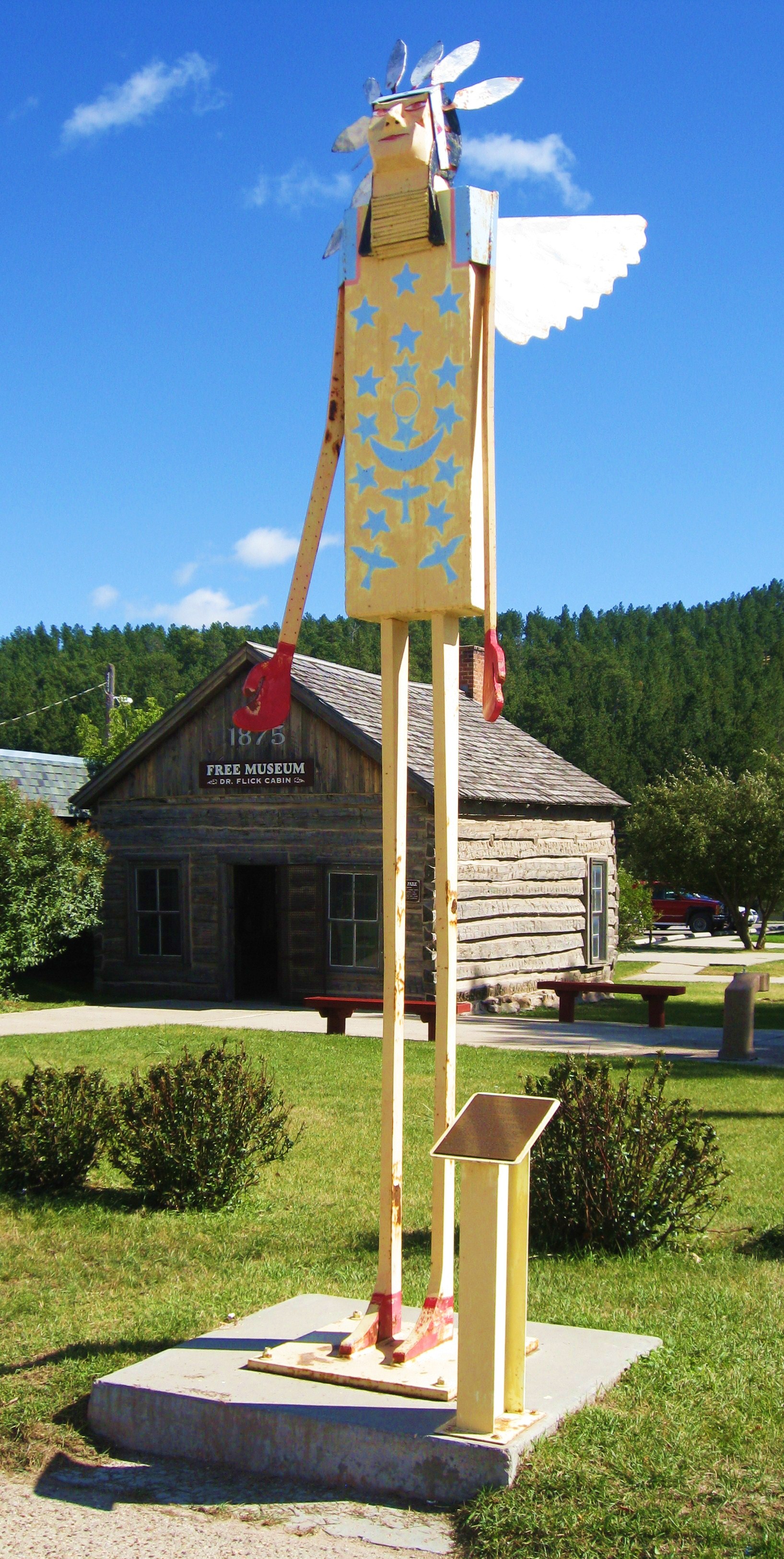
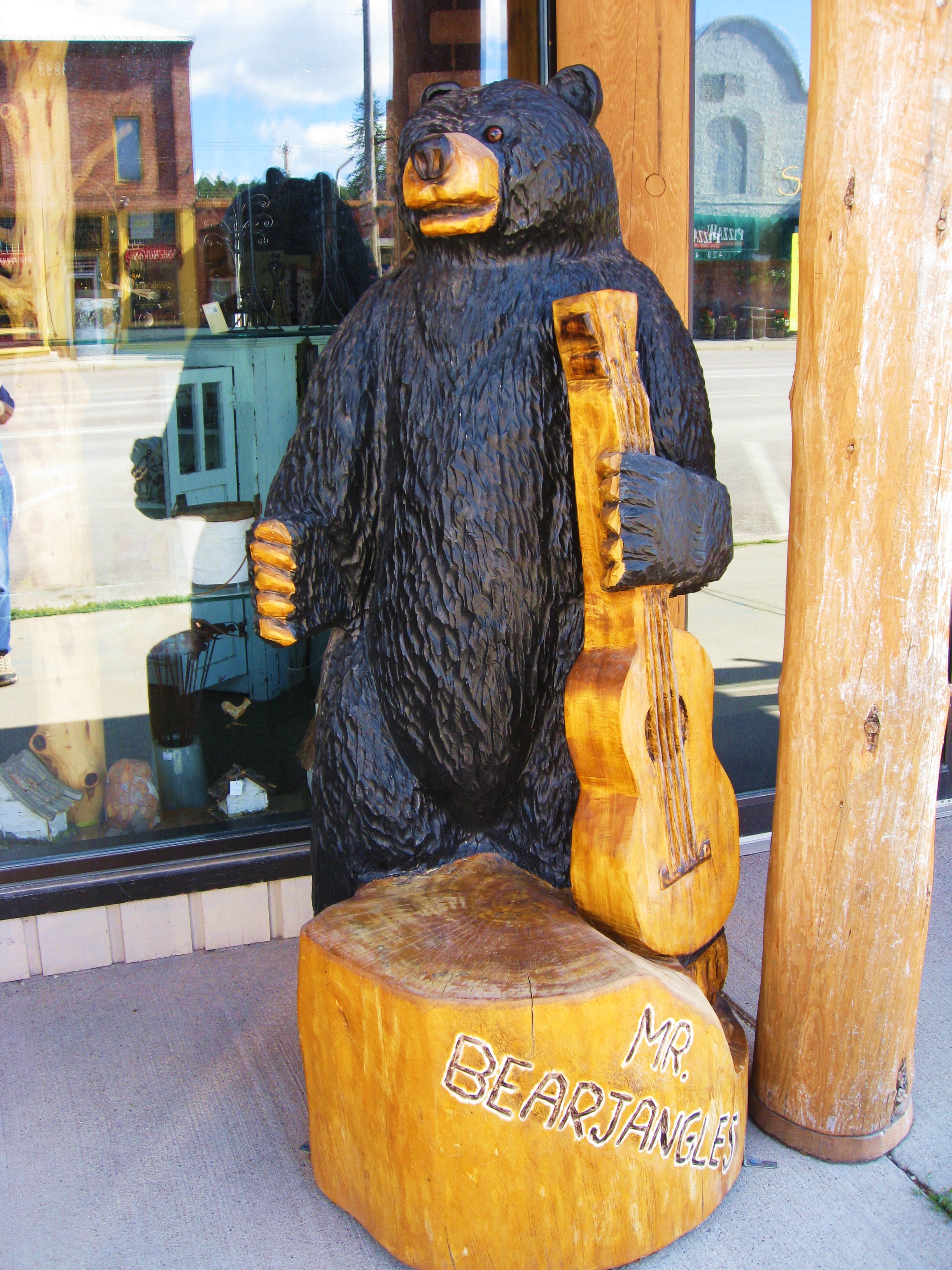
Mr. Bear Jangles -- Photos by Pat Bean

You can read all about the Indian fighter and Black Hills history in the town’s Courthouse Museum. And just so you don’t forget to leave some gold behind, the museum has a convenient gift store where you can buy regional books and Custer Historical playing cards.

Outside, located on what the city call’s the country’s widest Main Street, are several large, funky sculptures, which I thought were one of the city’s most endearing attractions.

Read Full Post »

Come journey with me through South Dakota for awhile as I relive my explorations of the state during the fall of 2008.

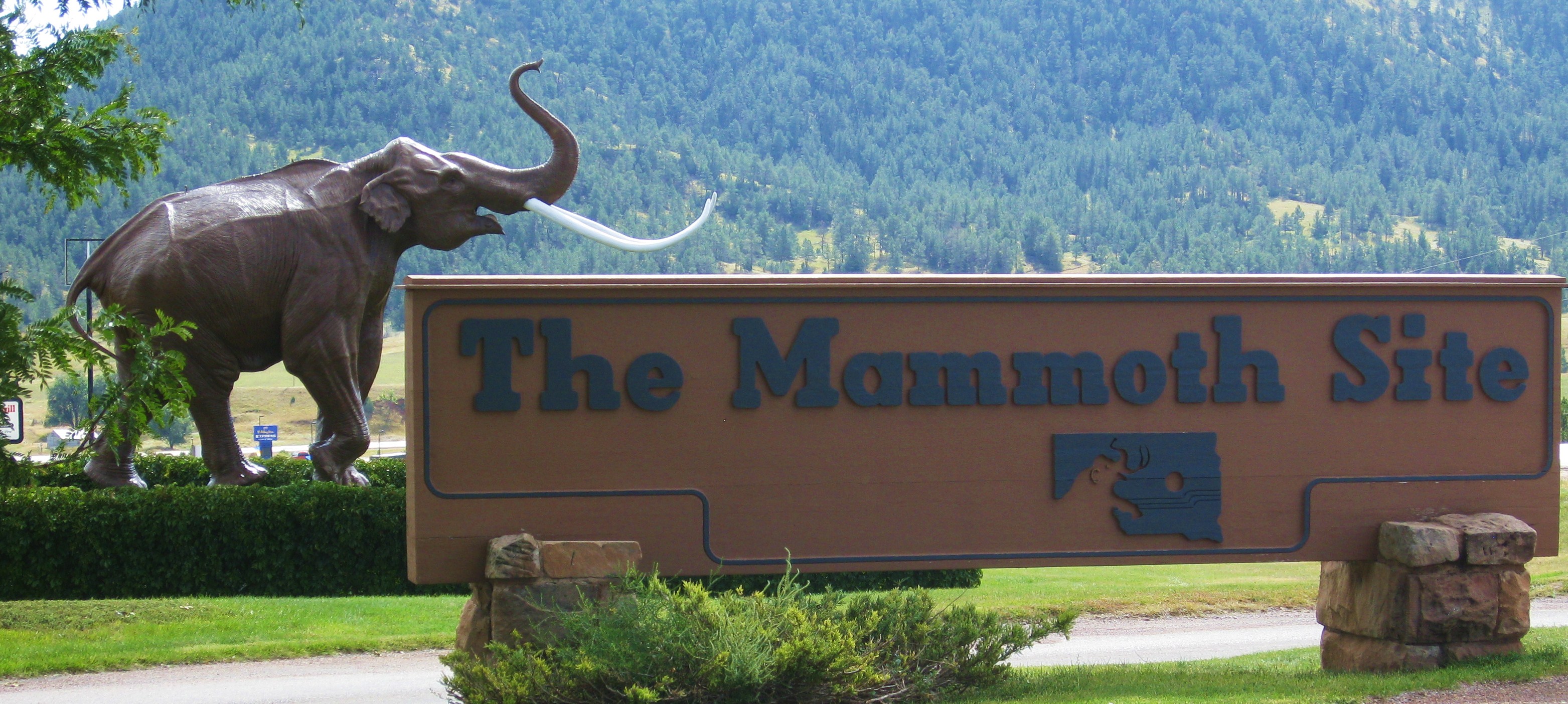
Mammoth Site in Hot Springs, South Dakota, where research of these Ice Age animals is an ongoing activity attracting paleontologists from all over the world. -- Photo by Pat Bean

“The struggle for existence holds as much in the intellectual as in the physical world.” — Thomas Huxley

Travels With Maggie

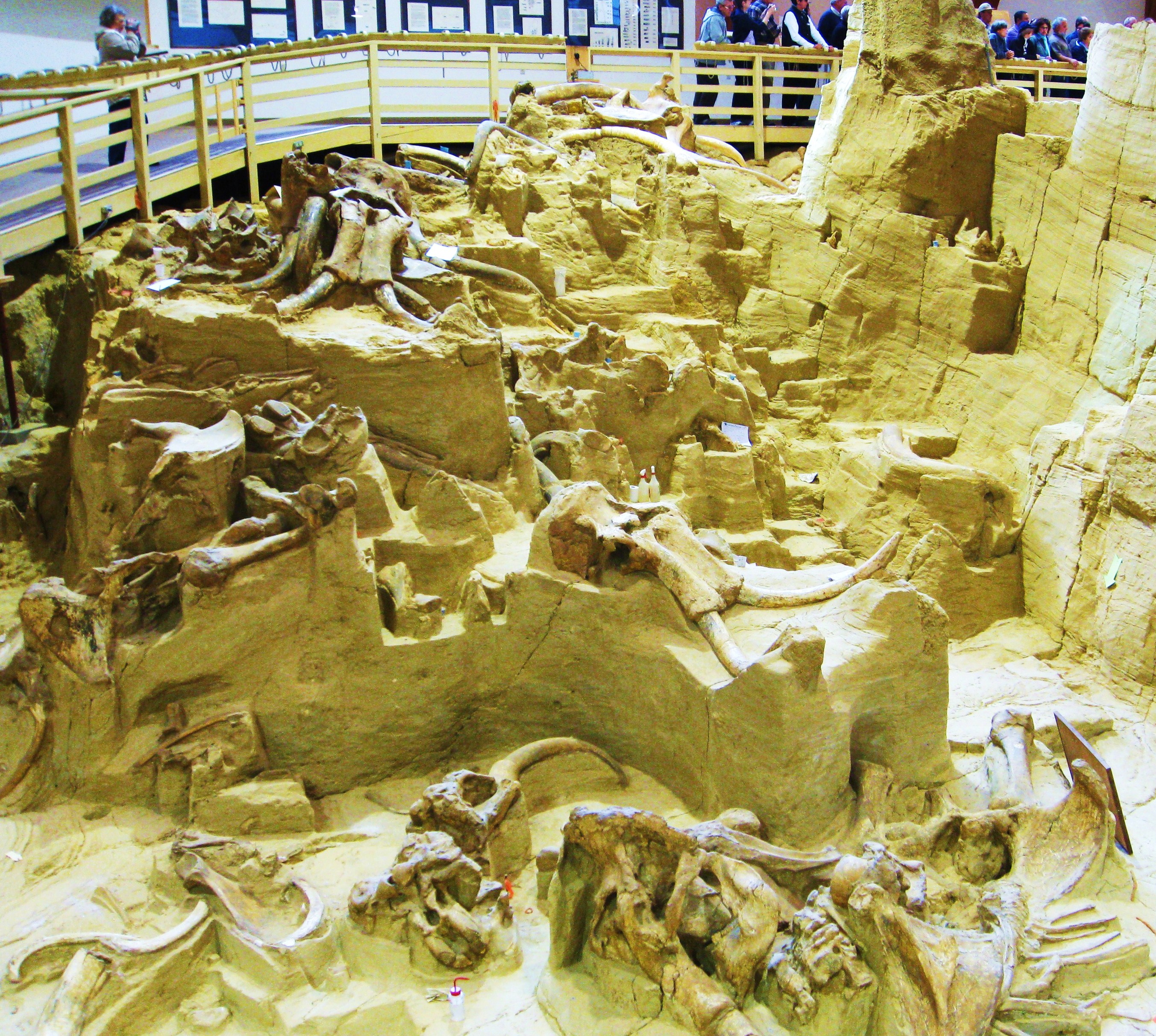
 Around 26,000 years ago a limestone cavern collapsed in what is now Hot Springs, South Dakota. The resulting sink hole filled with spring water and trapped over 50 Columbian mammoths and at least three wooly mammoths that couldn’t climb back up the steep banks of the pond. You can see the bony remains at the Mammoth Site.

Boneyard overview -- Photo by Pat Bean

Research and excavation work of these fossils, which were not discovered until 1974, continues today inside a permanent museum. A multi-level walkway encircling the still-partially buried bones makes viewing an easy task for visitors like me. And signs and a tour guide made the experience educational as well. .

My guide noted that all of the bones belonged to male mammoths, and mostly younger specimens. She speculated that they were probably young ones off on their own for the first time and didn’t understand the danger. It reminded me of the drowning deaths I covered yearly as a newspaper reporter. Almost everyone was a young male and an expert swimmer who had over-estimated his strength.

I found the correlation between then and now, and animal and human gender traits enlightening.

Read Full Post »

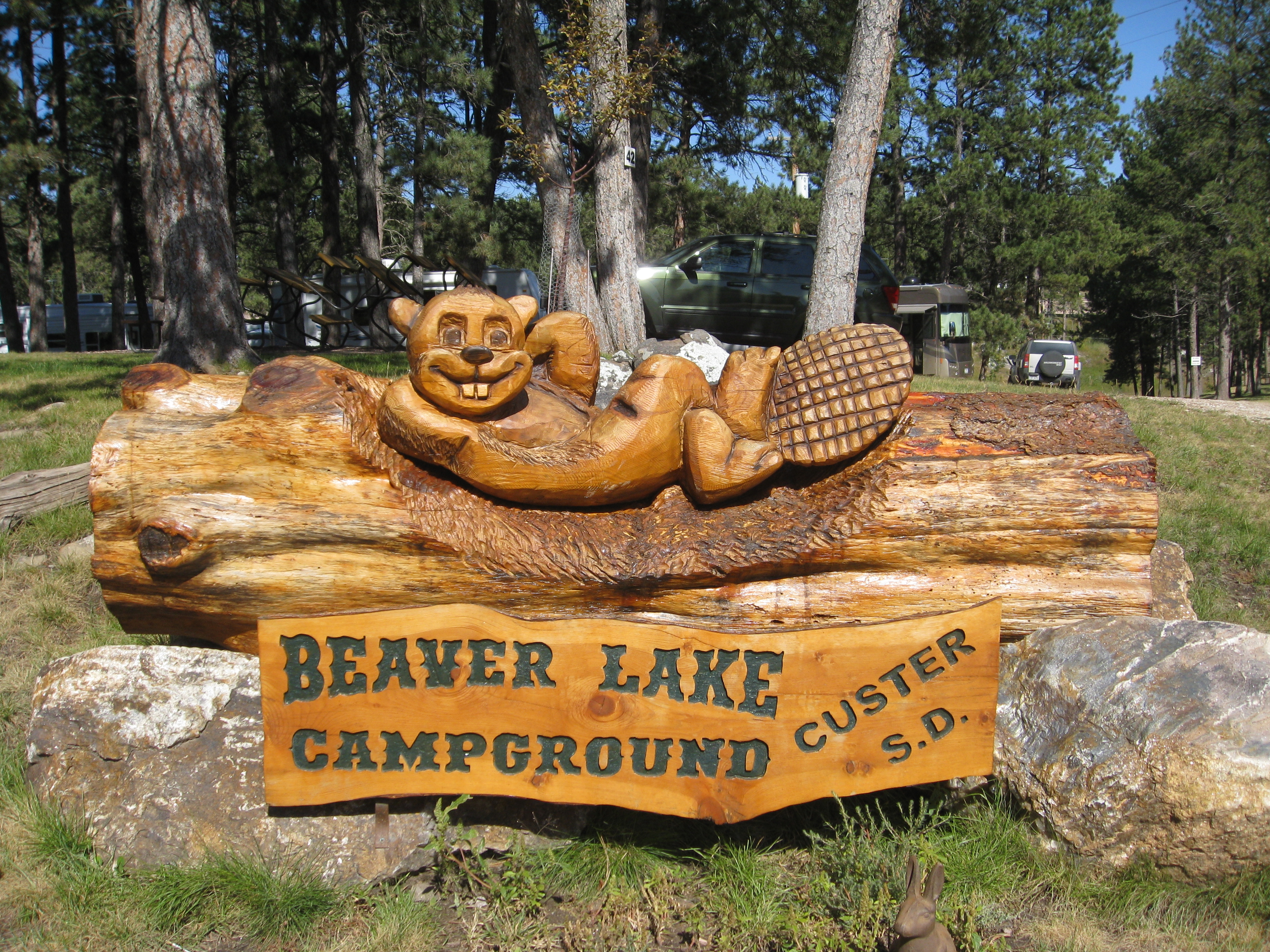
While the beaver adorned the campground's welcome sign, rabbits were the main attraction at this quaint South Dakota campground. -- Photo by Pat Bean

Come journey with me through South Dakota for awhile as I relive my explorations of the state during the fall of 2008. 

 “The world has different owners at Sunrise … Rabbits and blackbirds have the lawns; a tortoise-shell cat who never appears in daytime patrols the brick walls, and a golden-tailed pheasant glints his way through the iris spears.” — Anne Morrow Lindbergh

 Travels With Maggie

Maggie and I settled in for a week at the Beaver Lake Campground so as to have time to explore the nearby sights. Located three miles west of Custer in the eye of the Black Hills and just 25 miles from Mount Rushmore, this delightfully rustic campground couldn’t have been more perfect for my needs.

There were brown rabbits

And there were white rabbits

 There was also a waterslide, but since I was visiting after Labor Day, summer’s last hurrah, it was closed for the season. The friendly campground owners’ other family enticement, however, was still available for viewing. A colony of rabbits freely roamed the campground. The park owner said he wanted to provide something kids could enjoy watching and released a few. Of course you know what rabbits do.

 I guess I’m still a kid because I did enjoy the bunnies ‘ visits outside my RV, especially in the mornings when I sat drinking my cream-laced coffee while my sleep-in canine companion, Maggie, snored the morning away.

 Travel is all about knowing when to hit the road and when to stay put. Thankfully, I usually get this right.

Read Full Post »

 “In old age one should do something mounmental.” — Xiao Qiam

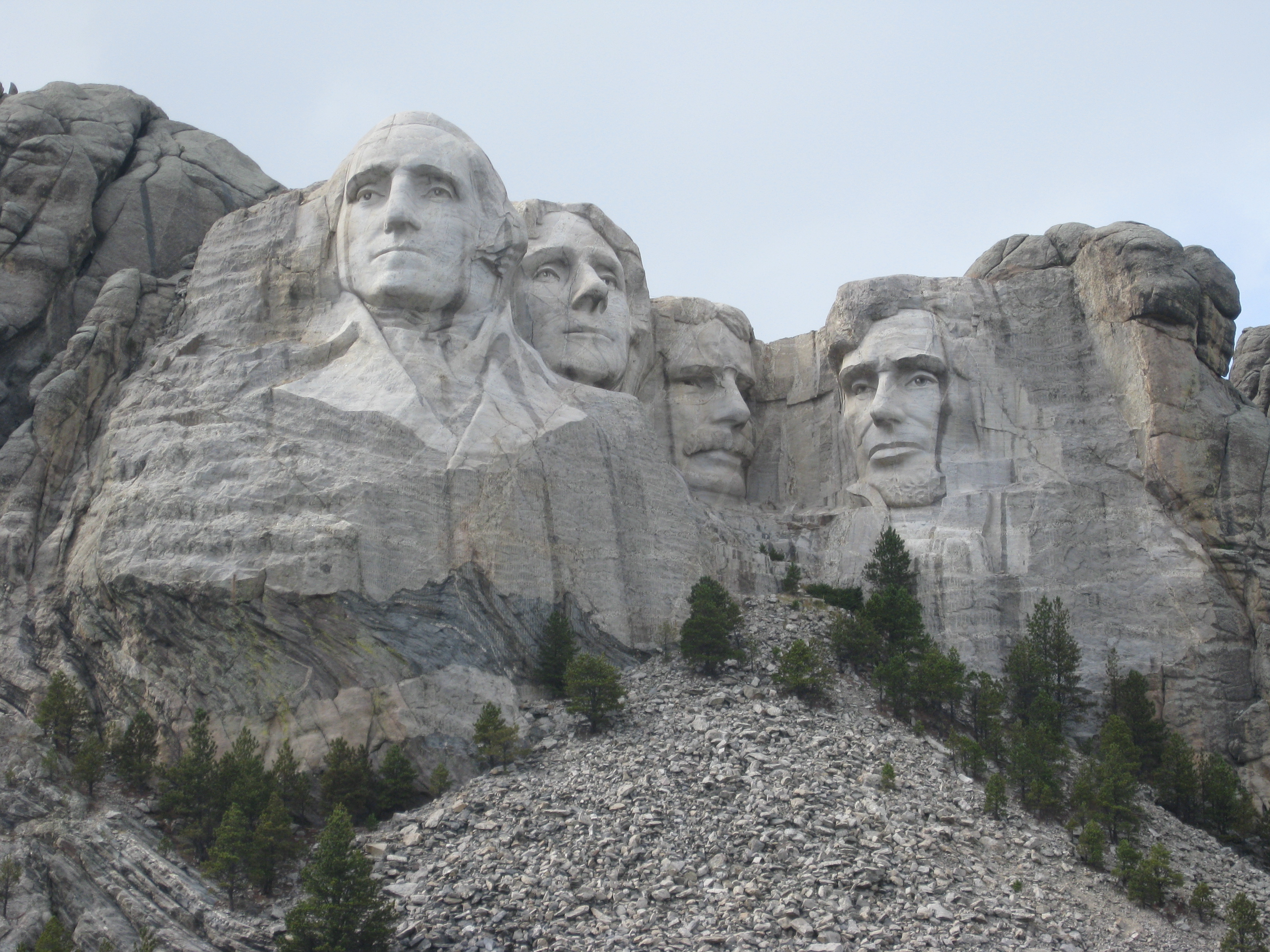
Mount Rushmore -- Photo by Pat Bean

Travels With Maggie

 I finally made it to Mount Rushmore. So much of my sight-seeing before I began doing it full time had to be squeezed in during trips from Utah, where I lived and worked,” and places where my kids lived, mostly Texas and Southern California. There was never time to detour through South Dakota.

Although I’m one who doesn’t believe Mother Nature can be improved upon, I still found this mountainous granite sculpture of four U.S. Presidents – Washington, Jefferson, Lincoln and Roosevelt – impressive. To understand the size of these heads, with their 20-foot noses, one has to visualize them atop men 465-feet tall.

The retooling of the mountain, originally undertaken to attract tourists to South Dakota, took 14 years, and included the removal of 800 million pounds of stone in the process.

The man behind the sculpture was Gutzon Borglum, a student of renown French artist sculptor Auguste Rodin. Borglum was 60 years old when he began the monumental task, and sadly died just months before it was completed in 1941. His son, Lincoln Borglum, finished the politically controversial task his father had begun in 1927.

Some historians allege the monument’s underlying theme is one of racial superiority, a suggestion encouraged because of Borglum’s membership in the Ku Klun Klan. I admit that learning this bit of information dimmed my admiration for Borglum. But South Dakota thrives on the tourist attention it gets from the presidential memorial. And it’s certainly not an American wonder I would have wanted to miss.

Read Full Post »

The sign stopped me, the park enchanted me -- Photo by Pat Bean

 “Peace is not the product of a victory or a command. It has no finishing line, no final deadline, no fixed definition of achievement. Peace is a never-ending process. The work of many decisions.” — Oscar Hammerstein

Travels With Maggie

Located on the Arkansas side of the Talimena Scenic Drive before it crosses into Oklahoma, Queen Wilhemina State Park was created in the late 1800s and named after Queen Wilhelmina in hopes the young ruler of the Netherlands would visit.

While the park was only 15 miles from where I had spent the previous night, it looked too inviting to pass by – or stay for just one night. That’s the beauty of having no deadlines to meet. The rain storm that blanked the area for the next few days, and which I wouldn’t have wanted to drive through, confirmed my instincts

Turtles, along with birds, deer and squirrels called Arkansas' Queen Wilhemina park home. -- Photo by Pat Bean

During one break in the storm, I walked up to the Queen Wilhelmina Lodge, where I devoured one of the tastiest cheeseburgers of my life while watching dark storm clouds build up for another burst. There’s something in me that loves a storm, and the sound of rain drumming on my RV roof is as enjoyable as a well-played concert. I was glad, however, that I made it back to the coziness of my RV, with my last bite of cheeseburger wrapped in a napkin for Maggie, before the downpour began anew.

Flowers grew all over the park -- Photo by Pat Bean

Finally the storm ended and I spent the next two days hiking the park’s trails, and watching birds and other wildlife. It was with reluctance that I finally left this special place. It’s too bad Queen Wilhelmina never visited. I’m sure she would have enjoyed her stay.

Read Full Post »

“Life is like a train ride. You get on. You get off. You get on and ride some more.” — Author unknown  

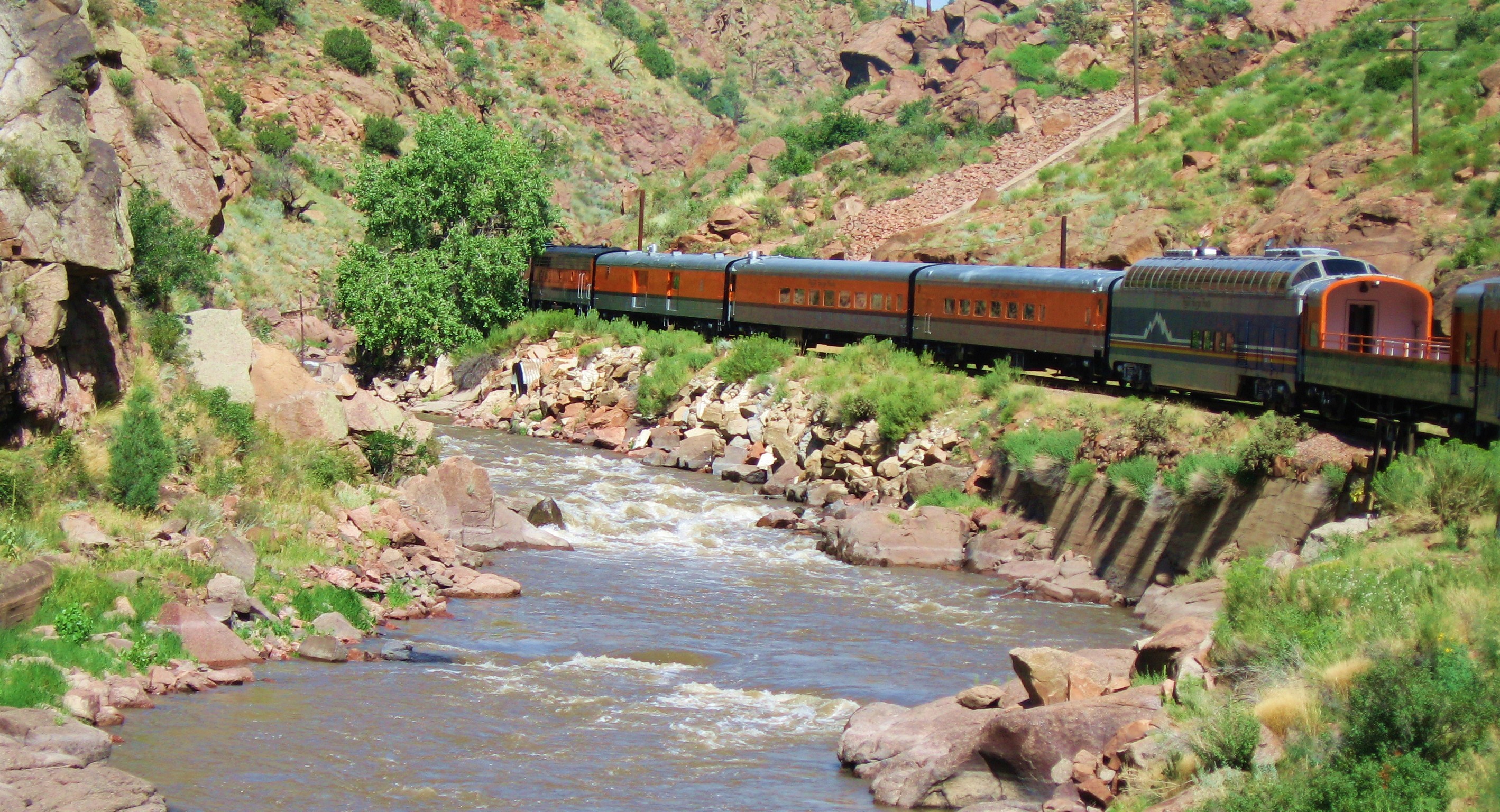
Going round the bend -- Photo taken by Pat Bean from one of the train cars.


Travels With Maggie

When I was mapping out my route back to Texas from Utah – a trip I make yearly, always trying to see new sights along the way – I came across information on a scenic train ride through Royal Gorge.

I immediately signed up for the 24-mile round-trip. I’ve been intrigued with train trips ever since reading Agatha Cristie’s “Murder on the Orient Express,” and I’m a big fan of Paul Theroux’s books on his train journeys through Asia, China, South America and elsewhere.  

I wasn’t disappointed wtth my click-clacking scenic ride through the gorge – well except that I wasn’t ready for my journey to end.  The train ride, begins in Canon, Colorado, and on the summer day I took the tour, we passed several groups of white-water rafters coming

 down the Arkansas River. But I noted, as I refreshed my memory for this blog by going to the railroad’s web site (http://www.royalgorgeroute.com/), that it’s now offering its own version of “The Polar Express” for this season of the year.

Too bad I’m spending my Christmas holidays this year in Texas and Arkansas. I’d love to hug Santa and feel like a kid again. Wouldn’t you?

Read Full Post »

 “This seems to be the law of progress in everything we do; it moves along a spiral rather than a perpendicular; we seem to be actually going out of the way, and yet it turns out that we were really moving upwards all the time.” Frances E. Willard.

The Spiral Jetty -- Photo by Michael David Murphy

Travels With Maggie

Sometimes you just have to do something even if it makes no sense. This was true the day my good friend, Kim, and I drove out to Rozzel Point on the northern end of Utah’s Great Salt Lake to see the Spiral Jetty.

The earthworks sculpture was created from black basalt rock by artist Robert Smithson in 1970 at a time when the lake was near its historic low. Within 10 years, however, the rising waters of the lake hid it from view.

Kim and I viewed the jetty in 2003, when the lake level was once again on the low end of its spectrum. By this time, the dark basalt rock was encrusted with salt, and its now white and jagged outer coat outlined in pink. The color of the lake water is a result of bacteria and algae that thrive in the heavy salt content now present in this section of the lake because of decreased water circulation due to a railroad causeway across the lake.

Looking out at the jetty, my friend Kim and I shared the same thought. There was no way we could come this far without taking a walk to the center of the spiral. It was as if there would be a magic reward for doing so. But afterward, all we had to show for our difficult efforts were salt encrusted legs and wet tennis shoes full of grainy crystals that made walking difficult.

Well, there was our great sense of satisfaction.

If you visit the jetty, which is once again now visible, don’t pass by the nearby Golden Spike National Historic Site without stopping. It was here where the Union and Pacific railroads joined their rails in 1869. A visit here, where the first transcontinental rail line became a reality, makes more sense than walking the spiral jetty, or as some might say, creating such a nonsensical structure in the middle of nowhere in the first place.

Sometimes, however, a person has to do what a person has to do.

Read Full Post »

 “I consider myself to have been the bridge between the shotgun and the binoculars in bird watching. Before I came along, the primary way to observe birds was to shoot them and stuff them.” — Roger Tory Peterson

Travels With Maggie

Nothing could be finer than an early morning outing with fellow birders of the Wasatch Chapter of Audubon. Ever since I seriously began birding, which was back in 1999, the chapter has had a Wednesday morning bird walk. When I first hooked up with the group, I had to play hooky from work to join them.

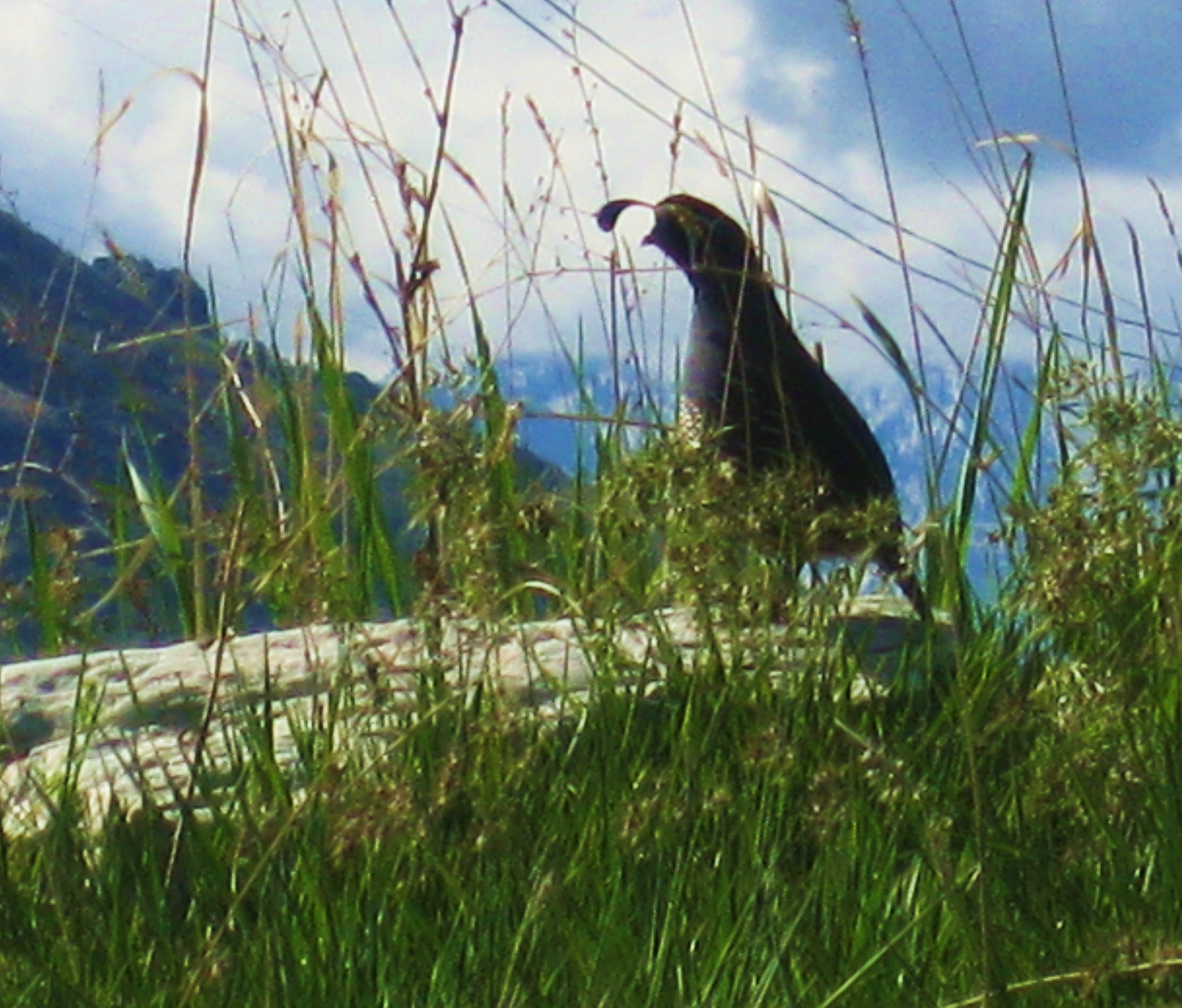
A California quail hides among the weeds. I spotted him on an outing to Willard Bay in Northern Utah while birding this past May with old friends. -- Photo by Pat Bean

 Shortly thereafter I was inspired to write a weekly bird column. So instead of playing hooky while I was roaming all over Utah’s Wasatch Front on these Wednesdays, I could honestly report that I was doing research.

 Since I knew next to nothing about birds, the research included a lot of that, plus the generous help of the chapter’s birding experts, Jack Rensel and Keith Evans. Both these guys had been at this sport since they were young boys – and both had tales to tell of being suspected of unsavory deeds because of wandering around alone with binoculars in hands. They grew up at a time when birding wasn’t a well known hobby, and certainly not one boys took up.

 Thankfully, Roger Tory Peterson, who put together the first field guide that made birding possible for us non-ornithologists, watched birds as a boy even before Jack and Keith’s time.

 My oldest son makes fun of my birdwatching, considering it a little old lady’s sport. Well, it can be that. But it can also involve long hikes in the dark so as to arrive in time to watch male sage grouse play drums with their chest sacs to attract the ladies, or a hike over treacherous lava to watch Flamingos at a small lake in the Galapagos.

 Birding gives my travels that extra bit of oomph. For example, the boat ride to Matagorda Island off the coast of Texas was pleasant enough in itself, but getting to see whooping cranes as well was like the salt around the glass of a good margarita. And the climb up a ridge to see a black-capped vireo at Lost Maples State Park gave me a good dose of needed exercise.

 Looking for birds in the landscape has also enriched my travels in yet other ways. One who is looking for a tiny bird in the bush is not likely to miss the moose in the stream. And when I’m visiting Northern Utah, my passion for birds gives me a legitimate reason to once again hook up with my old Wednesday morning birding buddies.

 And, as I said, nothing could be finer than time spent with them.

Read Full Post »

You are the person who has to decide. Whether you’ll do it or toss it aside; you are the person who makes up your mind. Whether you’ll lead or will linger behind. Whether you’ll try for the goal that’s afar. Or just be contented to stay where you are.” — Edgar Guest

Gypsy Lee at the bottom of the gorge at Capital Reef State Park -- Photo by D.C. Bean

 Travels With Maggie

 Whenever I see a road with a sign marker that says no trailers or vehicles longer than 24-feet allowed, I’m thankful I travel in Gypsy Lee. She’s only 22-feet long, 8 feet wide and 11 feet high. She can go practically anywhere – and practically anywhere is always where I want to go.

 While I try to take really good care of her, she wasn’t bought for show. She’s taken me to some amazing places. Her mobility serves me well, especially since my travel budget couldn’t afford a bigger rig, plus the tow vehicle they require if sight-seeing is on the menu.

 I looked at motorhomes for five years before buying my VW Vista Winnebago just two weeks before I retired from my 40-hour plus a week job. While the big Class A’s wooed me, I eventually, and correctly, decided a smaller Class C suited my needs best. I only looked at a couple of Class B’s, glorified vans, to realize they weren’t for me.

I also decided travel trailers – which actually make a lot of financial and practical sense – were not for me. I didn’t want to go down the road pulling something behind me, and hooking and unhooking them wasn’t something I wanted to do single handed, not to mention backing them up into a small campground site.

Gypsy Lee hooked up at Lake Walcott State Park in Idaho, where she sat for six weeks during my stint as a volunteer campground host. -- Photo by Pat Bean

My advice to potential RV buyers is to look at a lot of RVs and consider your own very personal needs before buying. For example while I know couples who travel in rigs as small as mine, I can’t imagine sharing it full-time with anyone but Maggie. S0 take your time and choose wisely to meet your own expectations and not those of others.

Then,  I hope you will enjoy the road as much as I do.

Read Full Post »

« Newer Posts - Older Posts »