Feeds:
Posts
Comments

Archive for the ‘Nature’ Category

 “Winter is an etching, spring a watercolor, summer an oil painting and autumn a mosaic of them all.” – Stanley Horowitz

Spring at Lake Walcott, when it arrived in June, brought trees laden with pink blossoms. -- Photo by Pat Bean

Travels With Maggie

Most of Lake Walcott's many trees were still leafless when Maggie and I arrived at the park in mid-May. -- Photo by Pat Bean

Fall is coming to Lake Walcott. It’s early. This Southern Idaho park was still sleepy with the last breaths of winter when I arrived here mid-May. Most of the trees were still leafless and running my heater, at least at night, was a given.

The days, however, slowly begin to warm and before soon foliage blocked my view of the lake, while dandelions dotted the park’s manicured lawns with yellow and pink blossoms colored a tree just outside my RV, Gypsy Lee.

Spring lingered for a long time here. It wasn’t until July that I had to first use my air conditioner, and even then it always went off when the sun went down. August brought with the first days when temperatures reached the 90s, but still most days the mercury’s high only hovered in the mid-80s.

Rarely was there a day that wasn’t perfect for the long walks my dog, Maggie, and I took daily through the park.

` While so many parts of the country have been experiencing record-breaking heat, Lake Walcott has had an unusually mild summer. And now, just a little more than a week before I am leaving, it’s treating me to hints of fall. Within a 120-day period I’ve experiences all four seasons.

As I looked out on the Landscape surrounding Lake Walcott, at the frosty sagebrush now grown tall, and the rabbitbrush all aglow in autumn colors, I remembered to thank Mother Nature for her gifts. -- Photo by Pat Bean

I thought on this as I looked out on a landscape yesterday of frosty sagebrush, now grown tall in this high desert, interspersed with the fall display of golden-topped rabbitbrush.

I give thanks to Mother Nature for the beauty she gifted me. I also give thanks that I have eyes and a heart capable of appreciating her gifts. May it always be so.

Read Full Post »

Looking UP to the journey’s destination

The beginning of the trail UP to the top of Angel’s Landing in Zion National Park. — Photo by Pat Bean

Up high looking down

View from the top of Angel’s Landing in Zion National Park. — Photo by Pat Bean

These photos were taken in 2007. 

“We have not wings we cannot soar; but we have feet to scale and climb, by slow degrees, by more and more, the cloudy summits of our time.” Henry Wadsworth Longfellow  


Read Full Post »

 “Deep in the human unconscious is a pervasive need for a logical universe that makes sense. . But the real universe is always one step beyond logic.” Frank Herbert.

Travels With Maggie

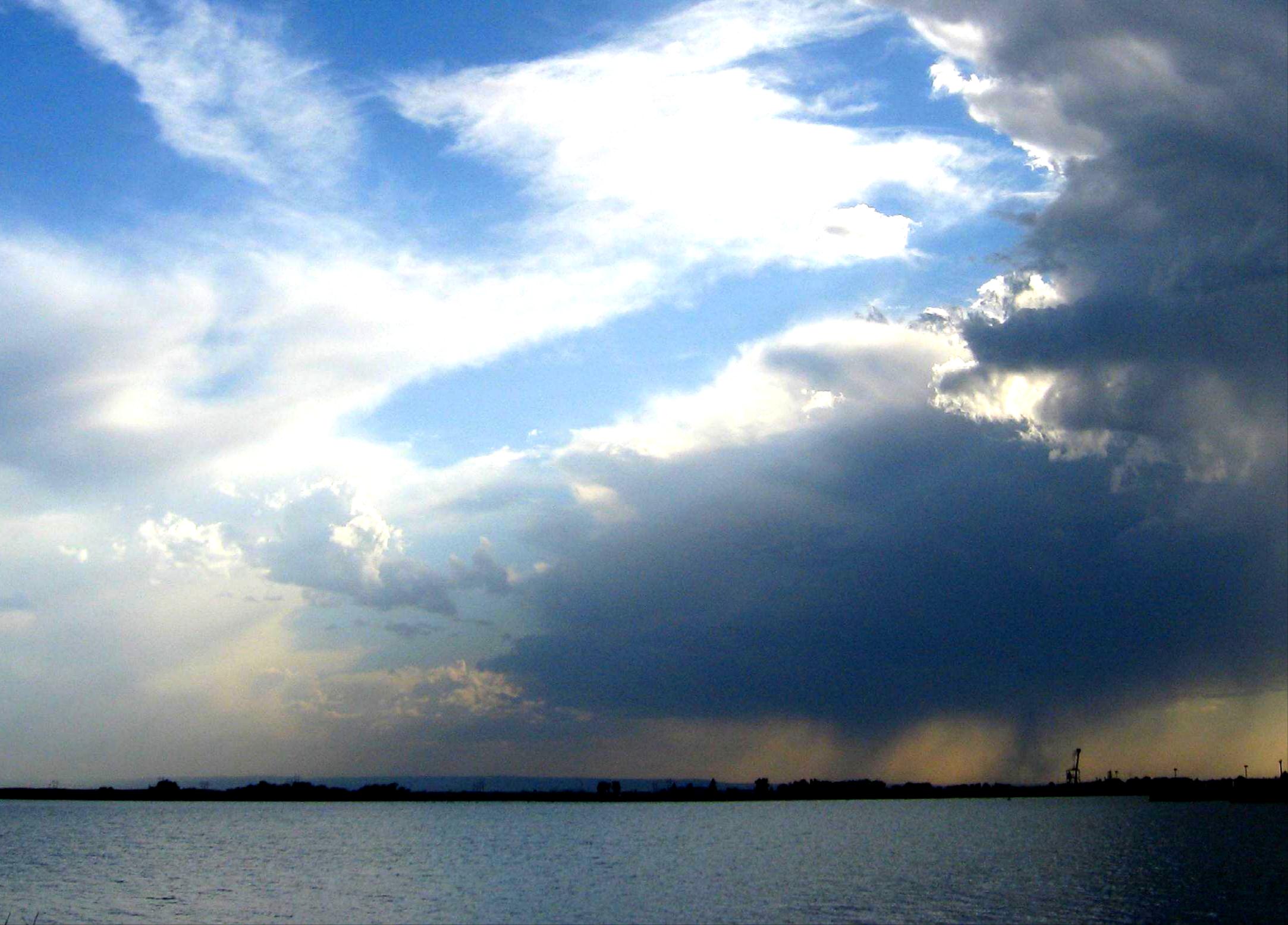
Sun and rain in the same frame. Lake Walcott State Park, August, 2011 -- Photo by Pat Bean

Going for our morning and afternoon walks here at Lake Walcott is a pleasurable experience for both Maggie and me. But for different reasons, of course.

Maggie uses her nose to follow the track of the raccoon that visited our camp site in the early hours of the morning. She slowly checks out the tree on which the male springer spaniel in the camp across the way lifted his leg. Then she spends 10 minutes circling a small area trying to decide the exact spot to do her own business.

Her entire small body wags with her tail in joy when she spies a human who looks like they might greet her. You can actually see the dejection in her body if that person passes by without snooping down to pet her.

I’ve never quite figured out why this is so important to her, because most always after about 15 seconds of a stranger’s adulation she’s pulling on the leash for me to continue our walk.

But then she probably doesn’t understand why I want to stop and watch every bird I see, photograph every butterfly buzzing around a flower or spend time each day simply staring out over the lake to gauge its mood.

I was doing just that a couple of days ago when I realized nature was presenting me with a triple matinée.

To the south, on the far side of the lake, a dark storm cloud was dumping rain on the landscape. To the north, the summer sky was bright blue with sunlight shimmering through white puffy clouds. Beneath my feet, meanwhile, the rocky shoreline was framed by a bush telling me fall had arrived.

But looking down instead of across the water, I found fall coming into bloom. -- Photo by Pat Bean

From a single spot, I was being presented with three stories, each in conflict with the other. Since I couldn’t deny reality, I had to believe them all.

Thus it is with life and people. There are many realities, and just because we believe one doesn’t mean the others aren’t true. Mother nature’s triple feature left me pondering over this for the rest of the afternoon.

It’s often what happens when I take myself into her realm.

Or listen to Bob Marley: “Life is one big road with lots of signs. So when you riding through the ruts, don’t complicate your mind. Flee from hate, mischief and jealousy. Don’t bury your thoughts, put your vision to reality. Wake Up and Live!”

Read Full Post »

 I think the environment should be put in the category of our national security. Defense of ourresources is just as important as defense abroad. Otherwise what is there to defend? ~Robert Redford

Travels With Maggie

It wouldn't be summer without sunflowers. -- Photo by Pat Bean

Summer has finally arrived here at Lake Walcott. Until this week, I think we’ve only had three days where the temperature got up to 90 degrees. This week, however, the mercury made it to 95.

Weather is always an easy conversation icebreaker with the strangers I meet at the park. It’s the one thing everyone living on this planet shares.

“Hot isn’t it,” a camper commented as I passed by during yesterday’s evening walk with Maggie.

“Yes,” I replied. “But I’m not complaining. I’m escaping Texas’ awful heat.”

“You’re right. It’s a perfect day. We’re from Tennessee,” he responded back. Neither one of us needed to say more.

Not only have both states been suffering from 100-degree plus temperatures – over 110 degrees at times in my native Dallas – but the high humidity in both states has upped the heat index even more. Yes, it’s been perfectly wonderful, weather-wise, here in Southern Idaho.

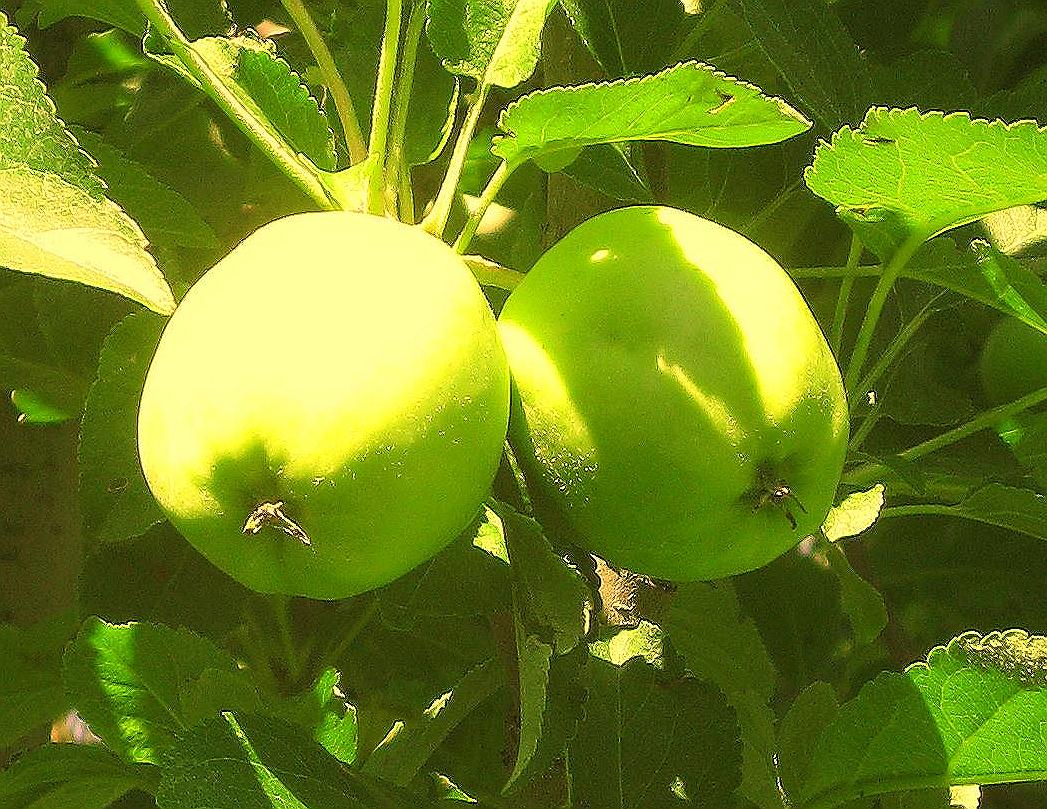
In the spring this tree graced us with fragrant pink blossoms. Now, in the summer, it's gifting us with apples. -- Photo by Pat Bean.

Most of my children and grandchildren live in Texas, and have not only had to endure the long hot summer, but they’ve done so mostly without rain.

“It’s almost as if we wish for a hurricane to give us some relief,” one of them said back in July.

I thought about that statement as I read this morning’s headlines, which are all about Irene. This vast hurricane is moving into eastern coastal states even as I write this blog. Headlines say there is the possibility of it affecting 65 million people if it surges into New York City late tomorrow as expected.

What with the heat, the recent earthquakes, both drought and flooding, and destructive tornadoes, I have to say that Mother Nature is getting her revenge on us for the way we’ve treated her planet. But then perhaps it’s just the planet’s normal cycle of weather tantrums that has nothing to do with its inhabitants.

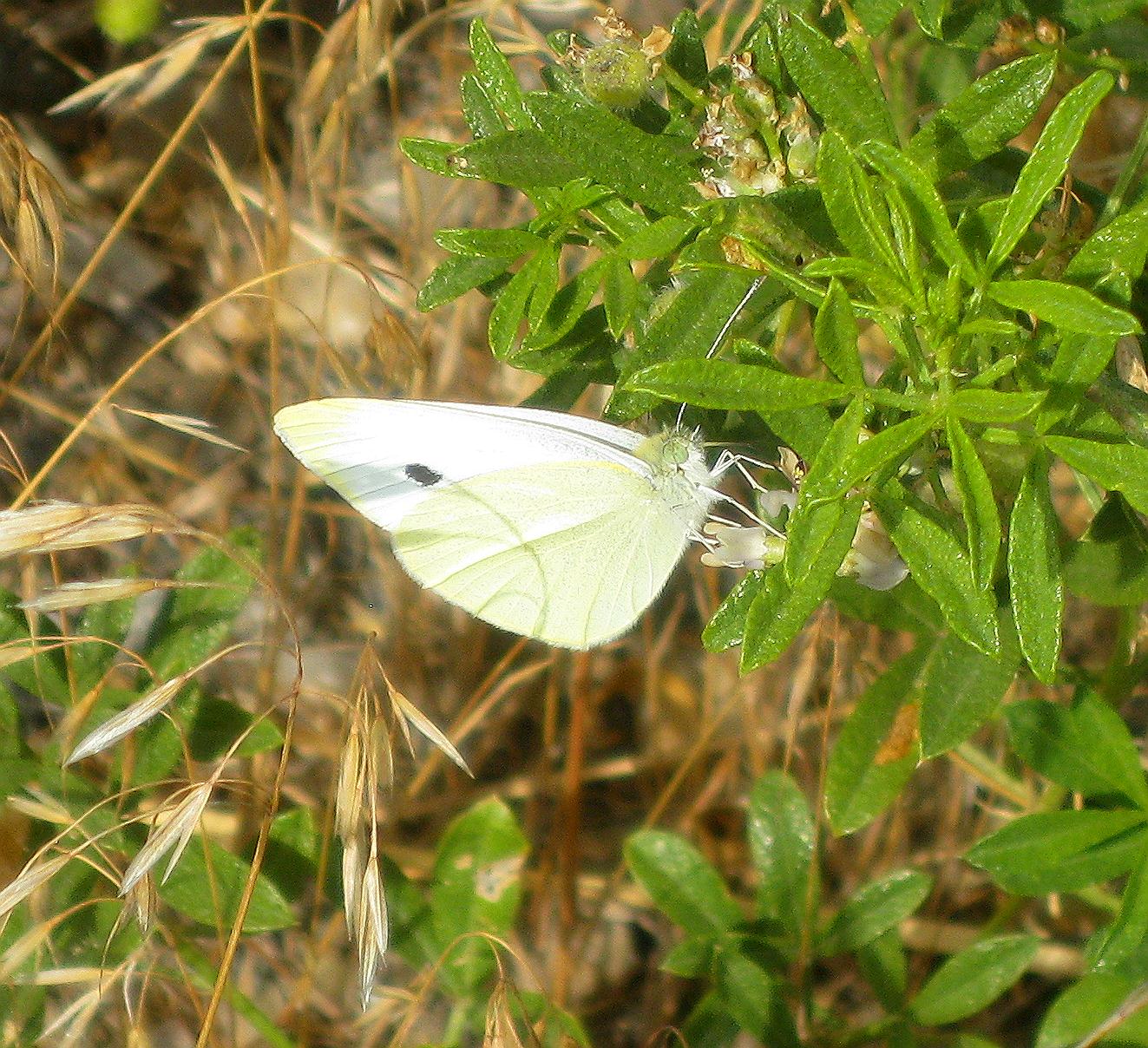
I hope this planet continues to support beauty, such as the cabbage white butterfly that I couldn't resist photographing. -- Photo by Pat Bean

The answer to this issue is quite a polarized one, with everyone having their own opinions.

I, personally, think it’s a combination of factors, and that we humans certainly have to take responsibility for making things worse. And I think it’s time we started thinking about what each of us can do to treat earth more kindly.

From walking more and driving less to planting trees and not dumping hazardous waste into our waterways, from reducing our personal footprint on the land to conserving water, there are many things we can do.

So let’s start doing them.

OK! End of soap-box oration. I know better than to get started on a subject so dear to my heart. I really wanted this blog to go in the direction of simply expressing thankfulness for my wonderful summer here at Lake Walcott, and to send well wishes to those in the path of Irene.

My computer keyboard, however, had other ideas. I’m sure the writers among my readers understand what I’m saying.

Read Full Post »

It may be hard for an egg to turn into a bird. It would be a jolly sight harder for it to learn to fly while remaining an egg. We are like eggs … We must be hatched or go bad.” C.S. Lewis

Travels With Maggie

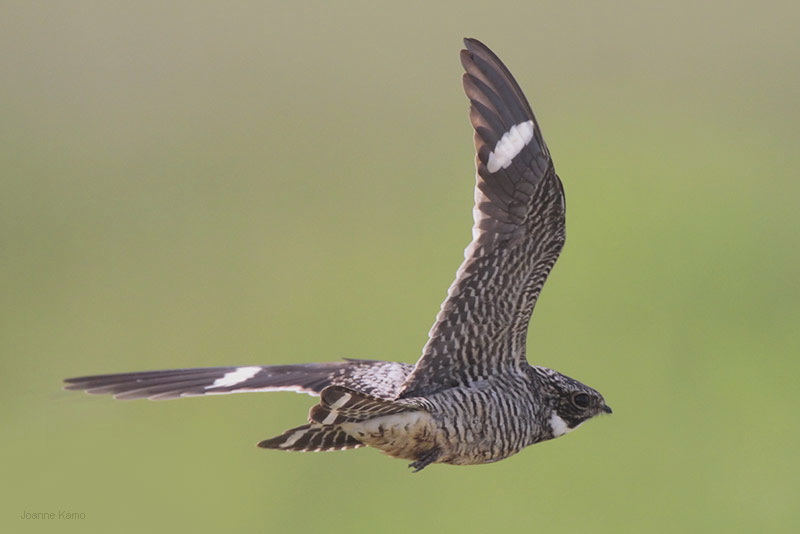
Common nighthawk -- Photo by Joanne Kamo, whose many other wonderful bird photographs can be seen at http://www.pbase.com/jitams

I try to time my last walk with Maggie so that it ends just as the sun goes down so as to catch the sunset. The days, in my opinion, are best when they begin with a sunrise and end with a sunset.

But late evening is also the time of day here at Lake Walcott State Park in Southern Idaho when the nighthawks come out to feed. For a kettle of common nighthawks that regularly takes place over the campground where my RV, Gypsy Lee, is parked.

They dine in the air on the many insects that also call this small park home. It’s always a treat to see them. Not only are they awesome to watch, my brain knows that every bug they eat is one that won’t bite me.

A fellow lone-female traveler, not a birder, who stopped by recently to visit me, asked what the birds flying overhead were as we shared our evening walk.

Common nighthawks, I told her. Then pointed out how to easily recognize them when in flight.


Common nighthawk -- Photo by Joanne Kamo

About the size of a robin, these birds have long, forked and pointed wings with a distinctive broad white bar about a third of the way up from the tip of the wing. The white bars are very prominent.

“Do they always fly that low,” she asked, as a couple of the birds zoomed in front of us at about head level.

“Nope. Usually they fly much higher,” I replied. “I guess the bugs are flying low tonight.”

The first time I saw these birds, whose large heads seem to lack a neck, they were flying even lower, however. I was fairly new to birding at the time, having only become addicted to the passion in 1999. The life sighting occurred while I was walking a trail at the Arizona-Sonora Desert Museum, where they were flying low over a small pond.

After watching them for a while, I realized they were skimming bugs off the water. Looking in my field guide to identify them, I discovered they were a member of the goatsucker family, whose name tickled my funny bone. According to folklore, these birds were thought to suck a goat’s milk at night.

The image this false legend flashed through my brain gave me an even more robust chuckle.

There are so many reasons why I’m passionate about birds, and such oddities as this, which I swear each species seems to enjoy, is just one.

Lake Walcott, meanwhile, has treated me to more common nighthawks in one night than all the others I’ve seen elsewhere. If you visit, I hope you take advantage of the nightly summer show.

Read Full Post »

 What makes a river so restful to people is that it doesn’t have any doubt – it is sure to get where it is going, and it doesn’t want to go anywhere else.” – Hal Boyle

Lake Walcott puts on light and music shows daily. I love to sit on a bench nearby and let my mind drift into calmness. -- Photo by Pat Bean

Travels With Maggie

Water soothes me. There’s something about the sound it makes as it laps against the shore that vanishes the rest of the world for a little bit.

Having lived for many years right on the Texas Gulf Coast, I’ve set for many an hour mesmerized by the way light played through the gulf’s waves as they relentless rolled forward onto the sand. These days my water fix comes in smaller packages.

Here at Lake Walcott, where I walk daily by the 11,000-acre reservoir, I never cease to be fascinated by the water’s mood.

This day the lake was restless. -- Photo by Pat Bean

On the May 15 day I arrived to begin my summer campground hosting duties, it was in the throes of a wind storm. The lake water was dashing against the shore, sending its spray onto Maggie and I when we got too close. .

I was just giving Maggie a quick walk after our windy drive, and didn’t have my camera with me. Back at the RV, I decided to rest a bit before going back out to record the fury. Bad decision. An hour later, the wind had ceased and the lake was once again calm. I’ve never seen it quite that angry again.

Most days, the lake transforms itself frequently between a gentle rustling to mirror calm. Other days, it can send fishermen in their small boats dashing for shore; and because the winds here can blow up suddenly, anyone leaving their boat unattended on the water over night risks losing it.

Gypsy Lee is parked about 150 yards away from the lake. Unless it is overly restless, I can’t hear the water’s drum beat against the shore when I’m inside my motor-home. I can, however, almost constantly hear the symphony performed by the Snake River, which feeds and flows out of the lake.

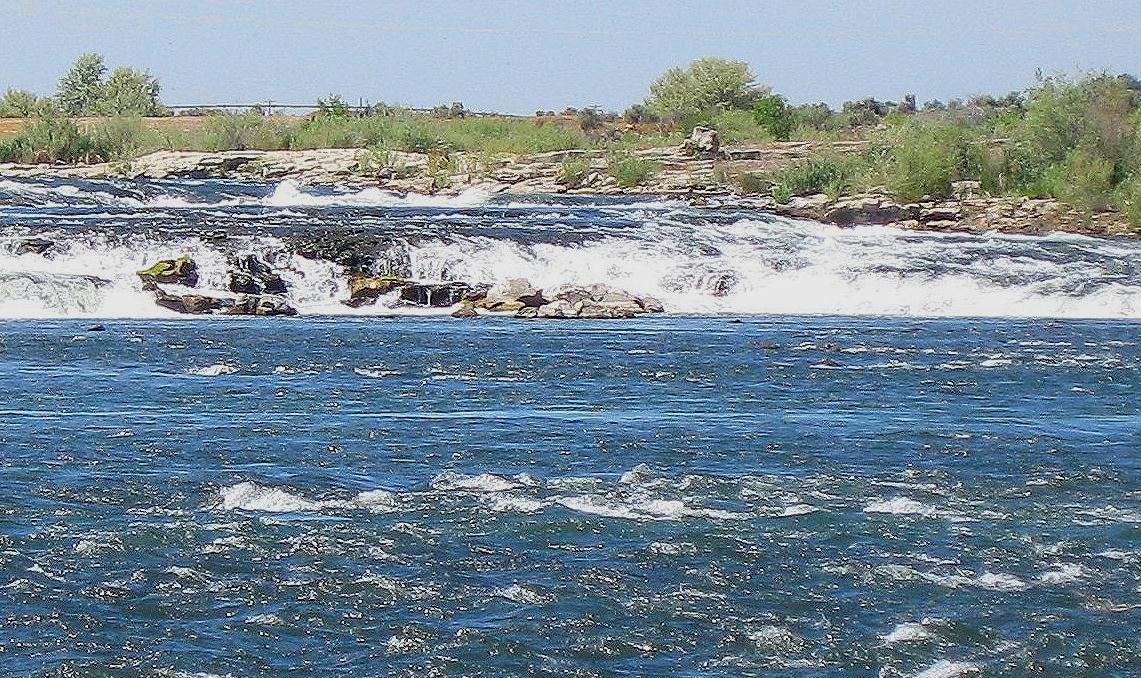
The Snake River below the Minedoka Dam that created Lake Walcott. -- Photo by Pat Bean

A siren signals the release of water from the dam, and I know on hearing it that the river’s rise turns up the volume of the music. When I first got here, because of rain and snow melt, that siren was going off every few hours.

A white water stretch in the Snake just below the dam particularly roars with intensity when the river rises. Depending, I think, on the direction of the wind, the river music can either sound like a revved-up dragster or simple be an unrecognized part of the background, like the silent running of a refrigerator.

The lake and river music drown out the chaos of the real world, which is probably why I find water soothes my soul.

What soothes yours?

Read Full Post »

 “Clouds come floating into my life, no longer to carry rain or usher storm, but to add color to my sunset sky.” Rabindranath Tagore


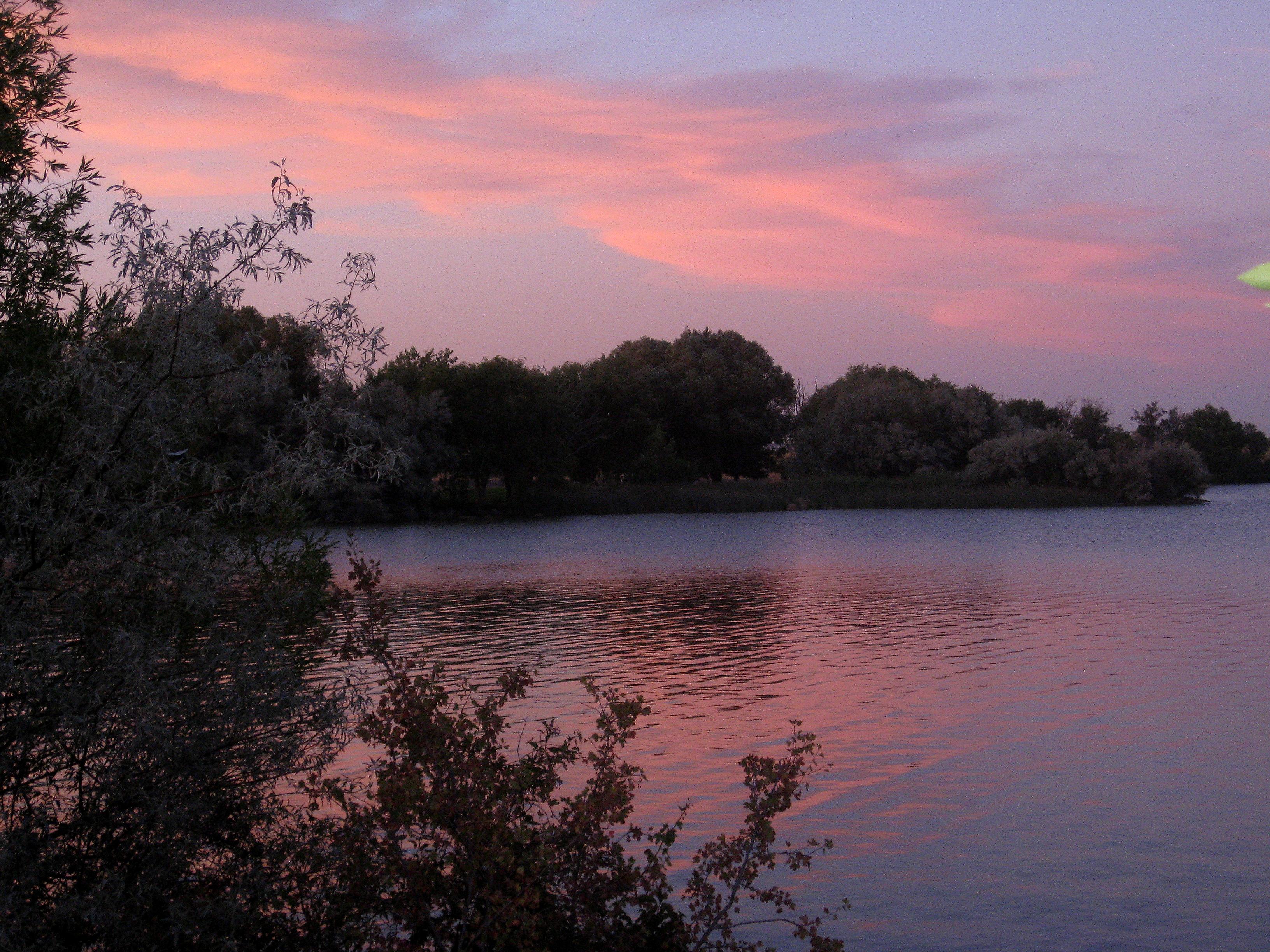
Looking eastward at the sunset over Lake Walcott, Aug. 17, 2011. -- Photo by Pat Bean

Travels With Maggie

There’s a scene in the first released episode of “Star Wars” in which Luke Skywalker is standing outside at the end of the day, staring at the sky.

You immediately know he’s not on Planet Earth because the sky is lit by two moons. That scene has long stayed with me. It had a haunting quality about it that imprinted on my catch-all brain.

The scene flashed in my mind again the first time I visited Lake Walcott in Southern Idaho a few years ago. As always, Maggie and I were taking our walk at the end of the day.

We were standing on a point overlooking the lake, her sniffing at a bush, and me staring up at a princess pink sunset with a half-moon framed between glowing clouds. It was an awesome, but not unfamiliar sight – until I realized I was looking east.

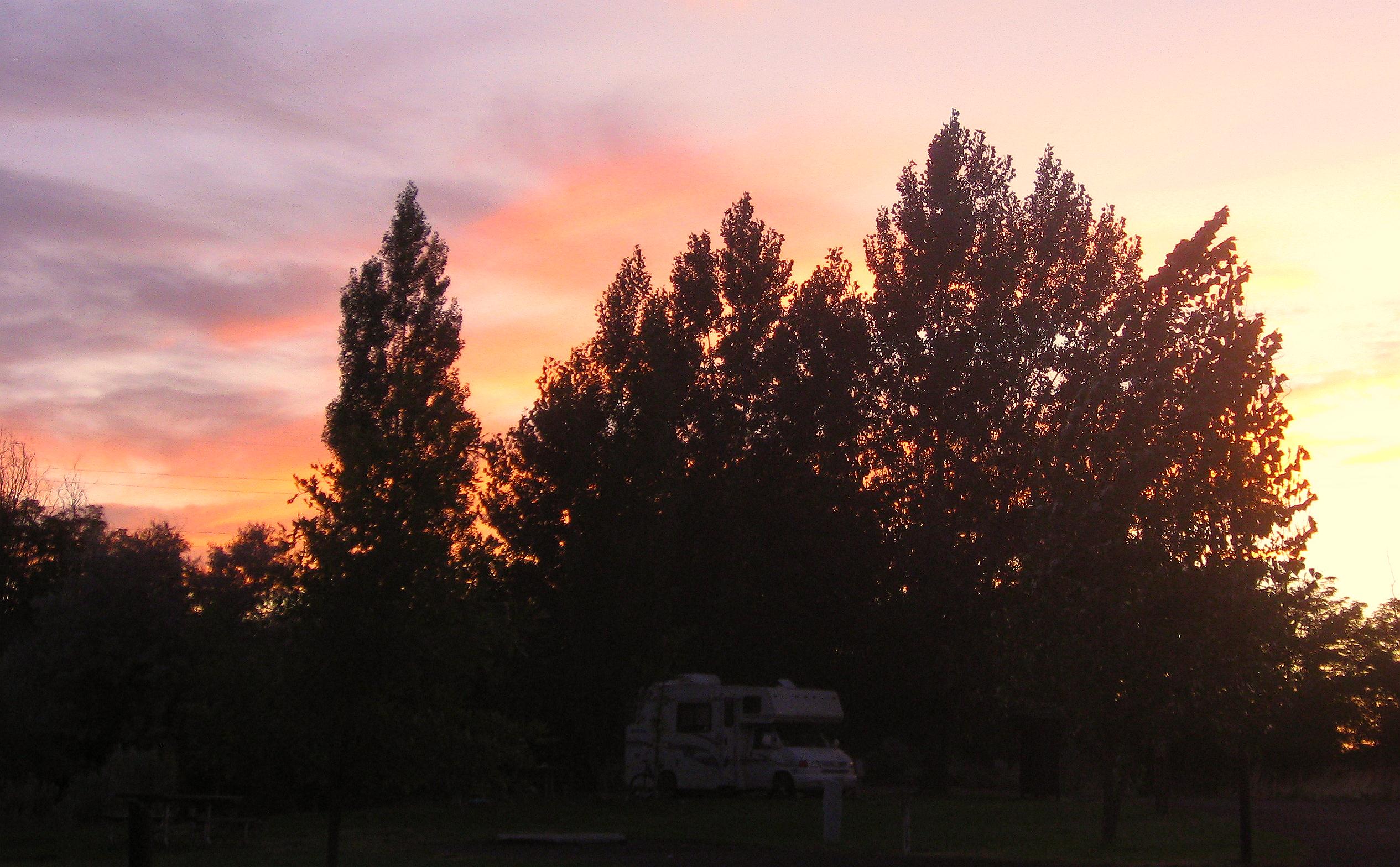
Quickly turning around, I saw a second sunset, a Halloween orange one peeking from behind cottonwood and Russian olive trees. This was the real sunset. The eastern one was a trick of the lake.


The same sunset view looking west, Aug. 17, 2011. If you look carefully you can see Gypsy Lee beneath the trees, -- Photo by Pat Bean

The calm water, acting like a mirror, had captured the sunset and then reflected the hues, now muted, up into the clouds.

Depending on the weather, the clouds and what’s hanging around in the air, the sunsets here at Lake Walcott range from a”Brahms Lullaby” to the clash of cymbals in Beethoven’s “1812 Overture.” While the eastern display is barely visible on quieter nights, it can outshine its western source on the louder nights.

I’ve seen both versions many times now since this is my second year as a summer volunteer campground host here at Lake Walcott. But they can still can take my breath away.

And they did that just two nights ago. I was standing at my favorite spot overlooking the lake when the show began. It lasted for a good 10 minutes, going from pastel to vibrant hues than fading into darkness.

I wish you had been here to see it with me.

Read Full Post »

 “Most of us don’t need a psychiatric therapist as much as a friend to be silly with.” – Robert Brault.


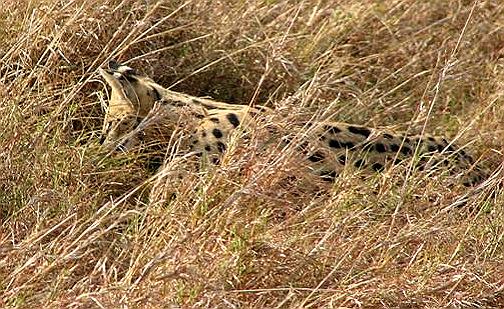
Sharp-eyed Kim spotted this serval in the bush. It was a rare daytime find. -- Photo by Kim Perrin

African Safari: The Rest of the Day

Joseph picked us up after the hot air balloon ride for yet another exciting Safari day. Right off Kim spotted a cheetah – No, we quickly saw it was a serval, a rare daytime find, said Joseph, who quickly followed it off the road to give us a better look before it slunk off.

Then we watched a river full of crocodiles dining on a dead hippo, the same dead one we had seen them guarding the day before. Joseph had told us that hippos’ thick hides were too tough for the crocs to eat, and that they were waiting for it to rot a bit so they could tear it apart.

I thought you might enjoy this picture of a live hippo enjoying its spa day better than the one of the dead hippo being chomped up by crocodiles. -- Photo by Pat Bean

And that’s exactly what they were doing. Several toothy snouts had hold of it and were twisting their bodies in circles to tear off chunks. Really gruesome to watch, but Kim and I were fascinated.

Our big event for the day was to watch wildebeest on migration cross the Mara River. We watched for hours but it never happened. All it would take is for one wildebeest to start across and the all the rest would follow in a mad dash. Such a crossing is prime dinner time for the Nile crocodiles, but the mass swim allows most of the wildebeest to survive the day.

The animals make the crossing twice a year.

Today's wildebeest preferred dry land to water -- Photo by Kim Perrin

But this day, despite many a wildebeest approach right up to the river, they all skittishly turned back.

Finally Joseph gave up, as disappointed as Bilal was at not finding rhinos for us to watch, and went in search of lions and cheetahs for us to watch. He always found them, and watching their feline ways was never disappointing.

It was a wise choice because we heard over dinner that night the wildebeest never did get up the nerve this day to cross the river. The cat-watching, meanwhile had been great, Among other things, we got a glimpse of a hyena that was stalking a cheetah that was stalking a tommy.

The gazelle ran, the cheetah slinked away, and the hyena decided there might be easier prey around and trotted off as well.

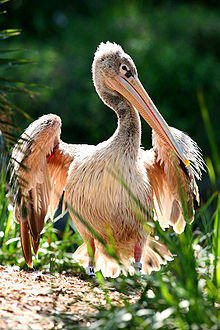
Pink-backed pelican -- Wikipedia poto

Toward the evening, Joseph lingered in a swampy area of the park, where birds were plentiful.

I spotted what I thought was a pink-backed pelican, which would be a lifer for me. Joseph, however, thought it might be a white pelican, which would have been a lifer for him.

So off we went for a closer view. While I felt sorry for Joseph, I’m glad my identification proved right. It would be one of only two lifers I would get this day, the other being a black-chested snake eagle. I was still happy, however. We saw lots of birds I had seen earlier and it was becoming easier for me to recognize the common ones.

Back in camp, Kim and I bemoaned that our African Safari was coming to an end. We only had one more wildlife drive with Joseph in the morning and then we would be flying back to Nairobi, and from there home to the United States. .

We made it a two Jack and Coke night, celebrating both the adventure and the fact that our friendship had survived over two weeks of 24-hour togetherness. Given how quirky and different from each otherwe are, that was as important to celebrate as was our fantastic safari.

Read Full Post »


“Toughness is in the soul and spirit, not in muscles and an immature mind.” Alex Karras


The young male lion struts his stuff -- Photo by Kim Perrin

African Safari: Female Power

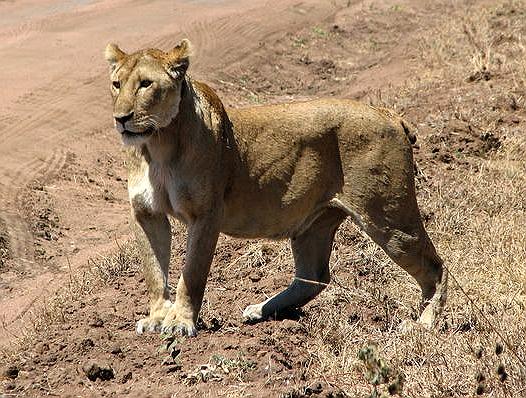
The Lion fight occurred when we were still in Tanzania with Bilal. We were watching three female lions with several cubs when we noticed a young male, his mane still not developed, watching them.

Slowly he began making his way toward the females and their cubs. His actions didn’t go unnoticed. One of the lionesses took all the cubs off away out of harm’s danger while the other two stood guard.. Male lions are quite protective of their own young, but will kill the young of any other males so their moms will be ready to breed again so he can sire his own cubs.

One mama takes the cubs away -- Photo by Kim Perrin

It was likely this is what the young male had in mind this day – and since the cubs’ father was no where in sight he evidently saw this as an ideal opportunity.

Bilal, as we watched the action, said that the lack of the cubs’ father when another male was in his territory was probably because something had happened to him.

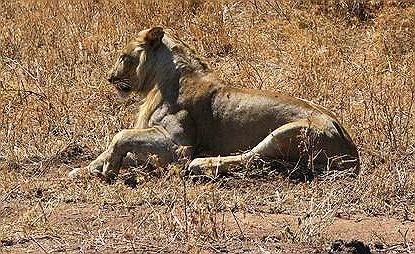
Suddenly, as the young male shortened the distance between him and the two lionesses, the females attacked. In a matter of seconds, the young male was limping away, and soon he lay down to lick his wounds.

Kim and I cheered, but Bilal said the male would eventually get his way. We chose to believe that the females

The male licks his wounds. -- Photo by Pat Bean

would hold out at least long enough to raise their cubs.

“They gave him a pretty good licking,” we said.

Of course Bilal might have been right, but we had faith in mom power. We thought the lionesses were tougher than Bilal gave them credit for – just like Kim and I.

As Mahatma Gandhi said” “Strength does not come from physical capacity. It comes from an indomitable will.”

Read Full Post »

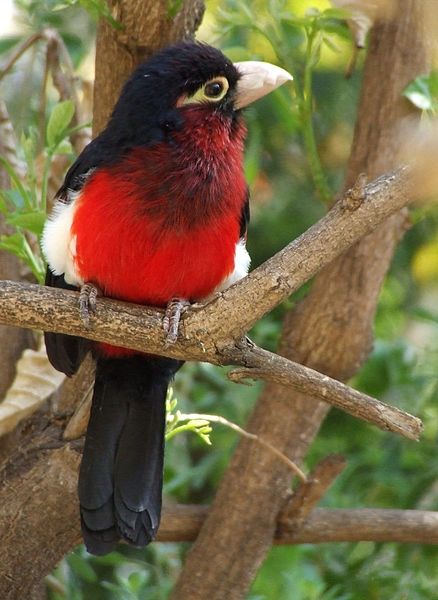
Double-toothed barbet, yet another of Africa's flamboyant birds. -- Wikipedia photo

“Don’t be over self-confident with your first impressions of people.” – Chinese proverb

African Safari: Bird-Watching Guard

Before Dave Richards had left us after lunch, he introduced us to David, the tall, muscular guard who had been the one to walk Kim and I from the lodge compound down to the river for our game drives.

“He’s a birder,” Dave said, causing me to finally notice the pair of binoculars around his neck. “If you see that barbet again,” he told Dave, “tell Pat here.”

David, who had been quiet and stoic during our walks, smiled and promised to come get me if he saw it. Later, as Kim and I were watching a large elephant on the outer edge of our marsh, he did just that.

It was a double-toothed barbet that had built a nest near one of the tents. It was shy, but finally I got half a decent look at it. Enough to see why it was so named. Its bill has two jagged points.

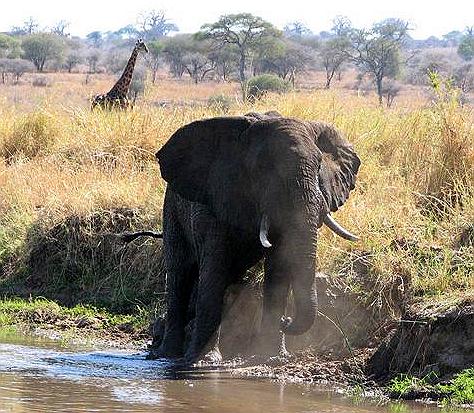
Elephant watching was always fun. Note the giraffe in the background behind this one. -- Photo by Kim Perrin

David was more talkative with us after that, stopping along the way to point out a bird for me, and discussing other wildlife habits with Kim She particularly wanted to know how often hippos visited our tent area.

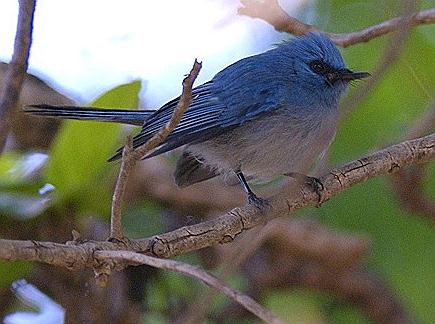
I didn’t hear the answer because I had come across a little blue and white bird perched beside the trail, and I was madly flipping through Dave’s book to identify it. It kind of looked like a mountain blue bird. I finally saw that it was an African blue flycatcher.

Meanwhile, as some days we made three trips back and forth across the river (before breakfast, after breakfast, and after lunch game drives with Joseph), we slowly got to know David a little better.

African blue flycatcher

For having such a tough-looking exterior, I found him to be a gentle soul. It gave me pause to wonder why my first impression of him had misidentified his nature so much that I had totally missed seeing the binoculars hanging around his neck.

It seems I needed to try harder not to let outer appearances play mind games with reality. Africa was teaching me a lot.

Read Full Post »

« Newer Posts - Older Posts »