Feeds:
Posts
Comments

Archive for the ‘Lakes’ Category

 “Nothing great in the world has been accomplished without passion.” – Georg Wilhelm Hegel

Gray partridge -- the pair disappeared too quickly for me to get a photo of them, so thanks to Wikipedia for this one.

Travels With Maggie

I was on the phone with my daughter in Arkansas when I saw two quail-like birds trot across the manicured lawn beside my RV.

I quickly cut the call short, and rushed over to the window for a better look. I knew if I went outside my RV they would quickly disappear. As it was they pretty much did that anyway, although not before I had a quick study.

They were short and plump, gray and brown, and sported a rusty-red face and throat design. I suspected they belonged to the quail or grouse family of birds that spend more time on the ground than in the air.

I was right, which is a clue to how far I’m come since becoming a birder 12 years ago when I couldn’t tell a gull from a tern or a swallow from an oriole.

Back then, I spent many hours thumbing through an entire bird book just to identify one species, or to tell a ruddy duck from a mallard. Today I quickly narrowed the possibilities, and with the help of my National Geographic “Field Guide to the Birds of North American, soon decided the birds were gray partridges.

Maggie and I daily stroll Lake Walcott's many paths, always finding new wonders of Mother Nature. -- Photo by Pat Bean

The guide’s range map, which let me know this partridge could be found in Southern Idaho, and the bird’s facial color,  were the deciding factors. Later, when I mentioned the sighting to a park worker, he told me gray partridges were commonly found here at Lake Walcott State Park.

I was an ecstatic birder. The gray partridge was a life bird for me, my 697th species.

Birding, as a passion, came at exactly the right time of my life. My journalism career was nearing an end, and I was planning for a traveling retirement. Chasing birds not only gave me a new interest in life, it fit in perfectly with my upcoming life as a vagabond.

While you can see robins and red-tailed hawks everywhere, in North America you can only see a Florida scrub jay in one small parcel of land in Florida, or a white-tailed hawk only in the Rio Grande Valley of Texas, or an elegant trogan in Southeast Arizona.

I still have a long way to go to see all of North America’s nearly 1,000 bird species, and even farther to go to see the world’s nearly 10,000 species. But that’s OK, because there will always be birds to chase.

Learning about birds, and boy is there a lot of fascinating stuff to learn, has also been great exercise for my brain. But the most important word here is passion.

While of course there’s the male-female sex thing, it can also mean anything in life that moves us. Adding birds to my passion, along with the passions I have for family, writing, art, reading and travel has made my life richer.

If not a gray partridge, what’s your passion?
Read Full Post »

“Spring’s last-born darling, clear-eyed sweet, Pauses a moment with white twinkling feet, And golden locks in breezy play, Half teasing and half tender, to repeat her song of May.” –Susan Coolidge

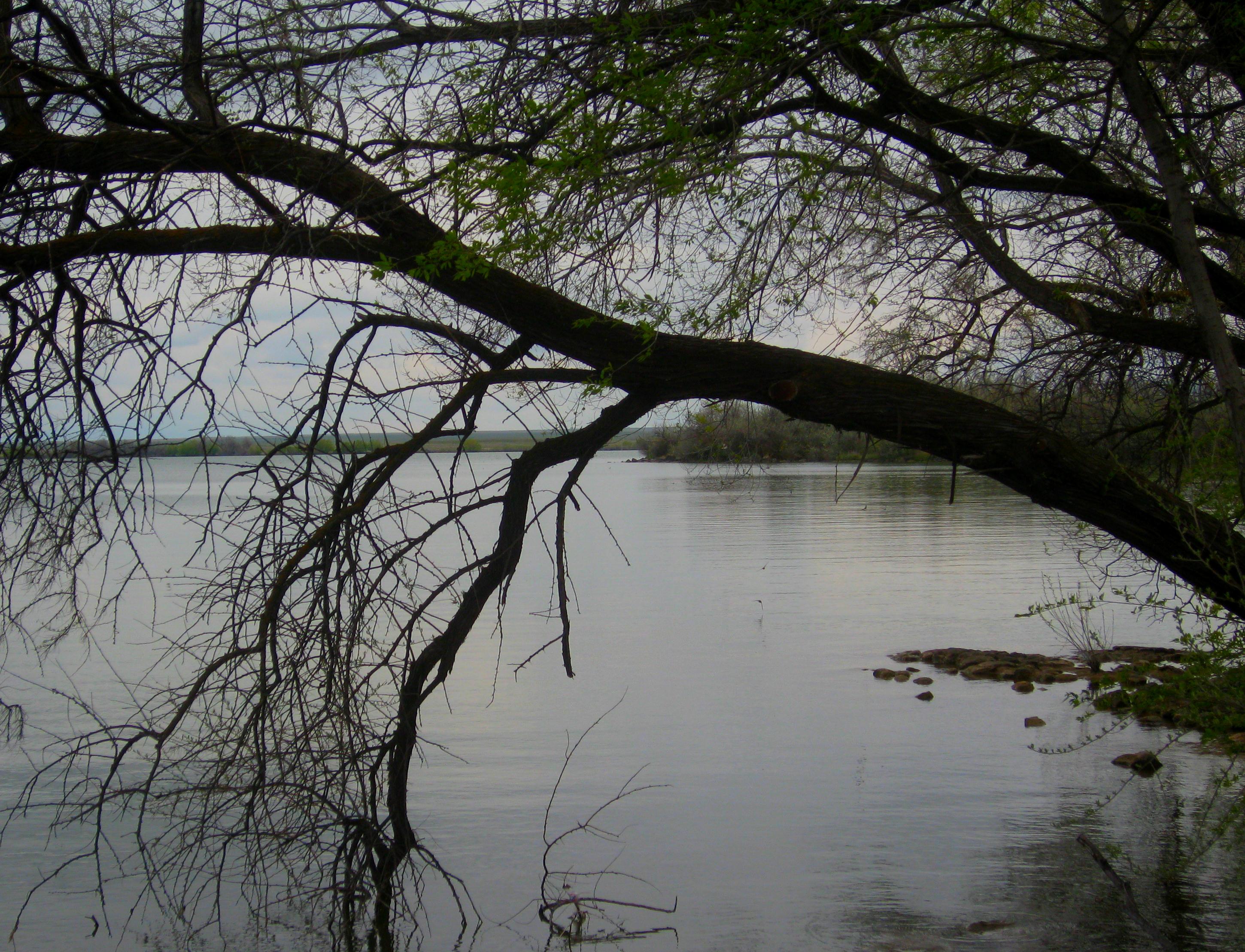
Looking out over Lake Walcott on a cool day through tree branches that are just now beginning to green up. -- Photo by Pat Bean

Travels With Maggie

Today is the last day of May, and supposedly summer should be on the way. In fact, it was already being felt mid-April when I left my family behind in Texas, where yesterday they had temperatures in the 90s.

Here in Southern Idaho, yesterday’s temperatures were only in the 40s, but the weather gurus say it’ll be in the 60s today.

I think the birds, who have mostly been staying sheltered during the past few days of cold, wind and rain, might have heard the news as well. I was awakened by their blaring symphony outside my RV.

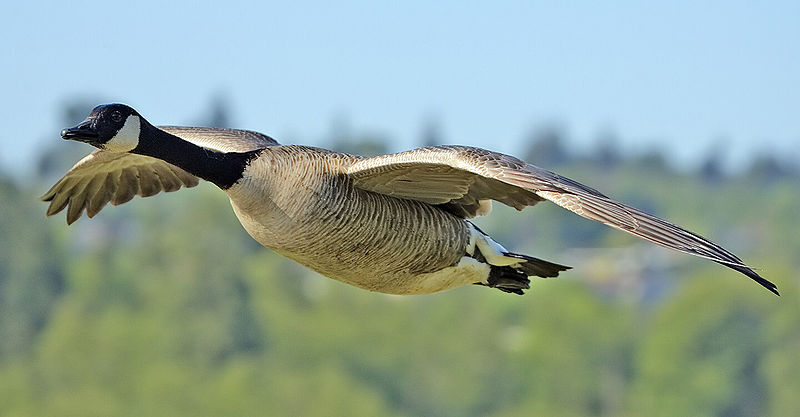
Barn, rough-winged, violet-green and bank swallows are making the landscape outside my window look as if it’s full of moving polka dots. Bright orange-chested robins are courting and building nests. Canada geese are already raising goslings. Western grebes are dancing on the lake. Common nighthawks are circling overhead in the evenings.

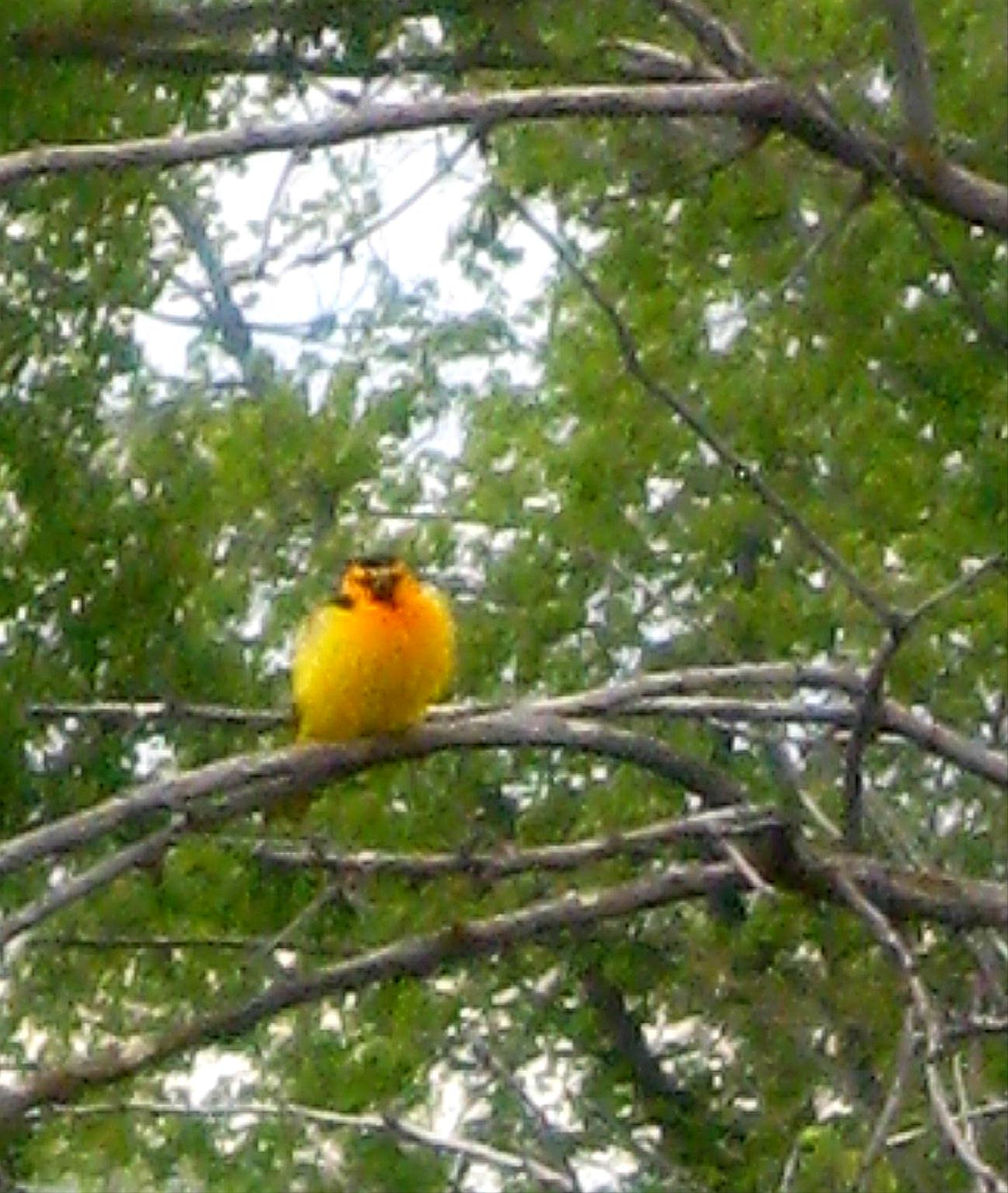
American goldfinch have already emptied my thistle bag twice. Killdeer are loudly squealing on the ground as they lead trespassers away from their nests in the grass. Starlings are going in and out of a hole in the self-pay kiosk outside my RV. Mourning doves are gobbling up the birdseed I threw on the ground. And brightly colored Bullock’s orioles are preening their puffed-out feathers.

I’m a happy birder.

It’s also been a delight the past two weeks to watch spring, which everyone says is quite late this year, come out of hiding.

A Bullock's oriole outside my RV in a cottonwood tree with his feathers all puffed up to ward off yesterday's wet coolness. -- Photo by Pat Bean

While the process happened almost overnight in Texas before I left there, the cool weather here has caused the change to take place in slow motion. It’s been a delight to be able to watch it in such detail.

Daily, I’ve seen leafless tree branches green up, beginning to hide the nests being built there by stick-transporting birds. I’ve watched as dainty lavender and yellow wildflowers have slowly peeked up through the grass, while the dandelions that came before them have shed their blossoms and are now scattering their puffy white seeds.

And now I’m going to walk Maggie and see what other wonders I’ll discover this last day of May. Life is good.

Read Full Post »

 “I would feel more optimistic about a bright future for man if he spent less time proving that he can outwit Nature and more time tasting her sweetness and respecting her seniority.” E. B, White

Thirty-thousand years ago, only the very tallest peak of Antelope Island, which now sits in Great Salt Lake, would have been visible when Lake Bonneville covered nearly all of Northern Utah. -- Photo by Pat Bean

Travels With Maggie

My laptop computer finally began misbehaving too badly to ignore any longer. Since it’s my lifeline to the world as a full-time RV-er and daily blogger, and because it had given me four years of decent service, I decided it was time to retire it.

Since I’m rather in the boonies here at Idaho’s Lake Walcott State Park, 45 miles away from the closest Best Buy, I decided to drive 160 miles instead to Ogden, Utah, where I had a geeky-in-a-good-way friend whom could help me set up a new computer.

The historical marker at an Idaho rest stop that got me pondering the ever-changing face of the planet we live on.

It was a beautiful drive, sunny albeit a bit windy, mostly through land that 30,000 years ago lay beneath Lake Bonneville. A large historical marker at a rest stop just north of the Utah border tells travelers all about the prehistoric lake, whose shorelines are still in evidence along Interstate 84 which I was driving on this day.

The majority of the 1,000-foot-deep prehistoric lake was in Utah and its two distinct levels were clearly visible from my front porch when I formerly lived in Ogden. I can’t help but notice the ancient shorelines – there’s two distinct levels – every time I return to this city I loved.

The lake took up a huge portion of Utah and smaller bits of Nevada and Idaho until it broke though Idaho’s Red Rock Pass east of 84 about 15,000 years ago.

Great Salt Lake is all that’s left of Lake Bonneville today. It’s average depth is only about 25 feet.

Because I had stopped at the rest stop and seen the sign, I pondered as I drove, about how Mother Nature, with her floods, tornadoes, tsunamis, earthquakes, and water and wind erosion is constantly changing the nature of this planet we live on.

I had long ago given up believing I was ever fully in control of my life, and now felt sorry for all those who hadn’t yet reached that conclusion. All we can do is take life a day at a time.

This day was a good one. I even got into Ogden in time to purchase my new computer. It’s a beauty, with more bells and whistles than I will probably ever use. But, everything didn’t go as planned.

Murphy showed up just to show me he could. I’ll tell you all about it tomorrow.

.

Read Full Post »

 “Compassion, in which all ethics must take root, can only attain its full breadth and depth if it embraces all living creatures and does not limit itself to mankind.” – Albert Schweitzer

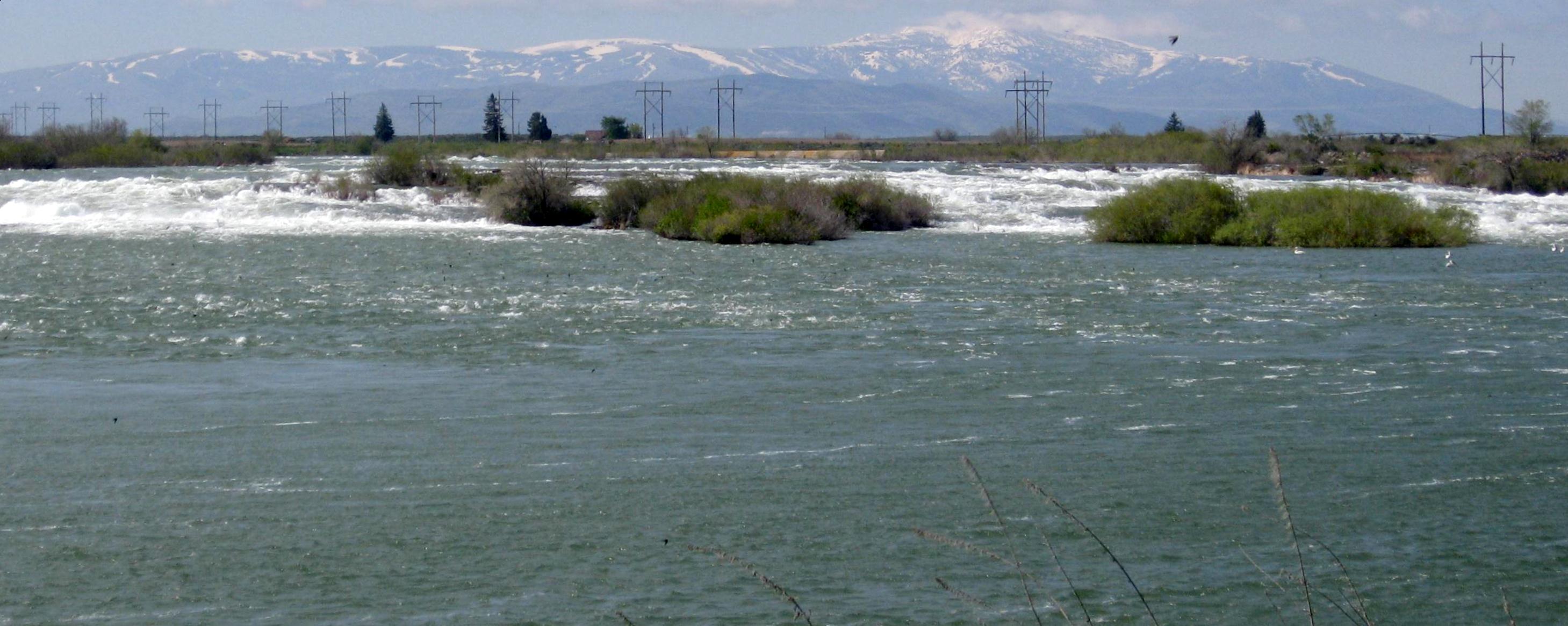
Water gushing down into the Snake River during a release at the Minidoka Dam. -- Pat Bean

Travels With Maggie

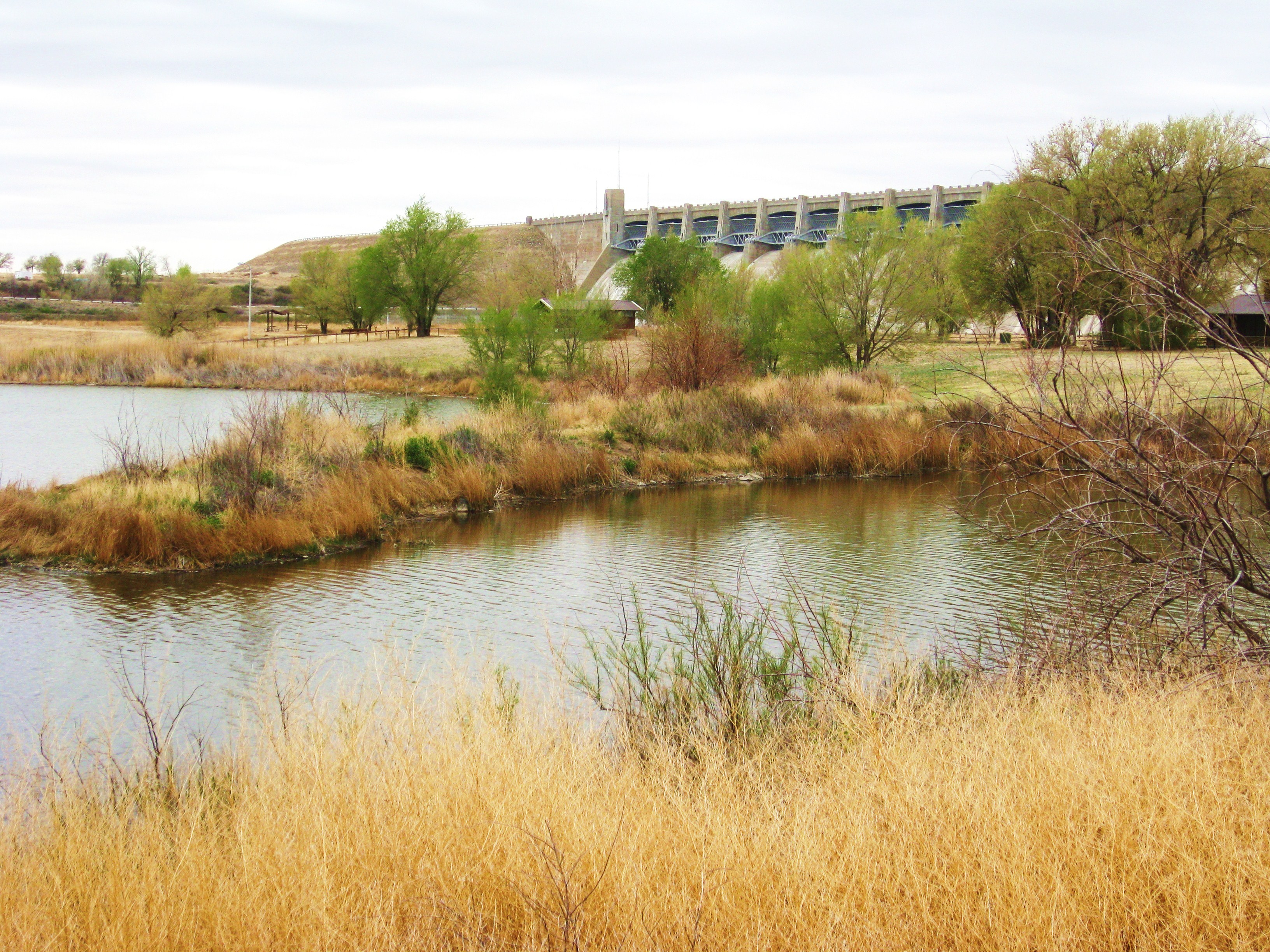
The siren letting people downstream know they are letting water out of the dam here at Lake Walcott has been blaring frequently the past few days.

The lake’s high, the irrigation canals are full and the Snake River is flowing fast and furious.

I watched yesterday as the siren blew and the water gushed down from behind the dam. The white pelicans floating near where the water splashed as it cascaded down a short incline watched, too.

Occasionally I see pelicans in the lake, but sitting below the falls seems to be their favorite hang out, probably because fish like the oxygen rich spot, too. And pelicans like fish dinners.

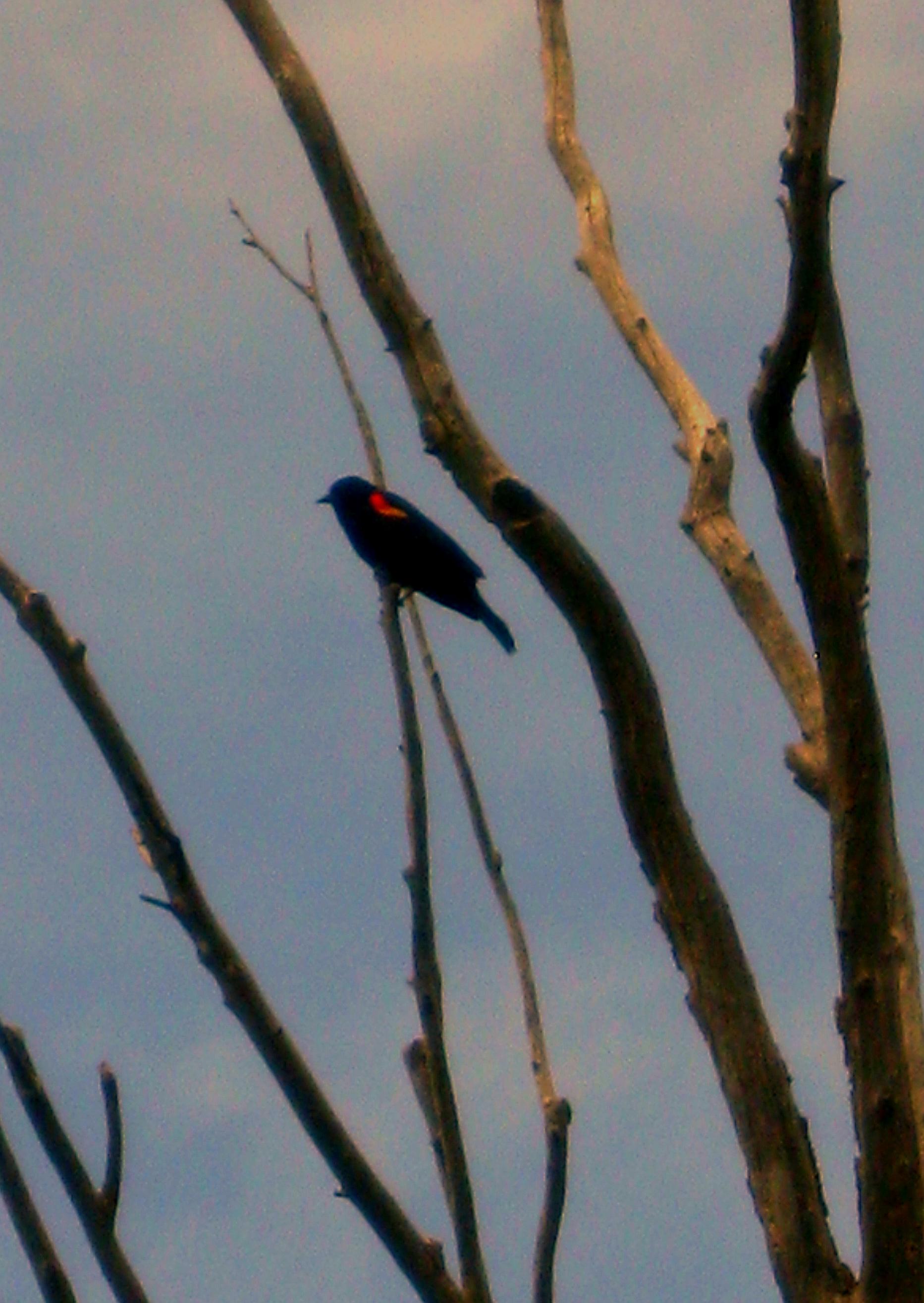
Red-winged blackbirds build their nest in foilage growing in the shallow waters along Lake Walcott's shoreline. -- Photo by Pat Bean

The Minidoka Dam here that created Lake Walcott has been around since 1906, and a power generating plant added soon after, giving local farmers both water and electricity. Teddy Roosevelt, in 1909, created the 25,000-acre Minidoka National Wildlife Refuge around the lake, and the state park, which came much later and which is full of families, fishermen, RV-ers, tenters and boaters for the memorial weekend,, is within the refuge boundaries.

While too often someone suffers when man interferes with Mother Nature, this time it seems like it’s mostly been a win-win situation for human and wildlife species alike.

This is  all too rare these days.

Read Full Post »

“perhaps travel cannot prevent bigotry, but by demonstrating that all people cry, laugh, eat, worry, and die, it can introduce the idea that if we try and understand each other, we may even become friends.” — Maya Angelou

Travels With Maggie

A western grebe floats near Lake Walcott's shore on a liquid canvas painted with reflections. -- Photo by Pat Bean

One of the reasons I love being a campground host is the people I get to meet, like Jane and Greg from Australia, who arrived here two days ahead of their paid reservation.

This charming couple with the twangy accent had rented an RV to tour western national parks, and had been chased out of Yellowstone early because of snow.

They came knocking at my RV door after park office hours to tell me their dilemma. Since the park was sparsely occupied this rainy night, I took their name and information and told them to just select a site and the details could be straightened out in the morning.

But being a nosy old broad, I had to also ask a lot of personal questions, beginning with: “Are you two Aussies?” They, thankfully, were just as nosy about me and Maggie, and eventually we agreed to get together over a drink and before-dinner snacks the next afternoon.

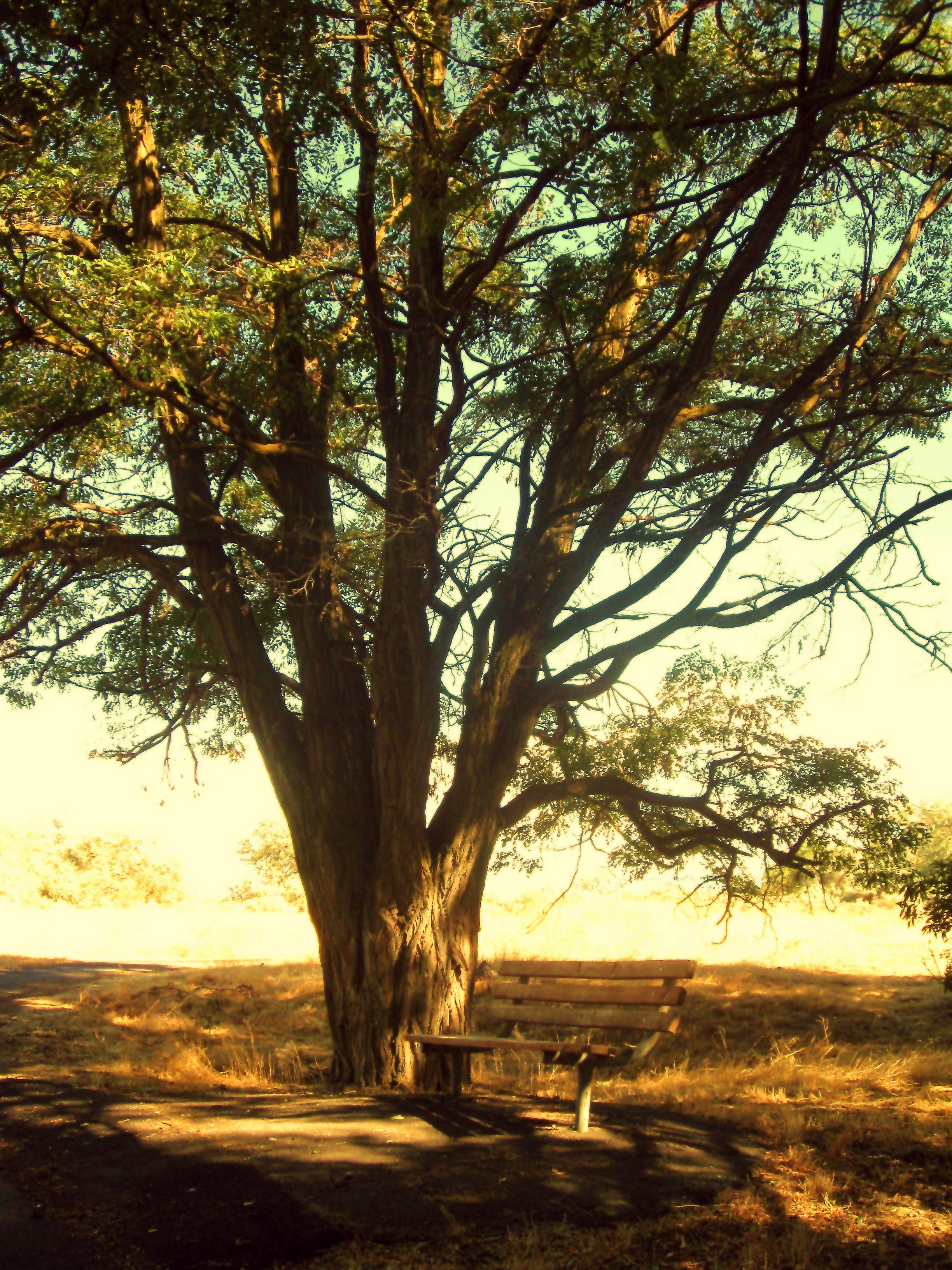
A bench beneath a shade tree says "Come sit a while and visit with Mother Nature." -- Photo by Pat Bean

Lake Walcott State Park here in Southern Idaho was their last hurrah before heading back to their home in Queensland. We talked about their visit to Zion National Park, my favorite place in the universe, and their fantastic reaction to the waterfalls in Yosemite, which is the one western national park that has mysteriously escaped a visit from me.

This was their first visit to America and I told them of other of this country’s wonders they should see if they came back, like Texas’ Palo Duro Canyon. They, in return, told me of places I should visit in Australia, which is still on my To-Do list.

It was a cold day, and the extra chill of the approaching night, sent us off to our respective homes on wheels all too soon. But not before we had exchanged e-mails.

The next morning, as they pulled out in the gray dawn, we waved at each other, like two ships passing in a fog. Perhaps we’ll continue our friendship, perhaps not. Only time will tell.

But I feel richer for having met them and sharing the wonders of our two countries. I can’t help but think that this kind of exchange is where world peace has to begin.

Read Full Post »

“Finish each day and be done with it. You have done what you could. Some blunders and absurdities no doubt crept in, forget them as soon as you can. Tomorrow is a new day, you shall begin it well and serenely…” Ralph Waldo Emerson

Gypsy Lee in a better place than a dinky RV park in Alamosa. -- Photo by Pat Bean

Travels With Maggie*

My grandmother believed that trouble came in threes. I can’t tell you how many times in my life she was proved right, which is why I should have been more worried at the first setback of my perfect day.

My two previous overnight campgrounds were Colorado state parks with trails to walk, lakes to sit by, scenic landscapes out my window and birds to sing me awake in the morning. I expected tonight’s stay at San Luis State Park, just 20 miles down the road from the Great Sand Dunes, would offer much the same.

And well it might have if it hadn’t still been closed for the season – even though my Trailer Life Directory of RV campgrounds, my travel bible, said it opened for the season April 15.

The next closest campground I could locate was a KOA in Alamosa. It was another 25 miles to drive, but the directory’s ratings gave it a thumbs up, along with noting that it opened for the season on March 13.

Wrong again. It didn’t open until May 1.

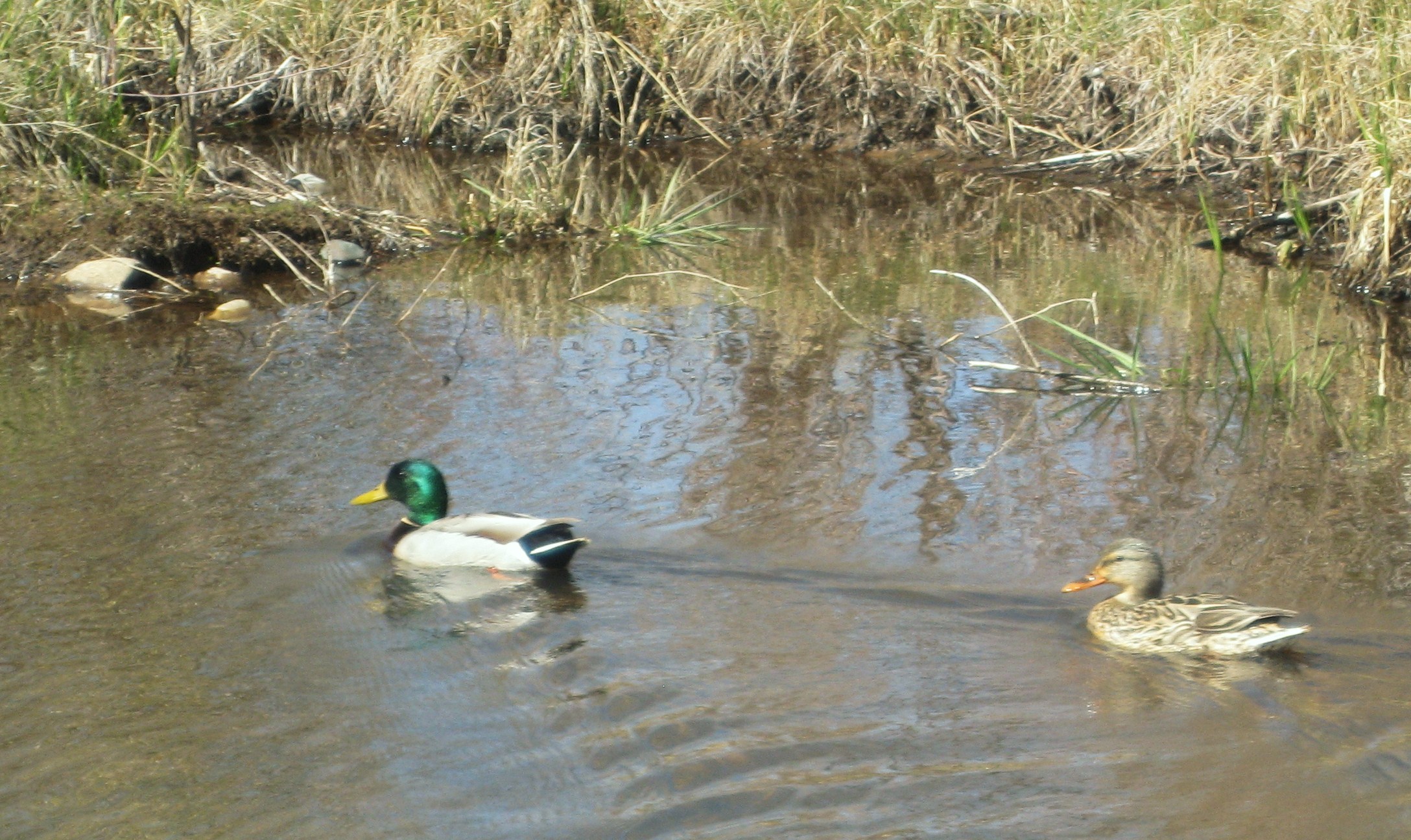
A pair of mallards cheer up any day. -- Photo by Pat Bean

I then realized my RV was pulling to the right and discovered the front passenger tire was low. My nearly new tire, I saw, had a nail in it. Quickly, I retreated to a tire store I had passed about five miles back up the road, thinking it would be an easy fix. Wrong.

Before beginning this trip, Gypsy Lee, which has over 115,000 miles on her, underwent some major wear and tear repairs, including new wheels to replace the corroded and cracked old ones. They were shiny, spiffy and expensive – and required a special key to unscrew their lug nuts, which someone had forgotten to give me.

The small Alamosa tire store, which was also a service station, couldn’t solve my problem. And by now it was after 6 p.m. and every place else was closed for the evening, even the place in Texas where I had bought the wheels. As a last resort, I called them thinking they could FedEx the part to Alamosa overnight.

I had air put in my tire, hoping it was a very slow leak, and retreated to a dinky RV park a few miles away where campers were allowed to dump their gray (dish-washing and/shower) water on the ground. I was not a happy camper. I might have whined a bit, except Gypsy Lee has a rule against such self-pity.

The best thing I have going for me as a lone female traveling this great country of ours is the confidence that I can handle what the road throws at me. This wasn’t the first, or the worse mishap, I had overcome in seven years of traveling.

So while I didn’t get a peaceful night’s sleep because of worrying about my situation, I awoke ready to solve it.

Thankfully my tire still had air in it, and the local Firestone tire shop I called as soon as they were open, said they could solve my problem. If they broke the studs getting the locks off, the sensible woman on the other end of the line told me, then they would just replace them. It wouldn’t be all that expensive.

It turned out they actually had a key for my wheels in stock, which they sold me for future emergencies. I was back on the road, my pocketbook only $22 thinner, within about 15 minutes.

Now let’s see. If I count the two closed RV parks and the nail-in-the-tire, that makes three things that went wrong yesterday.

If my grandmother was right, I had another perfect day ahead of me.

Continuing Day 7, April 25, 2001

Read Full Post »

I found the brown seed pods of the yucca plant as beautiful in their own way as the tall white blossoms that would burst forth when spring finally came to Lathrop State Park. -- Photo by Pat Bean

Who can not hear the honk of wild geese flying overhead and not yearn to be up there with them. Not I. -- Photo by Alan D. Wilson


 “There must be a positive and negative in everything in the universe in order to complete a circuit or circle, without which there would be no activity, no motion.” John McDonald

Travels With Maggie*

Before leaving Lathrop State Park this morning, Maggie and I took a walk along the park’s Hogback Trail. The path was heavily dotted with juniper trees, some full of berries, and yucca plants full of left-over brown seed pods. The few oaks we passed were still leafless.

That’s because winter still ruled this 6,500-foot elevation Colorado Park, where sparse sprinkles of snow fell during the night. I suspected it would still be awhile before the yucca plants’ tall white blossoms showed themselves to the world.

Maggie and I startled a couple of deer as we came around the corner, although they took their time in scampering away, as if knowing we meant them no harm. Maggie has never shown an interest in deer. Her preferred animal to chase are lizards, to the point that she once followed them into a mass of cactus, with the expected result.

We also passed sandstone boulders, whose pinkish orange and pale brown hued surfaces showed patterns of their life long ago beneath the sea. Lichens added more color to the rocks and would eventually wear them back down to the sand they were before pressure glued the grains together.

It seems Mother Nature is always pointing out to us that life is indeed a circle, just as in Disney’s “The Lion King.”  The more I travel and observe the more I know this is true.

Back at the RV, Maggie and I drove around the park for one last look at this stunning place with twin lakes, Martin and Horseshoe, that sits in the shadow of the Spanish Peaks. If I hadn’t planned on meeting up with a friend at Zion National Park on the 29th, I would definitely have stayed longer.

The park’s parting gift to us was a flock of honking geese flying overhead. Maggie was already snoozing and didn’t hear them, but they sounded to me like the opening prelude to the day’s travel ahead. I was eager to begin the adventure.

Day 7 of the Journey, April 25, 2011

Read Full Post »

A view of the Spanish Peaks, two Colorado volcanic mountains,  beyond Lathrop State Park's Martin Lake. The peaks were a popular landmark for Santa Fe Trail travelers. -- Photo by Pat Bean

A view of the Spanish Peaks, two Colorado volcanic mountains, beyond Lathrop State Park's Martin Lake. The peaks were a popular landmark for Santa Fe Trail travelers. -- Photo by Pat Bean

 “A mountain is composed of tiny grains of earth. The ocean is made up of tiny drops of water. Even so, life is but an endless series of little details, actions, speeches, and thoughts. And the consequences wherher goor or bead of even the least of them are far reaching.” — Sivananda

Travels with Maggie*

At La Junta, I left Highway 50, dropping down to Highway 10, not to be confused with busy Interstate 10 that rolls across the country between the two big oceans. This 10 was a narrow, two-lane Colorado backroad with practically no traffic – exactly the kind I seek out in my travels.

It was a hilly route, surrounded mostly by small farms and agricultural fields with an occasional sign announcing the owners considered their property a ranch and not a farm.

Soon I began seeing cholla cactus, and then magpies, my first since leaving Texas, which except for a rare one in the Panhandle, has no magpies. Since I consider the magpie my animal totem, I was excited to once again be in their landscape

As I drove west, I gained enough elevation to pop my ears, and watched as the fields gave way to cholla cactus and the land took on a more 3D appearance.

Ahead, I knew, lay mountains, big ones. So as Maggie, who as usually was snoozing in the co-pilot seat, and I crested each new hill, I scanned the horizon for my first peek at the peaks.

Finally, despite low hanging clouds this day, I had it. And as usual, after months of absence from them, my eyes became moist.

A short time later, Maggie and I reached our day’s destination, Colorado’s Lathrop State Park, where I parked with a view of the Spanish Peaks out my window.

I wasn’t born in the mountains, but I felt I was home.

*Continuing Day 6 of the journey, April 24, 2011

Read Full Post »

I named the upper one Peter, as in Cottontail. -- Photo by Pat Bean

The view out my rear window looking toward the John Martin Reservoir Dam. — Photo by Pat Bean


NOTE: I’ve been taking my blog readers on a journey from Texas to Idaho with me as Maggie and I go down the road. But while I’m writing a mile-by-mile travelogue so readers can actually follow me on a map or Google Earth, I may take three days of blogging to describe one day.

The result is that I’m farther down the road than my blog, which has confused readers. I know because they’ve told me. To solve that problem, I’m now adding a footnote to any blogs that are about a specific day of travel that happened earlier in time.

For example, today’s blog is about happenings that took place this past Sunday, and the footnote reads: April 24, Day 6 of the journey.

Travels With Maggie*

I realized when I woke this morning at John Martin Reservoir State Park in Colorado that it was Easter.

And a lovely one it was. Hasty Lake was winking at me in the morning light, robins were searching for worms beside my RV and a pair of mallards were floating and quacking among the reeds along the shoreline. Did you know that the mallard is the only duck that actually quacks.

As I sat, drinking my coffee and reading the news, or as much of it as I could handle for the day, I had a couple of visitors. Most appropriate ones, I might add.

Two small cottontails spent about 10 minutes roaming around my RV. I named the larger of the two Peter, and thought about Thornton Burgess’ “Adventures of Peter Cottontail” that I had so loved as a child. He wrote 26 books about the beloved rabbit, and while I’m sure I didn’t read all of them, I certainly read quite a few.

And now, since I was alone, I sang as much as I could remember of “Here comes Peter Cottontail, hopping down the bunny trail, hippity hop ….”  I suddenly felt like a child again, and at my age that’s a good way to feel.

The tune was still going through my head when Maggie and I got back on Highway 50, which we followed west through several small rural towns to La Junta. Along the way, I noticed quite a few redbud trees just popping with brand new hot-pink buds

They looked exactly like the blossoms of the redbud trees that I had photographed in early March in Harker Heights, Texas. I laughed, thinking that summer was just around the corner when I had left Texas.

It was sort of like being transported in a time machine. First remembering my childhood reading habits and now here I was enjoying spring all over again.

Pat Conroy, one of my favorite authors, sums it up: “Once you have traveled, the voyage never ends, but is played out over and over again in the quietest chambers. The mind can never break off from the journey.”

Read Full Post »

 
An early morning walk through a honey mesquite grove is full of surprises. — Photos by Pat Bean

 “Keep a green tree in your heart and perhaps a singing bird will come.” Chinese proverb

Travels With Maggie

I had barely stepped onto the trail before I heard a sort of screeching sound, which had me looking for a bird as its most likely source. I soon realized I was wrong.

It was the trees creaking with the wind. And this nature trail I was following was simply a mesquite grove with little else going for it, I concluded. Wrong again.

Just about the same time I decided the talking trees weren’t really all that eerie, I began seeing other bits of nature sharing the mesquite tree grove.

Cactus coming to life after the winter, purple thistle dotting the landscape, and numerous other plants that sadly I didn’t have a name for.

It was a short trail that ended way too soon.

The photos I took along the way, meanwhile, will remind me not to draw conclusions before seeing the evidence.

Read Full Post »

« Newer Posts - Older Posts »