Feeds:
Posts
Comments

Archive for the ‘Lakes’ Category

 “I feel there are two people inside me – me and my intuition. If I go against her, she’ll screw me every time, and if I follow her, we get along quite nicely.” – Kim Bassinger
When a beautiful landscape is also a safe place for Maggie and me to park Gypsy Lee, life couldn't be better. The Idaho state park campground above was lighted, patroled nightly and located by a scenic lake. -- Photo by Pat Bean

Travels With Maggie

When you’re an old broad who lives in an RV and often doesn’t know where she’s going to spend the night, safety is an issue. There are just too many sunrises and sunsets I still want to see.

I thought about this seven years ago when I sold my Utah home, and disposed of almost all my possessions and became a nomad.

My rules for staying safe on the road began with driving only during daylight hours and making sure I had a safe berth for the night. I quickly realized most inexpensive Forest Service campgrounds, where I thought I would be staying, didn’t quite fit that bill. They were a little bit too lonely and isolated for my comfort.

Written by Rana DiOrio and illustrated by Sandra Salsbury

National parks, state parks and decent commercial parks, while a bit more expensive, have become the mainstay for my nightly, weekly or even monthly stays, as this past summer when I volunteered as a campground host at an Idaho state park.

For additional safety, I have a guardian travel angel, a daughter-in-law who always knows the route I’m traveling when I’m on the road, and with whom I check in with once a day. And when I lock the doors of my 22-foot RV, I actually feel safer than if I were living in a home where I couldn’t see all the doors and windows. For added measure, my canine travel companion, Maggie, makes an excellent alarm system. She barks when anyone comes within about 30 feet of our home on wheels.

I wish when I was younger, and a mom of five kids, I could have felt as secure about their safety as I do today about mine. I was fortunate that my offspring escaped all the pitfalls of speeding cars, unsupervised creek swimming, stranger encounters and teenage foolishness to become adults who now worry about the safety of their children.

I do believe their job is even harder than it was for me, and more complicated for their children than it was for them. Rana DiOrio, author of the award-winning “ What Does It Mean To Be …” children’s book series tackles this situation in her latest offering” “What Does It Mean To Be Safe?”

It’s a book I want my grandchildren and great grand-children to read. One of the best messages of the book, which is delightfully illustrated by Sandra Salsbury, is that kids should follow their inner voices, that their own intuition will tell them when they are not in a safe situation.

I found this interesting because it was my own inner voice that told me I would be safer while on the road if I traveled only when the sun was out and spent my nights where there were people and lights.

I also remember times as a young child when my intuition told me never to be caught alone with a distant male relative. As an adult, I realized how on target my inner voice had been when I was only eight years old.

While designed for children, Rana’s book has a message even for us grownups.

Readers can buy her book by going to: http://shop.littlepicklepress.com/what-does-it-mean-to-be-safe-p33.aspx Enter the coupon code BBTSAFE at check-out to get free shipping and a free poster to go with the book.

Read Full Post »

“Perhaps the truth depends on a walk around the lake.” Wallace Stevens


Looking down on Mono Lake from the Highway 395 overlook. -- Photo by Pat Bean

Travels With Maggie

My trip back to Texas from my summer in Idaho was a hurried affair. Usually I plan on arriving for my winter rounds with family just in time for Thanksgiving But a grandson’s wedding, which takes place tonight, moved that up by about six weeks.

Even so, I managed to knock two things off my to-do list, now more popularly called a bucket list, on my way back to my native Lone Star State.

Mono Lake and Yosemite National Park now have check marks beside them. .

It may be easier for some of you to understand why Yosemite was a place I wanted to visit than it is to understand why Mono Lake was on my list. After all, it’s simply a shallow, very salty, often smelly lake As we neared the lake basin, My canine traveling companion, Maggie, perked up at the smell, wrinkling her nose a bit as she caught the scent. . I’m not sure what she was thinking.


California gulls along the shoreline -- Photo by Pat Bean

 The odorous shoreline, however,  reminded me of Great Salt Lake, a place whose beauty I came to greatly appreciate while living next door to it for 25 years.

The Utah lake is larger and much younger than the smaller and much older California lake. Both, however, are part of the Western Hemisphere Shorebird Reserve Network that provides habitat for millions of migratory birds.

About the only species I saw on Mono Lake, however, was the California gull, which incidentally happens to be Utah’s state bird. It was given the honor after Mormon settlers in the Salt Lave Valley credited the gulls with saving their crops from a cricket infestation.

Neither lake has an outlet, and so remain the depository for everything that flows into them. Their importance to the ecosystem, however, has in recent years led to conservation practices engineered for their protection.

Mark Twain, in his “Roughing it,” called Mono Lake “a lifeless, treeless desert … the loneliest place on earth.”

I think otherwise.

Read Full Post »

 “Sometimes it’s important to work for that pot of gold. But other times it’s essential to take time off and to make sure that your most important decision in the day simply consists of choosing which color to slide down on the rainbow.” Douglas Pagels

Travels With Maggie`

A walk around Silverbell Lake helped clear the cobwebs from my crowded brain. -- Photo by Pat Bean

Life caught up with me this past week. Too many miles in not enough days, too many amazing sights and not enough time to linger among them, and only three days to enjoy loved ones before I’m back on the road.

My preferred style of travel – no more than 150 miles a day with a couple of days sitting in between – has been blown to hell in a hand basket, the same one my grandmother said would take me there if I didn’t shape up.

Something had to give. And it did. I stayed off my computer and missed two days of daily blogging.

Instead, I lazed around my youngest daughter’s Tucson home, took Maggie for short walks, enjoyed the company of three grandsons, hiked around Silverbell Lake while everyone else fished, read a lot, and watched the turkey vulture and red-tailed hawks soar above, and doves, rock wrens, curved-bill thrashers, gila woodpeckers, northern flickers and rabbits play among the saguaro cactus.

My daughter, Trish, lives on the outskirts of the city and coyotes and bobcats often visit, she said. As do quail that usually trot past their back porch daily.

My son-in-law, Joe, described them for me, and I suspect they’re Gambel’s quail, although they could just as easily be California quail. Both species have the C-shaped plume dangling forward over the front of their heads.


A landscaped yard without grass. Drought-stricken area residents should take note. -- Photo by Pat Bean

I haven’t seen them yet. I think they’re taking a break from their daily routine – like me.

It’s back on the road tomorrow. I’m heading to Texas’ Gulf Coast and a grandson’s wedding. It will be another four days of 300-mile a day drives, although thankfully, well except for the first 50 miles, it will not be freeway driving.

Interstates were something I could not avoid for two entire days on my way from Yosemite to Tucson. It made me never want to go back to California, that and the fact I was paying $4.15 a gallon for gas there. The cost immediately dropped to $3,39 a gallon once I crossed the border into Arizona.

I’ll post pictures nightly of my next four days of driving so you can enjoy the road with me. Just don’t expect me to be too wordy. I’ll save those for later when life has once again slowed down.  


Read Full Post »

 “Winter is an etching, spring a watercolor, summer an oil painting and autumn a mosaic of them all.” – Stanley Horowitz

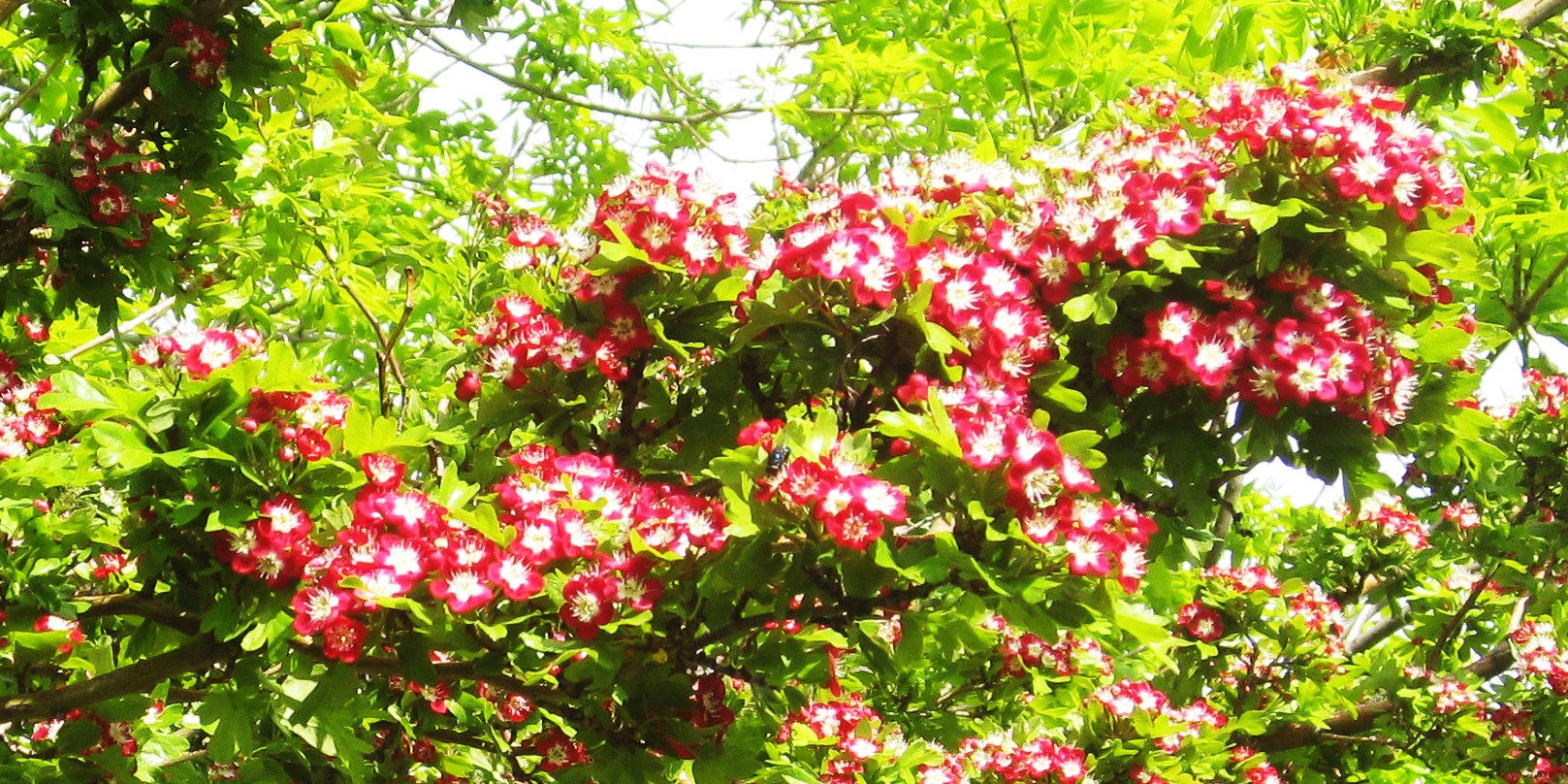
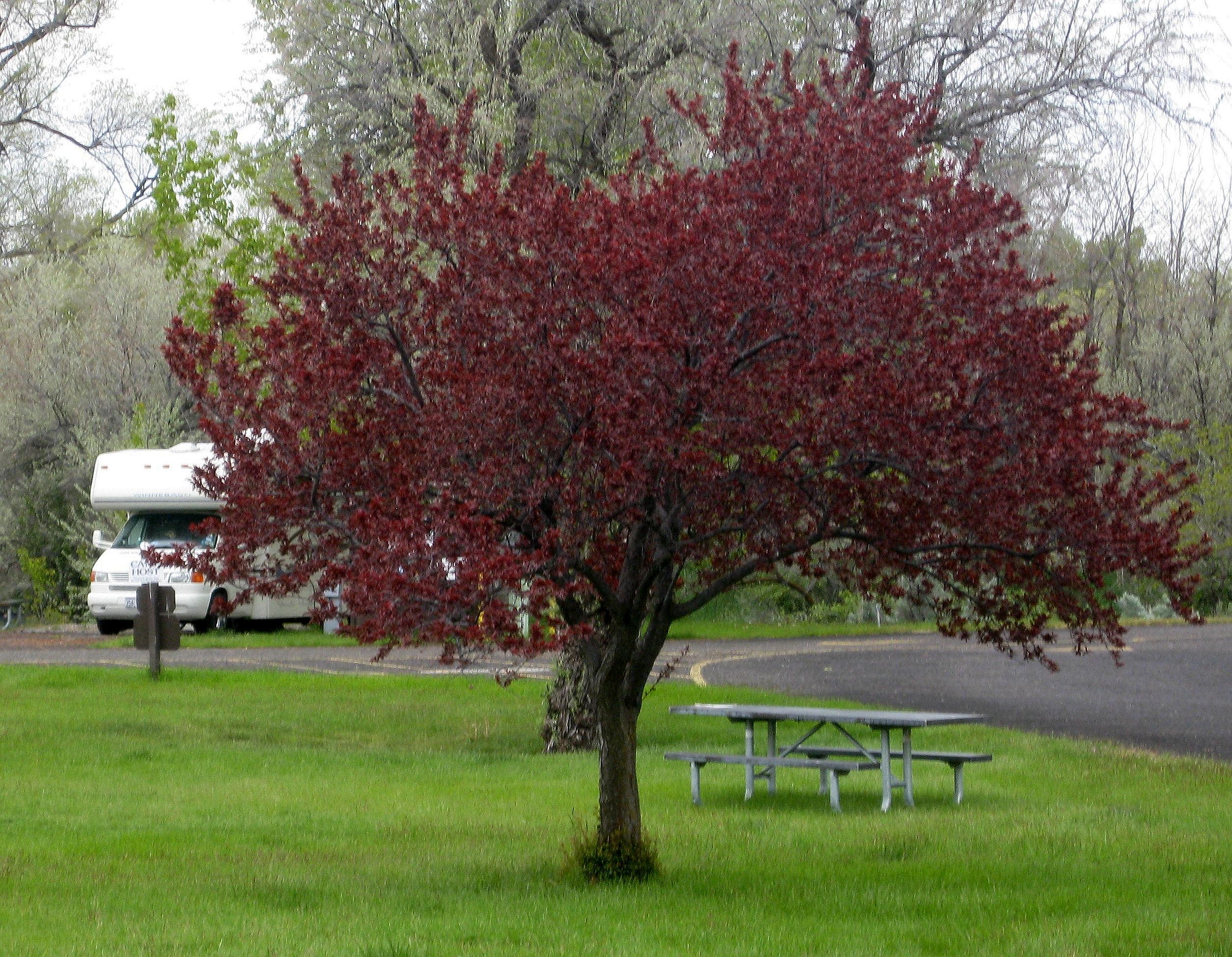
Spring at Lake Walcott, when it arrived in June, brought trees laden with pink blossoms. -- Photo by Pat Bean

Travels With Maggie

Most of Lake Walcott's many trees were still leafless when Maggie and I arrived at the park in mid-May. -- Photo by Pat Bean

Fall is coming to Lake Walcott. It’s early. This Southern Idaho park was still sleepy with the last breaths of winter when I arrived here mid-May. Most of the trees were still leafless and running my heater, at least at night, was a given.

The days, however, slowly begin to warm and before soon foliage blocked my view of the lake, while dandelions dotted the park’s manicured lawns with yellow and pink blossoms colored a tree just outside my RV, Gypsy Lee.

Spring lingered for a long time here. It wasn’t until July that I had to first use my air conditioner, and even then it always went off when the sun went down. August brought with the first days when temperatures reached the 90s, but still most days the mercury’s high only hovered in the mid-80s.

Rarely was there a day that wasn’t perfect for the long walks my dog, Maggie, and I took daily through the park.

` While so many parts of the country have been experiencing record-breaking heat, Lake Walcott has had an unusually mild summer. And now, just a little more than a week before I am leaving, it’s treating me to hints of fall. Within a 120-day period I’ve experiences all four seasons.

As I looked out on the Landscape surrounding Lake Walcott, at the frosty sagebrush now grown tall, and the rabbitbrush all aglow in autumn colors, I remembered to thank Mother Nature for her gifts. -- Photo by Pat Bean

I thought on this as I looked out on a landscape yesterday of frosty sagebrush, now grown tall in this high desert, interspersed with the fall display of golden-topped rabbitbrush.

I give thanks to Mother Nature for the beauty she gifted me. I also give thanks that I have eyes and a heart capable of appreciating her gifts. May it always be so.

Read Full Post »

 “Deep in the human unconscious is a pervasive need for a logical universe that makes sense. . But the real universe is always one step beyond logic.” Frank Herbert.

Travels With Maggie

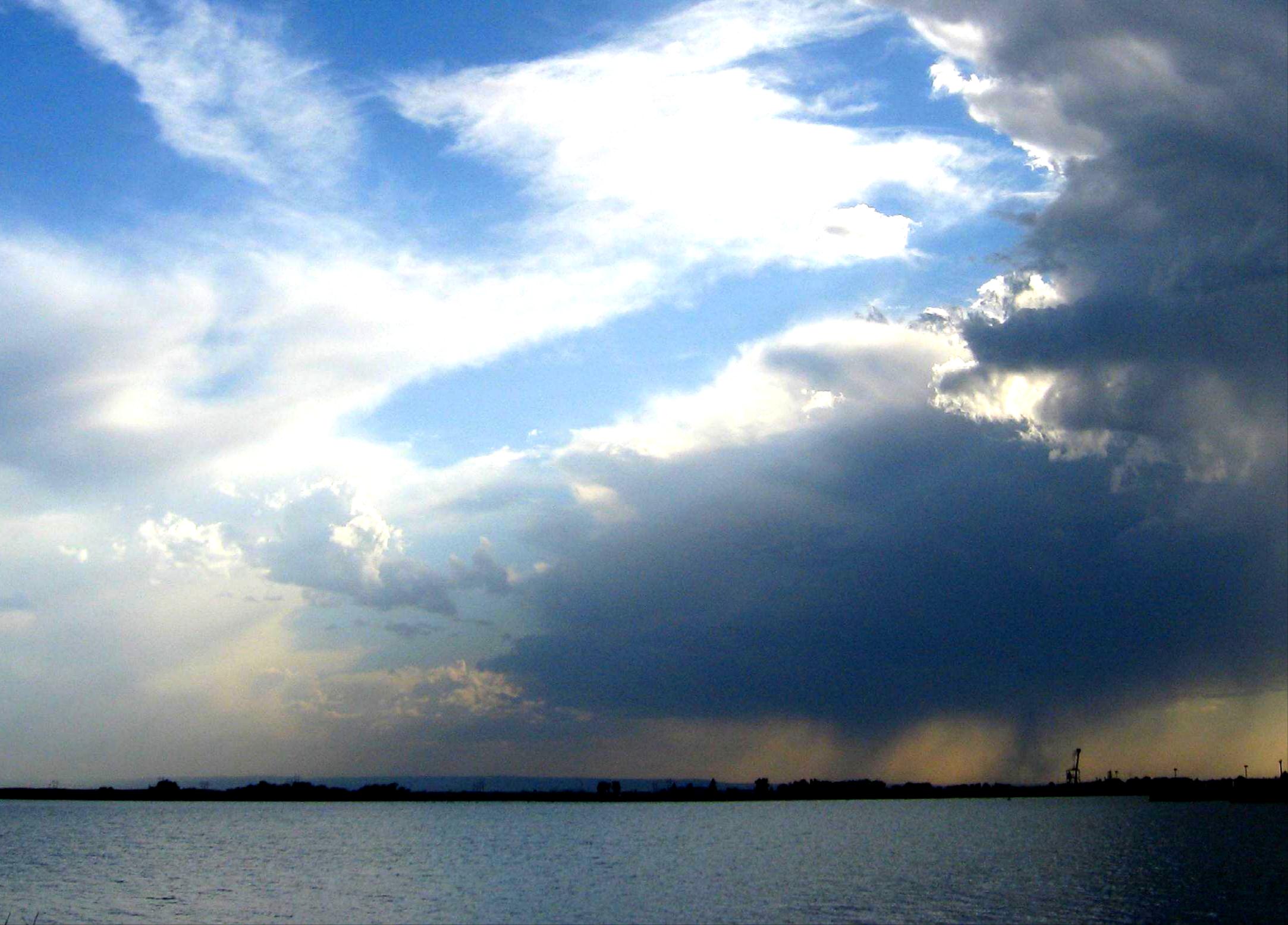
Sun and rain in the same frame. Lake Walcott State Park, August, 2011 -- Photo by Pat Bean

Going for our morning and afternoon walks here at Lake Walcott is a pleasurable experience for both Maggie and me. But for different reasons, of course.

Maggie uses her nose to follow the track of the raccoon that visited our camp site in the early hours of the morning. She slowly checks out the tree on which the male springer spaniel in the camp across the way lifted his leg. Then she spends 10 minutes circling a small area trying to decide the exact spot to do her own business.

Her entire small body wags with her tail in joy when she spies a human who looks like they might greet her. You can actually see the dejection in her body if that person passes by without snooping down to pet her.

I’ve never quite figured out why this is so important to her, because most always after about 15 seconds of a stranger’s adulation she’s pulling on the leash for me to continue our walk.

But then she probably doesn’t understand why I want to stop and watch every bird I see, photograph every butterfly buzzing around a flower or spend time each day simply staring out over the lake to gauge its mood.

I was doing just that a couple of days ago when I realized nature was presenting me with a triple matinée.

To the south, on the far side of the lake, a dark storm cloud was dumping rain on the landscape. To the north, the summer sky was bright blue with sunlight shimmering through white puffy clouds. Beneath my feet, meanwhile, the rocky shoreline was framed by a bush telling me fall had arrived.

But looking down instead of across the water, I found fall coming into bloom. -- Photo by Pat Bean

From a single spot, I was being presented with three stories, each in conflict with the other. Since I couldn’t deny reality, I had to believe them all.

Thus it is with life and people. There are many realities, and just because we believe one doesn’t mean the others aren’t true. Mother nature’s triple feature left me pondering over this for the rest of the afternoon.

It’s often what happens when I take myself into her realm.

Or listen to Bob Marley: “Life is one big road with lots of signs. So when you riding through the ruts, don’t complicate your mind. Flee from hate, mischief and jealousy. Don’t bury your thoughts, put your vision to reality. Wake Up and Live!”

Read Full Post »

 What makes a river so restful to people is that it doesn’t have any doubt – it is sure to get where it is going, and it doesn’t want to go anywhere else.” – Hal Boyle

Lake Walcott puts on light and music shows daily. I love to sit on a bench nearby and let my mind drift into calmness. -- Photo by Pat Bean

Travels With Maggie

Water soothes me. There’s something about the sound it makes as it laps against the shore that vanishes the rest of the world for a little bit.

Having lived for many years right on the Texas Gulf Coast, I’ve set for many an hour mesmerized by the way light played through the gulf’s waves as they relentless rolled forward onto the sand. These days my water fix comes in smaller packages.

Here at Lake Walcott, where I walk daily by the 11,000-acre reservoir, I never cease to be fascinated by the water’s mood.

This day the lake was restless. -- Photo by Pat Bean

On the May 15 day I arrived to begin my summer campground hosting duties, it was in the throes of a wind storm. The lake water was dashing against the shore, sending its spray onto Maggie and I when we got too close. .

I was just giving Maggie a quick walk after our windy drive, and didn’t have my camera with me. Back at the RV, I decided to rest a bit before going back out to record the fury. Bad decision. An hour later, the wind had ceased and the lake was once again calm. I’ve never seen it quite that angry again.

Most days, the lake transforms itself frequently between a gentle rustling to mirror calm. Other days, it can send fishermen in their small boats dashing for shore; and because the winds here can blow up suddenly, anyone leaving their boat unattended on the water over night risks losing it.

Gypsy Lee is parked about 150 yards away from the lake. Unless it is overly restless, I can’t hear the water’s drum beat against the shore when I’m inside my motor-home. I can, however, almost constantly hear the symphony performed by the Snake River, which feeds and flows out of the lake.

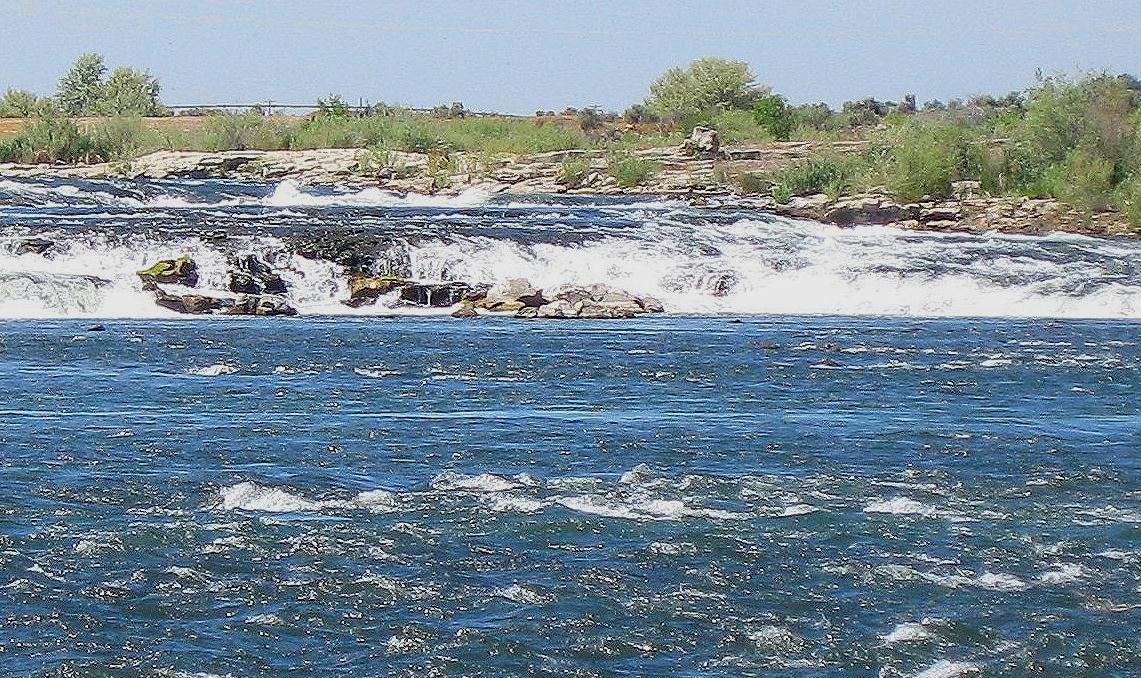
The Snake River below the Minedoka Dam that created Lake Walcott. -- Photo by Pat Bean

A siren signals the release of water from the dam, and I know on hearing it that the river’s rise turns up the volume of the music. When I first got here, because of rain and snow melt, that siren was going off every few hours.

A white water stretch in the Snake just below the dam particularly roars with intensity when the river rises. Depending, I think, on the direction of the wind, the river music can either sound like a revved-up dragster or simple be an unrecognized part of the background, like the silent running of a refrigerator.

The lake and river music drown out the chaos of the real world, which is probably why I find water soothes my soul.

What soothes yours?

Read Full Post »

Common mullein just starting to blossom -- Photo by Pat Bean

“Oh, grey hill,
Where the grazing herd
Licks the purple blossom,
Crops the spiky weed!
Oh, stony pasture,
Where the tall mullein
Stands up so sturdy
On its little seed!”
– Edna St. Vincent Millay

Travels With Maggie

Beautiful walk this morning here at Lake Walcott, where the mullein’s tall stalks are just beginning to fill with yellow blossoms.

As the weather has turned warmer – although not into the triple digits my family and friends back in Texas have been enduring – things have become to pop out. I see something new every morning when I take my walk with Maggie.

Mullein with the park and lake in the background. -- Photo by Pat Bean

This morning was especially nice, and so I decided to take a break from my African Safari to share it with you.

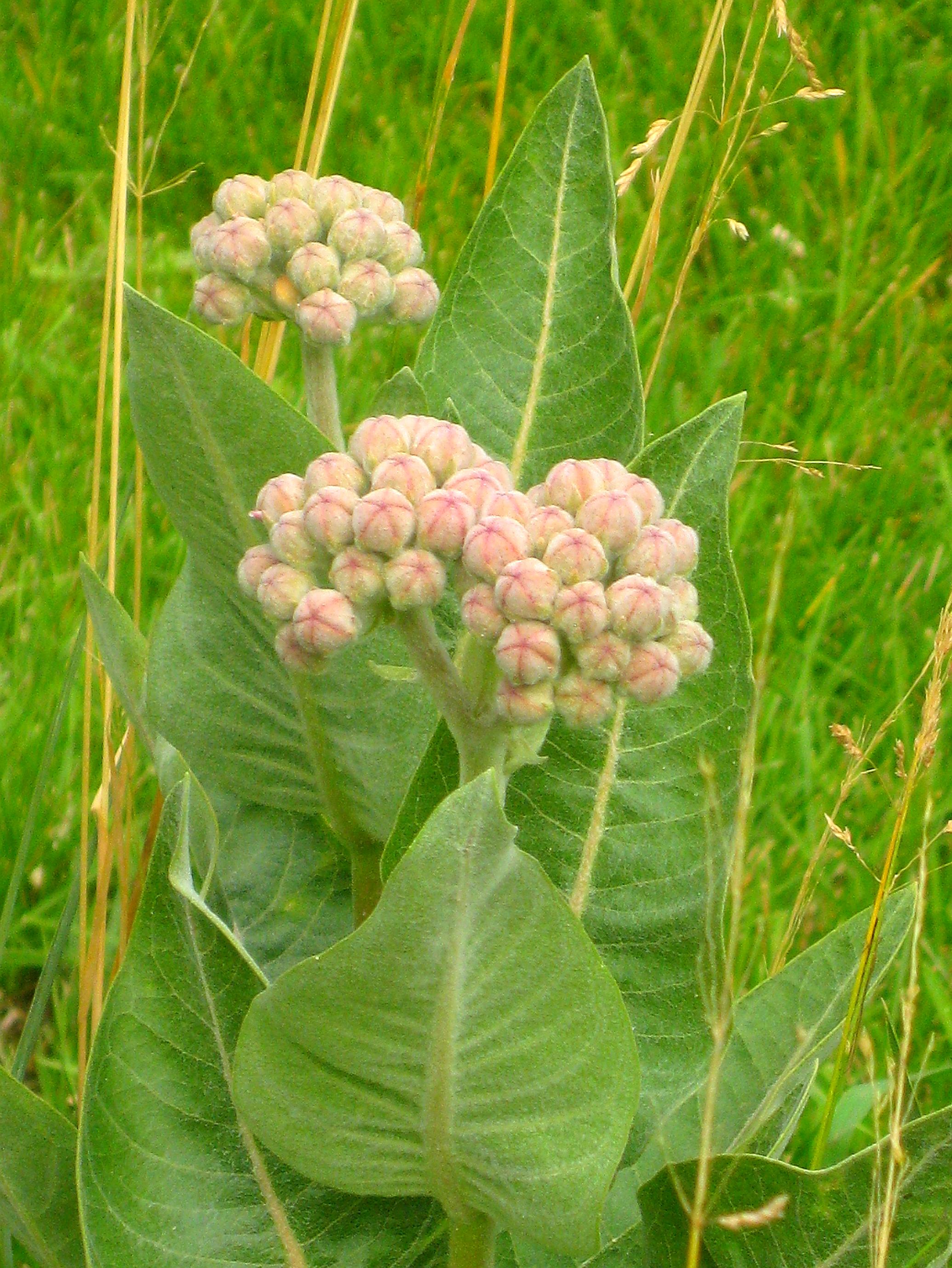
I’m not sure what the wildflower below is, although I think it may belong to the onion family. Perhaps one of you wildflower experts can identify it. I hope so because I really do like to know the proper names of things.

Meanwhile I’ll be back later today with more recap of Kim and my African Safari adventures.

Who can name this plant? -- Photo by Pat Bean

Read Full Post »

Overview of Lake Manyara -- Wikipedia photo

There are no foreign lands. It is the traveler only who is foreign.” – Robert Louis Stevenson.

African Safari: A Morning of Firsts

These tall fellows that eat leaves shape the acacia trees so they look like umbrellas. -- Photo by Pat Bean

Our morning agenda, according to the carefully arranged plans detailed in the booklet of our journey prepared by the African Adventure Company, was a two-hour drive to the Serena Lodge at Lake Manyara for lunch.

Such a terse description now seems obscene.

On our way there, we saw our first lions, a mating pair, which made the sighting more special, even if it also made us voyeurs. We also got our first view of giraffes and cheetahs, the later being a mom with three youngsters.

New life birds, meanwhile, were coming into view so fast that I truly couldn’t keep

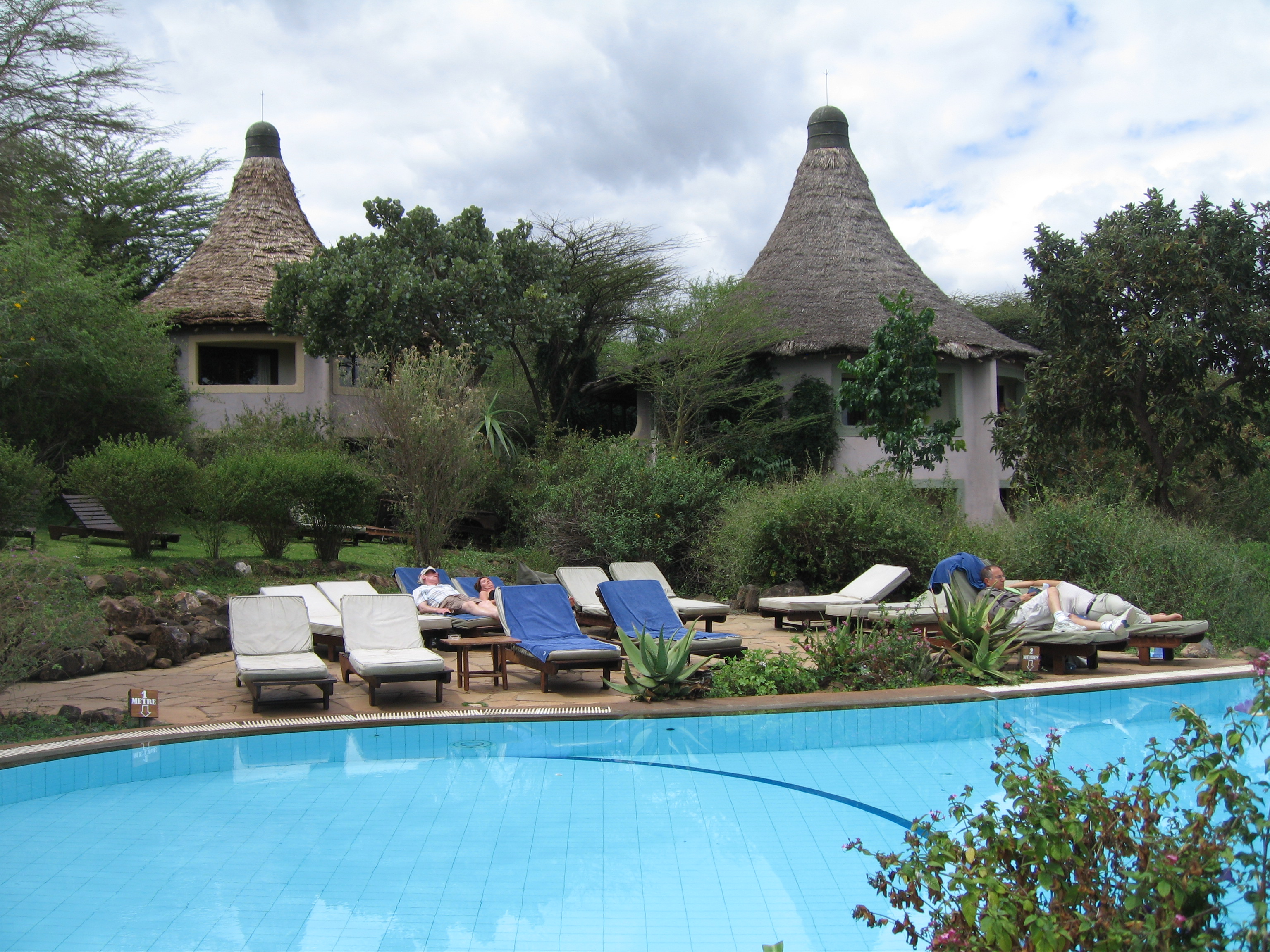
The Serena Lodge as viewed from the compound's pool. -- Photo by Pat Bean

up with identifying them. Bilal helped, but I later realized that while he was great at putting a name to the larger and more common birds, he was not quite as good at the smaller, obscure birds of interest only to crazily addicted birders like myself.

Lake Manyara, located along an escarpment of the great rift, and called “the loveliest … setting in Africa” by Ernest Hemingway, provides habitat to over 400 bird species, including marabou storks, which when I saw a flock of them in some overhead trees thought were the ugliest birds I had ever seen.

White-headed buffalo weaver -- Wikipedia photo

They were hanging about an outdoor market just outside the Serena Lodge compound. As we passed it, my attention was taken away from the birds to an exhibit of colorful African paintings. When I expressed interest in them, Bilal quickly cautioned us not to visit the market unescorted.

As we passed through a fence and guards to get to our accommodations, I realized that our safety was important not just to Bilal, but the country’s entire tourist interests. Harm to any one safari participant would mean bad publicity for business.

As beautiful as this superb starling is, it soon list its glamour because it was so common. We saw them everywhere. -- Wikipedia photo

The Serena Lodge, where we were to spend the night, was owned by India businessmen and staffed by local natives – as were most of the places we stayed at during our trip. It was a grandiose eye-popper.

Our rooms were circular, situated in tall, white-washed roundavels with thatched roofs. The structures sat on a cliff that provided panoramic views of the landscapes and wildlife below. A large swimming pool went right up to the edge of the escarpment.

Taita fiscal -- Wikipedia photo

Lunch was served in an outdoor setting, with birds frequently flittering about. It made for very distracted eating, but a perfect meal, especially with the bottled Coke we ordered to go with it. It was so much tastier than the ones we get in America.

Everything about the Serena Lodge was delightful, and everyone catered to our slightest needs. But the real Africa, both Kim and I knew, lay outside this guarded sanctuary where Bilal didn’t want us to go without him.

I had that decadent feeling again – but I was enjoying every minute of it.

Bird log of New Lifers: Augur buzzard, gray heron, yellow-necked spurfowl, black-shouldered kite, white-headed buffalo weaver, African gray hornbill, superb starling, northern white-crowned shrike, taita fiscal and marabou stork. (August 22, drive from Arusha Coffee Lodge to Serena Lodge near the main entrance to Lake Manyara National Park).

We also saw lots of cattle egrets, is a bird now common in North America, having first migrated to the United States from Africa in the 1940s. I would see many more of them on our wildlife outings while in Africa.

Next: An Afternoon in Lake Manyara National Park.

Read Full Post »

A starling chick getting its first look at the world. -- Photo by Pat Bean

“Now and then it’s good to pause in our pursuit of happiness and just be happy.” — Guillaume Apollinaire.

Travels With Maggie

I seldom get in funk, but that’s what I found myself in this past week. I’m not sure it was just my computer problems either. Thankfully Mother Nature stuck around to hold my hand and point out how precious every minute of life really is.

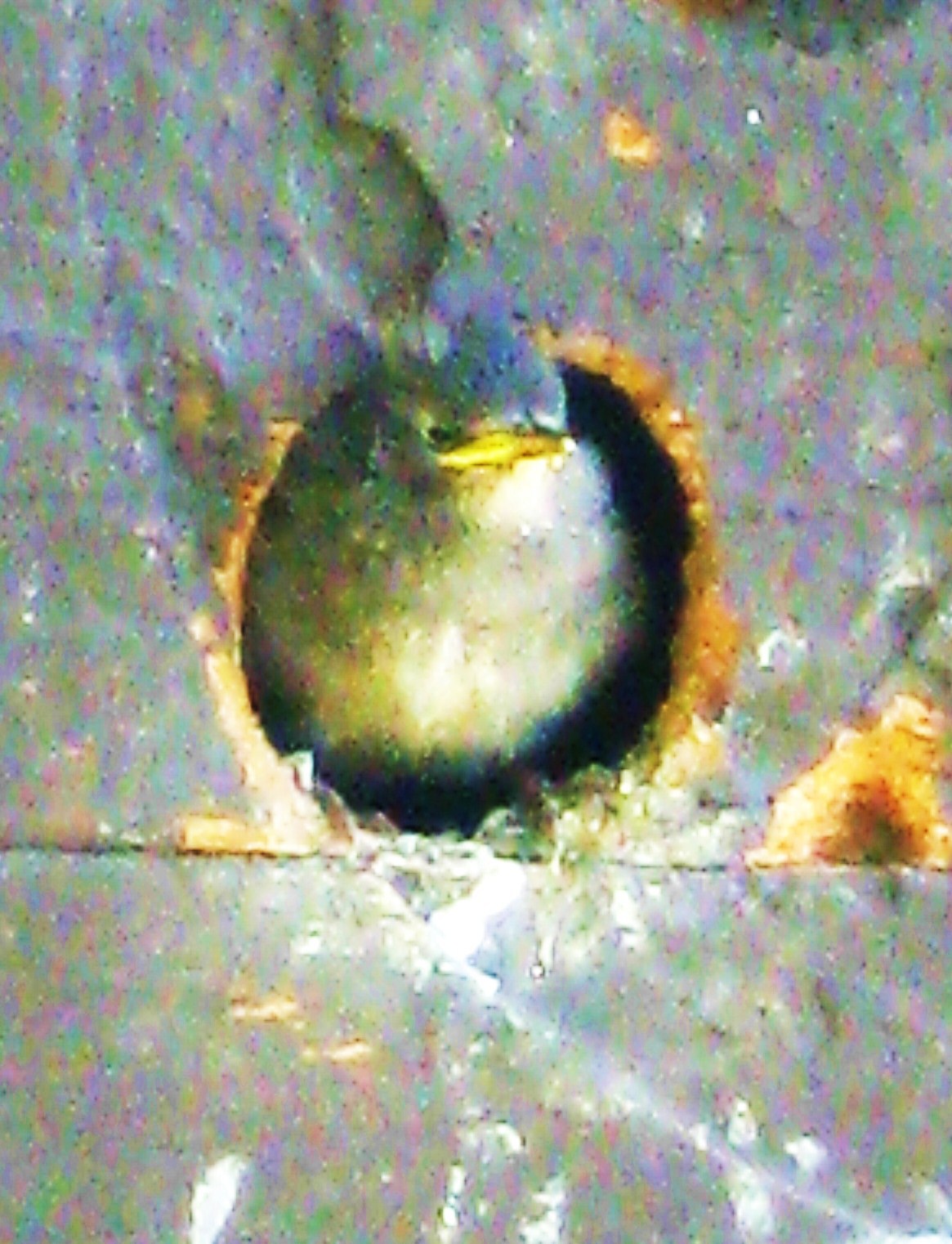
A pair of European starlings have been nesting in the self-pay kiosk here in the campground at Lake Walcott State Park. For weeks I’ve been watching as they disappear and reappear from a hole in the back of the small structure.

Yesterday morning I was rewarded with the end result of all the starlings’ hard work. I watched as a chick emerged from the hole for a look at the outside world. It sat on the rim of the hole looking amazed, and totally unafraid of the strange new sights.

It made me recall all the birds I saw in the Galapagos Islands that hadn’t yet, and hopefully never, been given reason to fear humans. I had a Galapagos mockingbird actually land on my shoe, and a blue-footed booby that refused to move off a trail to let me pass. I was the one who had to go around.

Later, when Maggie and I took our daily circuit around the park, Mother Nature continued to share her wonders with me.

Mother Nature is generous with her gifts here at Lake Walcott State Park. -- Photo by Pat Bean

The huge willow trees that were leafless when I first arrived in May are now bursting with lush green leaves that dip down to the ground. The frosty green Russian olive trees add texture to the park’s lively green landscape, while the flowering trees give it color.

Honking geese, giggles coming off rushing rapids on the Snake River that feeds the lake, screeching killdeer, rustling tree branches and cheery robins provide the musical background.

It’s as if Mother Nature is laughing at my funk and telling me to get over it. I heeded her advice.


Read Full Post »

            “If you feel the urge, don’t be afraid to go on a wild goose chase. What do you think wild geese are for anyway? – Will Rogers

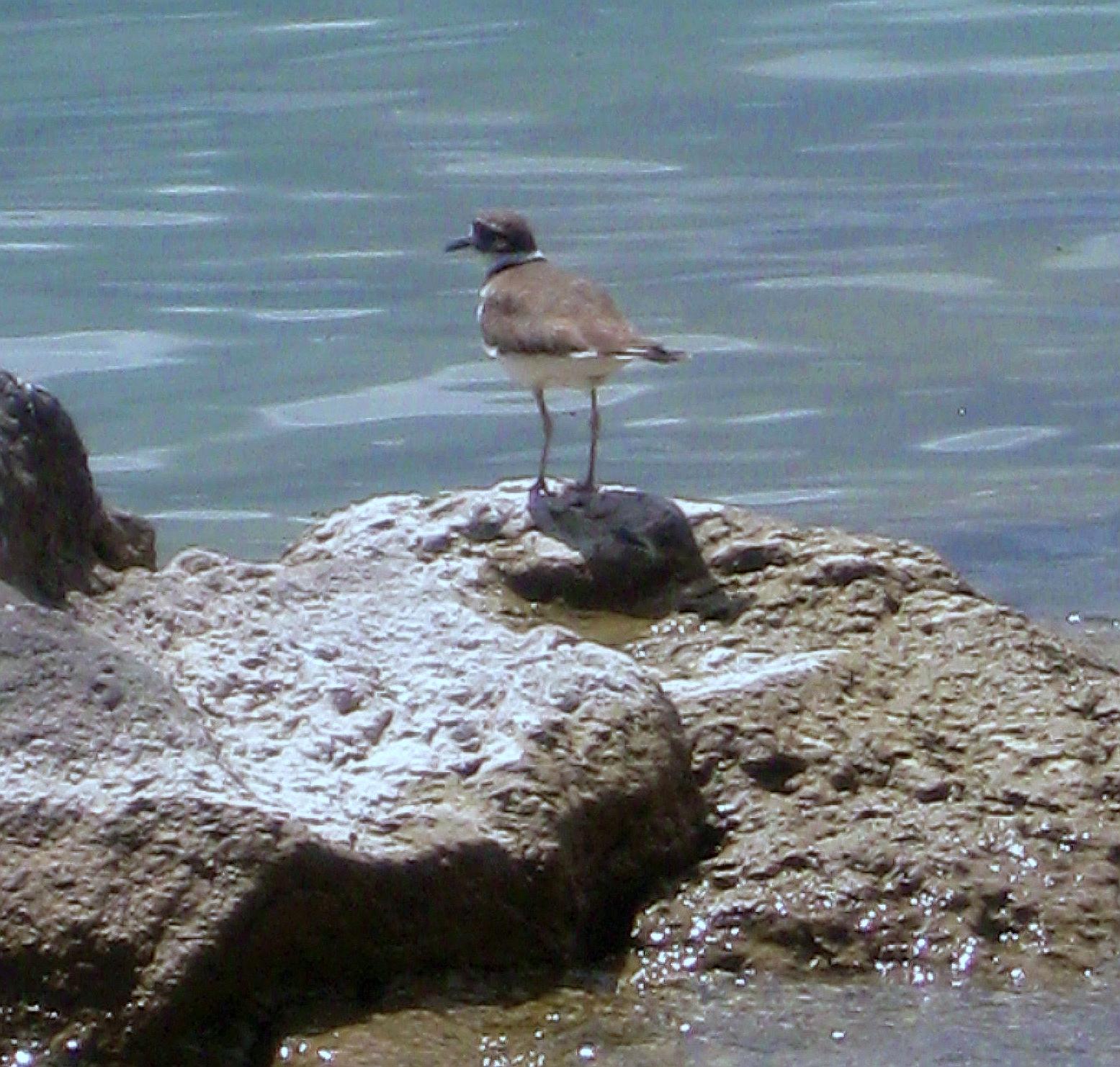
This killdeer is acting more like the plover shorebird it is, than all the others I've seen here at Lake Walcott. The many others I've seen have all been in the grass away from the water. -- Photo by Pat Bean

Travels With Maggie

            My morning stroll this morning was punctuated with killdeer along every path. Although a shorebird, the killdeer is more often than not found in grassy areas, where it builds its nest and raises its chicks. Whenever trespassers enter the nesting zone the killdeer, both male and female, will attempt to lure you away.

            They do so by walking on the ground, often holding out one wing as if broken, until you are a goodly distance away from their nest or chicks. Then they’ll fly out of harm’s way.

             A pair Maggie and I came across this morning stayed barely six feet ahead of us, screeching as they hurried along to make sure they had our attention.

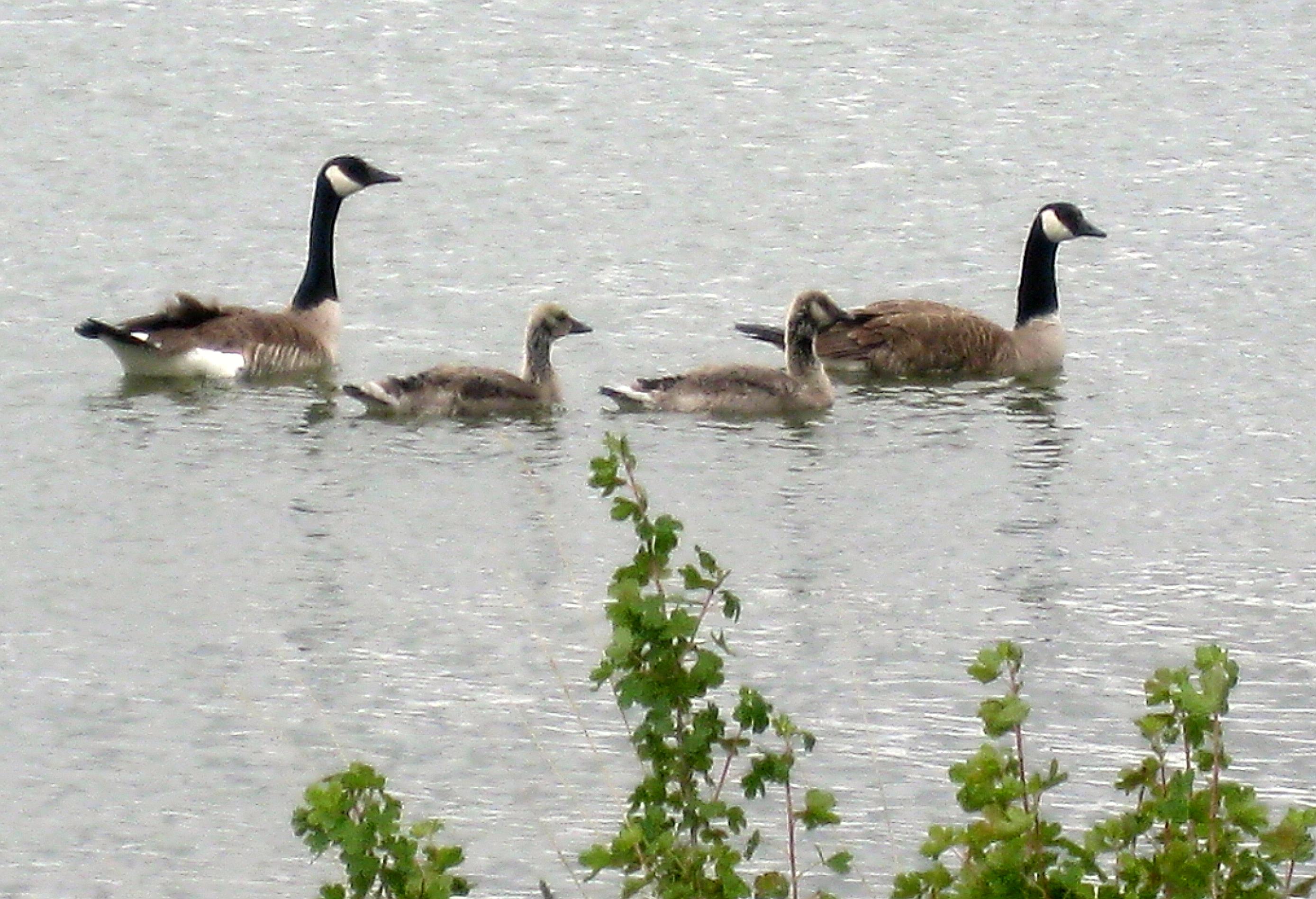
These young Canada geese are looking more and more like their adult parents every day. -- Photo by Pat Bean

            I once found a nest of killdeer chicks by ignoring the adults, who hopped away in different directions, by looking where they didn’t want me to look. I didn’t stick around long watching the long-legged bits of fluff, however. The parents’ wails quickly pierced my heart, and after only a couple of minutes I left the family in peace.

            I haven’t seen any killdeer chicks here at Lake Walcott yet, but I have been watching a pair of Canada geese with two chicks. They were already past the frothy yellow fuzz stage when I arrived mid-May, and are quickly taking on a more adult appearance.

This morning I found the family just off shore, where they felt safe enough to not swim away immediately. Thankfully I hadn’t forgotten my camera.

Read Full Post »

« Newer Posts - Older Posts »