Feeds:
Posts
Comments

Archive for the ‘Journeys’ Category

The photo I took of a tortoise on Santa Cruz Island in the Galapagos in 2004. — Photo by Pat Bean

“The tortoise only moves forward by sticking his neck out. I think it’s the same with humans.” – Pat Bean

I Met the Two Famous Ones

            There was a story about Diego in the New York Times this week that brought back memories of my 2004 trip to the Galapagos Islands. Diego is a tortoise that was taken from Espanola Island to the San Diego Zoo sometime in the 1930s. He belongs to the species of giant tortoises scientifically known as Chelonoidis hoodensis, or more commonly the Espanola tortoises.

Diego, the 100-year-old tortoise who has helped bring his species back from the brink of extinction.

There were originally 15 tortoise species in the Galapagos, but five of them are now extinct, with the last of the five dying out with the death of Lonesome George in 2012. I got to see both George and Diego at the Charles Darwin Research Station on Santa Cruz Island during the week that I spent cruising from island to island in a 16-passenger catamaran. Both of the tortoises stories fascinated me.

Lonesome George’s because he was the last of his species, and Diego, who had been brought back to the Galapagos in 1977 to help his species avoid extinction. At that time, there were only a dozen of his species known to still be alive, and while 10 of those were females, the two males were too young, too inexperienced, or too stand-offish to mate with them.

Diego’s male macho instincts on being returned to the Galapagos solved that problem. By some estimates, Diego, who is now 100 years old, has fathered over 800 tortoise babies.
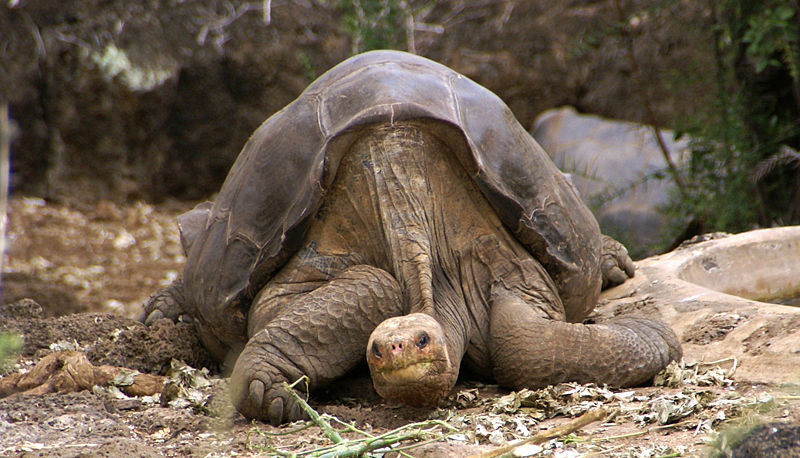
Lonesome George before his death in 2012, He was the last of his tortoise species.

The Galapagos tortoises, which can weigh up to 900 pounds or so, have shells of various sizes and shapes. The ones living on humid highland islands are larger with domed shells and short necks. On islands with dry lowlands, the tortoises are smaller with long necks. Darwin noted these differences during his second visit to the islands in 1835, and they most likely, along with his observation of finches, helped him contemplate the theory of evolution.

As stories go, Diego’s is the one I like best. While the demise of the tortoises from about 250,000 in the 16th century to only about 3,000 in the 1970s is primarily due to the fact that humans think they tasted good, it was humans who also helped bring their numbers back up. Currently, there are about 20,000 tortoises in the wild – and Diego, who is scheduled to be released back on Santa Cruz Island will be one of them.

Blog pick of the Day. Check it out.

Bean Pat: My Botanical Garden http://tinyurl.com/jbswvwm I love the thought behind this blog. It’s sort of like my desire to always look for that silver lining, like the fact there are more tortoises in the world today than there were 50 years ago.
Read Full Post »

“If you don’t have time to read, you don’t have the time (or the tools) to write. Simple as that.”  — Stephen King

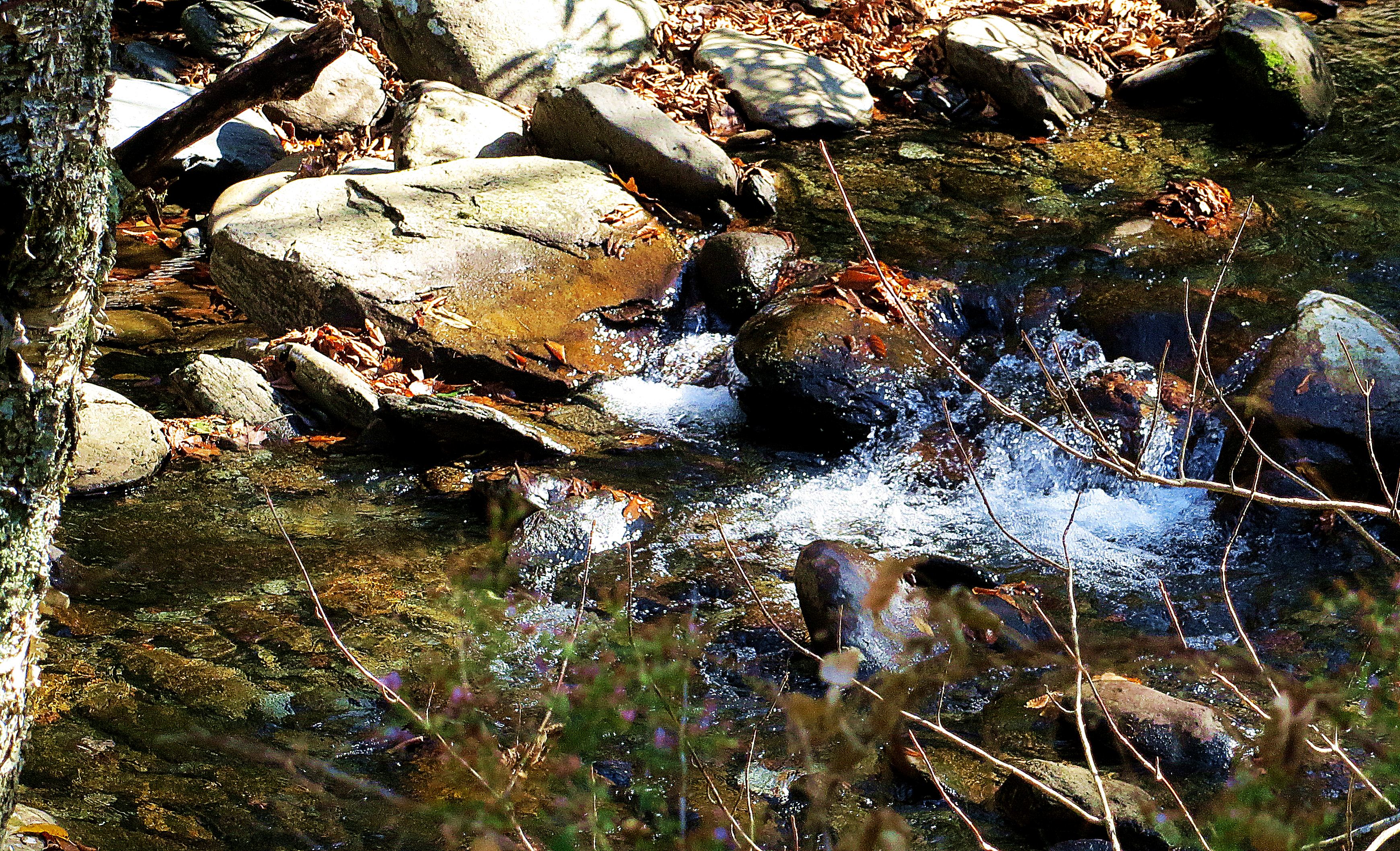
A good writer will let you see beyond the picture and hear the water gurgling. — Photo by Pat Bean in Smoky Mountain National Park.

Five Books at a Time

My reading table always contains five books. In addition, there are books scattered all around my house – many waiting to become one of the five that are currently being read. I usually read the selected five one chapter at a time, rotating between them in order.

Well that’s what I do until one of the five demands I continue reading until I finish it without stopping, which I have to admit, is not a rare occurrence. And if that happens, nothing else gets done until the book is finished – and I love it when this happens.

I started my unusual reading habit for two reasons. The first is that there are books that I knew I wanted to read, but couldn’t seem to get into them. If I recall correctly, the first time that happened was with a James Michener novel, The Source. So I began reading just a few pages in it every night, and then I would pick up a book that held my attention better, At some point in Michener’s book, my interest took hold and I finished it quickly.

A good writer can place you in this forest and let you see the colors. — Photo by Pat Bean

I’m not a speed reader, but I can read fast when my attention is harnessed. On average, I read two complete books in a week. Reading too fast, however, was my second reason for reading several books at a time. Once a book takes hold of me, especially if I want to know what is going to happen next, I find myself reading so fast I don’t digest what I’m reading,

By reading several books at a time, I find myself better able to remember what I’ve read, maybe because I have to recall what went before when I return to the book. It works for me is all I can say.

Another habit I have is reading with both my journal and my daily to-do list nearby. In the journal, I write down quotes from the books, and my own thoughts about things I read. On my to-do list, I often jot down names of places that are mentioned, which I will later locate on a map or read more about. I also write down any words I do not know the meaning of, and will later look them up in a dictionary. This habit means nary a day goes by that I don’ learn something new.

Meanwhile, this slow-down ritual of reading that I’ve developed is also a tool for studying good writing, a habit that hundreds of authors have suggested makes for good writing. And good writing is definitely something I’ve come to love and appreciate. It was actually a piece of good writing that inspired this blog. After copying the paragraph down in my journal, I was inspired to share it.

I came across the paragraph in an essay by Eric Hansen that was included in his book, The Bird Man and the Lap Dancer: Close Encounters with Strangers.

It is the story of an elderly Russian woman who narrowly escaped with her life during World War II, and who now lives in a rent-controlled apartment in one of New York City’s worst sections of town. The woman, known as Madame Zova, warns Eric not to visit at night because it is too dangerous. He admits he is afraid to visit in the day, too, But he does. Later, when Eric has moved to California, he talks to Zoey, as he came to call her, on the phone, and asks if she is afraid to live alone. It is her reply, which Eric recalls in a marvelous piece of writing, that moves me intensely.

“No,” she said. “I am not afraid because I know what it means to love life and survive. People with no belief and no faith and no hope are like empty box. They have nothing. Miracles happen every day. You think red tulip growing from black soil is not a miracle?”

So what good books are you reading?

Blog pick of the Day. Check it out.

Bean Pat: The Day After http://tinyurl.com/htebvmj As a person with wanderlust in my soul, these photos made me want to take a walk. Perhaps they will affect you the same way.

Read Full Post »

img_3981

2001 Memories of a Non-Wandering Wanderer

Among the first new sights I saw, as the M.V. Columbia as the large ferry left Haines, were sea otters and porpoises in the water around the boat. Then, farther out, I watched as a humpback whale surfaced. It was as if this portion of my journey had been blessed.

I can't think of too many animals cuter than a sea otter. Can you? And seeing them in the wild was as good as it gets. -- Wikimedia photo.

I can’t think of too many animals cuter than a sea otter. Can you? And seeing them in the wild was as good as it gets. — Wikimedia photo.

Despite being tired from a half day of driving and a half day of sight-seeing, the spirit of the voyage encouraged me to stay up late and watch as our boat maneuvered through the Wrangell Narrows in the dark hours of the early morning.

The Narrows is a 22-mile long winding channel that is too shallow and narrow for the larger cruise ships to navigate. It requires an expert pilot to maneuver through the passage’s sharp turns. I could almost feel the tension as the ferry approached the town of Petersburg, which marks the north entrance to the channel. I dutifully watched the lighted buoys marking the path ahead – but that was pretty much all I could see in the dark.

Shortly after Petersburg, I gave up and went to bed in my tiny room on my tiny bunk.

Bean Pat: In search of snow http://tinyurl.com/hlolo66 Beautiful snowy photos that I enjoyed traveling through in my armchair.

Read Full Post »

A page from my journal with a picture of the ferry that I took.

A page from my journal with a picture of the ferry that I took.

            “Travel is like love, mostly because it’s a heightened state of awareness, in which we are mindful, receptive, undimmed by familiarity and ready to be transformed. That is why the best trips, like the best love affairs, never really end.” — Pico Iyer

2001 Memories of a Non-Wandering Wanderer

Map of the Alaskan Marine Highway.

Map of the Alaskan Marine Highway.

            It was early afternoon when I arrived in Haines, where I continued to see bald eagles, plus puffins and a big-eyed seal. I still had plenty of time before I would drive myself aboard the M.V. Columbia for the three-day cruise down the Inside Passage to Bellingham, Washington.

To pass the time, I explored the small town, and visited the local history museum, where I learned all about Tlingit symbols, which I had been seeing on totem poles. Originally, totem poles were carved and raised to represent a family clan’s dignity, accomplishments, adventures and stories. Learning what the symbols meant helped me better appreciate the totem poles I would see later.

Afterwards I went in search of a Coke to quench a sudden craving – and couldn’t find one. I had to laugh at that – and be thankful for the surprises of travel. I then got in the vehicle line to board the ferry.

Haines, Alaska. -- Wikimedia photo

Haines, Alaska. — Wikimedia photo

After parking my car in the large space below, I went up on deck to find my cabin, a tiny like hall with a small porthole at the far end, and just enough room to squeeze in and sit on its bunk bed. I noted that passengers without rooms simply claimed a lounge chair on deck. I wished I had done the same. But when I booked the reservation, I hadn’t known that was possible.

Hmmm. Perhaps I should add taking the Alaska Ferry a second time to my bucket list. It was an exciting adventure.

Bean Pat: Morning Walk http://tinyurl.com/zhrr7rs With coffee and reflections. One of my favorite bloggers.

Read Full Post »

“The real voyage of discovery consists not in seeking new landscapes, but in having new eyes.” Marcel Proust

Forget-me-nots by the roadside. -- Wikimedia photo

Forget-me-nots by the roadside. — Wikimedia photo

2001 Memories of a Non-Wandering Wanderer

I remember clearly when Alaska became a state in 1959. It had been an issue that had been discussed in the news for several years before it actually happened. And it had been one of the issues I debated in school.

Bald Eagles near Haines ... Wikimedia photo

Bald Eagles near Haines … Wikimedia photo

I remember that I took the opposing view, and one of my arguments against Alaska becoming a state was that it would mean Texas would then be only the second smallest state. Dumb argument, but what do you expect from a 14-year-old native Texan. And as I recall that argument was met by another 14-year-old who said: Alaska wouldn’t be bigger if all the snow and ice were melted away.

I thought about those school days as I drove from Haines Junction, Yukon, to Haines, Alaska, where I would catch a Ferry that would take me and my vehicle on the Inland Passage to Vancouver, Washington.

It was yet again another scenic drive, one with quite a few lake overlooks, an abundance of ground squirrels flittering here and there, trees full of bald eagles and roadsides full of small blue flowers.

Forget-me-not, up close and personal

Forget-me-not, up close and personal

I identified the flowers as Forget-me-nots, and learned it was Alaska’s state flower. From an Alaska guidebook, I also learned that the For-get-me not was first adopted in 1907 as the official flower of the “Grand Igloo,” an organization formed by pioneers that had arrived in Alaska before 1900, and that in 1917 it was proposed that the flower be declared the official emblem of the newly created Alaskan Territory. Esther Birdsall Darling wrote a poem for the occasion:

        So in thinking for an emblem

        For this Empire of the North

        We will choose this azure flower

         That the golden days bring forth,

        For we want men to remember

        That Alaska came to stay  

       Though she slept unknown for ages

        And awakened in a day.

        So although they say we’re living  

       In the land that God forgot,  

       We’ll recall Alaska to them

        With our blue Forget-me-not.

The Alaska Flag

The Alaska Flag

In 1927, Benny Benson, a 13-year old Aleut boy, referenced the Forget-me not with his winning flag design for the territory. He said the blue field represented the sky and the blue of the Forget-me-not flower. The North Star is for the future state of Alaska, and the Dipper is for the Great Bear – symbolizing strength, he added.

When Alaska entered the Union as the 49th state, Benny flag was retained as the state flag – and the Forget-me-not was adopted as the official state flower.

And it seemed that everywhere I looked on the drive this day, I saw Forget-me-nots. And I never will forget them.

Bean Pat: Forest Garden http://tinyurl.com/hk8rssn Flowers and Words, lovely.

Read Full Post »


“The World is a book, and those who do not travel read only a page.” – Saint Augustine

In Tok, I watched a dog sled demonstration. -- Wikimedia photo by Mark Wilson

In Tok, I watched a dog sled demonstration. — Wikimedia photo by Mark Wilson

2001 Memories of a Non-Wandering Wanderer

After a second night in Anchorage, and another breakfast with fellow travelers, I took of to  Alaska’s largest city — and soon found myself at Earthquake Park, which was created to memorialize the 1964 Alaskan Earthquake.

According to a National Geographic article, “In Anchorage, the ground cracked open and giant fissures swallowed children whole, killing them in front of their siblings. Landslides launched tsunamis that swept away coastal villages before the shaking even ended. In Seward, spilled oil slicked the water and caught fire. When the earthquake-triggered tsunami hit minutes later, the wave was blazing.”

Rock ptarmigan were on of the more commonly seen birds while I was in Alaska. I also saw a willow ptarmigan with is Alaska's state bird. Wikimedia photo

Rock ptarmigan were one of the more commonly seen birds while I was in Alaska. I also saw a willow ptarmigan, which is Alaska’s state bird. Wikimedia photo

The park contains a portion of the two-mile slide area produced by the quake, which registered about 8.5 on the Richter scale. Looking at the remnants of the quake that killed 139 people humbled me, and reminded me that Mother Nature is not always kind.

But I got to see her kinder face — the one that so often takes my breath away because of its grandness — when I drove past the Wrangell Mountains on my way from Anchorage to Tok.

That evening, when the sun was still high in the sky, I watched a dog sled demonstration in Tok. I also spent the night there but my memory is vague on the lodging. While I can’t picture it, I did write in my journal that the Tok “hotel was rough.”

Bean Pat: Where’s my Backpack http://tinyurl.com/gp844m8 The eyes have it. This blog reminds me to keep my own eyes open to the world around me. It’s full of wonders and surprises if I just look.

Read Full Post »

            “No matter what people tell you, words and ideas can change the world,” – Robin Williams.

Beside a lake in Maine. -- Photo by Pat Bean

Beside a lake in Maine. — Photo by Pat Bean

Just Call Me an Old Broad

Picture, if you can, an image of a little old lady. Then picture the image of an old broad. I suspect the two images are nothing alike, even if they’re of the same person.

Words can’t help but define how we see things. But then there are images that can put words in our heads. The best example I can think of was when I spent a week at Wassamki Springs Campground near Scarborough, Maine, back when I was still living and traveling full-time in my RV.

View from my RV at Wassamki Springs Campground in Maine. -- Photo by Pat Bean

View from my RV at Wassamki Springs Campground in Maine. — Photo by Pat Bean

My camp site was right next to a lake, and from my RV window I once watched a moose swim across the water, and exit not more than 50 feet away. Watching that moose, I thought how lucky I was to be able to see nature take place so up close and personal.

But I also did a bit of people watching, too, especially of one elderly couple who walked their fancy poodle past my RV several times a day. They were always happy and smiling. I pictured them as an old married couple, one of the very few couples I knew, whose love had grown stronger with each passing decade. I could even see, in my mind’s eye, this old couple at their 50th wedding anniversary celebration.

Boy was I wrong.

The night before I left the campground, I met the couple at the nightly Bingo game held in the campground’s community building. I couldn’t help but laugh when I learned they were newlyweds, having been married only two months previously.

Now, instead of seeing them as a happy couple, I wondered about their pasts – and their previous partners. They had sure fooled this old broad, and changed the images in my brain.

Bean Pat: Expectations when we travel http://tinyurl.com/gm86s7x My kind of traveling and hiking

Read Full Post »

Aerial view of Seward, Alaska. -- Wikimedia photo

Aerial view of Seward, Alaska. — Wikimedia photo

“Not all those who wander are lost.” – JRR Tolkien

Salmon and Glaciers

I started off the day sharing breakfast with six other guests, then it was off on a day trip to Seward, 125 miles away. The first stop along the way was Potter’s Marsh Bird Sanctuary, where I saw salmon jumping in a stream, something I had read much about but never expected to see. I stayed a while to bird watch, and among the many species I saw, were a green-winged teal, and a red-necked phalarope, which were new birds for my trip list.

I found Seward to be a quaint tourist town, but traffic to and from it was as heavy as Utah’s I-15 between Ogden and Salt Lake, except it was squeezed into two lanes with construction going on around every curve in the road. Unlike my frustrating trips from Ogden to Salt Lake, however, I found the slowness of today’s traffic absolutely perfect. It gave me more time to enjoy the spectacular landscape along the way.

A tufted puffin. Isn't it cute? -- Wikimedia photo

A tufted puffin. Isn’t it cute? — Wikimedia photo

Once in Seward, I enjoyed a rockfish lunch at a small café with a view of a marina full of sailboats with glaciers in the background. Afterward I toured the Sealife Center, much of which had been built with fines from Exxon Valdez oil spill. I saw my first tufted puffin here, but thankfully I would see these delightful black, orange and white seabirds in the wild before my trip was ended, and could then add them to my life bird list.

Then it was on to explore some glaciers, which awed me by their brilliant colors. I never knew ice could be so full of rainbows?

It was late in the evening when I drove back to my bed and breakfast in Anchorage, but as bright as midday because it was summer in Alaska. As I drove, I heard the words of Dr. Seuss humming in my ear: Oh the places you’ll go, and the things you’ll see.

Bean Pat: Horse Trail Adventures https://horsetrailadventures.wordpress.com/ This is a blog my youngest daughter recently started. If you like horses, dogs, cat or the outdoors, I think you will enjoy it. And I’d love it if you would comment, and tell her mom sent you to check her blog out.

Read Full Post »

An Art Project

            “The purpose of art is washing the dust of daily life off our souls.”– Pablo Picasso

My art project for the day.

My art project for the day.

I Call It Entangled Passion

            It began with my friend Jean coming across an odd-sized free frame, which she gave to me. I pondered if I had anything among my art pieces that would fit it – but the answer was a negative.

Illustration of a poured painting in Just Paint It.

Illustration of a poured painting in Just Paint It.

The next step came when I checked out an art book at the library, titled Just Paint It by Sam Piyasena and Beverly Philp. The book was subtitled: The world’s most enjoyable painting course ever – and its first lesson was a pour painting, with the illustration that is pictured here on the left.

I loved the example, and then thought of the frame and its heavy wood backing, which for my next step I painted white with some acrylic paint I had on hand. I let that dry overnight, then picked out five colors from some old gouache tubes of paint, which I seldom used.

I used five plastic cups and mixed each of the colors with a little water, then one at a time I poured the colors on the board, which I had propped up at about a 60-degree angle.

Gravity, with a few touchups from me, did the rest. I love how the colors all dripped and blended together. After it was dry, and I had reinserted the board into the frame, I stared at it for a while, decided I liked it, then named it “Entangled Passion.”

But perhaps you have a better name.

Bean Pat: A New Day https://imissmetoo.me/2017/01/27/filters-and-artists/ Another artist who is having fun.

Read Full Post »

            “We live in a wonderful world that is full of beauty, charm and adventure. There is no end to the adventures we can have if only we seek them with our eyes open.” — Jawaharal Nehru

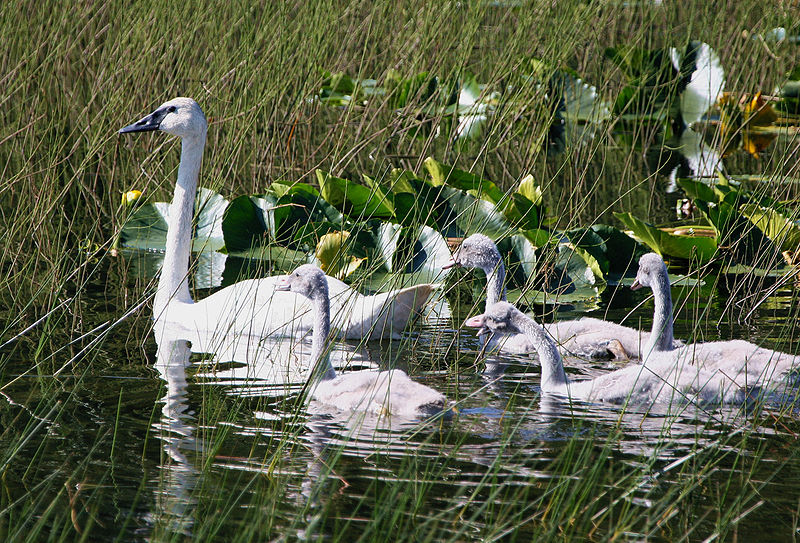
I saw my first trumpeter swan in Alaska. -- Wikimedia photo by Donna Dewhurst.

I saw my first trumpeter swan in Alaska. — Wikimedia photo by Donna Dewhurst.

2001 Memories of a Non-Wandering Wanderer

            Less wild, but just as beautiful, the 275 or so miles from Denali National Park to Alaska, took quite a bit more than the average six hours to drive because of sightseeing stops along the way.

A postcard of the Anchorage bed and breakfast where I stayed for two days.

A postcard of the Anchorage bed and breakfast where I stayed for two days.

One of those first sights along the way was a pair of beautiful trumpeter swans on a lake. I immediately did a U-turn for a closer, and longer look. It was a lifer for me. Although looking much like the tundra swan, of which I had seen thousands at Bear River Migratory Bird Refugee in Utah, the trumpeter is much larger. It is, with a wing span of six feet and weighing in at about 25 pounds, North America’s largest waterfowl.

What a great start, I thought, for the day.

Another spot along my drive that slowed my progress was the small and quaint village of Talkeetna, which felt very Alaskan. It was exactly the opposite of how I felt when I drove into Anchorage for the first time. Even the weather here is different, with more moderate winters because of its location in the southern portion of the state.

Talkeetna welcome sigh

Talkeetna welcome sigh

Anchorage’s large population, close to half a million residents, and yuppie espresso shops made the city feel more like California than Alaska.

The bed and breakfast  I had booked for two nights, however, had the feel of Alaska that I preferred. It was run by two great old ladies, one who cooked and took care of the flowers, and the other who took care of the business.

Yet another great day!


Blog pick of the Day. Check it out.

Blog pick of the Day. Check it out.

Bean Pat: Something to keep in mind. http://tinyurl.com/jfrz43y

Read Full Post »

« Newer Posts - Older Posts »