Feeds:
Posts
Comments

Archive for the ‘Favorite Places’ Category


Looking down from one of the many overlooks on the Sky Island Scenic Byway. I stopped at almost every overlook. -- Photo by Pat Bean

Looking down from one of the many overlooks on the Sky Island Scenic Byway. I stopped at almost every overlook. — Photo by Pat Bean

The Wanderings of a Nested Wanderer

Sky islands are isolated mountains surrounded by radically different landscapes. My wondering-wandering curiosity had me looking up the term after I drove the Sky Island Scenic Byway to the top of Mount Lemon as a day road trip to pacify my wanderlust. We left before the sun came up and my canine companion, Pepper, and I didn’t get back home from the 60-mile round trip until mid-afternoon.

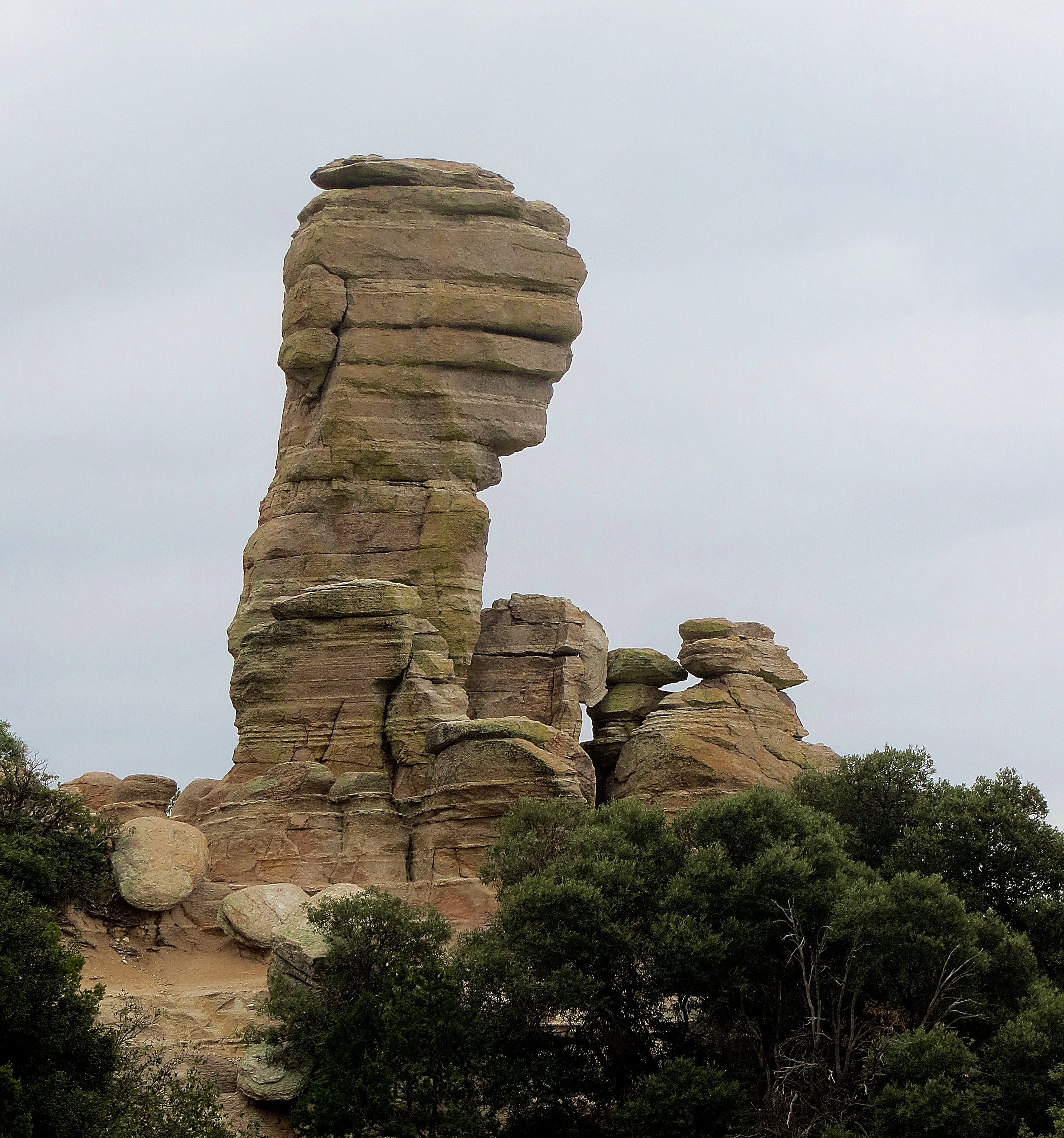
Hoodoos, like this, were plentiful along the way. I love the word hoodoo -- and the most colorful ones can be found in Southern Utah. -- Photo by Pat Bean

Hoodoos, like this, were plentiful along the way. I love the word hoodoo — and the most colorful ones can be found in Southern Utah. — Photo by Pat Bean

It was a great, soul cleansing day.

I hadn’t really heard the tern sky island until I settled in Tucson three years ago, and then it seemed to be frequently popping up. That’s because, the Catalina, Santa Rita and the Chiricahua mountain ranges that surround Tucson are all perfect examples of sky islands.

I live in the 3-000-foot shadow of the 9,159-foot tall Mount Lemmon, meaning my road trip took me from an arid desert landscape to a much cooler landscape 6,000 feet higher. It was the perfect escape on a hot day. A gazillion bicyclists thought so too. Next time, perhaps, I’ll take the drive on a weekday instead of a weekend.

Real soon, I decided.

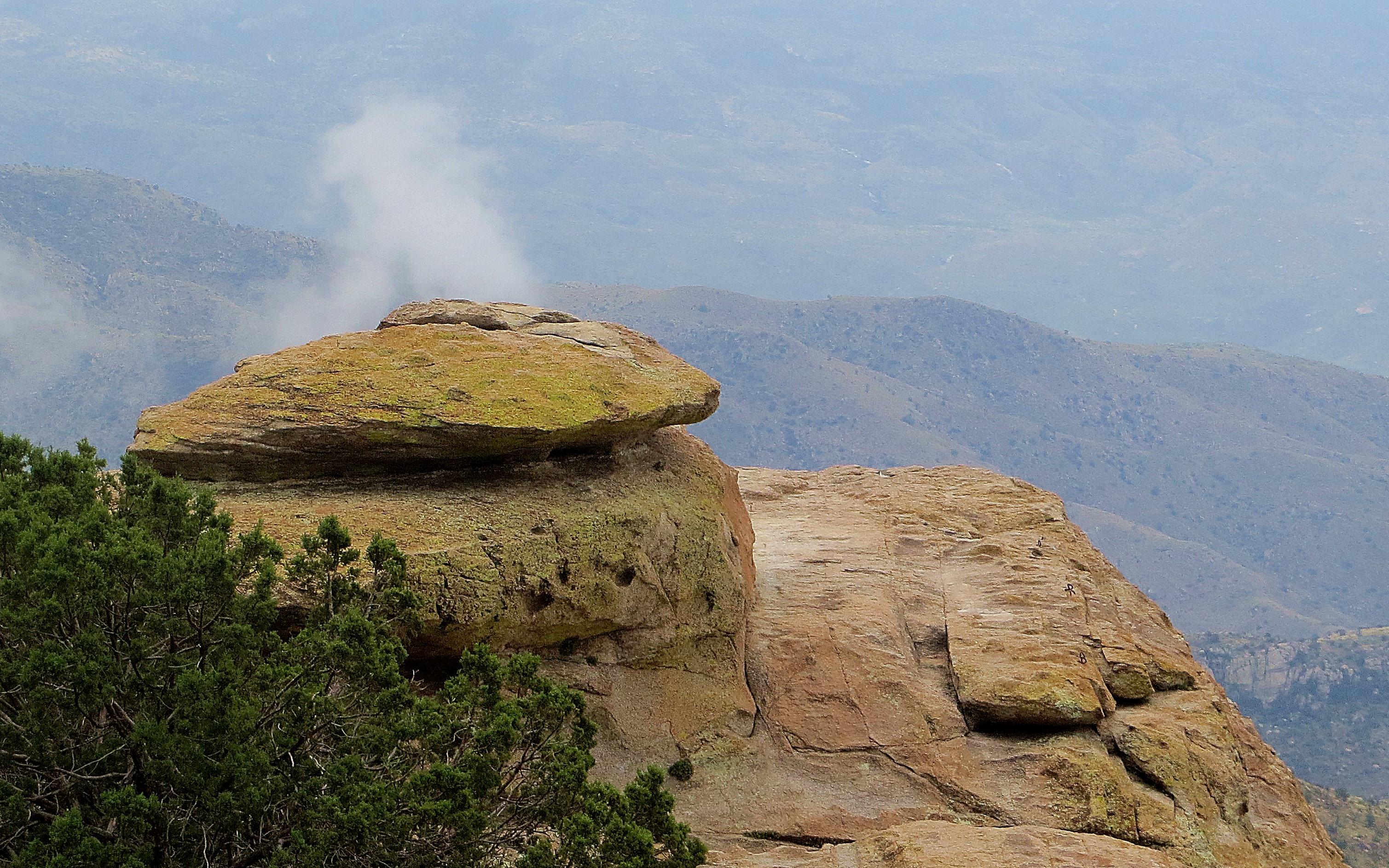
I called this one spaceship rock. -- Photo by Pat Bean

I called this one spaceship rock. — Photo by Pat Bean

Bean Pat: Raspberry Sunset http://tinyurl.com/j68j4cf Great Yellowstone wildlife capture with a camera. I love this blog.

Read Full Post »

“This idea that being youthful is the only thing that’s beautiful or attractive simply isn’t true. I don’t want to be an ‘ageless beauty.’ I want to be a woman who is the best I can be at my age. ” –Sharon Stone

Photo by Pat Bean

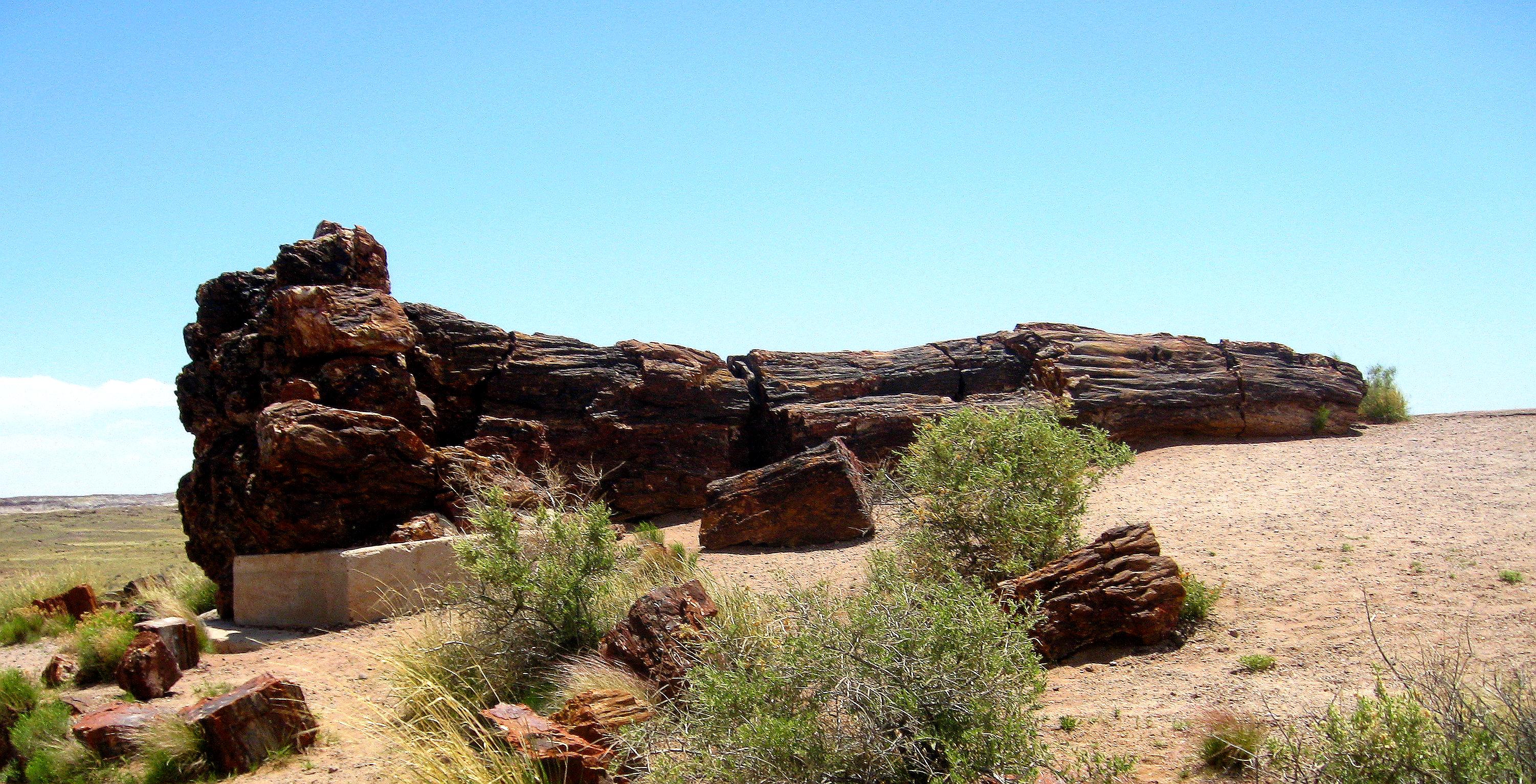
The fossilized rock tree, araucarioxylon arizonicum, known as Old Faithful, can be found in  Petrified Forest National Park — Photo by Pat Bean

An Old Tree 

Araucarioxylon arizonicum: I can’t pronounce it, but I did learn that it was one of the most common trees found in a 225 million year old forest that once thrived in what is now Arizona.

A more lively sight near the fossilized tree. -- Photo by Pat Bean

A more lively sight near the fossilized tree. — Photo by Pat Bean

The petrified remains of these trees, which are now extinct, can be seen along old Route 66 as it winds through Petrified  Forest National Park between Interstate 40 and Highway 18 in Arizona. It’s one of those great travel adventures that are so readily available when you exit the freeways.

These great conifers were buried by mud, silt and volcanic ash in ancient days, then at some point were exposed to silica-laden water that transformed organic tissues into quartz.

That, at least, is the abbreviated version of the science behind the stone trees. If you want more details, you’ll have to do your own research. It could be fun.

I tried to picture the forest as it once was, with dinosaurs roaming through it, as I stood in front of 225-million-year-old “Old Faithful,” the oldest petrified araucarioxylon arizonicum tree trunk in the park. It is located along a short hike behind the Rainbow Forest Museum near the south entrance to the park.

Araucarioxylon arizonicum, by the way, is Arizona’s state fossil.

Hmmm. I wonder if I can learn to speak the name of the tree as easily as I learned to say supercalifragilisticexpialidocious.

Blog pick of the Day. Check it out.

Blog pick of the Day. Check it out.

Bean Pat: About Elephants http://tinyurl.com/htk8jt9 This blog is really about the baobab tree, which was one of my favorite trees to see during my African safari. I loved learning more about them.

Read Full Post »

“Fame is like a shaved pig with a greased tail, and it is only after it has slipped through the hands of thousands, that some fellow, by mere chance, holds on to it!” – Davy Crockett

Lake Jackson, where I lived for 15 years and where I still have family, is called the City of Enchantment. Being able to see great egrets -- this one was photographed at the city's Sea Center but you can also see them in drainage ditches all over town -- is enchanting. Don't you think?

Lake Jackson, where I lived for 15 years and where I still have family, is called the City of Enchantment. Being able to see great egrets — this one was photographed at the city’s Sea Center, but you can also see them in drainage ditches all over town — is enchanting. Don’t you think? — Photo by Pat Bean

Travel is so Enlightening

On road trips, when I’m driving the back roads that take me through the middle of small towns, I look for the one thing that makes one place stand out from another.

For instance, did you know that Venice, Florida, calls itself the Shark Tooth Capital of the World? People actually visit this quaint, snowbird town to find them, which isn’t hard to do as the tide and waves are constantly bringing shark’s teeth and other fossils up onto the city’s beaches.
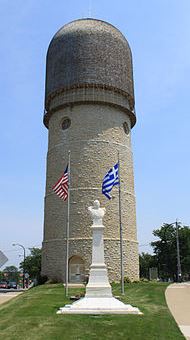
Ypsilanti's Dick Brick, errrr Water Tower. -- Wikimedia photo

Ypsilanti’s Dick Brick. Oops,  I mean Water Tower. — Wikimedia photo

Sharks, which have an abundance of teeth to begin with, are continually replacing any that are lost – and a tiger shark, for instance, can produce as many as 24,000 teeth during its lifetime. That’s according to the web site of Sharky’s Shop, an online store where you can buy shark’s teeth if you don’t want to go beach surfing.

The small town of Woodstock, Vermont, which I passed through one rainy day, as were all the days I spent in this Green Mountain State, doubled up on its privileges to fame. It claimed: to be the only town in America with four Paul Revere bells, to be the site of the first ski tow, to be the birthplace of Hiram Powers, the sculptor of “Greek Slave” for which Elizabeth Barrett Browning created a sonnet, and to be the home of railroad empire builder Frederick Billings.

Perhaps the most outrageous claim to fame by a town I’ve visited, however, is the one made by Ypsilanti, where I spent a few days. This Michigan’s town’s brag is that it is home to the “World’s Most Phallic Structure.” That title was won by the city’s 147-foot limestone water tower during Cabinet magazine’s 2003 contest to find the building most resembling a human phallus.

One look at the tower – built in 1890 by someone either with a macho bent or a sense of humor – and I could see why it must have easily won the contest. Locals call it the “Dick Brick.” It’s said that if an Eastern Michigan University student graduates while still a virgin the tower will fall down. Travel is so enlightening.

Then there’s:

Hico, Texas: Where Everybody is Somebody.

Hico, Texas: Where Everybody is Somebody.

Hico, Texas: Where Everybody is Somebody.

Camden, Arkansas: Home of the Grapette.

Hatch, New Mexico: Chili Pepper Capital of the World.

Green River Utah: Watermelon Capital of the World.

Louisville, Kentucky: City of Beautiful Churches.

Aberdeen, Washington: Port of Missing Men

Rumney, New Hampshire: Crutch Capital of the World

Abbeville, Georgia: Wild Hog Capital of Georgia

Belle Glade, Florida: Muck City

St. John, North Dakota: City at the End of the Rainbow. I’ll stop here, but if you are interested in more town nickname trivia check out: http://tinyurl.com/z9odvg6

So what’s your town’s claim to fame?

Blog pick of the Day. Check it out.

Blog pick of the Day. Check it out.

Bean Pat: Have Bag, Will Travel http://tinyurl.com/zodt2r4  This blog appealed to me because I’m always visiting odd museums when I travel. This blog about a visit to one such museum made me laugh.

Read Full Post »

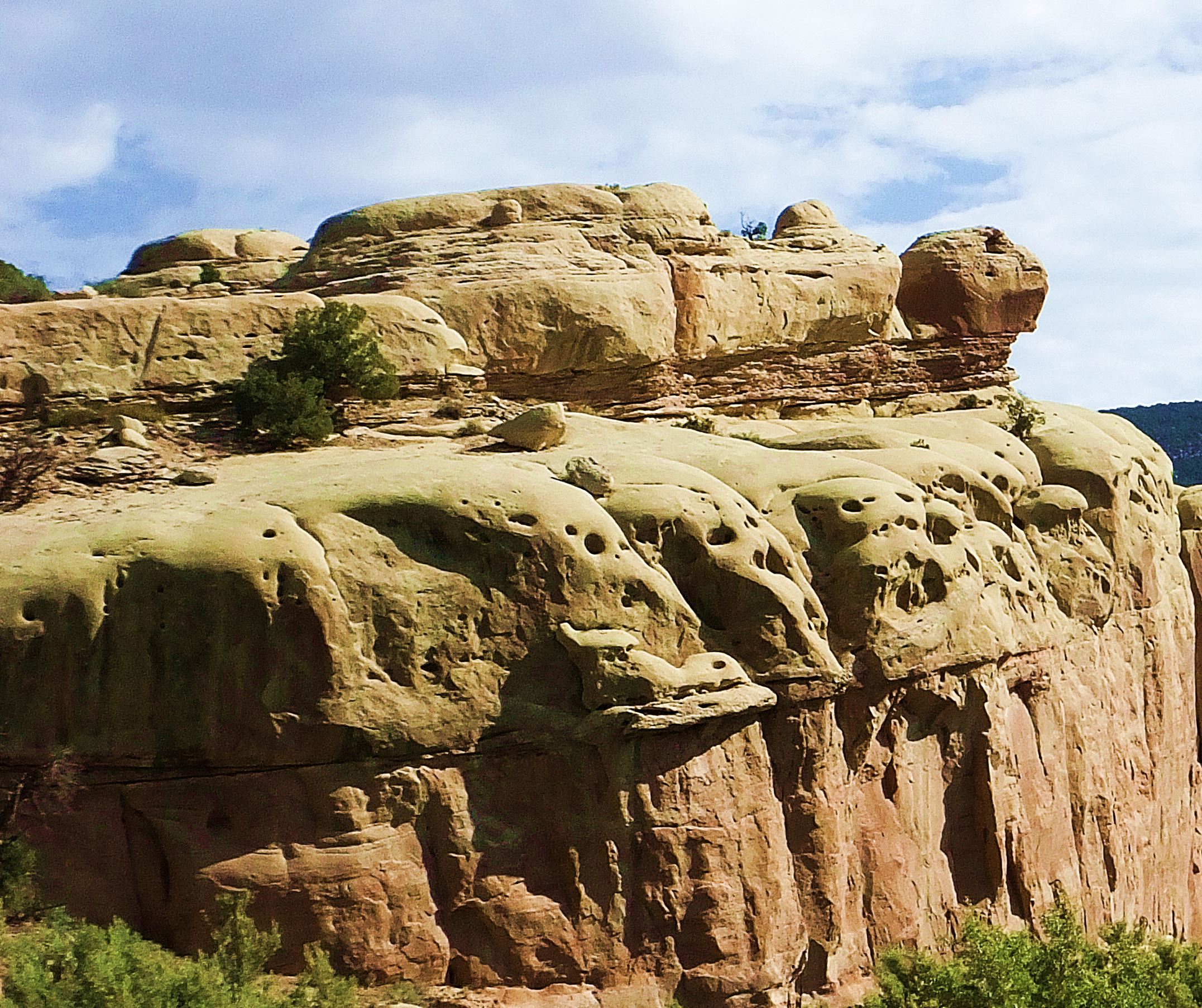
Turtle Rock at Dinosaur National Monument in Utah.

Turtle Rock at Dinosaur National Monument in Utah.

            “The world is big and I want to have a good look at it before it gets dark.” – John Muir


A Turtle and a Lizard

One Saturday morning back in January of 1999, I woke up at o-dark-hundred feeling lazy and bored after a heavy-duty work week. My first inclination, as I noted in my journal that morning and reread for the first time this morning, was to turn over and go back to sleep. That, however, was quickly followed by the words “road trip” jumbling around in my brain.

Lizard petroglyph at ; Dinosaur National Monument, Utah

Lizard petroglyph at ; Dinosaur National Monument, Utah

Knowing which of those two thoughts would reinvigorate me more, my then canine companion Peaches and I set out on a day trip to Dinosaur National Monument, a mere 250 miles away from my Ogden, Utah, home. .

We left in time to see what I think is the most magical moment of the day, those seconds between night and dawn when the world is all gray and silvery and the world recatches its breath – and so do I. But we missed it because of the bright street lights on Harrison Boulevard as we exited the city. I was disappointed, but I consoled myself by knowing the day was young and there were still magical moments ahead that I wouldn’t miss. It’s the same feeling I have at the start of any road trip – and I’ve never been disappointed.

Among the sights I recorded on the drive to the dinosaur quarry were a farmer feeding his cows, snow in Echo Canyon and ice fishermen out on Strawberry Reservoir. I stopped in Heber for breakfast, where I was waited on by a grandmotherly woman who sweetly called me honey. Her words took me back to my Southern-raised origins.

There was more snow after Heber, but the road was mostly a sandy slush as the snowplows had already been out. I passed a guy rubbing snow on his car’s windshield to clear it, and was thankful my wipers and windshield fluid were keeping mine clean. The windshied fluid, however, ran out just as I was coming into Duchesne, where thankfully I stopped at a gas station and replaced it so I could see clearly again.

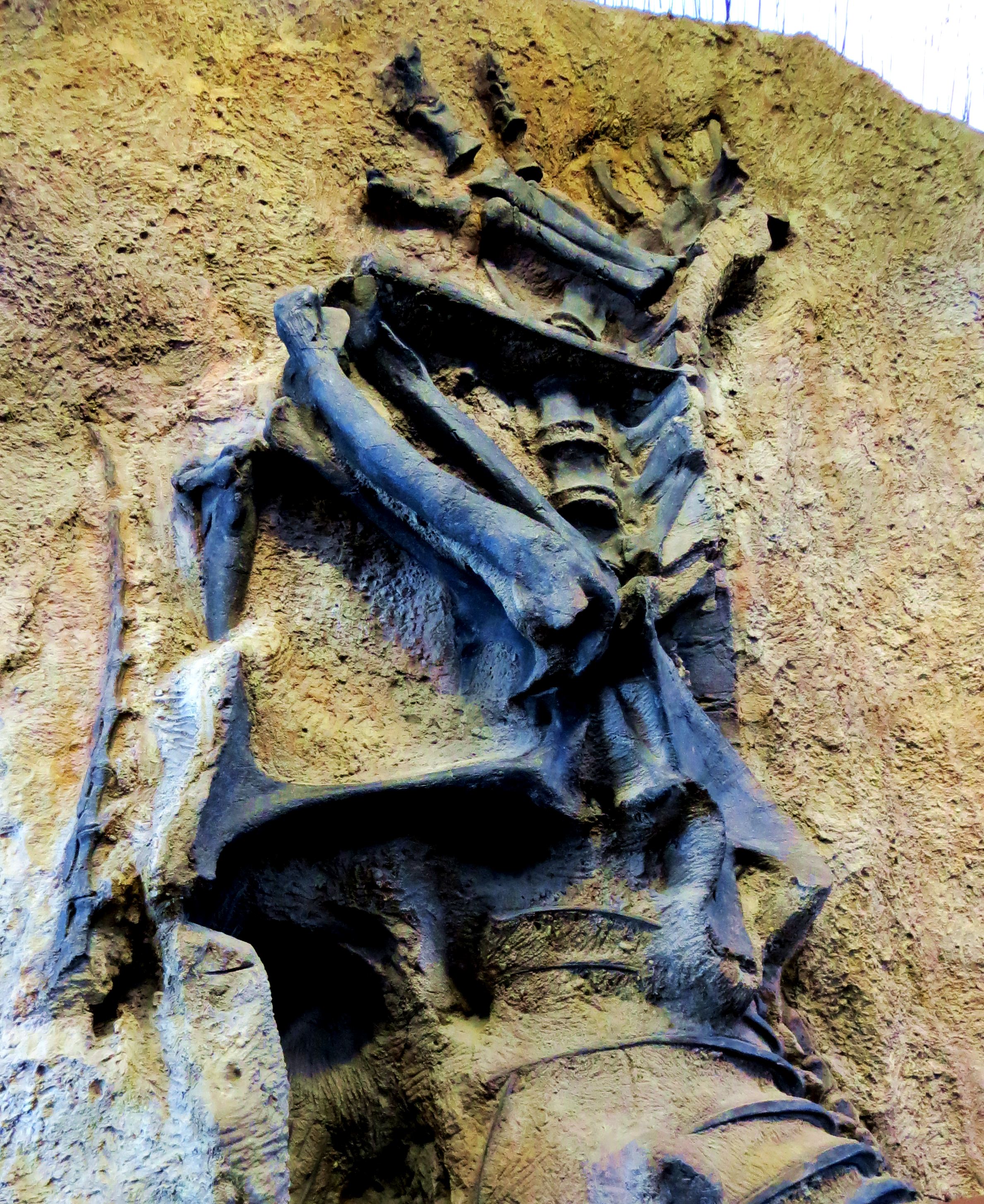
Just a few of the 1,500 or so dinosaur bones on display at the monument's enclosed quarry exhibit.  -- Photo by Pat Bean

Just a few of the 1,500 or so dinosaur bones on display at the monument’s enclosed quarry exhibit. — Photo by Pat Bean

After Duchesne, it was sunny and bright all the way to the Dinosaur Monument, which was located east of Roosevelt. On arriving, I didn’t spend too much time looking at the actual bones of dinosaurs exposed by diggers in the quarry. I was more in the mood to explore the 10-mile Tilted Rocks Road, which is rife with petroglyphs and pictographs, and scenic views of Split Mountain, which a few years earlier I had rafted past on the Green River.

It was memories of a quick drive on this stretch many years earlier that had been in my mind as destination for this morning’s spur-of-the-moment road trip. And this time, as I had not earlier because someone else was in charge, I was able to leisurely enjoy the drive at my own pace. I stopped often to get closer up views of the wall paintings and landscape. I saw mule deer, rabbits and visited a shelter site that may have first been used over 9,000 years ago.

The views of Turtle Rock and the Lizard on the Rock were two of my favorite sightings. They held the magic for me that made up for missing the gray still seconds between day and night.

I didn’t pull back into my driveway until well after dark, and after encountering more snow in the mountains. It had been an invigorating road trip, and I didn’t feel lazy or bored anymore; nor did Peaches, who enjoyed a good romp in the snow on our return drive.

Blog pick of the Day. Check it out.

Blog pick of the Day. Check it out.

Bean Pat: Glenrosa Journeys http://tinyurl.com/htmsjfj Do a bit of bird watching with Candace.

Read Full Post »

, whn contc

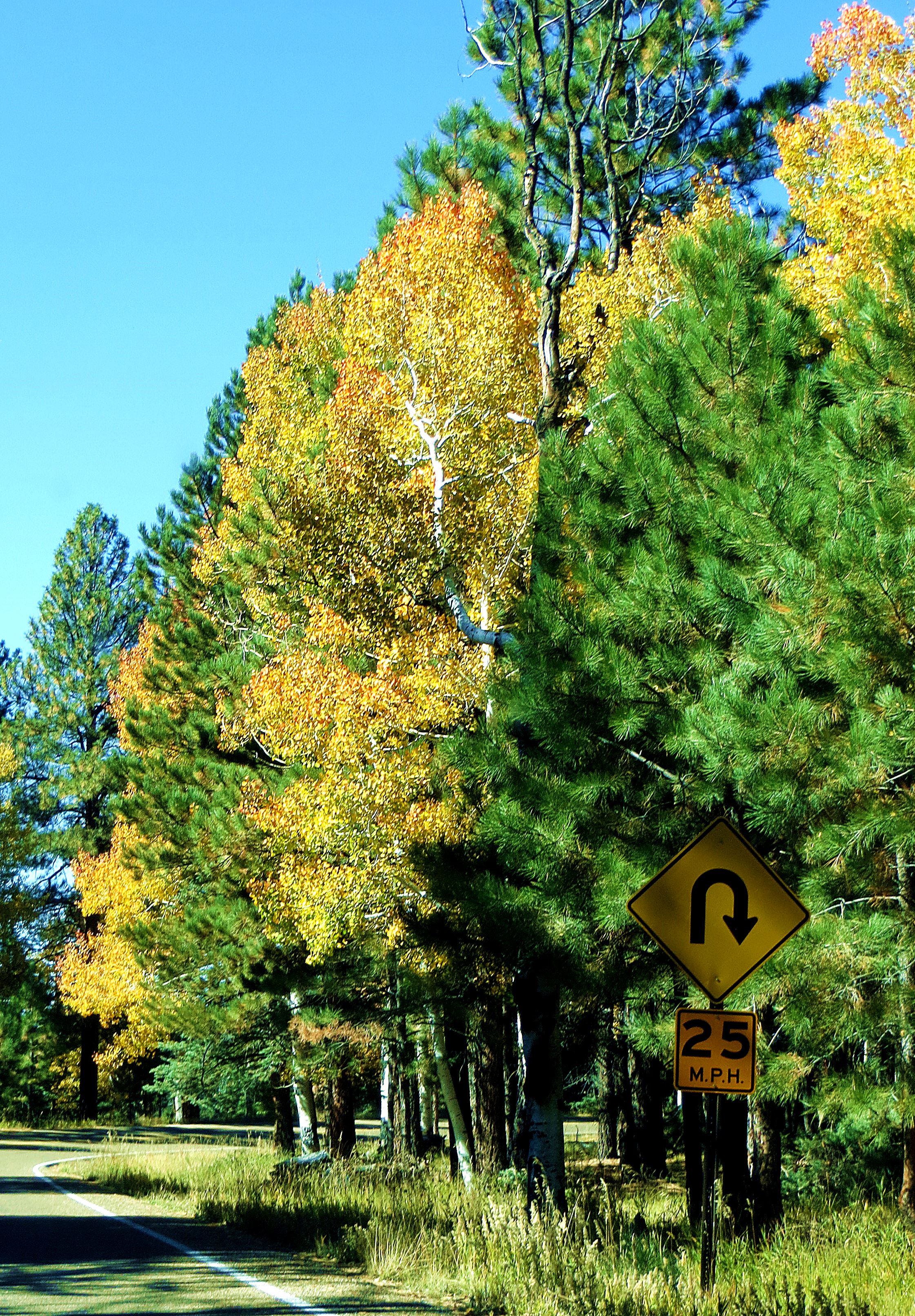
The first aspens I saw were off in the distance, where their golden deliciousness stood out in contrast to the dark evergreens -- Photo by Pat Bean

The first aspens I saw were off in the distance, where their golden deliciousness stood out in contrast to the dark evergreens — Photo by Pat Bean

“Willows whiten, aspens quiver, Little breezes dusk and shiver” – Alfred Lord Tennyson

“Late in August the lure of the mountains becomes irresistible. Seared by the everlasting sunfire, I want to see running water again, embrace a pine tree, cut my initials in the bark of an aspen, bet bit by a mosquitos, see a mountain bluebird, find a big blue columbine, get lost in the firs, hike above timberline, sunbathe on snow and eat some ice, climb the rocks and stand in the wind at the top of the world on the peak of Tukuhnikivats. – Edward Abbey            

Aspens at Last

            Jacob Lake, a tiny community that sits at the junction of Highway 89A and State Road 67 and which is the turnoff to the North Rim of the Grand Canyon, sits at an elevation of 8,000 feet.   I had expected to see aspen trees by this elevation, but none came into my view, although I usually began seeing these scarred, white-trunk trees around 7,000 feet. Of course that was when I lived in Utah, and now I’m in Arizona.

The second grove of aspens was right next to the road. I stood beneath this one and let it sing to me.

The second grove of aspens was right next to the road. I stood beneath this one and let it sing to me. — Photo by Pat Bean

Still hopeful that the goal of this particular road trip, to see aspen trees in their golden autumn colors, would be met, I took the turnoff  for the Grand Canyon. There was still 44 miles to go before I reached the rim of what many people consider to be one of the seven natural wonders of the world, so there was still time for this road trip’s mission to be accomplished.

And it was – although I was closer to Grand Canyon National Park than I expected before the landscape began to be dotted with patches of yellow that challenged the color of the sun. I was delighted.

Aspen trees gown in colonies from a single seedling that sends up its children through the earth into the sunlight. If you look closely, you’ll see how similar each tree in close proximity looks like its neighbor; and how different they look from a nearby patch of aspens that also hover close together with roots and branches entangled.


Near the top of the North Rim of the Grand Canyon. -- Photo by Pat Bean

Near the top of the North Rim of the Grand Canyon. — Photo by Pat Bean

Until its death, only the mother tree can send up new seedlings. Then another tree takes its place. It has to do with some chemical or such that the mother tree sends out as a birth control pill to the other trees, is how it was once explained to me. While an aspen tree can live only up to about 150 years, there is one large aspen grove in Utah near Fish Lake that is 80,000 thousand years old. Just thinking about this sends shivers through by brain neurons.

As I stopped to stand beneath one of the aspen groves, I was reminded that not only are these trees pleasing to the eye, but to the ear as well. The breeze rippling through their coin-sized leaves sent a pleasing melody into the air. The aspens sang for me.


Blog pick of the Day. Check it out.

Blog pick of the Day. Check it out.

Bean Pat: Life’s Purpose   http://tinyurl.com/ocjqsok  Why limit yourself to one passion. As a person who has many passions, this blog appealed to me. Even though I know that it’s the people with only one passion who may accomplish the greatest things in life. But oh what they miss.

Read Full Post »

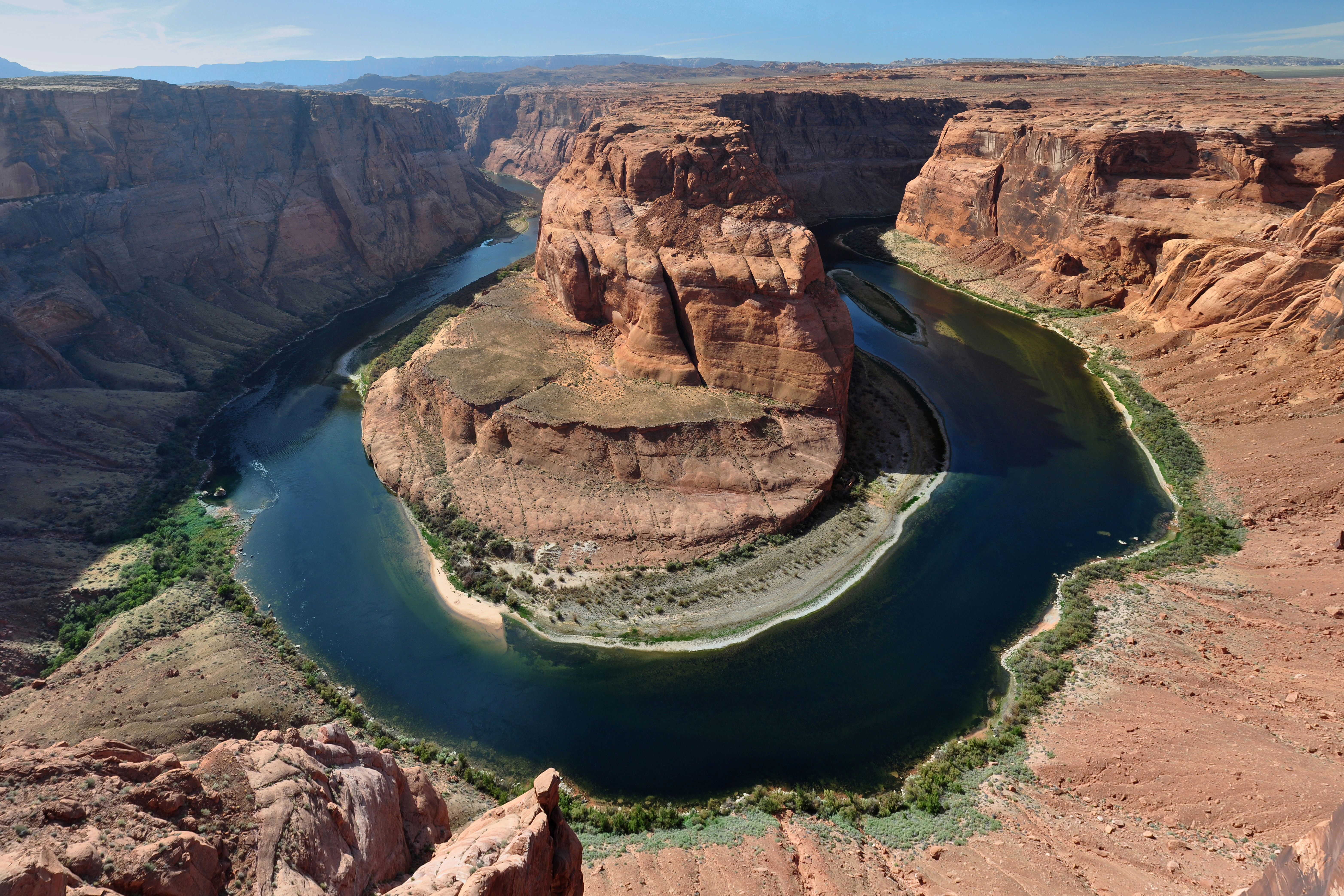
Thank Heavens for Wikimedia and generous photographers for this fabulous stitched panorama of Horseshoe Bend because halfway down to the overlook I remembered I didn't have my camera with me. But even if I had, I couldn't have taken such a magnificent photo. -- Wikimedia photo

Thank Heavens for Wikimedia and generous photographers for this fabulous stitched panorama of Horseshoe Bend because halfway down to the overlook I remembered I didn’t have my camera with me. But even if I had, I couldn’t have taken such a magnificent photo. — Wikimedia photo


“Walking is magic … The movement, the meditation, the health of the blood pumping, and the rhythm of footsteps. This is a primal way to connect with one’s deeper self. – Paula Cole

On Being the Caboose

            Pepper and I set out for the North Rim of the Grand Canyon shortly after dawn, but stopped just south of Page for a quick hike to Horseshoe Bend. It didn’t turn out to be as quick, however, as I remembered it from my younger days.

The hike started with a steep trek up a sandy hill, where you got a good look at the long downhill path ahead of you leading to the edge of a cliff overlooking perhaps the most photographed spot on the Colorado River.

Pepper, the little engine that could to my caboose. -- Photo by Pat Bean

Pepper, the little engine that could to my caboose. — Photo by Pat Bean

Just coming off a serious episode of heavy-duty back pain – from being stupid and lifting way too many pounds for an old broad my age – I questioned my sanity about going on instead of turning back. It wasn’t the next downhill section that worried me, but the trip back up it.

Pepper, however, was still quite frisky and eager for the hike to continue. As for me, I wanted to prove to myself that I still had some go left in me. As I trudged, step at a time in the quickly warming day, I thought back to 1999 when my 60th birthday present to myself was a rafting trip down the Colorado River through the Grand Canyon.

I had made the same trip earlier in time, when I had paddled through the canyon in a six-person paddle raft, enjoying a wondrous up close, personal connection with the rapids. The second trip down the Colorado through the canyon was made in an oar boat with someone else doing all the hard work, which wasn’t too bad because I got to carefully study the passing scenery.

But then, on a side hike up one canyon, over a ridge and them down a second canyon to meet back up with the rafts, I reached a point where I had to have someone help me over a boulder in the path because I couldn’t manage it on my own. I shed a few tears at that. I wasn’t used to having to be helped on a hiking adventure. Usually I led the way – and was never the caboose.

On this day’s adventure to the Horseshoe Bend viewpoint of the Colorado River, I was following my canine companion Pepper. But at least I was going – and of course the viewpoint was worth the effort. In fact, it was magnificent.

On the hike back, I followed Pepper up the hill, and didn’t resist, nor cry, when she trotted far enough ahead to pull me along with her. I’m quite thankful to have such a wonderful hiking companion, and doubly thankful that I still have at least a little bit of go left in me, even if I have to be the caboose on my adventures. .

Back in our vehicle, with its air conditioning blasting away, Pepper and I continued on our day’s journey to the North Rim of the Grand Canyonas Dr. Seuss’s words danced in my head. Oh the places you’ll go and the things you’ll see. To be continued           

Blog pick of the Day. Check it out.

Blog pick of the Day. Check it out.

Bean Pat: Wednesday Vignettes http://tinyurl.com/qape662 Tranquil

Read Full Post »
            Climb the mountains and get their good tidings. Nature’s peace will flow into you as sunshine flows into trees. The winds will blow their own freshness into you, and the storms their energy, while cares will drop off like autumn leaves. As age comes on, one source of enjoyment after another is closed, but Nature’s sources never fail. – John Muir

Looking down from the top of Oak Creek Canyon at Highway 89A's hairpin curves. -- Photo by Pat Bean

Looking down from the top of Oak Creek Canyon at Highway 89A’s hairpin curves. — Photo by Pat Bean

Autumn Wasn’t There

            The steep winding drive up Oak Creek Canyon was magnificent, and my vehicle, Cayenne, took it gracefully, without the hiccups she suffered in Sedona. But the fall colors I hoped to see as I gained in elevation from the upper Sonoran Desert were pitifully few, only a couple of low and faded patches of rusty red beside the road.

I always stop for butterflies. -- Photo by Pat Bean

I always stop for butterflies. — Photo by Pat Bean

I had hoped for more, but the beauty of the river gorge was enough to satisfy me. I strongly believe in the words of Garth Brooks:  “Happiness isn’t getting what you want; it’s wanting what you got.”

And I was on a road trip, so who could ask for anything more? Well, perhaps a little less traffic. But that was wishful thinking. The Sedona –Oak Creek Canyon area is the second most popular tourist destination in Arizona, surpassed only by the Grand Canyon.

The Oak Creek Canyon Scenic Drive on Highway 89A has been called of one the top five most scenic drives in America by map makers Rand McNally. The winding road climbs 4,500 feet from Sedona to the top of the Mogollon Rim. I had driven it once before, but that time was from the top to the bottom. Going up it was a new experience, like learning the other side of a story, which there always is.

The 12-mile river gorge, sometimes called the smaller cousin of the Grand Canyon, winds through a forest of oaks and evergreens with backdrop views of red-faced rocks and cliffs.

Oak Creek -- Wikimedia photo

Oak Creek — Wikimedia photo

The long, narrow parking lot at the top of the canyon overlook was full, but I squeezed Cayenne into one of the last spaces at the very end. That put us in position for about a quarter-mile walk to the overlook, which was fine with both Pepper and me. We had been driving, with only short stops, for 265 miles and we still had 135 more miles to go. We needed to stretch our legs.

Autumn was nowhere to be seen, but the views were still worth the walk, which held its own reward. After about a half hour of meandering,  and looking down to the road we had driven up and across the canyon, Pepper and I strolled back to Cayenne to continue our journey. To be continued …

Blog pick of the Day. Check it out.

Blog pick of the Day. Check it out.

Bean Pat: Ranting Crow:  http://tinyurl.com/oo7zotb  Thought of the day. I think I already said this, but it’s worth repeating.

Read Full Post »

Picacho Peak looking north. This is a Wikimedia photo because there never seemed to be a safe  spot to pull over and take a photograph from this angle on Interstate 10 -- and it's the view of the peak I like best. -- Wikimedia

Picacho Peak looking north. This is a Wikimedia photo because there never seemed to be a safe spot to pull over and take a photograph from this angle on Interstate 10 — and it’s the view of the peak I like best. — Wikimedia

It’s about finding something interesting in an ordinary place … I’ve found it has little to do with the things you see and everything to do with the way you see them.” – Elliott Erwitt

Road Trip 

            I began the first day of my road trip to the North Rim of the Grand Canyon, so I could see aspens in their shivering-in-the-wind golden fall leaves, by singing and dancing around to Willie Nelson’s “On the Road Again.” The song put me exactly where I wanted to be: excited about my upcoming adventure.

The overcast sky that started my day soon gave way to a sunny day. -- Photo by Pat Bean

The overcast sky that started my day soon gave way to a sunny day. — Photo by Pat Bean

When I had the car all packed and ready to go, it was 7 a.m., a great time to start a trip. Five minutes down the road I realized I had forgotten my binoculars, something no birder – which I am – never travels without. Fifteen minutes later, I was back at the spot I made the U-turn.

Fifteen minutes after that, I realized I hadn’t had my morning cup of coffee, which I had planned on making and pouring in my to-go cup for the trip. I assume it slipped my mind when I packed a cooler with sandwiches and other goodies for the trip, since I didn’t want to spend money for food.

Another 15 minutes later, my pocket book $4 lighter after waiting in a lengthy line at Starbucks for a latte, I again headed out of town. It was after 8 a.m. when my canine companion Pepper and I finally took the ramp to Interstate 10, leaving Tucson in the rearview mirror.

It was a pretty typical start for one of my road trips.

The morning was overcast and dusty, as a stiff breeze rolled across the desert roadsides. But I was upbeat, unhooked from all electronics, including my car radio, and scanning the landscape for surprises on a route I had traveled quite a few times before since moving to Tucson almost three years ago.

Those trips, however, were for taking my daughter to the doctor in Phoenix, or to the Phoenix airport, not just for the pleasure of it, which in my experience is the beginning of a whole new book. The first thing that caught my attention after I turned onto the interstate was Picacho Peak. It intrigues me because of how it stands out in the Sonoran Desert landscape, presenting different and distinct profiles depending on the viewing angle.

What I didn’t know before the trip was that Picacho Peak is the site of a Civil War Battle. The skirmish was fought between an advance party of Confederate soldiers from Texas and a Union Cavalry patrol from California. The site marks the westernmost battle of the war.   The Confederates won the April 1862 battle, but by May of the same year, a stronger force of Union soldiers from California pushed the Confederates back to Texas.

But the history of the 1,500 peak, which served as a landmark for travelers well before my time,  goes back much farther than that, It’s all explained by exhibits at Picacho Peak State Park that now sits at the base of the 1,500-foot peak. It was well worth a stop on my way.  — To be continued


Blog pick of the Day. Check it out.

Blog pick of the Day. Check it out.

   Bean Pat: Write like a weed http://tinyurl.com/nwtm53n  Good writer’s advice.

Read Full Post »

“Going off the grid is always good or me. It’s the way that I’ve started books and finished books and gotten myself out of deadline dooms and things.” — Neil Gaiman

The Grid

Roseate spoonbill nest. -- Photo by Pat Bean

Roseate spoonbill nest. — Photo by Pat Bean

These photos were take in the aviary at the St. Louis Zoo in Missouri that was specially built for the 1904 World Fair.

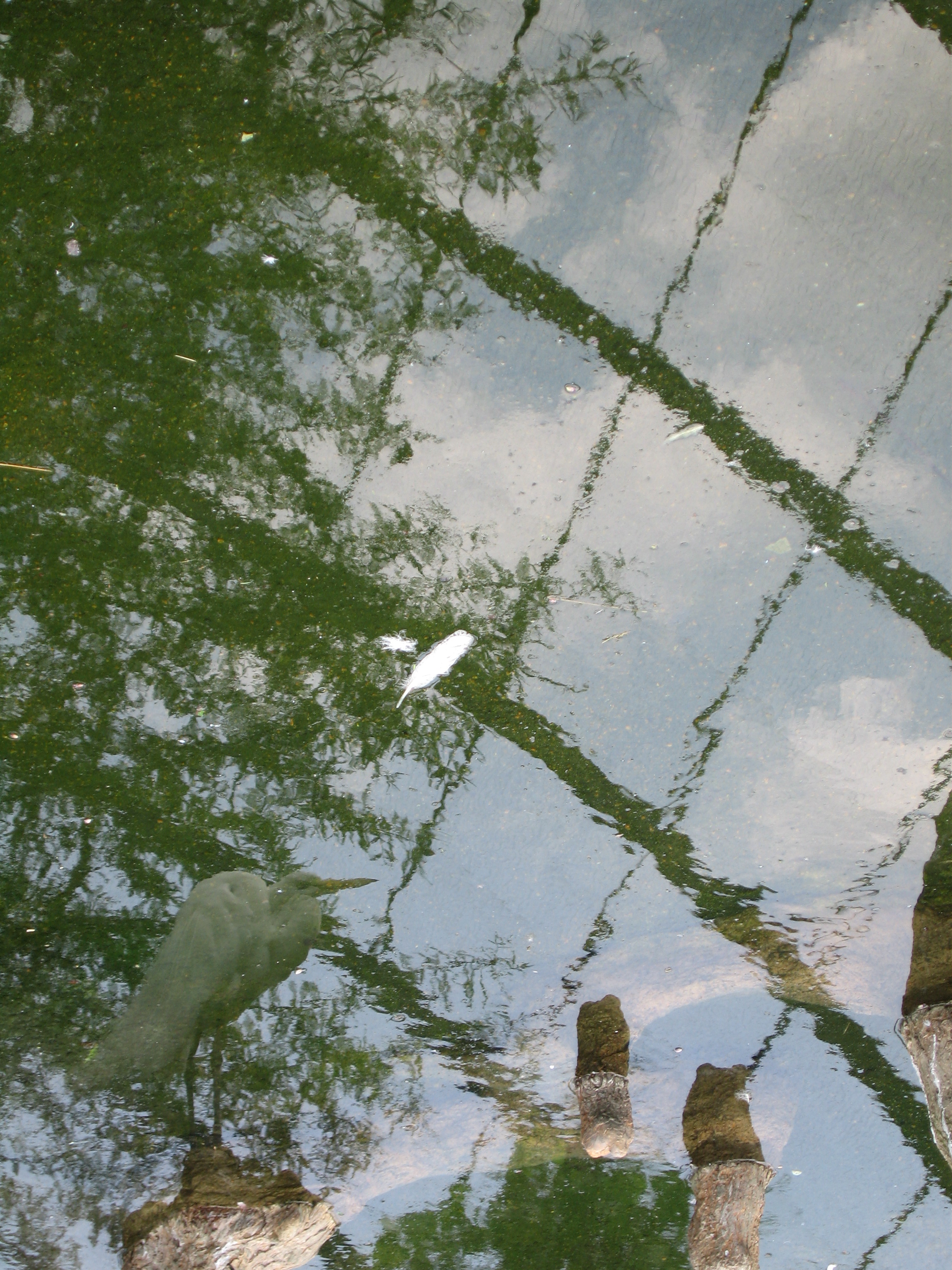
Cloud reflections through the grid and a great egret. -- Photo by Pat Bean

Cloud reflections through the grid and a great egret. — Photo by Pat Bean


Read Full Post »

            Don’t be fooled by the calendar. There are only as many days in the year as you make use of. –Charles Richard

This day, standing beneath a covered shelter on a bridge across a pond at Brazoria National Wildlife Refuge with my son, Lewis, was a seized day that left me with special memories. -- Photo by Pat Bean.

This day, standing beneath a covered shelter on a bridge across a pond at Brazoria National Wildlife Refuge during a storm, with my son, Lewis, was a seized day that left me with special memories. — Photo by Pat Bean.

Seize the Day

            Just a few quotations that hopefully will inspire you to not let today pass by unnoticed.

Enduring that same storm was a scissor-tailed flycatcher that I captured with my camera through the rain. -- Photo by Pat Bean

Enduring that same storm was a scissor-tailed flycatcher that I captured with my camera through the rain. — Photo by Pat Bean

Live every day as if it were going to be your last; for one day you’re sure to be right.” — Harry “Breaker” Harbord Morant

            “Go for it now. The future is promised to no one.” — Wayne Dyer

            Just FYI, I’m currently reading Dyer’s recent book, I Can See Clearly Now. His much earlier Your Erroneous Zones had a major impact on making my life better back in the 1970s. Dyer is one of my heroes.

“Every man dies. Not every man really lives.”Braveheart

            This final is a quote from the toast my son, Michael, made at his older sister’s wedding. “May you live, so that when you die, you know the difference.” It’s one of my favorite quotes.

Blog pick of the day. Check it out.

Blog pick of the day. Check it out.

Bean Pat: Eagle flight http://tinyurl.com/ng5s3ca WOW! Also, Cecil the Lion http://tinyurl.com/njcg2n2 NY Times Opinion Peace. Well said.

Read Full Post »

« Newer Posts - Older Posts »