Feeds:
Posts
Comments

Archive for the ‘Favorite Places’ Category

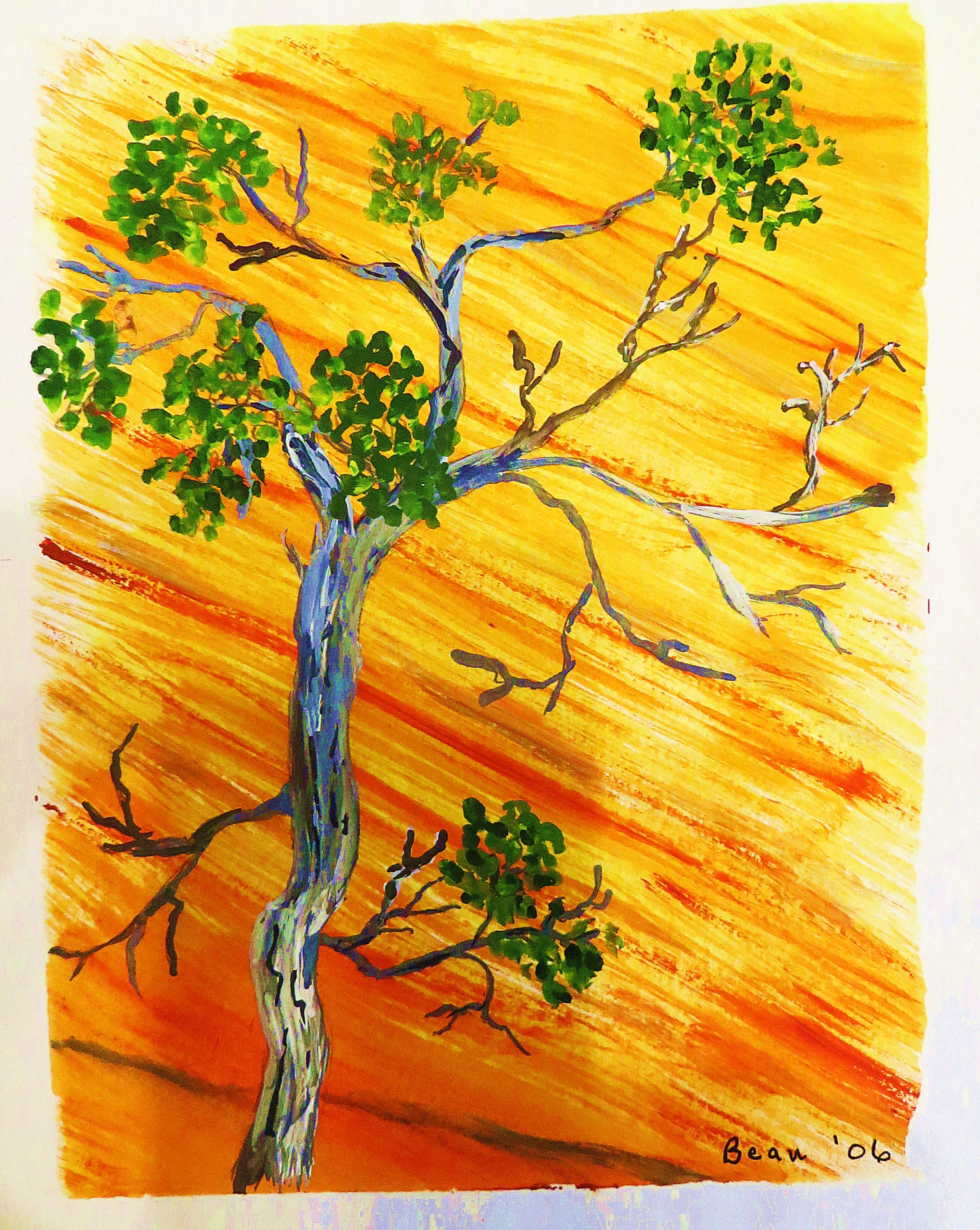
I sketched this scene while visiting Zion National Park in Utah, one of my favorite places.

      “It is necessary to write, if the days are not to slip emptily by. How else, indeed, to clap the net over the butterfly of the moment? For the moment passes, it is forgotten; the mood is gone; life itself is gone. That is where the writer scores over his fellows: he catches the changes of his mind on the hop.” — Vita Sackville-West

Pen or Computer? Or Both?

My normal early morning routine is to get up, brush my teeth, put moisturizer on my face, dress (or simply put a coat over my pajamas) and walk my canine companion Pepper. Back in my apartment, I sit down with a cup of cream-laced coffee, write at least two pages in my journal, and read the NY Times digital version.

An old Remington typewriter, similar to the one I used to write my first mystery novel draft, which languishes somewhere in my writing files.

The journal writing ritual, I finally learned, clears my head and makes my days more productive. I begin by writing about my walk, the weather, anything significant from the day before, and perhaps my dreams, if they’re still rolling around in my head. This usually takes up a page in my journal. If writer’s block sets in, I start perusing the newspaper, letting the day’s headlines bring into focus my own thoughts on the issues,

This morning, as I was writing, I noted that I let each of the next words roll around in my brain before I scrawled my pen’s bold black ink across the page. When using the computer my thoughts often seem to be more connected to my fingers than my brain. I’m not conscious about what I’m going to write, I just do it.

This effortless means of writing means my fingers tap out thoughts that I didn’t know were in my head.  I’m usually pleased with the outcome. It’s as if my fingers subconsciously know what my brain hasn’t yet acknowledged.

Why do the writing tools affect me so differently, I asked myself this morning, posing the question in ink in my journal? The answer that popped into my brain was that I took the time to think before using my pen because I wanted to keep my journal neat and didn’t want to have to black out a word, or two.

On a computer, if my fingers get ahead of my brain, I can simply delete the wrong words with no fuss or bother – unlike in my early years of writing using a typewriter.

Occasionally, I miss that old Remington. There was a calming satisfaction that came with the act of yanking a sheet of paper out of the typewriter, crumbling it up into a ball, and tossing it into a wastebasket.

It was an action that refreshed the brain, usually for the better.

Bean Pat: Six Word Saturday https://lingeringvisions.wordpress.com/2018/02/17/  The shoe was actually a boot. My favorite piece was the top hat, until the Scottie dog was added to the monopoly pieces in the 1950s. And today I have a Scottie dog, well at least half of her. The other half might be a schnauzer.

Pat Bean is a Lonely Planet Community Pathfinder. Her book, Travels with Maggie, is now up on Amazon at http://tinyurl.com/y8z7553y  Currently, she is writing a book she calls Bird Droppings, which is about her late-bloomer birding adventures. You can contact her at patbean@msn.com

Read Full Post »

IMG_1115

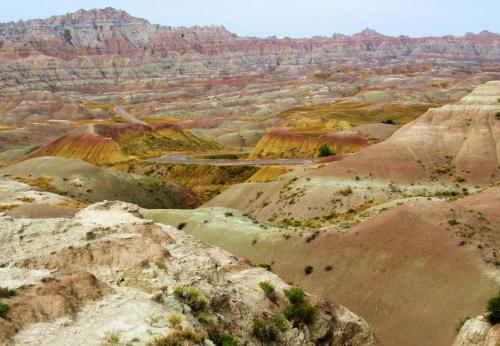
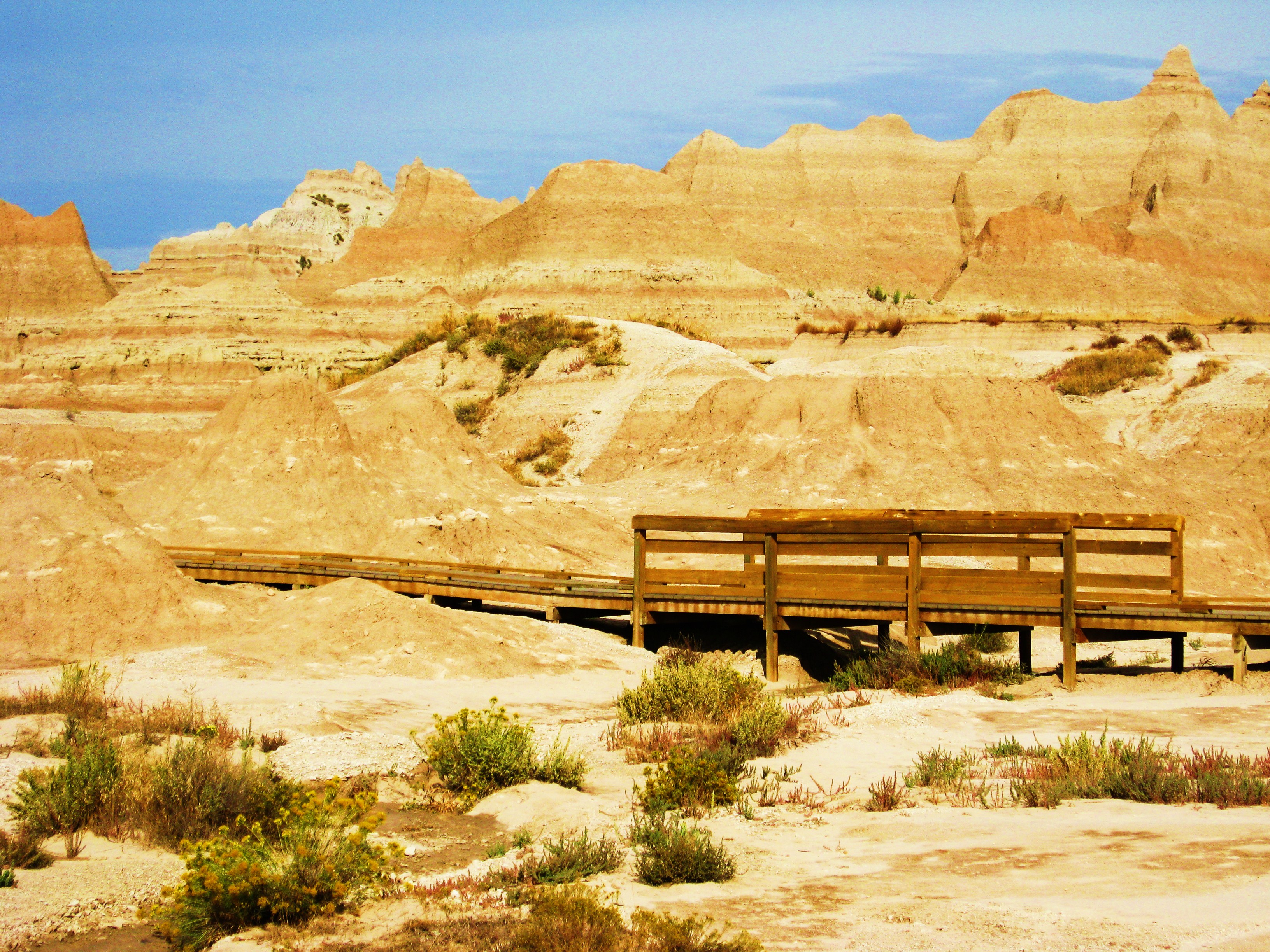
Candy-striped rocks in Badlands National Park. — Photo by Pat Bean

“Landscape is a piece that is emotional and psychological.” – Jim Hodges

IMG_1122

Remnants of an ancient jungle can be seen in the Badlands. — Photo by Pat Bean

Alone on a Windy Day

In the neighborhood of a million or more people from all over the world annually visit Badlands National Park, a rugged, colorful, wind scoured, sun-bleached, South Dakota landscape that took my mind back through endless eras of time. It felt magical, and the windy autumn day I drove, and hiked a bit, through it seemed as if I had the park’s entire quarter-million acres of rock and prairie to myself.

         I had spent the night at a small campground in Interior, a city of less than 100 residents that sits just outside the park. It is home to the Horseshoe Bar, whose sign out front said: “All Bikes Must Stop,” and a gas station, where I had to go inside to pay. The friendly clerk there old me to drop by for a hot meal later. I bypassed the bar, and did just that.

South Dakota is known as one of this country’s windiest states, and it was living up to the reputation when I awoke the next morning after a night of rocking and rolling in my over-the-cab bed. The smart thing to do was to stay put for the day. But the Badlands, which I had never visited before, was calling me.

My canine companion Maggie and I answered the invitation. We did get bounced around a bit in our undersized, 21-foot class C home on wheels. But, oh was it worth it! As more and more people seek relief from the world’s chaos in nature’s wild places, it is becoming rare to have time alone with Mother Nature. Well, unless you are a backpacker able to truly go into the backcountry, and age has put me at a point where that kind of adventure is behind me.

Besides the kaleidoscope of candy-striped boulders, remnants of an ancient jungle, and fossils of animals, like the saber-toothed tiger that no longer exist, I saw bison, prairie dogs, antelope, rock wrens and prairie falcons.

But the day’s furious winds, which calmed down for a bit every now and then, evidently kept other visitors away. I saw fewer than a dozen cars on the Badlands Highway 240 Loop Road, and only three other people during my several short hikes.

It rained shortly after I arrived back at the Interior campground, and I spent another night rocking and rolling as my RV danced with the wind. Then it was off for another day of exploring the “good” Badlands.

Bean Pat: An invitation https://natureontheedge.com/2018/01/27/ The adventure begins Feb. 16. Sounds like fun and a good cause.

Pat Bean is a Lonely Planet Community Pathfinder. Her book, Travels with Maggie, is now up on Amazon at http://tinyurl.com/y8z7553y  Currently, she is writing a book, tentatively titled Bird Droppings, which is about her late-bloomer birding adventures. You can contact her at patbean@msn.com
Read Full Post »

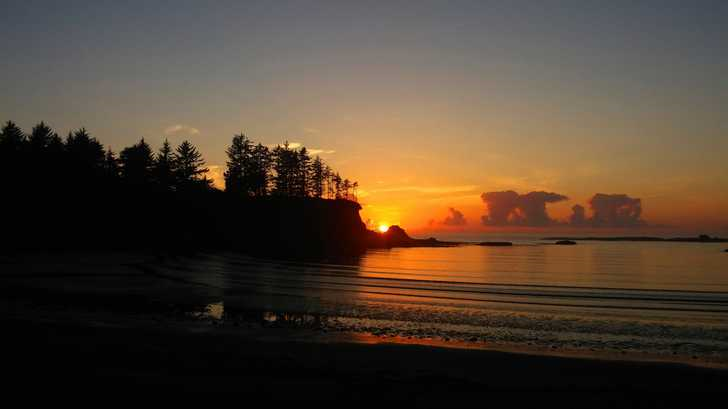
The sky broke like an egg into full sunset and the water caught fire.” — Pamela Hansford Johnson

Sunset Bay State Park — Oregon State Parks photo

A Moment Not to be Forgotten 

It was a misty, early morning at Sunset Bay Park where I was staying while attending the Oregon Shorebird Festival (See previous post) held nearby.

Sunset Bay State Park near Coos Bay in Oregon. — Wikimedia photo

The Oregon coast campground oozed beauty and peacefulness as I stepped out of my small RV for the morning walk with my canine companion. We strolled down to the beach, where not another soul was yet around. The quiet swishing of the waves against the sand poured calmness into my soul and made me glad to be alive – even though I hadn’t yet had my coffee.

As I walked along the water’s edge, I saw a flock of western sandpipers in the shallows ahead, marching slowly along and constantly dipping their tiny beaks in and out of the water in search of breakfast tidbits. I watched them through my binoculars, staying far enough behind them that they wouldn’t startle and fly off. Maggie was too interested in sniffing at the water’s edge to even notice. But then something, I’m not sure what, did disturb them. In what seemed like less than a second, as a unity of one, they soared into the air, circled for a moment, then flew farther down the beach, their feathers flashing silver when catching the morning sun.

As I stood there, I recalled  a quote by Cesare Pavese that I had written in my journal: “We do not remember days, we remember moments.”  My heart told me that this was a moment I did not want to forget.

Bean Pat: A strange bird story  https://apetcher.wordpress.com/2018/02/08/ This qualifies as my learning something new for the day. The post both made me laugh, and made me sad, first for the caged bird and then for the unethical humans. I know for a fact that there are more ethical people in the world than the other way around. But boy do the rotten ones leave a bad taste in the soul.

Pat Bean is a Lonely Planet Community Pathfinder. Her book, Travels with Maggie, is now up on Amazon at http://tinyurl.com/y8z7553y  Currently, she is writing a book, tentatively titled Bird Droppings, which is about her late-bloomer birding adventures. You can contact her at patbean@msn.com

Read Full Post »

“I hear lake water lapping with low sounds by the shore … I hear it in the deep heart’s core.”  – William Butler Yates.

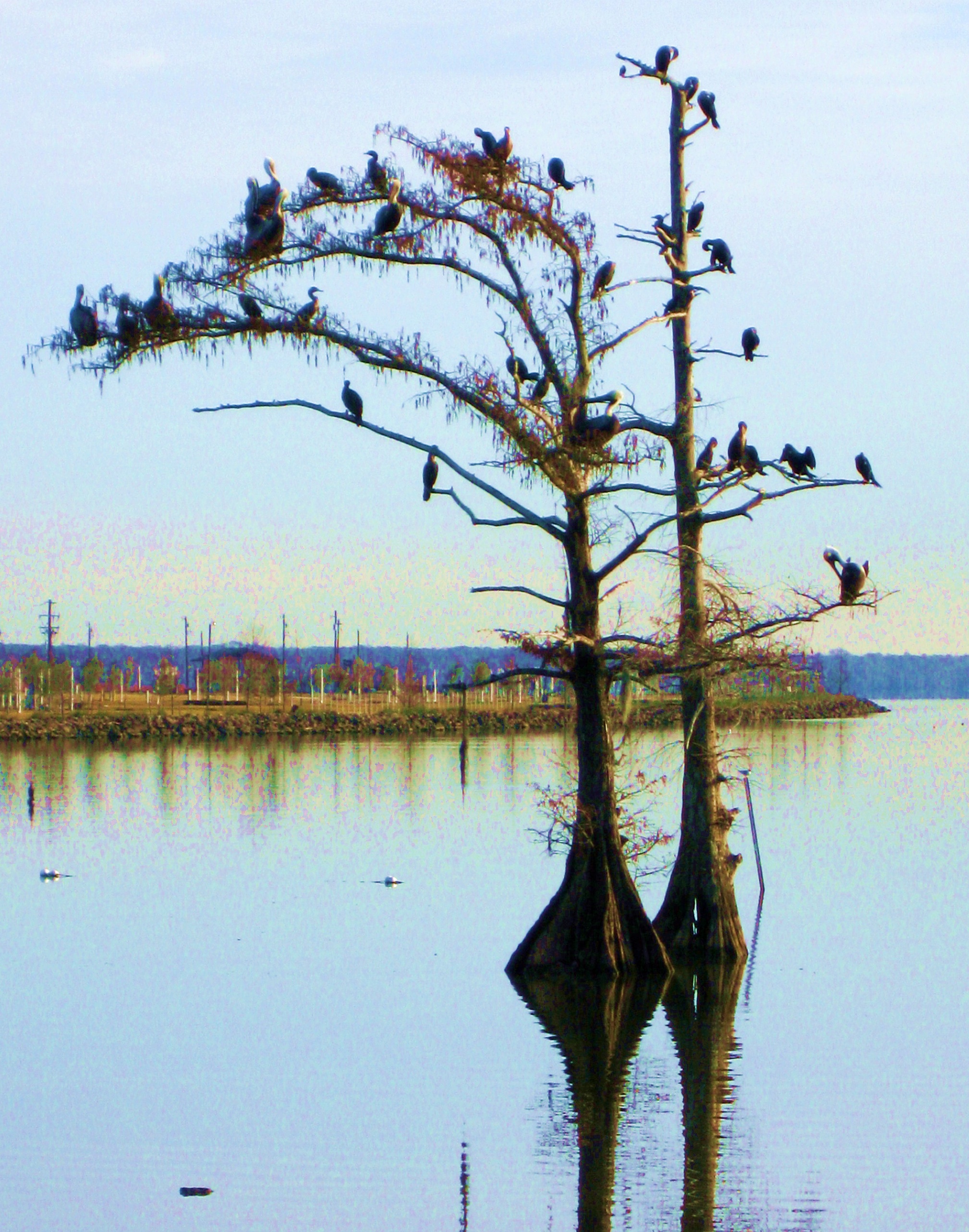
A tree full of double-crested cormorants at Lake End Campground. — Photo by Pat Bean  

Water and Birds for Double the Pleasure

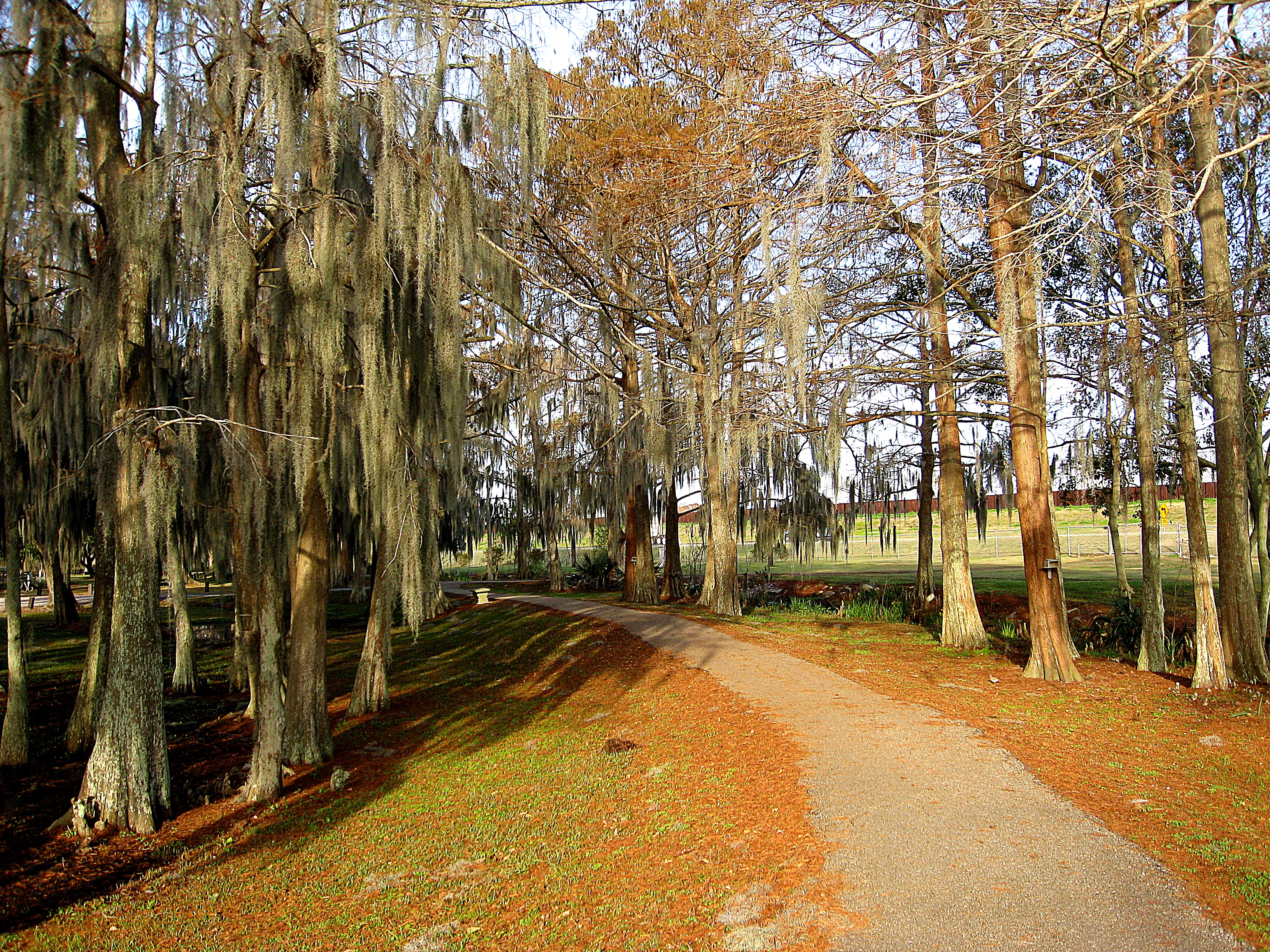
A walk among the moss-dripping trees. — Photo by Pat Bean

One of my favorite things to do when I traveled across this country in my RV was to spend the night parked where I could be lulled to sleep at night by the sounds of water gurgling, lapping and laughing. It was better than any sleeping pill, assuring me a good night’s sleep, and a morning eager to take a walk by the water.

It didn’t hurt either that lakes and ponds and oceans were also the stomping grounds of birds to feed my birdwatching passion.

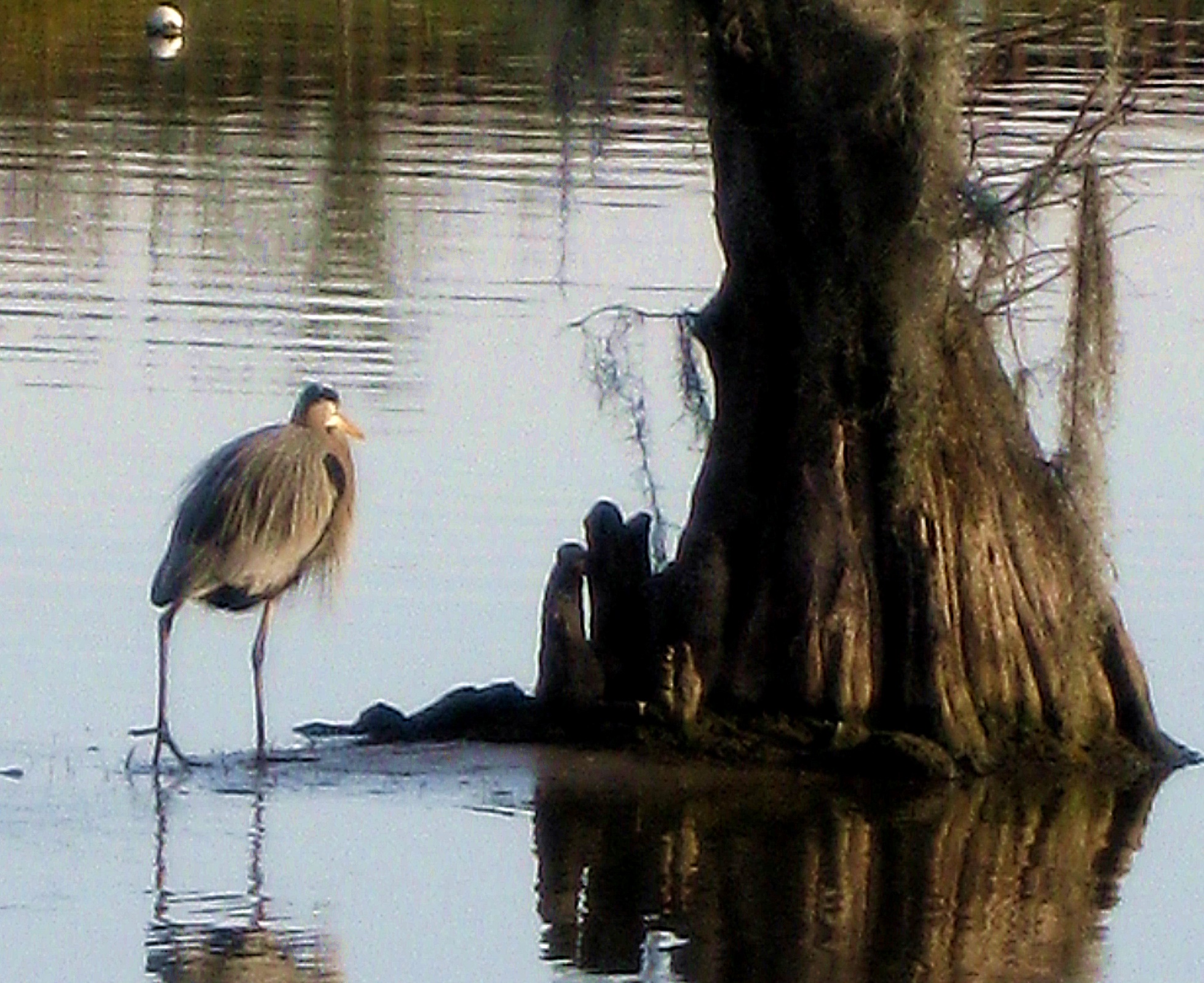
Great Blue Heron at Lake End Campground, Louisiana. — Photo by Pat Bean

So, it was that I found myself spending a few nights on the western edge of Louisiana’s Lake Palourde at Lake End Campground, sharing it with an abundance of double-crested cormorants and great blue herons. An additional bonus was its scenic walking trail.

Palourde is an 11,250-acre lake near Morgan City, Louisiana. It was originally called Lac Palourde by early French settlers, which means Lake Clam. The name came because of the abundance of clams that once lined the shore.

I didn’t see any clams, but I did see lots of birds – and I slept well.

Bean Pat:  Living outside the lines https://tinyurl.com/y9ho6t7r Be sure and listen to the music. I really loved this blog

Pat Bean is a Lonely Planet Community Pathfinder. Her book, Travels with Maggie, is now up on Amazon at http://tinyurl.com/y8z7553y  Currently, she is writing a book, tentatively titled Bird Droppings, which is about her late-bloomer birding adventures. You can contact her at patbean@msn.com

Read Full Post »

Some folks say big ol’ Lake Pend Oreille is Idaho’s most magnificent lake. But let’s just stick to the facts: It’s the state’s largest (43 miles long, 111 miles of shoreline). It’s the deepest (at 1,158 feet deep, there are only four deeper lakes in the nation). It’s got terrific scenery, splendid clean water, big fish, a fascinating history …” – sandpointonline.com

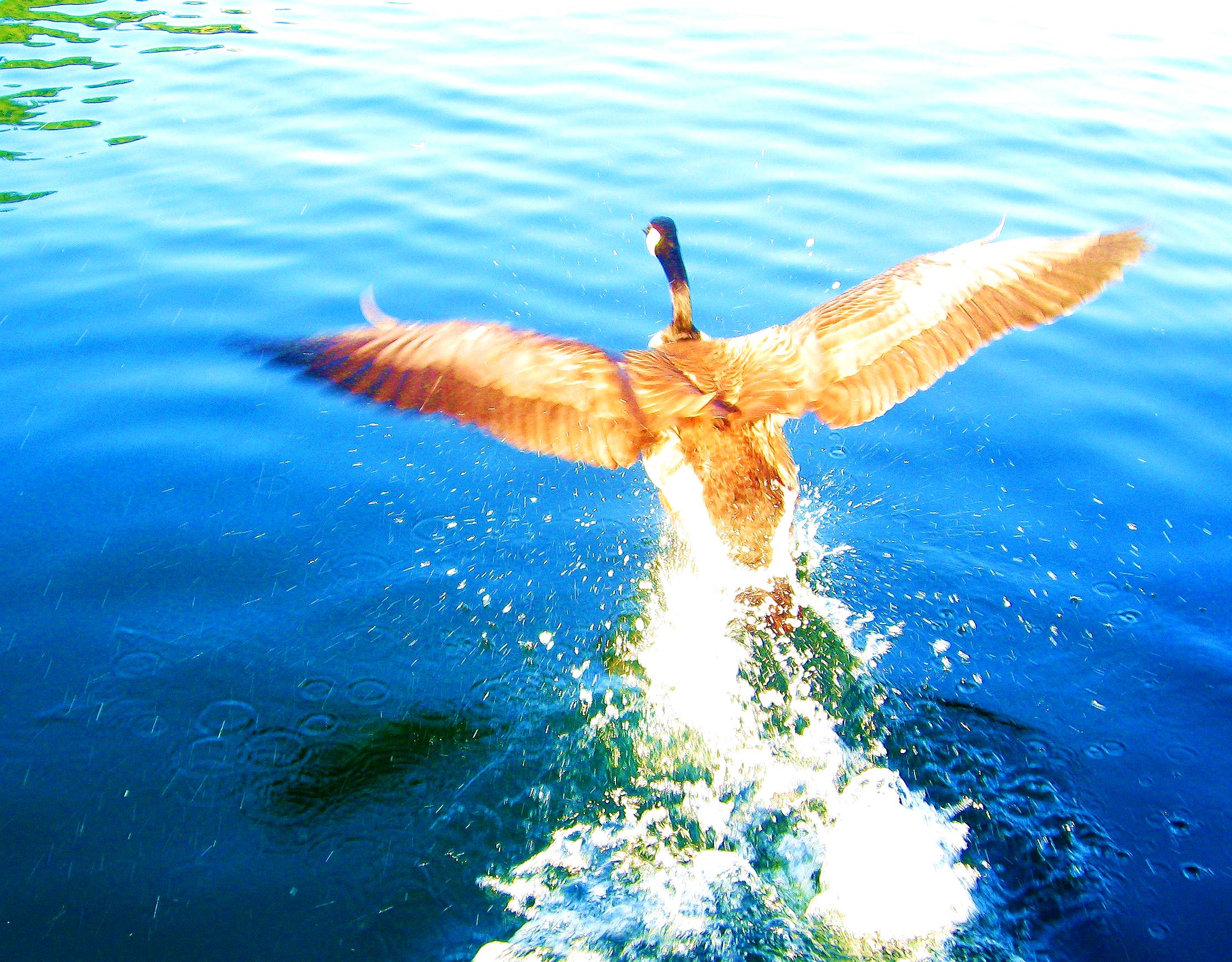
A Canada goose taking of from Lake Pend Orielle.  I took the photo during a Ladies Night Out boating cruise for Farragut State Park’s volunteers. — Photo by Pat Bean

It’s pronounced Pon-de-ray

I was listening to Clive Cussler’s Poseidon’s Arrow in my car while driving from Tucson  to my daughter’s home in Marana. It’s just 13 miles away, but traffic and construction detours turn it into a 40-minute drive, making the familiar route an excellent time for book listening.

An aerial view of Lake Pend Orielle. — Wikipedia Photo

I think of Cussler’s Dirk Pitt books as fantasy swashbuckler reading, not to be taken seriously, simply a time to enjoy the good guys wearing white hats and the villains all wearing black hats, which isn’t ever the case in the real world.

Anyway, after a boat/vehicle chase that led through a crowded Mexican town, the book has its protagonists landing at the Coeur d’Alene Airport in Idaho, then driving through Farragut State Park to Bayview, a small town that sits beside Lake Pend Oreille, which is pronounced Ponderay. The lake is home to a Naval submarine base, and the book’s characters talk of the place as being interesting trivia for back home in Washington D.C.

Now if you’re thinking that the idea of an inland submarine base in Idaho is all in Cussler’s imagination, you would be wrong. I was a campground volunteer at Farragut State Park one summer, have been boating on Lake Pend Oreille, and learned all about the Farragut Naval Training Station that was in operation during World War II, a part of which is still active for underwater submarine research.

One of the beauties of being a widely traveled old broad is reading books that include descriptions about places I have visited. It seems to happen regularly these days. I find such déjà vu moments, which refresh the brain, a bonus for having lived so long.

    Bean Pat: Have you ever seen an Inca tern? https://cindyknoke.com/2017/12/20/inca-tern/ Then take a look at them here. They are awesome, and so are this blogger’s photographs of them.

Pat Bean is a Lonely Planet Community Pathfinder. Her book, Travels with Maggie, is now up on Amazon at http://tinyurl.com/y8z7553y  You can contact her at patbean@msn.com
Read Full Post »

Flashing rays of the morning sun at Steinaker State Park near Vernal, Utah — where dinosaurs once roamed. — Photo by Pat Bean

“Exploration is really the essence of the human spirit.” — Frank Borman

Steinaker State Park

Pepper and me enjoying our morning walk at Steinaker State Park. — Photo by Pat Bean

“I’m fond of camping at state parks. I’ve truly never found one I haven’t liked. I’m also fond of traveling backroads and avoiding major highways and crowds, which you might say is how I ended up during one of my journeys spending a few days at Steinaker State Park near Vernal, Utah.

As far as campgrounds go, it had all the right stuff: a scenic lake setting and an ample tree-shaded campsite. But what made this off-the-beaten-path park special to me was the chance it offered for a bit of solitude among nature’s marvels. As our world population explodes, and more and more people seeking relief from the daily chaos discover the healing powers of Mother Nature, being alone on established trails and in parks has become a rare thing. Although opportunities exist to escape to this country’s true wilderness areas, at my age this has no longer become a viable option.

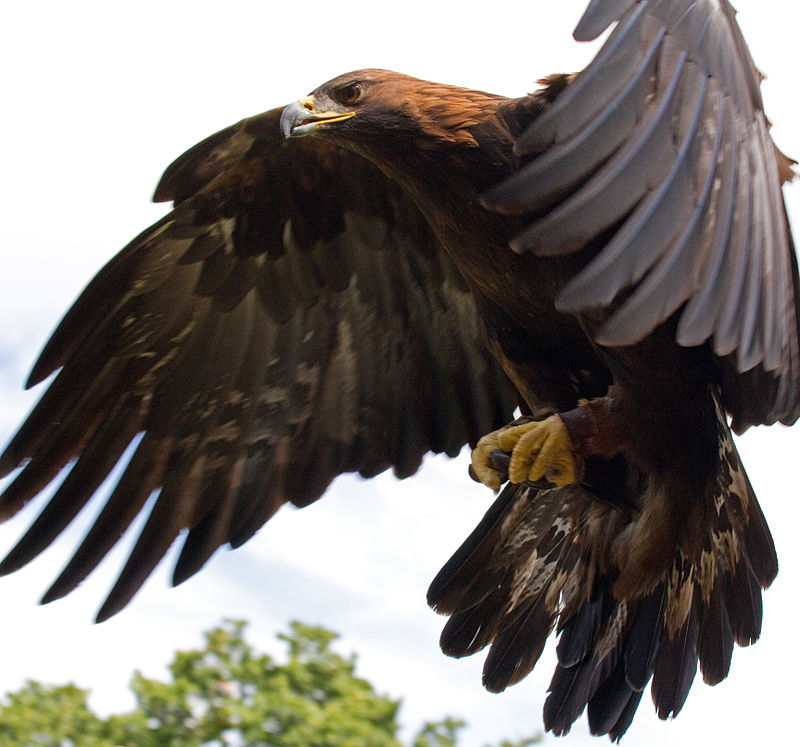
I wasn’t able to capture the golden eagle that morning, but I thought you would enjoy this Wikimedia photo by Tony Hiigett. I did.

While I wasn’t alone at Steinaker, which sits at an elevation of 5,500 feet, other campers were scattered enough that I seldom saw any of them. This was especially true when I took my early morning walks with Pepper, my canine companion.

The best morning was the one in which I was awoken by a hooting great horned owl, an  a golden eagle, its wings backlit by a rising sun, doing a flyover. It doesn’t get much better than that.

Bean Pat: Interesting Literature http://tinyurl.com/y9fjj7fr  Best poems about identity and self.

Pat Bean is a Lonely Planet Community Pathfinder. Her book, Travels with Maggie, is now up on Amazon at http://tinyurl.com/y8z7553y You can contact Bean at patbean@msn.com  (more…)

Read Full Post »

This photograph represents a magical moment in time that I relived when I came across this picture earlier today. — Photo by Pat Bean

“I have always been delighted at the prospect of a new day, a fresh try, one more start, with perhaps a bit of magic waiting somewhere behind the morning.” – J.B. Priestly

Reliving a Magical Moment

Bridge to an island in the lake at Frank Jackson State Park in Alabama. — Photo by Pat Bean

There are magical moments in your life that you hold dear, and always want to remember. For me, those memories include the feeling I had when I held each of my five children for the first time, moments of watching them grow up and achieve, my own sense of achievements during my 37 years as a journalist, and the feeling I get at the end of any day in which I feel I accomplished something good.

Beyond this stuff of everyday life, however, there are the moments of joy and wonder that I’ve experienced in nature, experiences that I have had, and still do have, that keep me sane in a chaotic world that does not always make sense.

There are hundreds of such moments, but the one I will tell you about today took place at Frank Jackson State Park in Alabama.

My camping site at the park. — Photo by Pat Bean

“Wow,” I wrote in my journal when I came across this place. While southern state parks usually impressed me when I came across them while traveling this country in a small RV with my canine companion, Maggie, this one outdid itself. I had a tree-shaded site with full hookups that backed up to the 1,000-acre W. F. Jackson Lake – and a cable TV outlet, a first for me at a public park.

The one night I had planned to stay turned into three, during which I took daily hikes across a wooden walkway to an island in the middle of the lake. One day I hiked it twice, first to catch the reflecting pink and soft orange glow over the lake as a sunrise welcomed the day, and a second to see bolder orange and red rays of the sunset that ended it.

A photograph I snapped at the perfect moment, after the sun had set and the glow had faded, captured a couple of fisherman silhouetted in a small boat floating on a lavender lake beneath a darkening sky.

This was the magical moment I relived this morning when I was looking through

my photos. Looking at the peaceful scene left me feeling as if I had captured a whole life time of living and reduced it to a single memory.

Bean Pat: The Path of the Spirit http://tinyurl.com/htrh8e5 Unweeded Edges

Frank Jackson State Park: 100 Jerry Adams Drive, Opp, Alabama (334) 493-6988. A 2,050-acre park with a 1,000-acre lake and three plus miles of trails. Entrance fee: $2-$4, Camping fee: $19 to $36 nightly, cabins $85 and up. Activities include boating ($4 launch fee), hiking, birdwatching, fishing. For more information go to: http://alapark.com/frank-jackson-state-park

Pat Bean is a Lonely Planet Community Pathfinder. Her book, Travels with Maggie, is soon to be released. You can contact her at patbean@msn.com


Read Full Post »

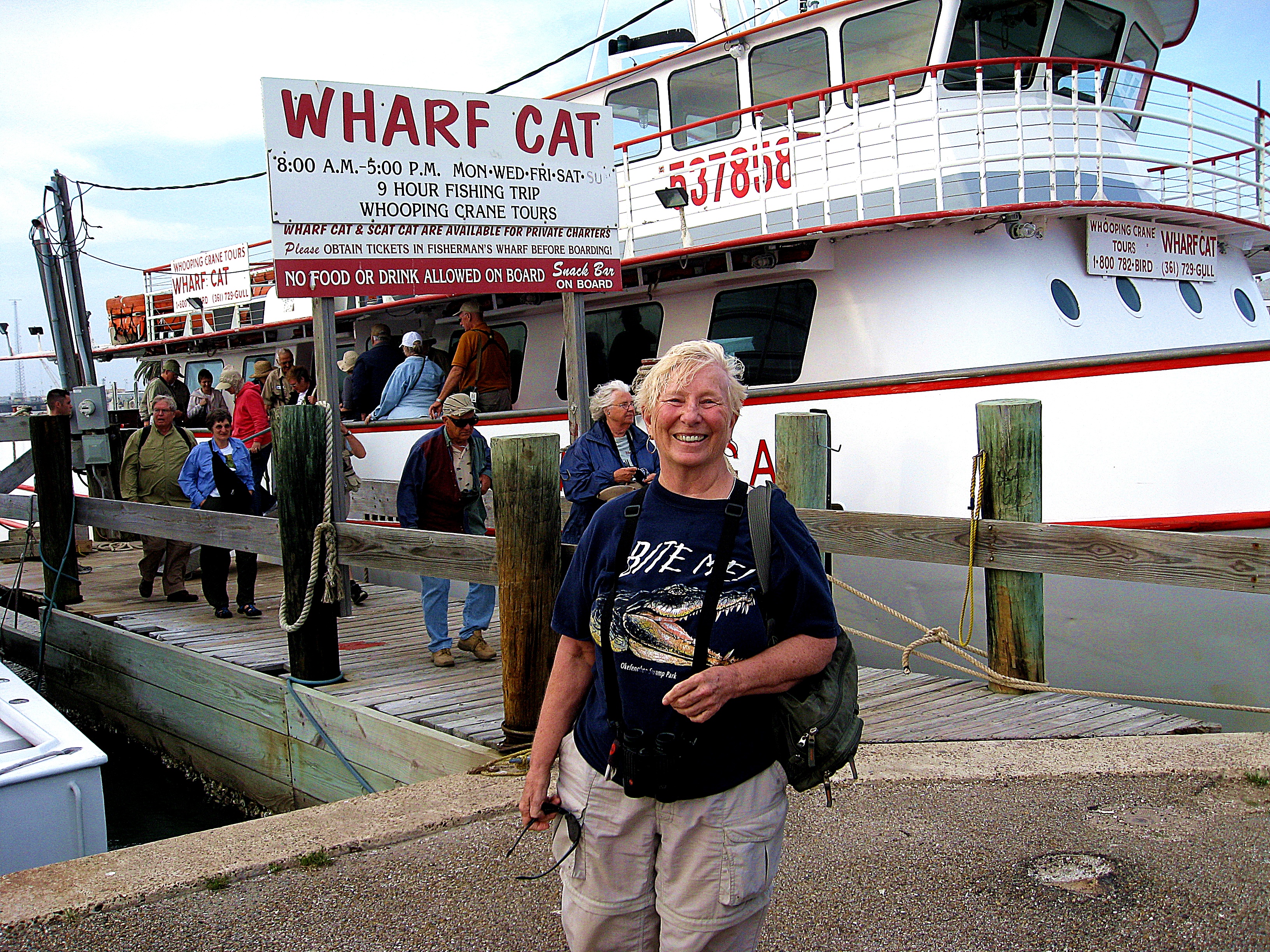
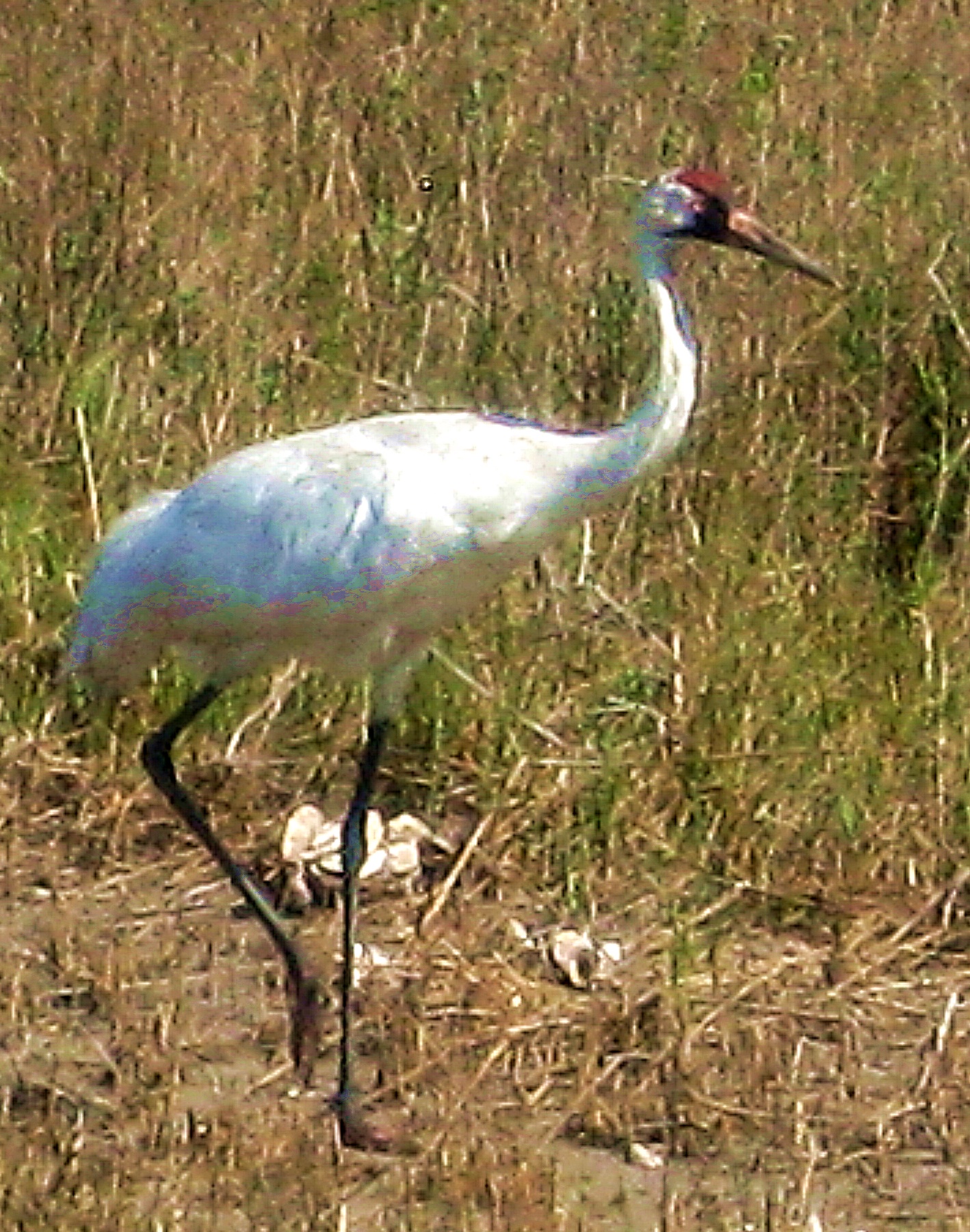
George Archibald took this photo of me at the end of our tour to see whooping cranes on the Texas Gulf Coast. I’m smiling because I saw these awesome endangered cranes. — Photo by George Archibald

To find the universal elements enough; to find the air and the water exhilarating; to be refreshed by a morning walk or an evening saunter… to be thrilled by the stars at night; to be elated over a bird’s nest or a wildflower in spring – these are some of the rewards of the simple life. John Burroughs

The Man Who Danced with One

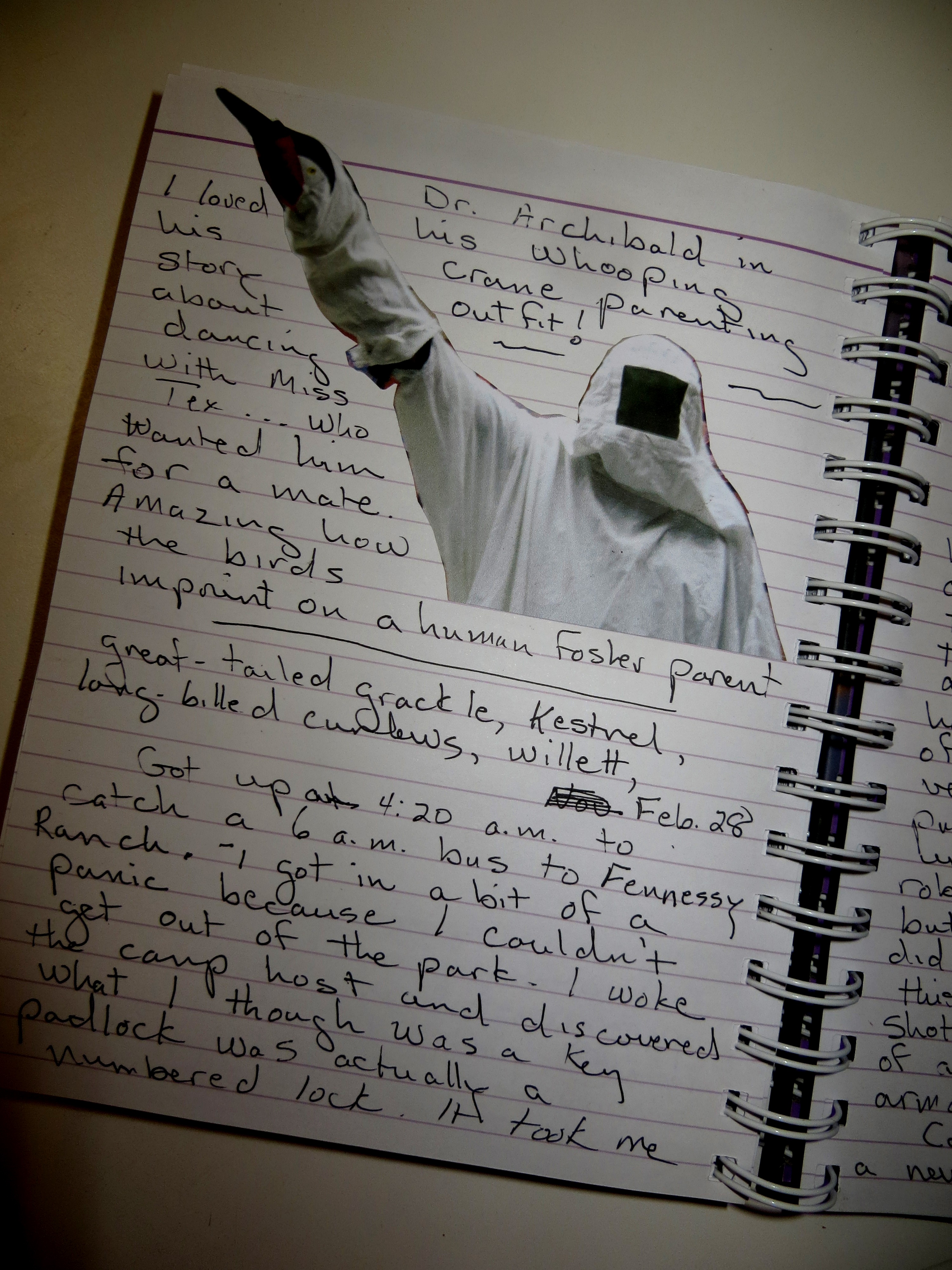
A page from my journal with a cutout of George Archibald in his whooping crane outfit.

I just finished reading To See Every Bird on Earth by Dan Koeppel. In it he mentioned George Archibald, a conservationist and co-creator of the International Crane Foundation. A day later, I read another mention about George, this time from one of my own journals. I had met George during a birding festival in Port Aransas in 2009, at which time he talked about the endangered whooping cranes that winter on the Texas Gulf Coast near Port Aransas.

In the 1940s, there were fewer than 25 whooping cranes left in the wild, and only a couple of these giant birds in captivity. Today, because of the efforts of Archibald and others like him, over 300 whoopers are now flying free, migrating between Canada and the lower U.S each year.

Whooping crame on Matagorda Island. — Photo by Pat Bean

During a workshop talk, George put on his crane costume and demonstrated how he danced with an orphan whooping crane chick as a way to teach it to dance the way whooping cranes do to attract and bond with a mate. Whooping cranes have to be taught this, as well as their migration paths, by their parents. Mom and Dad make their first winter migration flight with them.

I took pictures of George in his crane suit, and put some of them in my journal. Then the next day, I took the whooping crane tour aboard the Wharf Cat out to Matagorda Island to see the real whooping cranes. George was aboard and we had a nice long chat about the whoopers, and the work he and others are doing to save the cranes. It was a fascinating couple of days, and I’m glad both the book I was reading and my journals let me relive it.

Blog pick of the Day. Check it out.

Bean Pat: Interesting Literature http://tinyurl.com/y8casam5 Edward Allan Poe’s The Raven. I first read this when I was nine or 10 years old. Although it was another 15 years before I knew I wanted to be a writer, this poem certainly helped me fall in love with the sound of words, even though I didn’t know what they all meant at the time.

Read Full Post »

James Bond Island == Wikimedia photo

James Bond Island == Wikimedia photo

“Once you have traveled, the voyage never ends, but is played out over and over again in the quietest chambers. The mind can never break off from the journey.” – Pat Conroy

James Bond Island

            I was scanning through photos of what someone described as the most beautiful places on earth – dreaming over pictures of exotic places has been something I do frequently ever since I stopped wandering full time – when I came across one titled James Bond Island.

I recognized the place immediately as one of the settings for the James Bond movie, “The Man with the Golden Gun.” I had read Ian Flemming’s Bond books before JFK made them popular by saying they were his favorite books, and have seen every James Bond movie, even though most had little to do with the books.

But I had no idea where the actual island used in the film was located. So I did some research on the Internet, which provided a quick answer to this non-wandering wanderer’s curious mind.

Bartolemeo Island in the Galapagas with its its Pinnacle Rock near the center of this photo. If you watch Master and Commander, you can see the scene again. -- Photo by Pat Bean

Bartolomeo Island in the Galapagos with its Pinnacle Rock near the center of this photo. If you watch “Master and Commander,” you can see the scene again. — Photo by Pat Bean

The island, until the release of the movie in the mid’70s was unknown as Khao Phing Kau, in Thailand. It became a tourist attraction following the movie, and is most recognizable because of a 66-foot tall islet called Ko Taou that sits just 130 feet away from shore.

In 1981, the island became part of the newly established Ao Phang Nga Marine National Park. I wished I had seen it in person, but armchair travel is the next best thing.

Meanwhile, the morning’s at-home expedition brought to mind another movie, “Master and Commander,” which contained a setting I had visited. It was Bartolomeo Island in the Galapagos. And I took the photo on the left when I was there.

I would also classify it as one of the most beautiful places on earth. But then if I made such a list, it would probably be long enough to encircle the earth. And that brings me to one of my favorite travel quotes:

“We live in a wonderful world that is full of beauty, charm and adventure. There is no end to the adventures we can have if only we seek them with our eyes open.” – Jawaharial Nehru

            Bean Pat: A wee bee http://tinyurl.com/hyx5mp5 I love these photos, and they remind me of how important bees are to the environment.

Read Full Post »

A snowy egret at the Bear River Migratory Bird Refuge in Northern Utah. -- Photo by Pat Bean

A snowy egret at the Bear River Migratory Bird Refuge in Northern Utah. — Photo by Pat Bean

        “Live in each season as it passes; breathe the air, drink the drink, taste the fruit, and resign yourself to the influence of the earth.” — Henry David Thoreau

Some of my Favorite Places

There are 59 national parks, and in my lifetime I’ve been to 44 of them, mostly missing the ones in Alaska. They are some of my favorite places in the world.

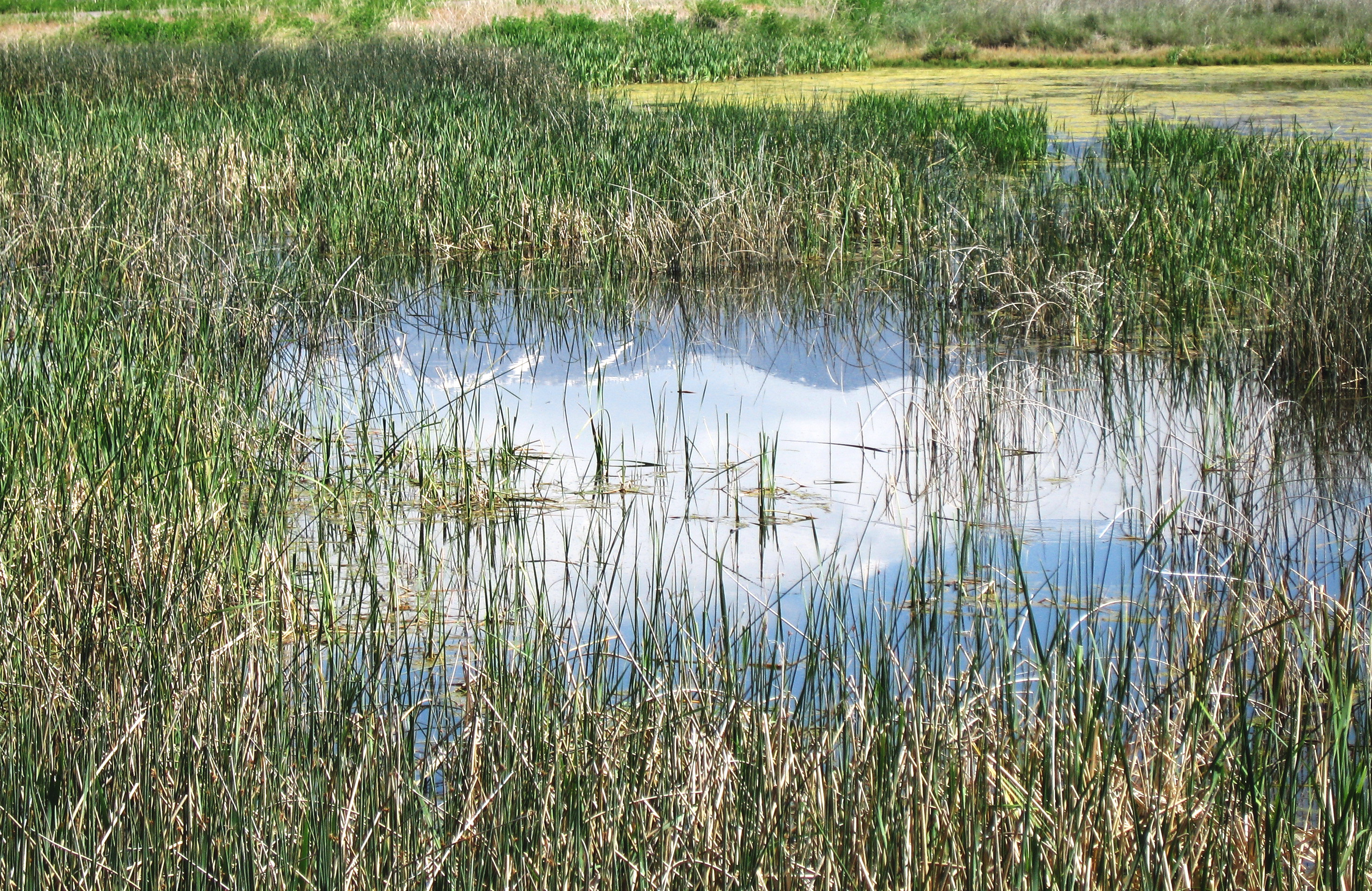
This pond captured images of the Wasatch Mountains and the clouds above them. I love it. -- Photo by Pat Bean

This pond captured images of the Wasatch Mountains and the clouds above them. I love it. — Photo by Pat Bean

On the other hand, there are over 550 national wildlife refuges. And they are also some of my favorite places – even though I haven’t kept track of the ones I’ve visited. During my nine years of traveling this awesome country, I stopped at any refuge in my vicinity, mostly to bird watch. .

Among the more memorable ones that would be on my list of the refuges I’ve explored, if I had such a list, would be Brazoria National Wildlife Refuge, located 15 minutes from my son Lewis’ Texas Gulf Coast home, and where I turned him into a birding addict like me. This refuge has added 16 birds to my life list of 710 species.

But that pales with the Bear River Migratory Bird Refuge that has given me 31 of my life birds. This refuge is very special to me because the first time I visited it was in the 1970s, when it was lush and green – and long before bird watching became one of my passions.

In the 1980s, I watched as the now 80,000-acre refuge was inundated by Great Salt Lake flood waters, whose salty content pretty much destroyed everything, including an almost new visitor’s center. I then regularly watched as the refuge, less than an hour’s drive from my Ogden, Utah, home for 25 years, made its comeback.

Pickleweed. I remember how thrilled I was when I saw the tiny beginning of this plant in a place desolate of greenery.

Pickleweed. I remember how thrilled I was when I saw the tiny beginning of this plant in a place desolate of greenery.

It started with pickleweed, one of the first plants to come back and one that helped eliminate the salt in the landscape. This was all explained to me during a tour of the damaged refuge for a newspaper story I was writing. Have I ever told you how much I loved my journalism career?

I was already retired, and traveling, but I made it to the grand opening of the refuge’s new visitor’s center in 2006. This time the center was located a good ways away from the flood zone, and next to Interstate 15 near Brigham City. The site offers visitors a convenient and quick view of a bit of what the refuge has to offer without the 10-mile drive on a rutted, unpaved road to the main refuge area.

I used to hate that rough ride – but I loved it, too. It kept the crowds away. Sometimes it seemed as if I had the whole refuge to myself, and if not, the other visitors were most likely to be nature lovers who, like me, thought the birds, animals and scenery were worth the bumpy drive.

If you’re one of us, along with visiting a national park during this year celebrating the system’s 100th birthday, you might want to also check out a national wildlife refuge. Most likely there is one not too far from where you live. https://www.fws.gov/refuges/

And if you’re interested in a good book, check out Refuge by Terry Tempest Williams. It’s much about the Bear River Migratory Bird Refuge.

Blog pick of the Day. Check it out.

Blog pick of the Day. Check it out.

Bean Pat: Living Life Almost Gracefully http://tinyurl.com/h97kl2v Chasing the Sun

Read Full Post »

« Newer Posts - Older Posts »