Feeds:
Posts
Comments

Archive for the ‘Books’ Category

 “Victory is won not in miles but in inches. Win a little now, hold your ground, and later, win a little more.” Louis L”Amour

While I haven't taken a walk through Alaska's wilderness, I have driven the Top of the World Highway past Chicken. It was an awesome drive. -- Wikipedia Photo

Book Talk

I just finished Lynn Schooler’s “Walking Home,” a true story about Alaska, Mother Nature’s fierce side, a crippled grizzly bear that wanted to eat a human, and coping with loss.

Lynn survived the bear, plus a raging creek, and heart-wrenching, although self-imposed, solitude – I’m not giving away the ending because of course he had to survive to write the book – with the comment that his next adventure might just be a drive in a rented car around Hawaii.

“Why not? I am fifty-five years old; they are all victory laps now.”

He said a whole lot more that resonated with who this wandering/wondering, nature-loving old broad is, but that comment made me laugh with joy. I’m 72 years old so certainly my life is now nothing but victory laps. It’s fun to think of it that way.

And I spent all day in a bus traveling this road in Denali National Park to Wonder Lake. Mount McKinley, shown above, hid behind the clouds for most of that day. -- Wikipedia photo

Lynn said it after surviving an awesome environment that suddenly turned mean and realizing that his wife no longer wanted to be with him.

His book, one of those slow-reading ones so you have time to ponder the words, made me think of the things I had survived. While nothing so deadly as Lynn’s adventure, I had survived my own marital breakup, teenage-children with rebellion in their makeup, 37 years as a journalist and even being thrown out of a raft in the middle of a raft-eating rapid on the Colorado River as it flowed through the Grand River.

These are indeed my victory-lap years. Thanks Lynn for allowing me to think of them this way.

Bean’s Pat: Everywhere Once: American Safari http://tinyurl.com/7932lx2 Who said you had to go to Africa to be on safari?


Read Full Post »

 “Finding beauty in a broken world is creating beauty in the world we find.” – Terry Tempest Williams

Travels With Maggie

Yellow-headed blackbirds are common sights at the Bear River Migratory Bird Refuge. -- Photo by Pat Beans

I first visited the Bear River Migratory Bird Refuge east of the Great Salt Lake in Northern Utah in the 1970s. It was lush with vegetation and full of twittering birds.

Then came the early 1980s, when the lake reached a historical high and its briny waters took out roads, causeways and buried the refuge. It killed all the sanctuary’s green-growing plants and took out the visitor center as a warning of Mother Nature’s fickleness. .

It took a long time for the refuge to recharge itself, a period in which Terry Tempest Williams wrote “Refuge,” a book published in 1991 that was written when Williams’ mother was dying. The book weaves the landscape of the refuge and nature into a tangled web with the author’s struggle to come to grips with her own life. A very good read, in case you’re interested.

Another common refuge inhabitant is the snowy egret. -- Photo by Pat Bean

Since both the refuge and I existed at that time in the shadows of the Wasatch Mountains, the refuge drew me to it – often. I enjoyed its quiet sanctuary from the chaotic and stressful world of journalism, and also wrote about the refuge’s recovery for my newspaper readers.

I still vividly remember the first green-growing thing that returned. It was pickleweed, a salt loving plant that would help heal the soil for other plants. Those tiny nubs of green poking up seemed like a miracle.

Today, the refuge,is once again lush and a thriving habitat for birds and other wildlife. It’s there for anyone willing to endure a drive down a 10-mile, bumpy unpaved road from Interstate 15.

Maggie and I’ve driven the slow-going, rough miles several times in Gypsy Lee, who shakes, rattles and rolls over the bumpier spots. She’s used to such detours, however, and so far has not complained.

For those less passionate nature lovers, there is now a new Visitor’s Center just a few hundred yards off the freeway. It was built there instead of on the refuge proper just in case Mother Nature decided to get a wild hair again.

It’s really a nice center, with a created wetlands through which a boardwalk winds to give visitors a chance to see Mother Nature at her best. If you’re ever in Northern Utah, you might like to check it out. Perhaps you’d even like to take the 10-mile bumpy drive.

Bean’s Pat: Travel Photography: Most Unexpected Rainbow http://tinyurl.com/867pogm Have you ever seen a full rainbow? I haven’t. But this photographer did.

Read Full Post »

“If it keeps up, man will atrophy all his limbs but the push-button finger.” – Frank Lloyd Wright

I found Estero Llano State Park in Welasco, Texas, the old-fashioned-way, with a map. I'm not sure how the anhinga found its way here. -- Photo by Pat Bean

Travels With Maggie

I was in Dallas, returning from taking my daughter to work so I could use her car for the day. All I had to do to get back home was follow the GPS map installed on the dashboard of her Toyota Highlander.

But I decided I wanted to get a different view of the map. Silly me. As I’m sure you have already guessed, I pressed the wrong button and lost everything on the screen — and couldn’t get it back.

Because I had depended solely on the GPS to get me from one place to the next, I was confusingly lost with morning rush-hour traffic zooming all around me.

I was fortunate that I eventually came to a landmark I recognized and, although it took an extra 40 minutes, I did eventually get back to my daughter’s house.

I then used a map, and my own handcrafted cheat-sheet of right and left turns, to complete the day’s errands and to find my place back to pick up my daughter from work later that day.

The truth is that I’ve had to be pulled, while screaming, into most technological changes. I was one of the last to finally get a cell phone, and it was only this past Christmas, and only because it was a gift from my son, that I got a “smart” phone.

On the other hand, I was one of the first to get a home computer. After using one at work to write my newspaper stories, I found using a typewriter for my personal writings impossible.

Without GPS, Monarch butterflies, like this one I found at Quintana Neotropic Bird Sanctuary on Texas' Gulf Coast, migrate annually between Mexico and Canada, although it may take three generations to complete the journey. -- Photo by Pat Bean

My first computer didn’t even have a hard drive. Everything ran from floppy disks. And the word-processing program on it came with a black screen and green type, or you could make the type orange.

Today, I can’t imagine life without my computer and the Internet. Such a thought sounds barbaric.

Ditto life without my Kindle, which was also a gift and which I’ve now had for a year. I thought I would miss the feel of a real book in my hand, but I haven’t. I think the fact I can be reading almost any book I want almost instantly is a miracle – well until I discover how much I’ve spent at Amazon each month.

I still haven’t got a GPS, however. My canine traveling companion, Maggie, and I still use maps, albeit it computer ones, to find our way across the country.  It seems a GPS might be as difficult for me to use as an electric can opener, which is why I still use a manual one. 

But I’ve got a Twitter account, maggieandpat. And when I announced it, my oldest granddaughter laughed and said: “Who would have thought it would take my Nana to make me get a Twitter account?” 

Her comment made this wandering/wondering old broad feel young – well at least until a pain in one of my joints announced a change in the weather.

Bean’s Pat: Vimeo: My Friend Maia by Julie Warr http://vimeo.com/31733784 A video to inspire all us old broads, and perhaps those still young among us, too.


Read Full Post »
“Everyone is a moon, and has a dark side which he never shows to anybody.” – Mark Twain

New York Times best seller, "Neon Rain"

Travels With Maggie

Last night, after Maggie and I had crawled into bed in the childhood bedroom of my grown granddaughter, Shanna, where I sleep at my oldest daughter’s home because I can’t plug into an electrical outlet, I turned on my Kindle.

My neck started getting uncomfortable after I had read for about a half hour. But since I still wasn’t ready for the sandman, I switched to one of the audible books I had downloaded.

I had put off getting a Kindle for a long time because I loved the magic of holding a real book in my hand. It took all of about 10 minutes, however, before I decided the Kindle had just as much magic, perhaps even more so because if I decided I wanted a certain book, I could be reading it in less than a minute.

But back to last night. My choice of listening pleasure was “The Neon Rain,” a Dave Robicheaux novel by James Lee Burke. The book had

New Orleans' Bourbon Street in 2003 -- Wikipedia photo

been on sale through Amazon’s Audible.com and on a whim I had bought it since I had already used my two monthly credits.

While I’m a big fan of murder mysteries, I quickly realized this one, whose hero is a New Orleans homicide detective with a Vietnam past, is darker than the cozy mysteries I favor. Burke puts into words what the authors I usually read keep hidden behind closed doors.

His descriptive phrases are gritty and complete, and Will Patton, the book’s narrator, captures Robicheaux’s dark character completely.

New Orleans French Quarter -- Wikipedia photo

What kept me reading, however, was that Burke had created Robicheaux in both black and white, and made him likeable. Underneath the toughness was a gentleman with depth, and Burke’s descriptive writing captured both sides.

I recently watched the movie “Salt’ with my daughter and her husband. At the end, the three of us sort of shook our heads.

“Not really a great movie,” my son-in-law, Neal, said.

“That’s because there was never any one to root for,” I replied.

The fact that I can root for Robicheaux, and that Burke is a writer’s writer, will keep me reading/listening  to the end of “The Neon Rain.”

I will, however, continue to favor my more cozy mysteries, where the object is to simply to figure out who-done-it. But I also recognize that it’s good to once in a while be jolted back to reality and the knowledge that there is a dark side to the world – and as Twain says, a dark side within each of us’

Thankfully, most of us keep that side hidden behind closed doors.

Read Full Post »

 “In three words I can sum up everything I’ve learned about life. It goes on.” – Robert Frost

A tree that doesn't want to die. Now this is what I call a passion for life. -- Photo by Pat Bean

Travels With Maggie

When I first started writing about my travels, I tried to disguise the fact that I was an old broad. Then one day, after a hint from an online writing colleague that being an old broad was what set me apart from all the glamorous young women out there traveling in search of love. I claimed the honor.

I first heard the term “old broad” back when I was a journalist reporting on the environment. In writing about wilderness issues and the value of protecting it, I came across a group called “Great Old Broads for Wilderness.”

I sent this photo of me taken by my friend, Shirley Lee, in Cozumel to my kids announcing that I had a new boy friend. Even old broads want to have fun.

Wow, I thought, when I met some of these women, like Susan Tixier, the brain behind the organization, and author Terry Tempest Williams, as they exercised their passions to help protect wild lands from disappearing from America. Suddenly the term old broad seemed more honorific than derogatory.

Recently I’ve added a couple of new adjectives to my own old broad-persona that I feel fit perfectly. I’m a wandering-wondering old broad with passions for writing, travel, birds, books and Mother Nature.

One of my goals for this year is to rewrite my travel book with this voice. It’s too bad I didn’t do it the first time around. I won’t make that mistake this year with my blog. It’s a promise.

And my canine traveling companion, Maggie, who is also an old broad, is my witness.

Read Full Post »

“It was a terrible, horrible, no good, very bad day.” — Judith Viorst  quoting Alexander

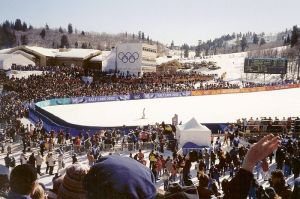
The back side of Mount Ogden. That little peak on the right marked the start of the Men's Downhill for the 2002 Winter Olympics. -- Photo by Pat Bean


Travels With Maggie

I was sick yesterday with a 24-hour bug. I broke my glasses. My computer is acting up again. And I was up all night with Maggie, whose ears were hurting. And of course, being as it’s the holiday season, I’m already over budget for the month.

This morning I ignored the rule about never feeling sorry for myself, and broke down and cried while on the phone with my oldest daughter.

You can insert the S word here if you like.

So it’s off to take Maggie to the expensive-as-hell vet who never seems to solve the problem,  get a new pair of glasses and visit the geeks.  Hopefully they can fix my computer so I can blog again tomorrow, hopefully about happier things.

Life sometimes is just not fair. Book cover illustration by Ray Cruz

Meanwhile, I thought I’d share a  picture of a happier day with you.  It’s one of my very favorite views taken from Huntsville, Utah.  

Oh, and if you’re looking for a book to give some young person this year, I suggest Judith Viorst’s “Alexander and the Horrible, Terrible, No Good, Very Bad Day.”

Read Full Post »

“I have the world’s largest collection of seashells. I keep it on all the beaches of the world … perhaps you’ve seen it.” – Steven Wright

Wave-watching from the Quintana Jetty on the Texas Gulf Coast. -- Photo by Pat Bean

Travels With Maggie

Janet Evanovich’s Stephanie Plum’s latest antics in “Explosive Eighteen” called louder to me last night than the Cowboys and Giants.

This ruddy turnstone was also wave-watching. -- Photo by Pat Bean

So after dinner with my son and his family, I escaped back out to my RV to read instead of watch the Dallas Cowboy?New York Giants football game. As a Dallas native, I’m an avid cowboy fan, but I seldom watch football these days, preferring instead to read about the game the next day.

I also knew that this particularly game was going to spark family tensions. My Texan son, Lewis, would be pulling for the Cowboys, while my fantastic New Yorker daughter-in-law, Karen, would be rooting for the Giants. Both of them are rabid followers of their teams.

My son left for work before I got up this morning, but my daughter-in-law stopped by my RV to say good-bye before she left for the day. I

Footprints in the sand intrigue me. -- Photo by Pat Bean

didn’t need to ask who won. The smile on her face lit up the overcast dawn. Hopefully my son will have cheered up by the time he gets home.

In the meantime, I have errands to run. I have to mail off Christmas packages and get propane for my RV, which means a road trip from Lake Jackson to Brazoria.

After that, Maggie and I are going to the beach for a little bird-watching, wave-watching and sand-walking. I can’t think of a better way to spend the afternoon. Can you?

Read Full Post »

One of the books I loved growing up was a literature textbook that belonged to my mother. She told me her parents had bought it for her after she had flunked her English course so she could study it before she had to take the class over again.

I must have been only about seven years old, but already reading extremely well, when I discovered it. I fell in love with the book, and especially the poetry it contained. I memorized many of the pieces, including the lengthy “Prisoner of Chillon” by Lord Byron. The poem’s chilling closing lingers with me still: “My very chains and I grew friends/So much a long communion tends.”

But my favorite of all the poems, which I also memorized although at the time I understood it less than Byron’s narrative, was “In Flanders Fields.” I simply liked the rhythm and music of the words.

Today I understand it well. Sadly it’s as timely now as it was at the end of World War I, when John McCrae wrote it.

Field of poppies -- Wikipedia photo

In Flanders Fields

In Flanders Fields the poppies blow
Between the crosses, row on row,
That mark our place; and in the sky
The larks, still bravely singing, fly
Scarce heard amid the guns below.

We are the dead. Short years ago
We lived, felt dawn, saw sunset glow,
Loved, and were loved, and now we lie
In Flanders Fields.

Take up our quarrel with the foe:
To you from failing hands we throw
The torch; be yours to hold it high.
If ye break faith with us who die
We shall not sleep, though poppies grow
In Flanders Fields.

NaNoWriMo Update – 21,497 words

Lot of backtracking during my writing today. What time did that restaurant open? What was the name of the Bed and Breakfast on the beach? What was Jeff’s last name? Etc., etc, etc. Thankfully I was able to find what I wanted through a word search.

I added the information I needed to my character/time frame/place-name notes. It would have been nice if I had jotted that information down when I originally wrote it but how was I to know I would need that information again.

I’m learning, however, and that was what this challenge for me is all about.

And among the things I’ve learned is that I work best if I start my writing at 5 a.m., especially since most of the rest of the world – including my daughter and her husband who got back from their cruise yesterday – are still asleep. The secret to doing this is to get to bed early.

And despite my flipping back and forth through what I had already written, today’s writing went speedily, more so than any day. I had my 2,000 words finished by 9 a.m., despite trying to remember and get up every half hour and stretch my neck and back. .

The “Force” was with me today. Hope it’s with all you other NaNos out there, too.

Read Full Post »
 My Favorite Places: Lake Claiborne

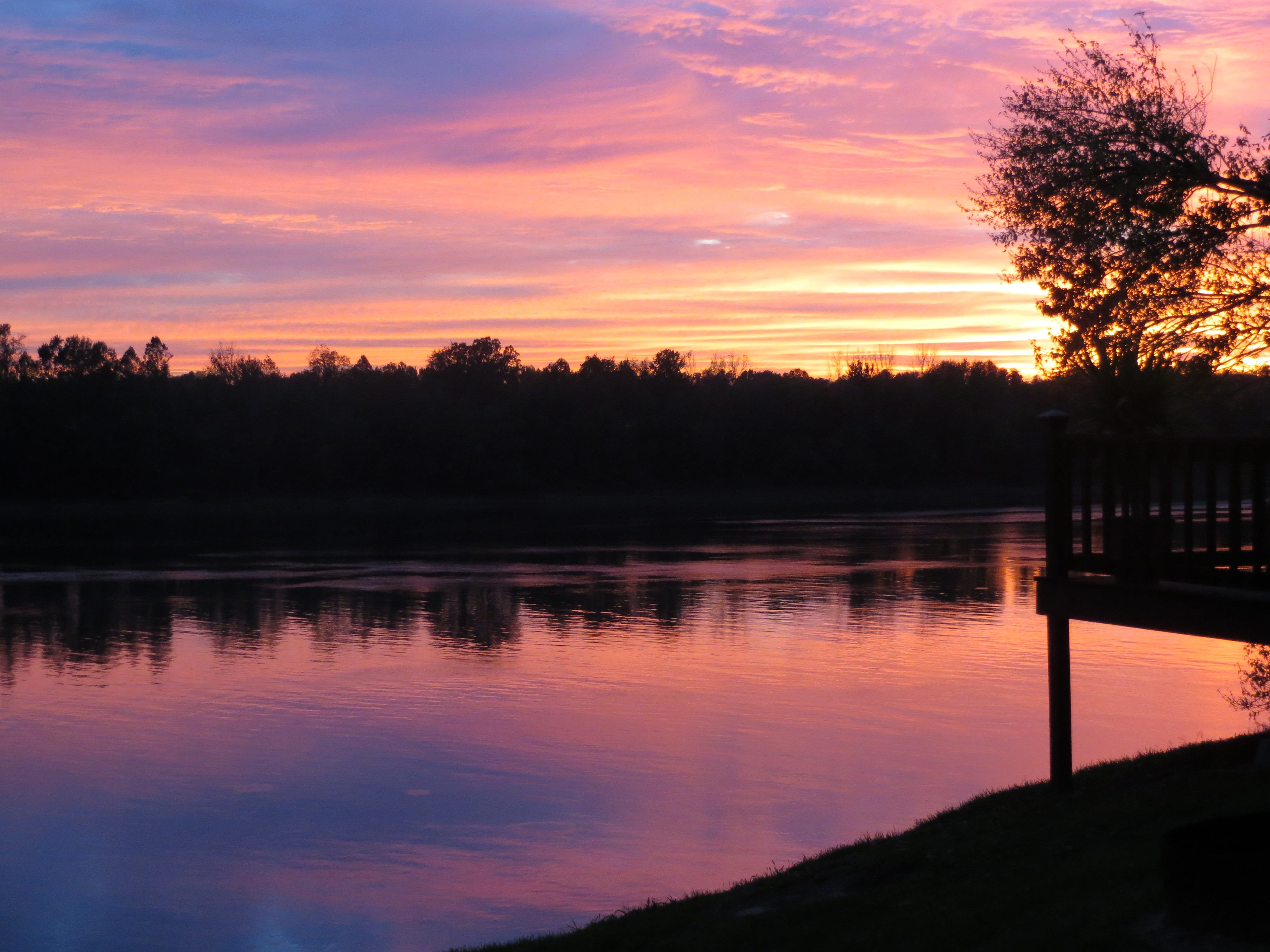
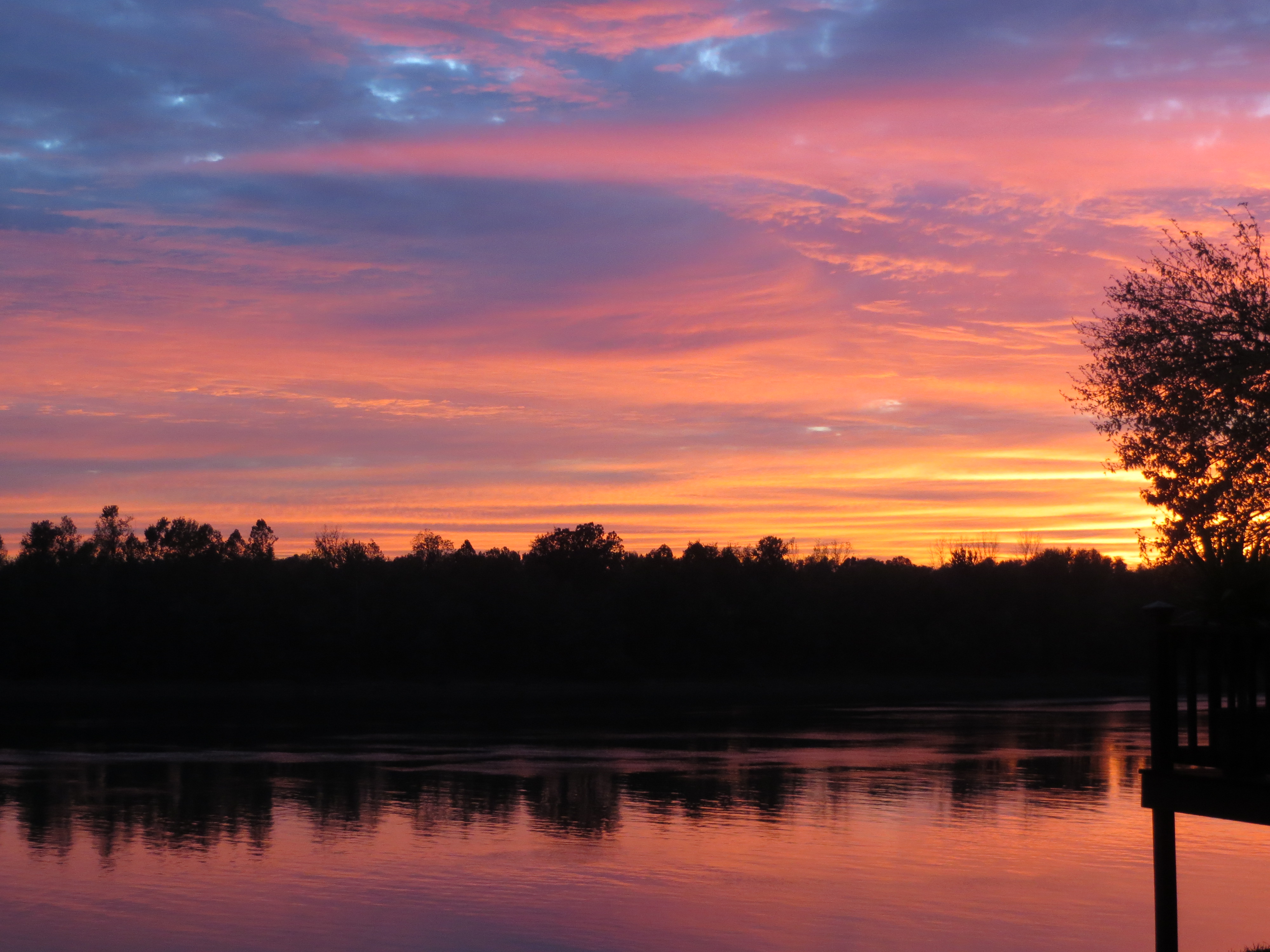
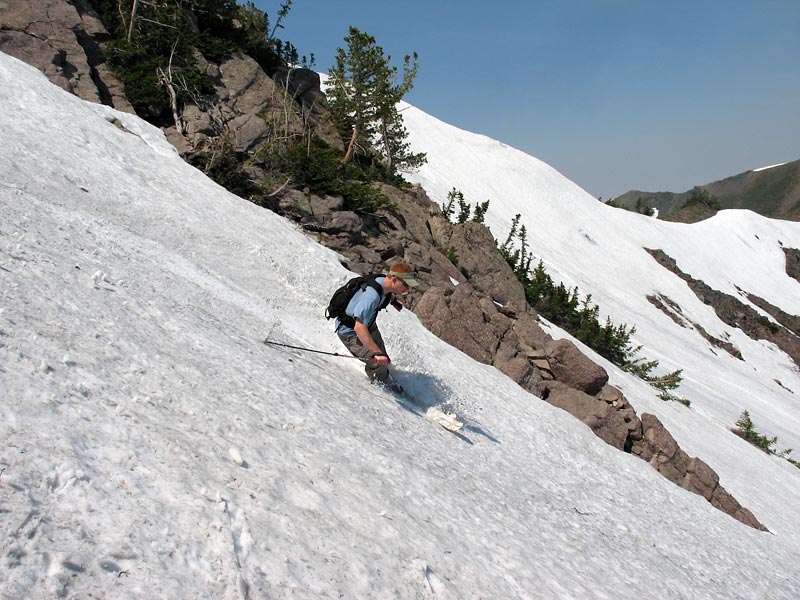
Lake Claiborne, Alabama, in the fall. -- Photo by Pat Bean

“Writing is an exploration. You start from nothing and learn as you go.: –E.L. Doctorow

NaNoWriMo Update – 17,309 words

Only about 1,500 words today, but they felt like good, words and I feel I’m back on track with places to go in my book. A couple of new plot lines finally hit my brain cells. .

I also don’t feel too bad about the fewer words because I had several errands to run and two hours of physical therapy for my neck. I also did an extra blog to promote Rana DiOrino’s “What Does It Mean to Be Safe,” a children’s picture book, but one that has good advice for adults as well.

The other reality I’m facing is the fact that I can’t sit and sit in front of the computer as I want. It’s most likely what got my neck so horribly stiff in the first place. I need to get up and move about every 30 minutes.

So what I’m now doing is writing my book in short scenes, and then taking a short break. I walk the dog, put a load of clothes in the washer, do my neck and shoulder exercises or whatever. The key is to get right back to the computer and go into the next scene. It helps if I get up in the middle of a sentence so I can get right back into it. A timer’s helping me do that.

I’m also trying to convince myself that I really can write after the sun goes down. I don’t like it, but I can see it’s going to have to happen if I’m to meet the 50,000 word goal without screwing up my neck any more than I already have. Can I say my favorite “S” word right now?

Read Full Post »

 “I feel there are two people inside me – me and my intuition. If I go against her, she’ll screw me every time, and if I follow her, we get along quite nicely.” – Kim Bassinger

When a beautiful landscape is also a safe place for Maggie and me to park Gypsy Lee, life couldn't be better. The Idaho state park campground above was lighted, patroled nightly and located by a scenic lake. -- Photo by Pat Bean

Travels With Maggie

When you’re an old broad who lives in an RV and often doesn’t know where she’s going to spend the night, safety is an issue. There are just too many sunrises and sunsets I still want to see.

I thought about this seven years ago when I sold my Utah home, and disposed of almost all my possessions and became a nomad.

My rules for staying safe on the road began with driving only during daylight hours and making sure I had a safe berth for the night. I quickly realized most inexpensive Forest Service campgrounds, where I thought I would be staying, didn’t quite fit that bill. They were a little bit too lonely and isolated for my comfort.

Written by Rana DiOrio and illustrated by Sandra Salsbury

National parks, state parks and decent commercial parks, while a bit more expensive, have become the mainstay for my nightly, weekly or even monthly stays, as this past summer when I volunteered as a campground host at an Idaho state park.

For additional safety, I have a guardian travel angel, a daughter-in-law who always knows the route I’m traveling when I’m on the road, and with whom I check in with once a day. And when I lock the doors of my 22-foot RV, I actually feel safer than if I were living in a home where I couldn’t see all the doors and windows. For added measure, my canine travel companion, Maggie, makes an excellent alarm system. She barks when anyone comes within about 30 feet of our home on wheels.

I wish when I was younger, and a mom of five kids, I could have felt as secure about their safety as I do today about mine. I was fortunate that my offspring escaped all the pitfalls of speeding cars, unsupervised creek swimming, stranger encounters and teenage foolishness to become adults who now worry about the safety of their children.

I do believe their job is even harder than it was for me, and more complicated for their children than it was for them. Rana DiOrio, author of the award-winning “ What Does It Mean To Be …” children’s book series tackles this situation in her latest offering” “What Does It Mean To Be Safe?”

It’s a book I want my grandchildren and great grand-children to read. One of the best messages of the book, which is delightfully illustrated by Sandra Salsbury, is that kids should follow their inner voices, that their own intuition will tell them when they are not in a safe situation.

I found this interesting because it was my own inner voice that told me I would be safer while on the road if I traveled only when the sun was out and spent my nights where there were people and lights.

I also remember times as a young child when my intuition told me never to be caught alone with a distant male relative. As an adult, I realized how on target my inner voice had been when I was only eight years old.

While designed for children, Rana’s book has a message even for us grownups.

Readers can buy her book by going to: http://shop.littlepicklepress.com/what-does-it-mean-to-be-safe-p33.aspx Enter the coupon code BBTSAFE at check-out to get free shipping and a free poster to go with the book.

Read Full Post »

« Newer Posts - Older Posts »