Feeds:
Posts
Comments

Archive for the ‘Books’ Category

“If you don’t have time to read, you don’t have the time (or the tools) to write. Simple as that.”  — Stephen King
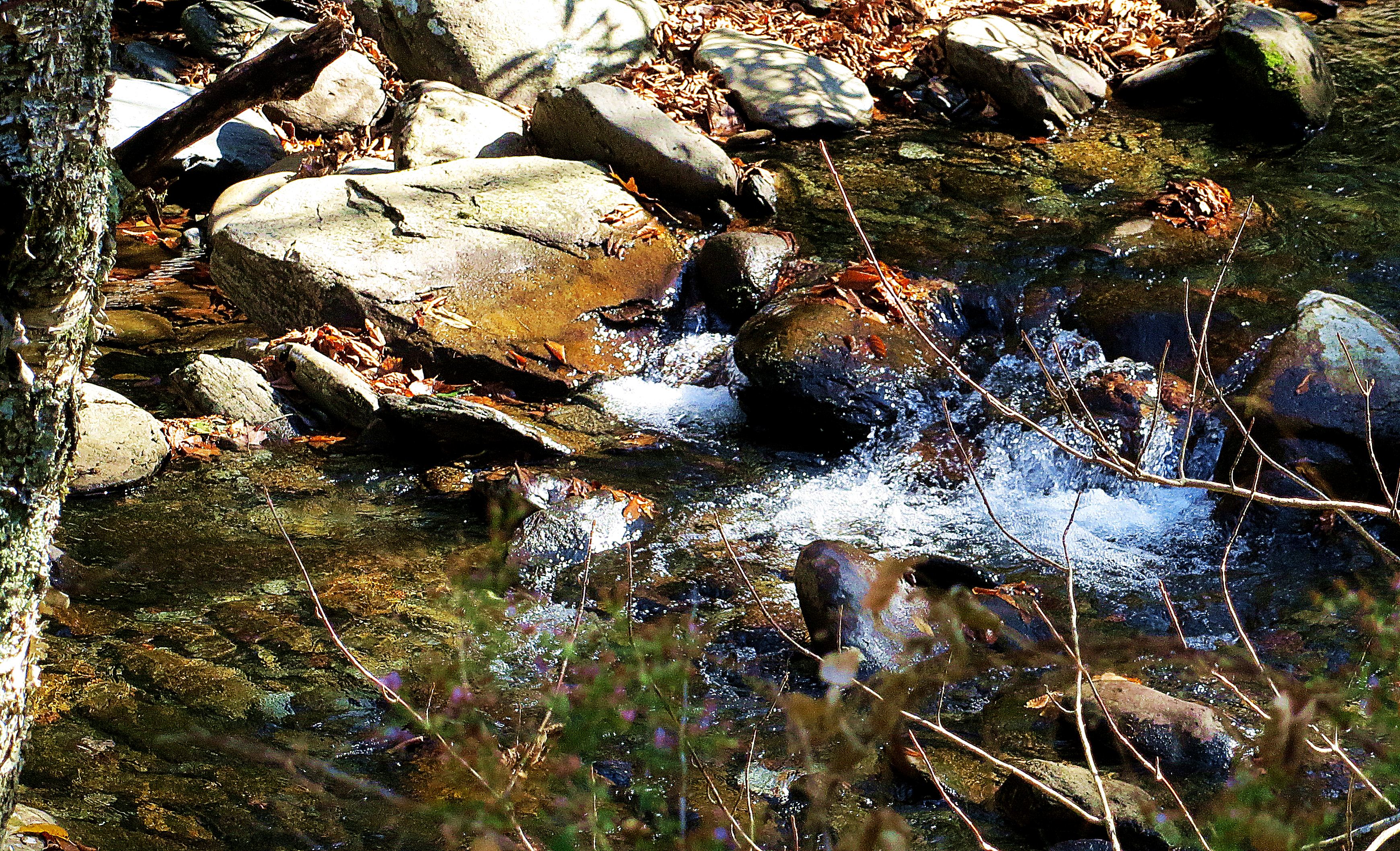
A good writer will let you see beyond the picture and hear the water gurgling. — Photo by Pat Bean in Smoky Mountain National Park.

Five Books at a Time

My reading table always contains five books. In addition, there are books scattered all around my house – many waiting to become one of the five that are currently being read. I usually read the selected five one chapter at a time, rotating between them in order.

Well that’s what I do until one of the five demands I continue reading until I finish it without stopping, which I have to admit, is not a rare occurrence. And if that happens, nothing else gets done until the book is finished – and I love it when this happens.

I started my unusual reading habit for two reasons. The first is that there are books that I knew I wanted to read, but couldn’t seem to get into them. If I recall correctly, the first time that happened was with a James Michener novel, The Source. So I began reading just a few pages in it every night, and then I would pick up a book that held my attention better, At some point in Michener’s book, my interest took hold and I finished it quickly.
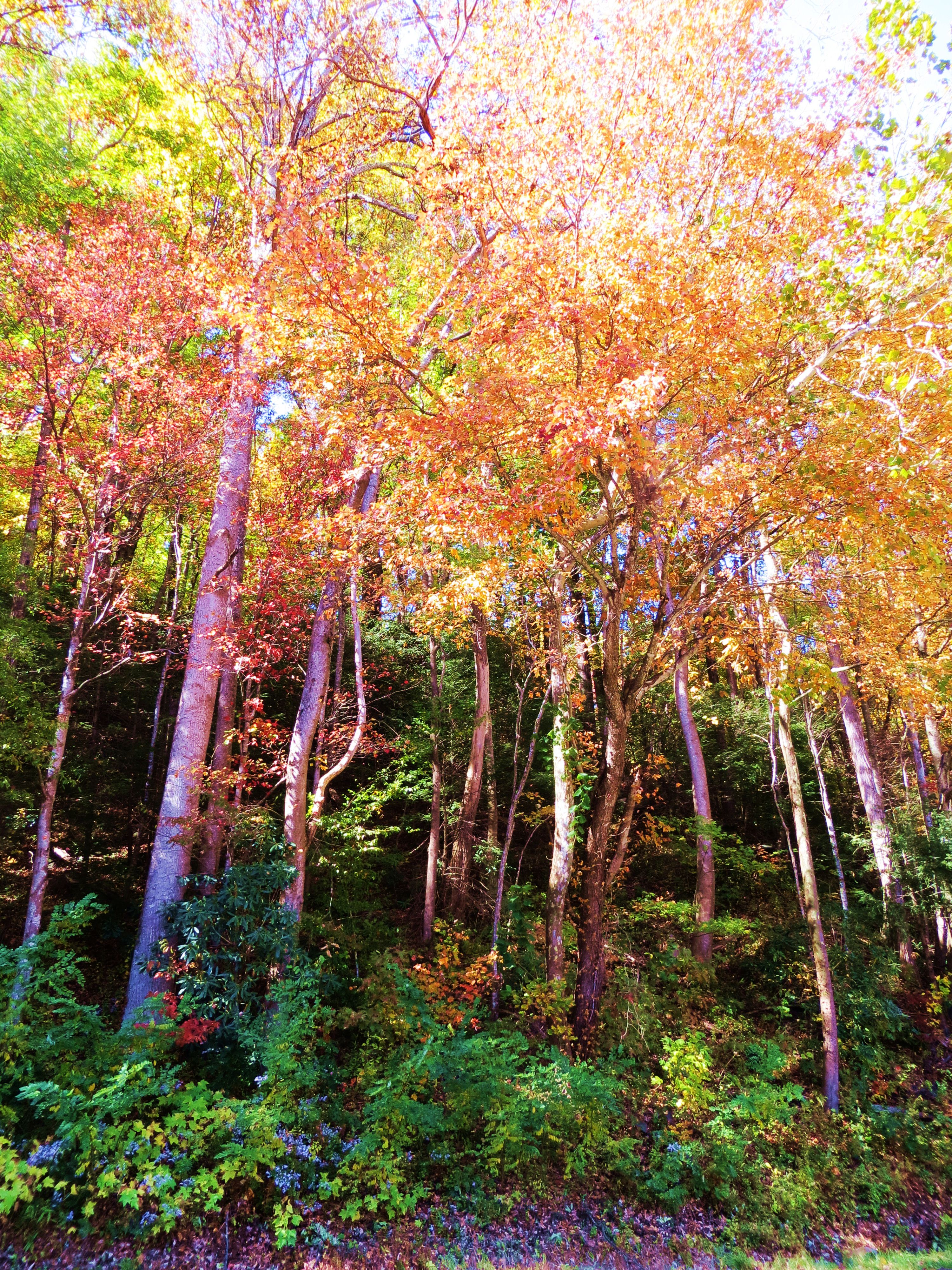
A good writer can place you in this forest and let you see the colors. — Photo by Pat Bean

I’m not a speed reader, but I can read fast when my attention is harnessed. On average, I read two complete books in a week. Reading too fast, however, was my second reason for reading several books at a time. Once a book takes hold of me, especially if I want to know what is going to happen next, I find myself reading so fast I don’t digest what I’m reading,

By reading several books at a time, I find myself better able to remember what I’ve read, maybe because I have to recall what went before when I return to the book. It works for me is all I can say.

Another habit I have is reading with both my journal and my daily to-do list nearby. In the journal, I write down quotes from the books, and my own thoughts about things I read. On my to-do list, I often jot down names of places that are mentioned, which I will later locate on a map or read more about. I also write down any words I do not know the meaning of, and will later look them up in a dictionary. This habit means nary a day goes by that I don’ learn something new.

Meanwhile, this slow-down ritual of reading that I’ve developed is also a tool for studying good writing, a habit that hundreds of authors have suggested makes for good writing. And good writing is definitely something I’ve come to love and appreciate. It was actually a piece of good writing that inspired this blog. After copying the paragraph down in my journal, I was inspired to share it.

I came across the paragraph in an essay by Eric Hansen that was included in his book, The Bird Man and the Lap Dancer: Close Encounters with Strangers.

It is the story of an elderly Russian woman who narrowly escaped with her life during World War II, and who now lives in a rent-controlled apartment in one of New York City’s worst sections of town. The woman, known as Madame Zova, warns Eric not to visit at night because it is too dangerous. He admits he is afraid to visit in the day, too, But he does. Later, when Eric has moved to California, he talks to Zoey, as he came to call her, on the phone, and asks if she is afraid to live alone. It is her reply, which Eric recalls in a marvelous piece of writing, that moves me intensely.

“No,” she said. “I am not afraid because I know what it means to love life and survive. People with no belief and no faith and no hope are like empty box. They have nothing. Miracles happen every day. You think red tulip growing from black soil is not a miracle?”

So what good books are you reading?

Blog pick of the Day. Check it out.

Bean Pat: The Day After http://tinyurl.com/htebvmj As a person with wanderlust in my soul, these photos made me want to take a walk. Perhaps they will affect you the same way.
Read Full Post »

“A newspaper is lumber made malleable. It is ink made into words and pictures. It is conceived, born, grows up and dies of old age in a day.” — Jim Bishop

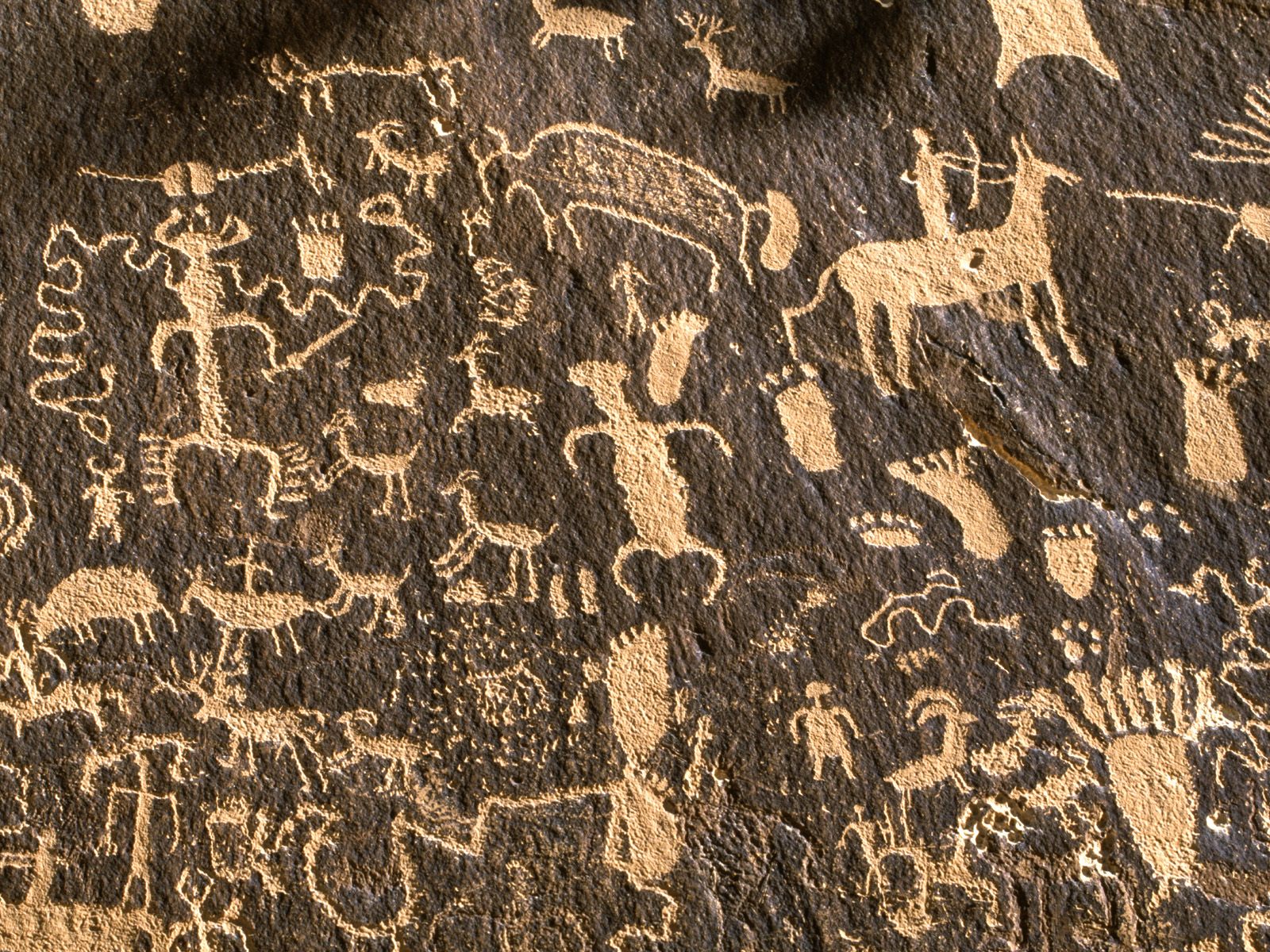
Newspaper Rock, Utah. I don't want to go back in time, I just want truth to once again become possible.

Newspaper Rock, Utah. I don’t want to go back in time, I just want truth to once again become possible.

          “A newspaper is a circulating library with high blood pressure.” — Arthur Baer

My Heart is Breaking

It was my usual morning. I walked Pepper, came back and fixed myself a cup of cream-lace coffee, and settled down with a book to read while I drank. And suddenly there were tears in my eyes, tears that are still falling, which is why I am writing this blog.

I need to tell someone, besides Pepper, why my face is wet.

The book I’m reading is a simple book by Ari L. Goldman called The Late Starters Orchestra. It’s about the author’s efforts to play the cello. Ari is a former New York Times reporter, and now a professor at the Columbia University Graduate School of Journalism.

Toward the end of his book Ari achieves his goal of playing in public at his 60th birthday party.

He then writes “…I would die a happy man. I was a musician. Maybe that wouldn’t be the first thing that the newspapers would write in my obituary (if there are still newspapers) … “It was those last five words that opened the floodgates in my eyes.

I was a journalist for 37 years. I worked for honorable newspapers that did not slant the news, which was most of them during my career era. I tried, as did my reporter colleagues, to give the people what they needed to know in as objective a manner as possible. One of the newspapers I worked for has folded. The others are dying, or hollow publications of what they once were.

As a city editor at a 65,000 circulation daily, I had 21 reporters covering local beats. The last time I visited the paper, the city editor had seven reporters covering the same beats.

In the past few days, I’ve been reading stories, proudly told, about how fake online news impacted the recent election. And I’ve heard newspapers referred to as archaic. Shouldn’t we all be crying?

I love the Internet, the connection it gives me to loved ones, and the ease it gives me to have the answer to almost every question I have at my fingertips. But I also know not to believe everything I read. That has always been true, even when newspapers were in their prime. But it is especially true these days when anyone can write anything they want without regard to truth.

You can’t be a journalist and not believe in, and support, freedom of speech. And I do.

So where do we go from here? I don’t know. And that’s another reason my heart is breaking.

Read Full Post »

   “The more often we see the things around us – even the beautiful and wonderful things – the more they become invisible to us. That is why we often take for granted the beauty of this world: the flowers, the trees, the birds, the clouds – even those we love. Because we see things so often, we see them less and less.” — Joseph B. Wirthlin

A male house finch sitting on the tree limb  next to my third-floor balcony. -- Photo by Pat Bean

A male house finch sitting on the tree limb next to my third-floor balcony. — Photo by Pat Bean

A Spot of Cheer

            Almost anywhere you live in North America, your day could easily be brightened by a house finch, a seemingly common name for a little brown bird, whose scarlet bib and head band worn by the male lights up any gray day. The female wears only a pale brown feather coat whose white front is brown streaked, as is the male’s lower belly. Both have a sturdy bill for their dainty size.

House finches are the most widely distributed songbirds in America. And since they love backyards and bird feeders, they’re also one of the easiest birds to identify. Here in Tucson I see them almost daily.

This house finch decided to watch me as I watched it. -- Photo by Pat Bean

This house finch decided to watch me as I watched it. It’s in full breeding colors with more red on it than usual. — Photo by Pat Bean

Because of their coloring and whistle punctuated song, these birds were once popular pets. A crackdown on keeping wild birds in this country, however, pinched off most of that activity – and also is the reason these birds can now be found in all 48 mainland states. Before 1940, when New York house finch breeders loosed their breeding stock because of the new laws, house finches were only found in the West. The freed pet birds, however, quickly dispersed, and today their North America numbers are estimated at a billion.

I only learned the bird’s history this morning, when I was reading Feather Brained by Bob Tarte, a late-blooming birder like myself. I was 60 years old before I begin fully seeing all the birds that share our spaces. Today I can’t not see birds. And that is a gift I’ve come to treasure.

Blog pick of the Day. Check it out.

Blog pick of the Day. Check it out.

Bean Pat: Ruffed Grouse http://tinyurl.com/jjfnxpm Great photo of a ruffed grouse for birdwatchers. This blog also took me back to my 2012 drive down the Skyline Drive through Shenandoah National Park, where if you look hard enough you’ll find this species of grouse.


Read Full Post »

  “A woman’s mind is cleaner than a man’s. She changes it more often.” – Oliver Herford

            “You have power over your mind – not outside events. Realize this, and you will find strength.” – Marcus Aurelius

The story of how the magpie became my animal totem would make a good first chapter  for my bird book. -- Photo by Pat Bean

The story of how the magpie became my animal totem would make a good first chapter for my bird book. — Photo by Pat Bean

It’s OK to Change One’s Mind

I’m not sure where I got it in my head that once I made a decision I had to follow through on it, but it got me in trouble in my earlier years. Young minds don’t always make the right choices.

Old minds don’t either.

But more often than not, the choices and decisions we make in life, especially those we make on a daily basis, have nothing to do with right or wrong. They are simply choices, like the one I made recently to do NANO in November, which is to write a 50,000 word novel in 30 days.

m

And I can write about my experience of seeing California condors flying free  over Zion National Park, and all the times I wrote about them when I was a reporter. -- Wikimedia phoot by Phil Armitage.

And I can write about my experience of seeing California condors flying free over Zion National Park, and all the times I wrote about them when I was a reporter. — Wikimedia photo by Phil Armitage.

Along with making that choice, I also made a decision to make my proposed book a mystery, and dedicated yesterday to working on an outline for it. Instead, I kept putting the task off and spent most of the day reading. The truth was I couldn’t come up with a good plot.

Then this morning I got to thinking. I have three completed (not sure how many uncompleted) first drafts of mysteries in my writing files, which I have no inclination to take to polished completion. I don’t think I need another.

Meanwhile, for the past year I have been outlining a book about my bird-watching experiences. I have numerous anecdotes about this late-blooming passion of mine. Why not, I thought, write my bird book for my NANO project?

The decision felt right. And suddenly I was more enthusiastic about my November writing marathon. Of course, I could change my mind again.

Learning to be comfortable with not having one’s decisions written in cement, even for life-changing choices, has made life a lot easier and more pleasant for me. Perhaps that’s because I make a lot of hummingbird-wing-quick decisions without thinking everything out fully first.

Patience simply isn’t a virtue in my mind. And while I believe, unlike Oliver Herford whose quote began this blog, that men change their minds as often as woman, I do believe I have a very clean mind.

Bean Pat: Hanging out: in Puerto Iguazu http://tinyurl.com/h6rg4vm A nice and easy day of armchair travel

Read Full Post »

The starting point of discovering who you are, your gifts, your talents, your dreams is being comfortable with yourself. Spend time alone. Write a journal. Take long walks in the woods.” – Robin Sharma

The Mark Twain Lighthouse in Hannibal Missouri, which I wrote about climbing up to see in 2006, when I was traveling the country full time with my canine companion Maggie in a small RV. -- Photo by Pat Bean

The Mark Twain Lighthouse in Hannibal Missouri, which I wrote about climbing up to see in 2006, when I was traveling the country full-time with my canine companion Maggie in a small RV. — Photo by Pat Bean

A Half Century of Memories

            I began keeping journals when I was 25, when, like a bolt of lightning on a clear day, I discovered I wanted to be a writer. For the next 15 years, my journals were cheap spiral notebooks that never got completed. I might write for a week, and then the next entry wouldn’t happen for three months, and sometimes the journal got lost in the between times.

I say lost because I never threw one away, and I think I eventually found most of them. A few years ago, I recopied the scant early journaling pages into one volume.

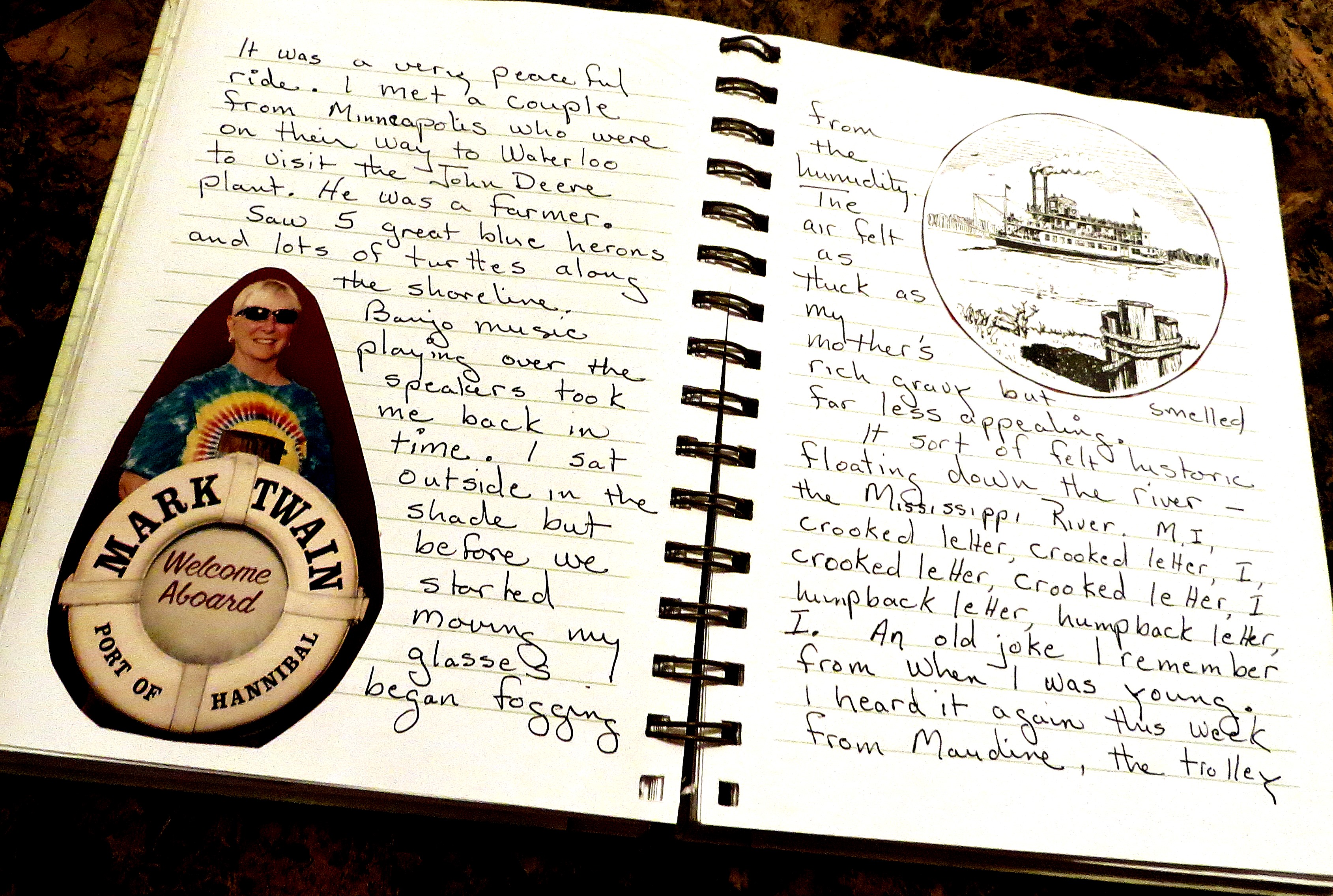
Pages from my journal  written when I was in Hannibal, Missouri, and took a paddleboat cruise on the Mississippi River.

Pages from my journal, written when I was in Hannibal, Missouri, in 2006, and took a paddle boat cruise on the Mississippi River.

My first journals were written when I was a working mother of five with no help, and the journal contents were too often filled with my beating up on myself because I never completed a day’s to-do list. What amazed me in the rereading, however, were all the things I did accomplish, and never gave myself credit for doing. Today, I honestly don’t know how I did all I did back then.

Around the age of 40, I decided to buy decent journals – one of my favorite being a Gibson that has thick enough paper to write on both sides and a spiral binding for ease in writing. I also began journaling more regularly. As time passed, the journals filled more quickly, until the present when I complete about two a year with a record of my days and thoughts. My journals, even the early ones, are also packed with quotes that have meaning to me.

Until recently, I had never read most of my journals, a task that now finds its way on my daily to-do lists. Unlike many of my journal writing friends, who told me they wrote more when times were bad, I’ve discovered that most of my entries are about the good times. While that means there are big gaps, especially in my earlier journals, and makes for an incomplete recording of my life, I’m discovering a treasure trove of memories that are delightful to relive.

And the thoughts I did record are enough for me to see how I’ve changed over the years – from a goodie-two-shoes who beat up on herself to an imperfect human who makes mistakes and is not usually sorry for them – and into someone who actually likes herself.

And that’s enough for me.

Blog pick of the Day. Check it out.

Blog pick of the Day. Check it out.

Bean Pat: 10 Forgotten Books http://tinyurl.com/hs5qh7n This dang blog cost me money. As an avid reader of travel books, I had to have The Illustrated Journeys of Celia Fiennes, 1685-c.1712, which was on the list. But thankfully I found one for 97 cents (plus $3.99 shipping) instead of having to buy a new one for the listed price of $59.

Read Full Post »

            “Wilderness is not a luxury but a necessity of the human spirit, and as vital to our lives as water and good bread. A civilization which destroys what little remains of the wild, the spare, the original, is cutting itself off from its origins and betraying the principle of civilization itself.”  Edward Abbey

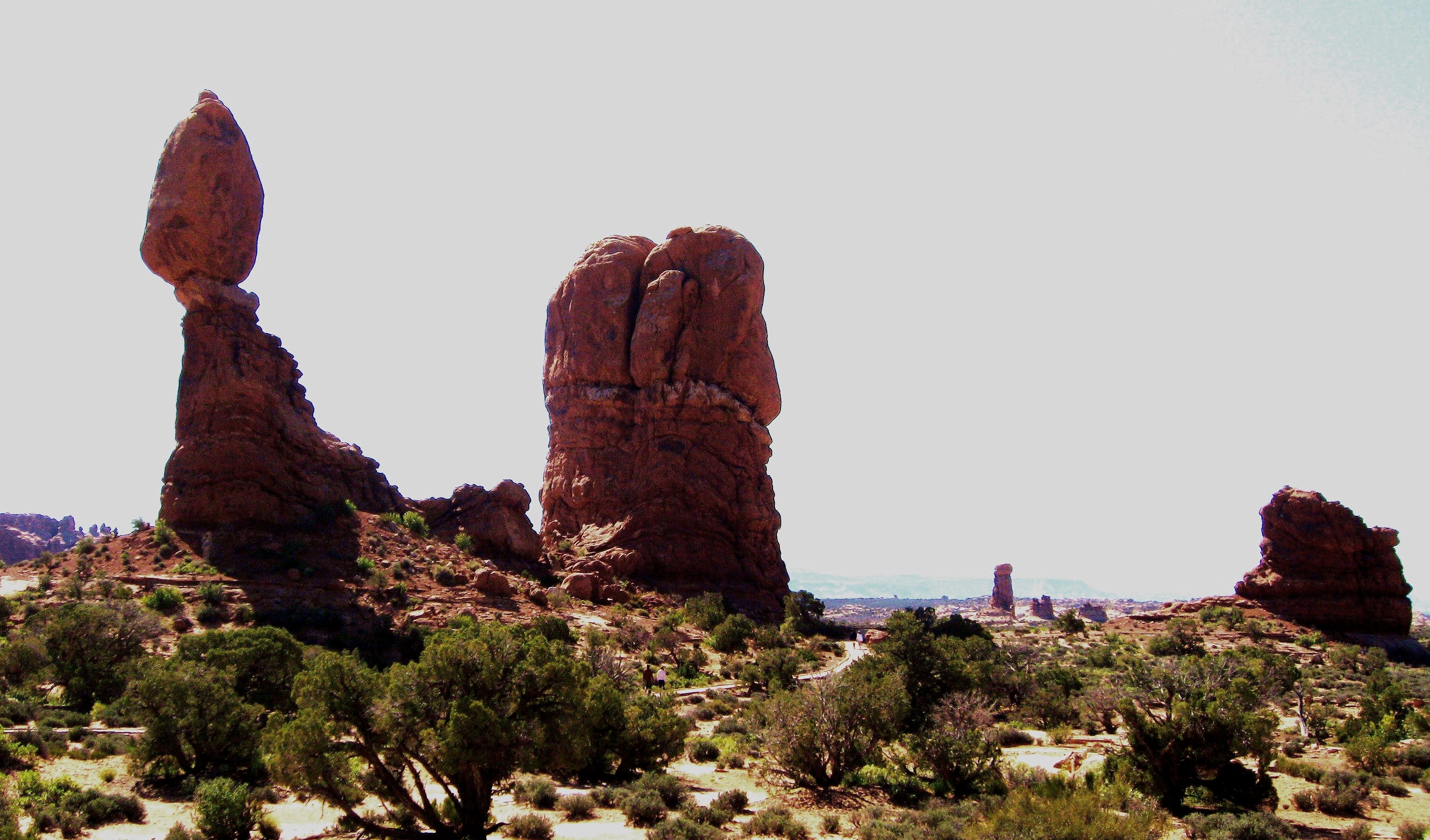
Balanced Rock, one of he more recognizable features at Arches National Park. -- Photo by Pat Bean

Balanced Rock, one of the more recognizable features at Arches National Park. — Photo by Pat Bean

Edward Abbey

            I’m slowly rereading Desert Solitaire by Edward Abbey, just a few pages a day as my morning read with coffee. I have more leisure time than the first time I read it, when I was a working mother of five whose every moment was double or triple-booked. If memory serves me well, I read it while soaking in a hot bath, about the only solitary luxury in my life back then.

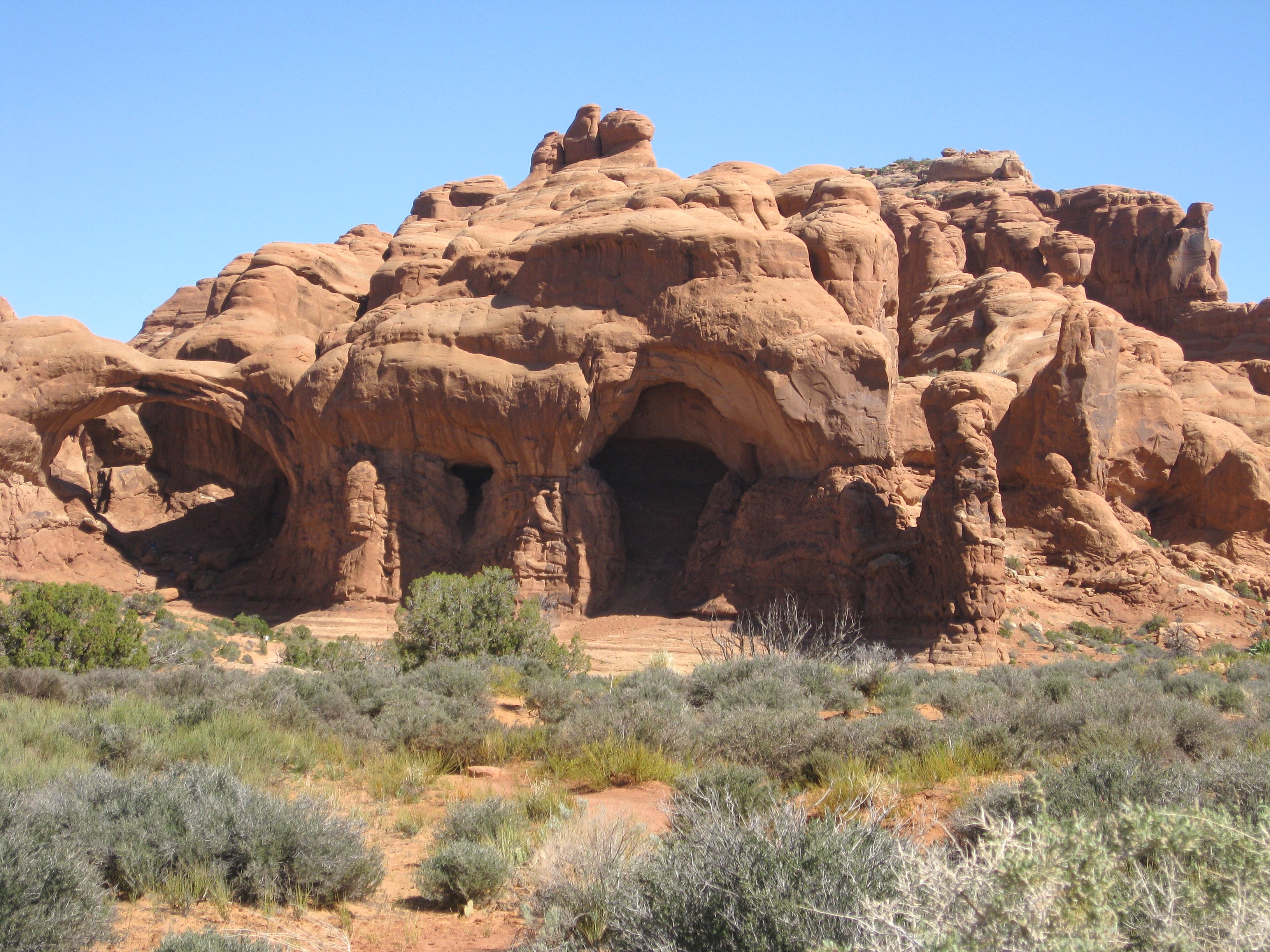
Paved roads have brought crows to Arches. I'm thankful more people have the opportunity of seeing Mother Nature's red-rock creations, but miss the solitude I found there even back in the 1970s. -- Photo by Pat Bean

Paved roads have brought crowds to Arches. I’m thankful more people have the opportunity of seeing Mother Nature’s red-rock creations, but miss the solitude I found there even back in the 1970s. — Photo by Pat Bean

While I originally enjoyed the book for its content, this time around I’m also enjoying it with a writer’s eye, immersing myself in Abbey’s ability to put life into the landscapes with words that paint vivid images in my mind.

Desert Solitaire is about the author’s seasonal ranger job at Arches National Park back in the 1950s, when it was still just a monument and the few roads into it were unpaved. Arches is a place I’ve visited many times, having lived for many years only five hours away, but it wasn’t until the 1970s when I saw it for the first time. It was more civilized by then, but I can still recognize the landscape features as Abbey describes them with accuracy and poetry.

  “Lavender clouds sail like a fleet of ships across the pale green dawn,” he wrote, about his first morning at the park. Such imagery inspires me to get up in time to watch yet another sunrise.

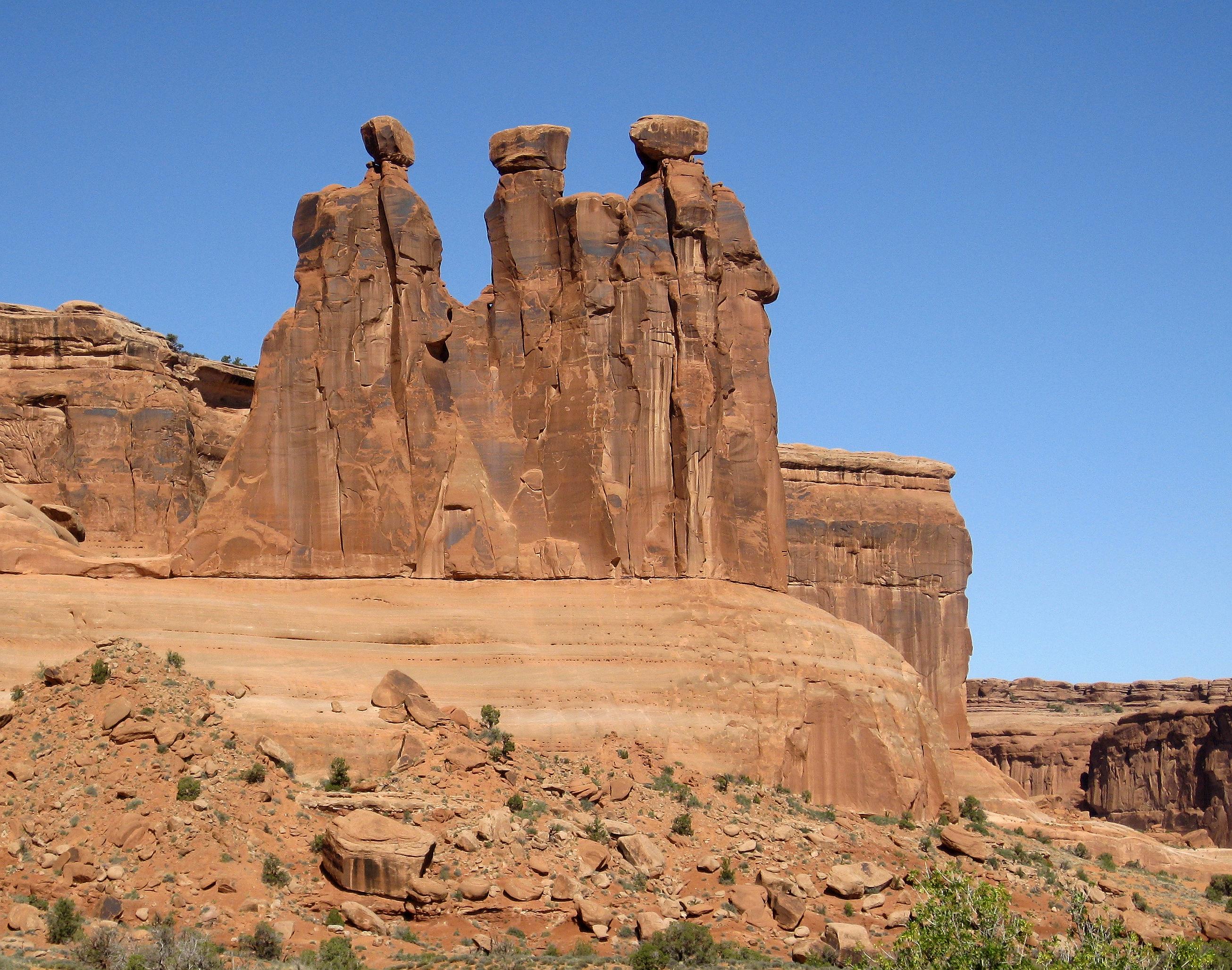
The three gossips, one of my favorite landmarks at Arches. -- Photo by Pat Bean

The three gossips, one of my favorite landmarks at Arches. — Photo by Pat Bean

And then, moved back in time and place by words, I sit with Abbey on the step of his trailer as he waits for the sun to come up on a cold April morning.

  “Suddenly it comes, the flaming globe, blazing on the pinnacles and minarets and balanced rocks, on the canyon walls and through the windows in the sandstone fins. We greet each other, sun and I, across the black void of ninety-three million miles. The snow glitters between us, acres of diamonds almost painful to look at. Within an hour all the snow exposed to the sunlight will be gone and the rock will be damp and steaming. Within minutes, even as I watch, melting snow begins to drip from the branches of a juniper nearby…”

Abbey’s words brought a memory to life. They took me back through time and place to a moment when I looked down and saw a melting tennis shoe that I had placed too close to a campfire as I watched for a morning sun to creep down from a red-rock cliff and into the valley where it would warm my body.

Thank you Edward Abbey.

You may have left this world, but your words still bring joy to my soul. And my hope for you — wherever you are — are the words you wrote that I took to heart when I was on the road: “May your trails be crooked, winding, lonesome, dangerous, leading to the most amazing view. May your mountains rise into and above the clouds.”

Bean Pat: A photo to make you smile and some words to make you think.  http://tinyurl.com/jostvnh


Read Full Post »

A snowy egret at the Bear River Migratory Bird Refuge in Northern Utah. -- Photo by Pat Bean

A snowy egret at the Bear River Migratory Bird Refuge in Northern Utah. — Photo by Pat Bean

        “Live in each season as it passes; breathe the air, drink the drink, taste the fruit, and resign yourself to the influence of the earth.” — Henry David Thoreau

Some of my Favorite Places

There are 59 national parks, and in my lifetime I’ve been to 44 of them, mostly missing the ones in Alaska. They are some of my favorite places in the world.

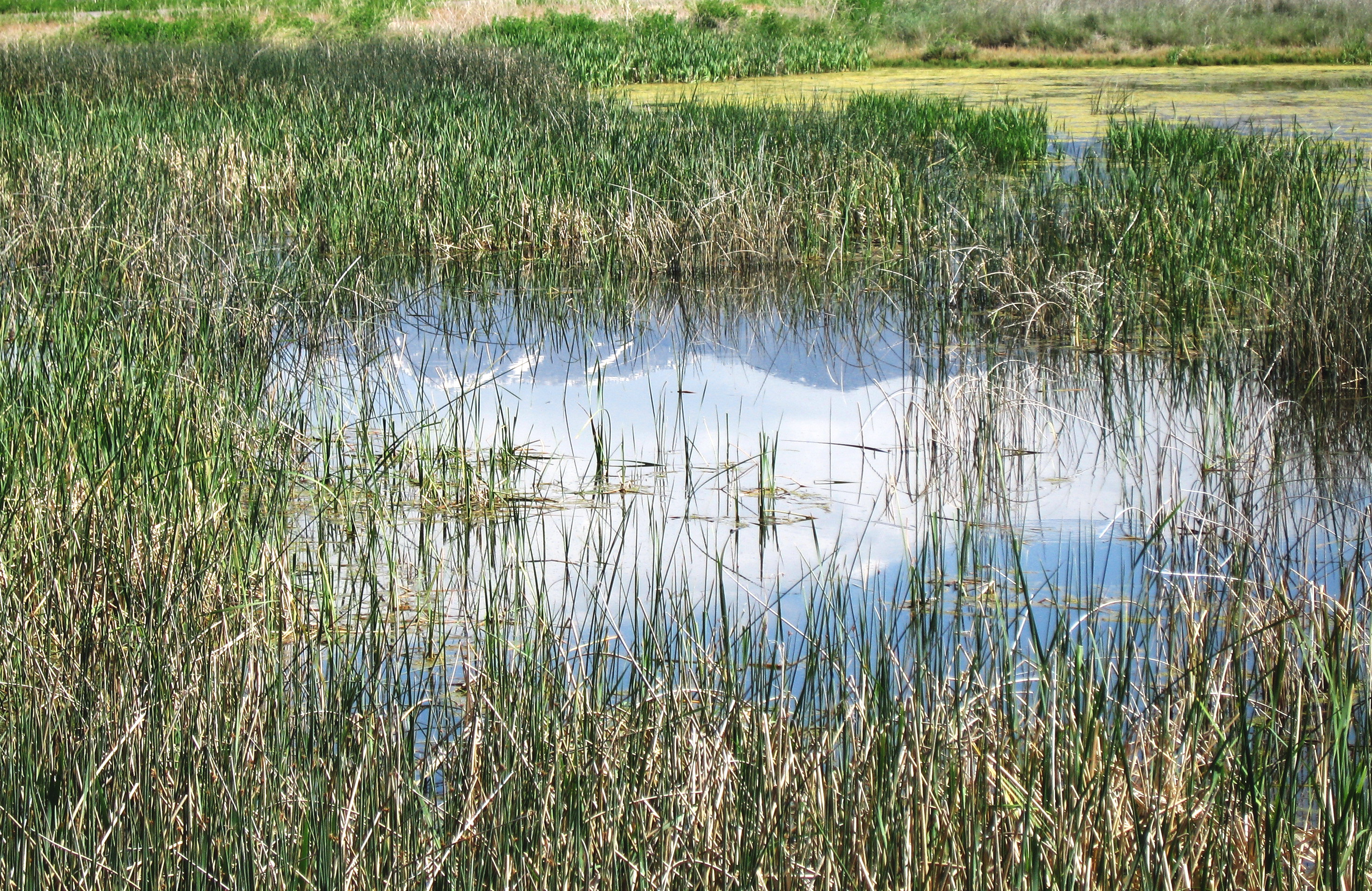
This pond captured images of the Wasatch Mountains and the clouds above them. I love it. -- Photo by Pat Bean

This pond captured images of the Wasatch Mountains and the clouds above them. I love it. — Photo by Pat Bean

On the other hand, there are over 550 national wildlife refuges. And they are also some of my favorite places – even though I haven’t kept track of the ones I’ve visited. During my nine years of traveling this awesome country, I stopped at any refuge in my vicinity, mostly to bird watch. .

Among the more memorable ones that would be on my list of the refuges I’ve explored, if I had such a list, would be Brazoria National Wildlife Refuge, located 15 minutes from my son Lewis’ Texas Gulf Coast home, and where I turned him into a birding addict like me. This refuge has added 16 birds to my life list of 710 species.

But that pales with the Bear River Migratory Bird Refuge that has given me 31 of my life birds. This refuge is very special to me because the first time I visited it was in the 1970s, when it was lush and green – and long before bird watching became one of my passions.

In the 1980s, I watched as the now 80,000-acre refuge was inundated by Great Salt Lake flood waters, whose salty content pretty much destroyed everything, including an almost new visitor’s center. I then regularly watched as the refuge, less than an hour’s drive from my Ogden, Utah, home for 25 years, made its comeback.

Pickleweed. I remember how thrilled I was when I saw the tiny beginning of this plant in a place desolate of greenery.

Pickleweed. I remember how thrilled I was when I saw the tiny beginning of this plant in a place desolate of greenery.

It started with pickleweed, one of the first plants to come back and one that helped eliminate the salt in the landscape. This was all explained to me during a tour of the damaged refuge for a newspaper story I was writing. Have I ever told you how much I loved my journalism career?

I was already retired, and traveling, but I made it to the grand opening of the refuge’s new visitor’s center in 2006. This time the center was located a good ways away from the flood zone, and next to Interstate 15 near Brigham City. The site offers visitors a convenient and quick view of a bit of what the refuge has to offer without the 10-mile drive on a rutted, unpaved road to the main refuge area.

I used to hate that rough ride – but I loved it, too. It kept the crowds away. Sometimes it seemed as if I had the whole refuge to myself, and if not, the other visitors were most likely to be nature lovers who, like me, thought the birds, animals and scenery were worth the bumpy drive.

If you’re one of us, along with visiting a national park during this year celebrating the system’s 100th birthday, you might want to also check out a national wildlife refuge. Most likely there is one not too far from where you live. https://www.fws.gov/refuges/

And if you’re interested in a good book, check out Refuge by Terry Tempest Williams. It’s much about the Bear River Migratory Bird Refuge.

Blog pick of the Day. Check it out.

Blog pick of the Day. Check it out.

Bean Pat: Living Life Almost Gracefully http://tinyurl.com/h97kl2v Chasing the Sun

Read Full Post »


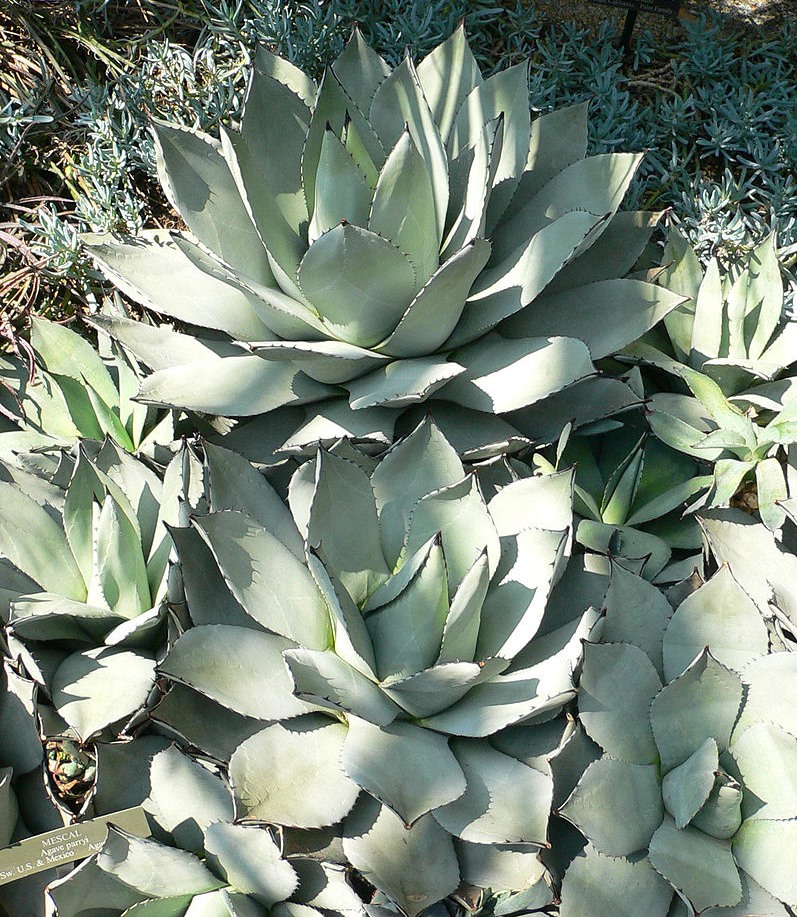
Parry's Agave. It's not a great photo, especial given the background, but I only had this view from below it's high perch. I'm so glad I could finally identify it. -- Photo by Pat Bean

Parry’s Agave. It’s not a great photo, especial given the background, but I only had this view from below its high perch. I’m so glad I could finally identify it. — Photo by Pat Bean

   “There are more truths in a good book than its author meant to put in it.”-Marie von Ebner-Eschenbach

Reading Let Me Name a Plant

During my recent road trip to the top of Mount Lemmon, I snapped a photo of a tall plant high on a cliff. I couldn’t see its base, just a slender stalk whose top was bedecked in candelabra fashion with clusters of green nodules. I wondered if it was a plant or a tree.

And this is what the plant looks like before it shoots up a stalk. -- Wikimedia photo

And this is what the plant looks like before it shoots up a stalk. — Wikimedia photo

This morning, as I was reading Richard Shelton’s Going Back to Bisbee – a fascinating book that is educating me about the landscape of my new home in the Sonoran Desert of Southeastern Arizona – I came across a perfect description of the plant, and learned that it was a Parry’s agave, an amazing cactus.

The one I saw was probably between 10 and 25 years old, and was in its final year of life, otherwise I wouldn’t have seen it. The plant, for most of its life, is short and bowl-like. When it finally blooms, it sends all of its life forces into a stalk that quickly sprouts up to 20 feet tall, and sends out blossoms at the top. The one I saw hadn’t bloomed yet, but Shelton described the blossoms as “shallow bowls about half a foot across and filled with frothy pink ice cream.”

A few pages on in the book, Shelton wrote about the magic of names and naming, a skill which all good writers should possess. A tree is never just a tree it’s a live oak or a baobab, a dog is a Rottweiler or a poodle, and a bird is a robin or a golden eagle. Such naming provides better images in a reader’s mind. And being able to put a name to something, be it a tree, a mountain, or a plant, gives me joy. So thank you Richard Shelton for helping me learn the name of the plant that I photographed – and for writing such a fantastic book, which I’m slowly savoring.

Blog pick of the Day. Check it out.

Blog pick of the Day. Check it out.

Bean Pat: The Methuselah Grove   http://tinyurl.com/hskgrcj Great Basin National Park, one of my favorite places.

Read Full Post »

             “We live in a wonderful world that is full of beauty, charm and adventure. There is no end to the adventures we can have if only we seek them with our eyes open.” Jawaharial Nehru

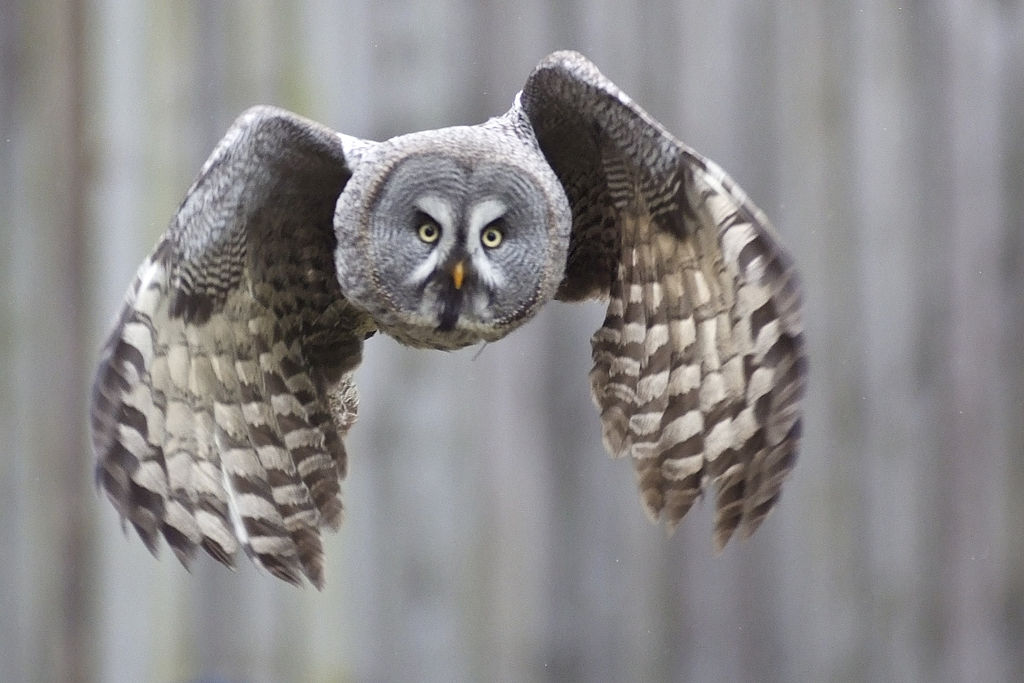
Great gray owl in flight. -- Wikimedia photo, Arne List.

Great gray owl in flight. — Wikimedia photo, Arne List.

Feeding my Wanderlust

            I’ve had wanderlust in my soul since reading “I Married Adventure” by Osa Johnson when I was 10 years old. Going on an African Safari in 2007, and finally seeing the wildlife she so vividly describes in her book, was the fulfillment of a life-long dream, as was traveling the United States from border-to-border and coast-to-coast for nine years in a small RV.

Great gray owl, Ontario, Canada. -- Wikimedia photo

North America’s largest owl, the great gray owl in Ontario, Canada. — Wikimedia photo

While my traveling days are not over, they are currently put on hold because of age and lack of deep pockets. I compensate by reading travel blogs and books. I also read a lot about birds, as birding is a late-blooming passion that addicted me at exactly the right time in my life.

Both birding and my wanderlust came together when I picked up Neil Hayward’s book Lost Among the Birds: Accidentally Finding Myself in One Very Big Year. The passage I was reading this morning was Neil’s account of chasing a Connecticut warbler in Sax Zim Bog. The name stopped me cold, tickling and delighting my wanderlust the same as hearing the names of places like Timbuctoo, Shangri-La and Zanzibar.

So of course I had to find my atlas, and then explore the Internet to learn more about the bog. The exotic sounding place is about 300 square miles of not just bog, but also aspen uplands, rivers, lakes, meadows, farms and a couple of towns in Northern Minnesota. Neil, doused liberally with mosquito repellant, visited a quite boggy patch of Sax Zim to successfully find his target bird, allowing me to follow him along in my armchair without getting bitten.

My bonus for taking the journey with Neil, followed by my online research, was to discover a You Tube video of a great gray owl sighting in Sax Zim Bog. It was so beautiful I almost cried. Sadly this bird is not on my life list of over 700 birds. But who knows what the future may hold?

Bean Pat: Great gray owl sighting at Sax Zim Bog http://tinyurl.com/gopkqt7 I hope this video thrills you as much as it did me.

Read Full Post »

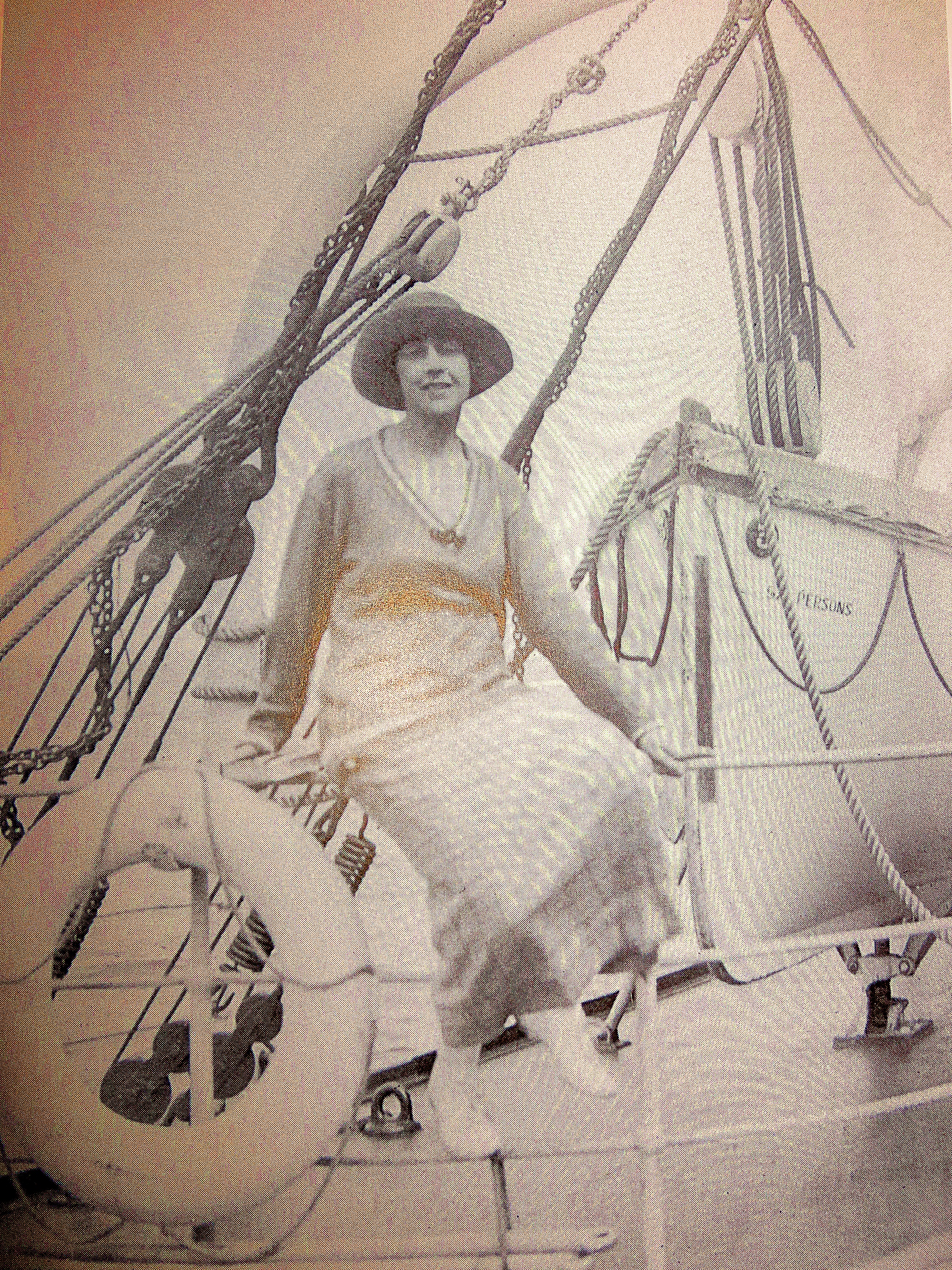
Agatha Christie on her world tour in 1922.

Agatha Christie on her world tour in 1922.

“There is a fountain of youth: it is your mind, your talents, the creativity you bring to your life and the lives of people you love. When you learn to tap this source, you will truly have defeated age.” — Sophia Loren


The Wonderful World of Books

I’m currently reading Diana Athill’s “Somewhere towards the End,” which was written when she was in her late 80s. She’s now 98 and still going. While I’m only in my 70s, I find that Diana’s reflections on life expressed in her book often mirror my own.

Agatha Christie with her surf board in Hawaii.

Agatha Christie with her surf board in Hawaii.

For example, both of us are big readers, and both started our reading adventures focused heavily on fiction. But we both find ourselves reading more and more non-fiction books with each passing year.

Writes Diana: “I am puzzled by something which I believe I share with a good many other oldies. I have gone off novels.” She then goes on to ponder, with no definitive answer, why this is?

Of course I had to ponder the same question. I think it’s because I no longer need to escape from life but am more fully willing to embrace it. But then it’s also because I love surprises, and real life seems to contain just as many, if not more, of them than the make-believe worlds.

For example, I’m a big fan of Agatha Christie’s, whose mysteries often hold many surprises. But the book about her that I’m now reading – The Grand Tour: Around the World with the Queen of Mystery – has also held a few surprises.

The book, which mostly consists of letters to her mother, written while she was on a world tour with her husband in 1922, has also been full of surprises, completely changing my preconceived idea of who Christie was. I think I saw her as an extension of Jane Marple.

But Jane Marple never went surfing, and Agatha Christie loved to surf. I’m not sure why I thought this was so absurd, but the book contained illustrations to prove it.

I don’t know about anyone else, but learning to read is one of the greatest gifts life has bestowed on me. So what’s everyone else reading these days?

Bean Pat: The Iris and the Lily http://tinyurl.com/jy6sqkf This blogger is just beginning her retirement years and she’s off to a great start.


Read Full Post »

« Newer Posts - Older Posts »