Feeds:
Posts
Comments

Archive for the ‘Birds’ Category

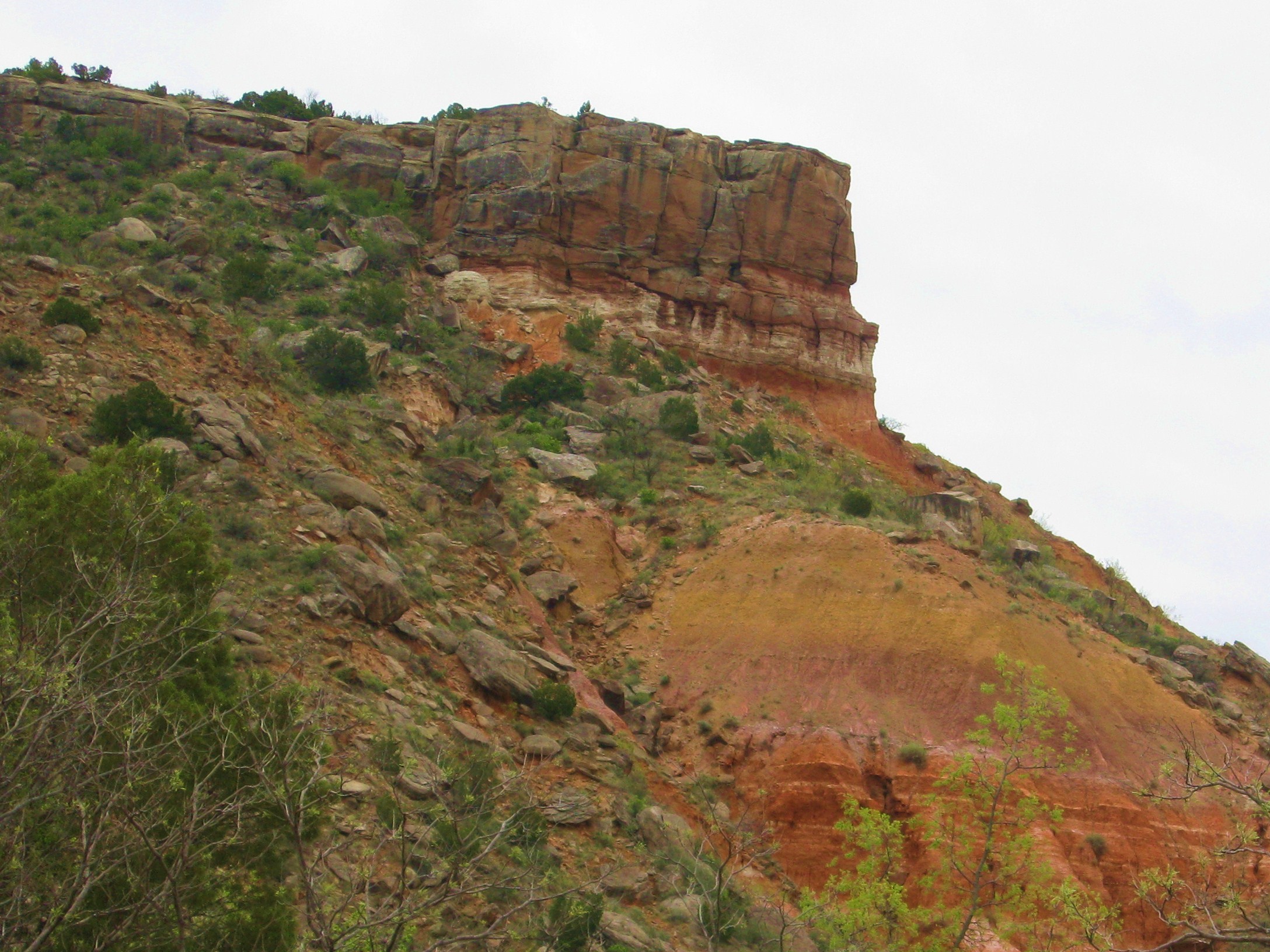
A Palo Duro Canyon view provided by Mother Nature ... Photo by Pat Bean

“There is something infinitely healing in the repeated refrains of nature – the assurance that dawn comes after night, and spring after the winter.” — Rachel Carson

Day Nine

 Today was the day I explored the park. I took pictures, hiked a few trails and let nature’s special medicine cleanse my brain of the world’s chaos. No chemicals could do as thorough a job.

The birds serenaded me. The spring budding of trees fed my soul, and the canyon’s rock cliffs, sluggish red creeks, and colorful wildflowers continually kept my eyes entertained. I looked for the coyotes that had howled during the night, but saw only deer, jackrabbit and of course birds, including a spotted towhee that was a new addition for my trip list.

Water carved the canyon, and continues to do so ... Photo by Pat Bean

 Palo Duro Canyon is a big Texas surprise. Hidden below a flat landscape of sagebrush and cactus, and blowing tumbleweeds when the wind howls, one has to be in it to see it.

 Have you ever felt that you were exactly in the place you were meant to be? This day felt like that.

Copyrighted by Pat Bean

Read Full Post »

The view from my camp site in Palo Duro Canyon ... Photo by Pat Bean

“Palo Duro … is a burning, seething cauldron, filled with dramatic light and color.” — Georgia O’Keeffe

Day Eight

Yesterday’s high winds continued today in the park so I stayed close to my No. 26 camp site in Palo Duro Canyon State Park’s Hackberry Campground. There was still plenty to see, however.

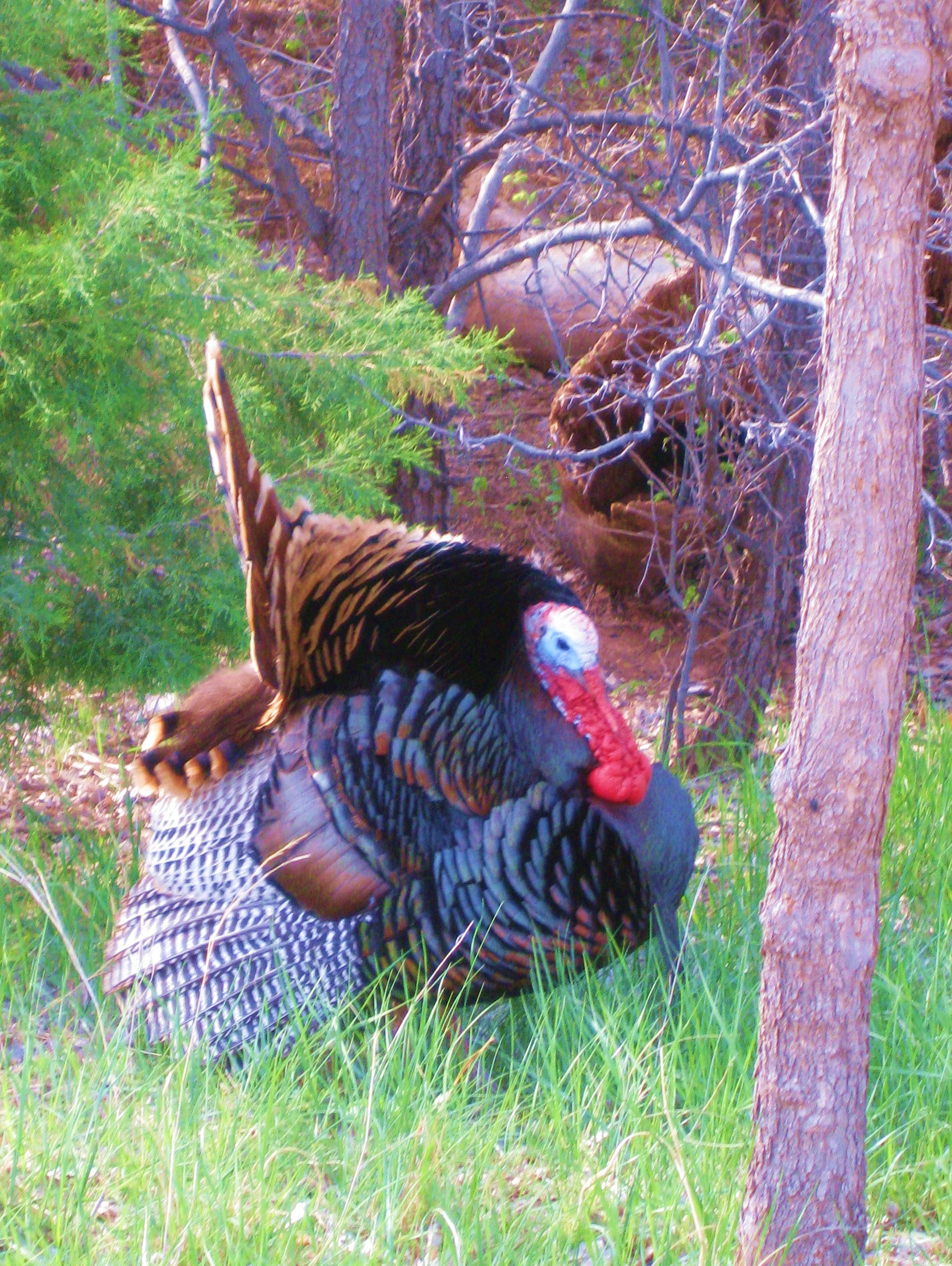
 As I often do when I’m in a campground, I throw out some birdseed to see what I can attract. When I did it this day, and while I was still spreading it around, several wild turkeys rushed out from nearby bushes and practically were eating out of my hand. They probably would have if I hadn’t been a bit concerned about their sharp bills.

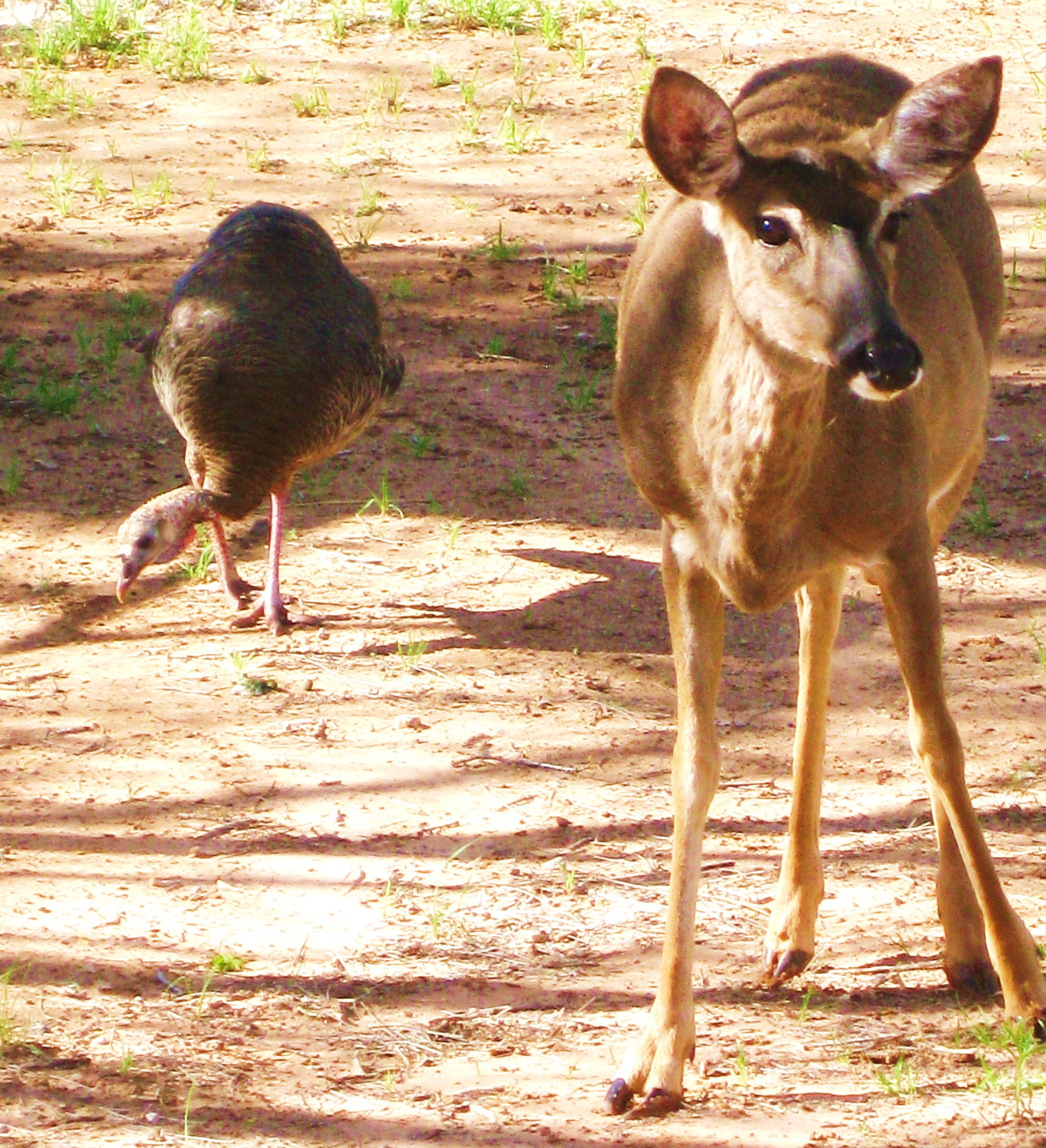
 A little later, after I retired to my RV to watch the show out my window, a deer came up and joined the turkeys. What fun. Chipping sparrows and cardinals dropped by later to glean the leavings.

At 120 miles long and 800 feet deep, Palo Duro is Texas’ Grand Canyon. Spectacular, but in un-Texas-like fashion only a miniature when compared to Arizona’s big ditch. It pains a Texan to admit this but as one who has seen both, I must tell the truth.

Like Georgia O’Keeffe, however, I found Palo Duro’s intensity stirring my soul.

Visitors to my camp site ... Photo by Pat Bean

Read Full Post »

“I can’t change the direction of the wind, but I can adjust my sails to always reach my destination.” — Jimmy Dean


Looking down canyon from the Palo Duro Canyon State Park interpretive center ... Photo by Pat Bean

 Day Seven

I took one last early morning hike and then a final drive around Lake Colorado City State Park before getting back on the road. I was rewarded with bluebonnets and a roadrunner. The bluebonnets, as always, cheered the soul while the road runner brought a smile to my face.

 It’s a long-legged bird that prefers running to flying, hence its name. It has a bad-hair-day crest that bobbles with every step. I can never watch a roadrunner without thinking of the Coyote and Roadrunner cartoon, in which the bird always outsmarts the wily coyote.

 I was still smiling when I got back on the road for the 250 -mile trip this day to Palo Duro Canyon State Park.  The smile, however, had disappeared by the time I passed Snyder and was traveling down Highway 84. It was typical West Texas landscape but with an added touch. I occasionally had to dodge blowing tumbleweeds. While the storm of the night before had passed over, it left behind high gusting winds that tormented my RV and kept me clinching the steering wheel so I wouldn’t get blown off the road or into a passing vehicle.

It didn’t let up the entire journey; not only did it make driving tense, it also keep most of the birds I would see along

Osprey on a windy day ... Photo by Mike Baird, Wikipedia

 the roadside tucked away. The exception were the turkey vultures. Like the postman, the weather never keeps these birds from their daily routine.

Finally as I approaching Palo Duro, Texas’ minature Grand Canyon, I did see another bird circling above. An osprey? Surely my eyes were playing tricks on me. Osprey eat fish and I didn’t know of any nearby lake.

At the park check-in, as always, I asked for a bird list and information on any rare or unusual birds seen recently. “Just an osprey,” the park worker replied. “He was seen eating a big trout taken from one of our streams.”

“And he ate it all,” chimed in another staff member.

 Birds never cease to amaze me.

Photos and prose copyrighted by Pat Bean. Do not use without permission.

Read Full Post »

 “Birds sing after a storm; why shouldn’t people feel as free to delight in whatever remains to them – Rose Kennedy

Bluebonnets at Lake Colorado City State Park survive a stormy night to carpet a picnic site beside the lake. ... Photo by Pat Bean

Day Six


The bird seed I threw around my camp site at Lake Colorado City State Park attracted a dozen species of birds. My favorites were the curved-billed thrashers and the northern cardinals. Several pairs of these birds, most likely in a courting act, fed one another. In the case of the cardinal, because of the differences in feather color, I knew it was the male feeding the female. I couldn’t tell the sexes of the curved bill apart but I assumed it was also the male doing the feeding.

The exchange of seed between the birds reminded me of French kissing.

One bird that didn’t partake of the seeds, but came to check it out from a tree-top seat was a magnificent Bullock’s oriole. I was sorry I didn’t have any oranges to slice and hang from the tree. Such offerings are one of the oriole’s favorite treats. Finding nothing to its liking, and after singing me a song, this glowing orange, black and white bird moved on.

Bullock's oriole ... Photo courtesy of Wikipedia

When not watching the lake and the birds out my RV window, I took frequent short walks with Maggie, did some writing, and read Catherine Watson’s “Home on the Road,” all the while keeping a watch on a dark, angry sky. I expected it to lash loose its fury at any moment, but it waited until the middle of the night to unfetter its bonds.

While I love storms, and listening to rain pitter-patter on my motor home’s roof is usually a pleasant symphony, the intensity of this one had my RV dancing a wild polka. Instead of a joyful tune, it was a discordant composition in which clashing cymbals and strobe lighting took center state. . When a lightning bolt struck only 10 feet away – or so it sounded – Maggie, who normally ignores storms, abandoned my feet and curled up next to my fetal-position curled stomach. I was glad for the comforting feel of her soft fur next to body.

I hoped my birds had found safety, and assumed they had when they showed up beside standing puddles of water early the next morning to eat my seed offering. While they had merely picked at the seeds yesterday, today they were gobbling it up as fast as they could. I was glad I could help them recover energy from what had been a wild stormy night.

Lake Colorado City State Park birds: Brewer’s blackbird, red-winged blackbird, eastern bluebird, bobolink, northern cardinal, mourning dove, house finch, scissor-tailed flycatcher, common grackle, great-tailed grackle, Cooper’s hawk, red-tailed hawk, killdeer, northern mockingbird, Bullock’s oriole, eastern phoebe, roadrunner, northern shoveler, house sparrow, lark sparrow, rufuous-crowned sparrow, song sparrow, vesper sparrow, white-crowned sparrow, Eurasian starling, barn swallow, rough-winged swallow, tree swallow, curved-bill thrasher, sage thrasher, tufted titmouse, turkey vulture and Bewick’s wren

Read Full Post »

A perfect place to end the day: Lake Colorado City State Park ... Photo by Pat Bean

A perfect place to end the day: Lake Colorado City State Park ... Photo by Pat Bean

Stand still. The trees ahead and bush beside you are not lost.” — Albert Einstein.

Day Five

 I needed to stock up on supplies, including chemicals to keep my RV holding tank smelling like honeysuckle or the close approximation, so before leaving San Angelo I needed a Wal-Mart. I looked up the nearest one on my computer mapping program and wrote down the directions. Somewhere between the park and the store, however, my missing sense of direction had me zigging instead of zagging.

My planned 10-minute side trip into town ended up taking over an hour. The up side – I always try to find one when horse pucky happens — was that I now had a more personalized feel for San Angelo.

This Central Texas city of 100,000 is dissected by the Concho River, a fact that made itself known as I crossed it several times in my efforts to get unlost. The twisting river flows between O.C. Fisher Lake to the north of town and Lake Nasworthy to the south, where I had spent the night.

Depending on the section of town in which I was lost, I could describe San Angelo as a progressive town or a decaying one, a place of manicured lawns or junky shacks, and its residents as rich or poor. Actually most of it looked pretty middle class, which gave it a distinction of being just about like any other city of its size I’ve explored. ations. The flat see-for-miles landscape was dotted with sagebrush, cactus and clunky mesquite and cedar trees. Adding color to the otherwise dull landscape were the roadside wildflowers Texas is known for: purple verbena, bluebonnets, pink primroses, and yellow blossoms too numerous (and difficult) to identify. Oil rigs, cattle, spring-plowed fields and huge windmills completed the picture. The latter was a recent addition to a landscape that was etched on my Texas memory.

The oil rigs pumping on one side and windmills turning on the other spoke of this country’s over-weight dependency on energy. I was glad to see the cleaner fuel source addition, but wondered if it would be enough. I, however, couldn’t cast stones. My RV was my glass house. My holding tank deodorizer, however, was organic and non-toxic.


Red-winged blackbird

A red-winged blackbird with shoulder epaulettes as bright as a shiny fire engine brought my attention back to nature. It stayed there until I drove into Lake Colorado City State Park, where I would spend the next two nights in a campground full of mesquite trees just coming into bloom. Both the trees and the ground beneath them was atwitter with birds. Life is good.

Photos and prose copyrighted by Pat Bean. Do not use without permission.

Read Full Post »

Pipevine swallowtail butterfly ... Photo by Pat Bean

 “Happiness is a butterfly, which when pursued, is always just beyond your grasp, but which if you will sit down quietly,may alight upon you.” — Nathaniel Hawthorne

Day Four

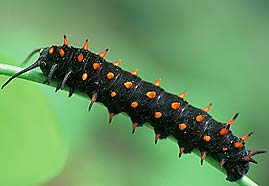
Pipevine larvae

My camp site at Garner held one of nature’s surprises. Chomping down on tiny ground plants hidden among the short grass were a dozen or so pipevine swallowtail butterfly larvae. This morning as I took Maggie on her first walk of the day before getting back on the road, I saw the end result: an awesome pinevine swallowtail.

How do you become a butterfly? You have to give up being a caterpillar. It’s one of those lessons Mother Nature teaches us about ourselves. And with that thought on my mind, I left the Edward Plateau country behind and headed north on Highway 83.

Just as I exited the park, about a half dozen deer crossed the road ahead of me. The spots on their bodies, since they were adults and not fawns, identified them as axis deer, a species imported to Texas from India as game for hunters. While I’m not anti-hunting, and gladly eat the venison my youngest daughter shoots for her freezer every year, I could never put a bullet in one of these beauties – a contradiction many of us face in a country where food comes wrapped and sealed from a supermarket. I’m old enough, however, to still remember my grandmother wringing the neck of a chicken that would be our Sunday dinner.

I don’t long for those “good old days.” I’m quite happy living in a world that lets me, a lone female, travel cross-country in safety, with plenty of books to read and a microwave oven to cook my store-bought dinner. Maggie, I suspect, prefers these days, too. In my grandmother’s time, dogs were not allowed in the house.

My mind was all awash with such thoughts when I passed through Leaky, a town of about 400 residents and an antique store with a sign that read: “Sophisticated Junk for the Elite.” I laughed out loud, but didn’t stop to investigate. Sophisticated or not, there was no room in my RV for old, or even new, doodads.

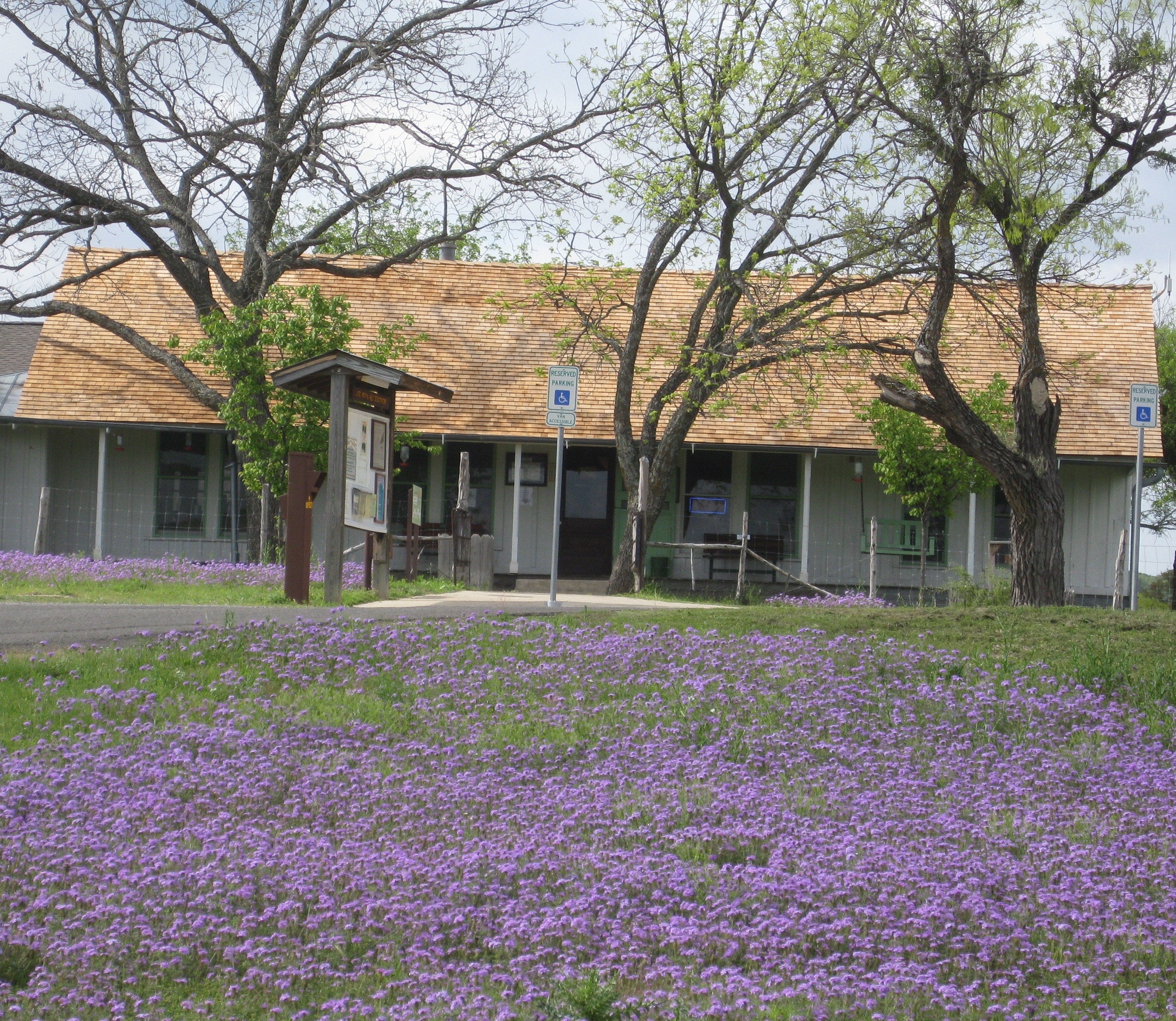
South Illano River State Park headquarters, where purple verbena brightened the landscape and a vermillion flycatcher kept watch. ... Photo by Pat Bean

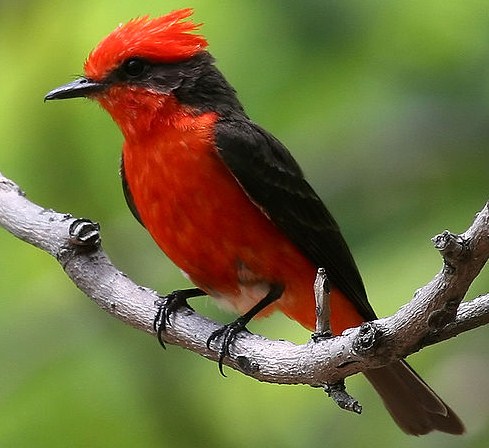
My sight-seeing stop for the day was at South Llano River State Park, where a vermillion flycatcher served as guard dog for the rustic headquarters. I was amazed to see this bird fly right up to the fence next to me. It was almost as if I was being scolded. When I mentioned this delightful, but unusual occurrence to the staff, they laughed and said he greeted all visitors that way.

Vermillion flycatcher ... Photo courtesy of Wikipedia

“He considers our office his personal territory, and wants everybody to know that,” a park worker said as she looked at my pass.

I spent a delightful hour birdwatching on the Illano River before saying good-bye to this small Texas park, giving myself a promise I would be back one day for a longer visit.

My traveling day ended at Spring Creek Marina and RV Park in San Angelo, a commercial park where I knew I could use my cell phone and get on the internet. My Verizon services hadn’t worked anywhere within a 50-mile radius of Garner State Park. That’s one of those traveling surprises that are not nearly as much fun as being able to photograph a pipevine swallowtail butterfly.

Sitting beside Lake Nasworthy, the park caters to fishermen. San Angelo is a convenient stopping place for me on my way between Texas (where family mostly lives) and Utah (where I worked for 25 years) so this was not my first visit to the marina. It’s a quiet quaint place, where a sign on the small combination office/grocery store tells everyone they can get snow cones and pickles, and where scissor-tailed flycatchers played this afternoon in the campground trees. 

After a walk around the lake with Maggie, I spent the rest of the evening catching up on three days of e-mail.  

Birds seen this day: red-winged blackbird, eastern bluebird, northern cardinal, American crow, Eurasian collared dove, mourning dove, white-winged dove, bald eagle, scissor-tailed flycatcher, vermillion flycatcher, blue-gray gnatcatcher, great-tailed grackle, ruby-throated hummingbird, kestrel, killdeer, northern kingbird, northern mockingbird, eastern phoebe, common raven, house sparrow, lark sparrow, vesper sparrow, white-crowned sparrow, European starling, bank swallow, barn swallow, cliff swallow, tree swallow, summer tanager, black vulture, turkey vulture, Bewick’s wren.

Photos and prose copyrighted by Pat Bean. Do not use without permission.

Read Full Post »


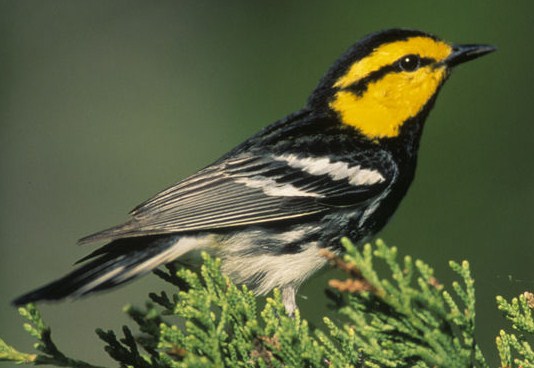
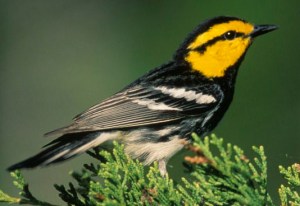
Golden-cheeked warbler ... Photo courtesy of Wikipedia


Day Two

“I hope you love birds too. It is economical. It saves going to heaven.” — Emily Dickinson

I was picked up at my camp site in Garner State Park by Lee Haile before the sun had cleared the horizon. Lee, a local nature guide, musician and storyteller, was going to help me look for two endangered birds, the golden-cheeked warbler and the black-capped vireo.

For those of you who don’t already know, I’m a passionate birder – and these two rare species were not yet on my life list. I had chosen this activity as my birthday present to myself this year. While a bit more sedate than jumping out of an airplane, which I did last year to celebrate turning a year older, it was just as adrenaline pumping to this birder’s heart.

Black-capped vireo

The bird search took us 30 miles away to Lost Maples State Nature Area, a Texas park renown for its fall foilage and as one of the few places the golden-cheeked and black-capped can be found.

The day started out slow, with the golden-cheeked staying out of sight in its usual haunt, a small canyon about a mile hike from the day use parking area. It didn’t help that the maples, black cherry and mesquite trees in the park were all springtime lush and green. It only takes one leaf, I well knew, to hide a bird from view.

“Let’s go up the hill and look for the vireo,” Lee said.

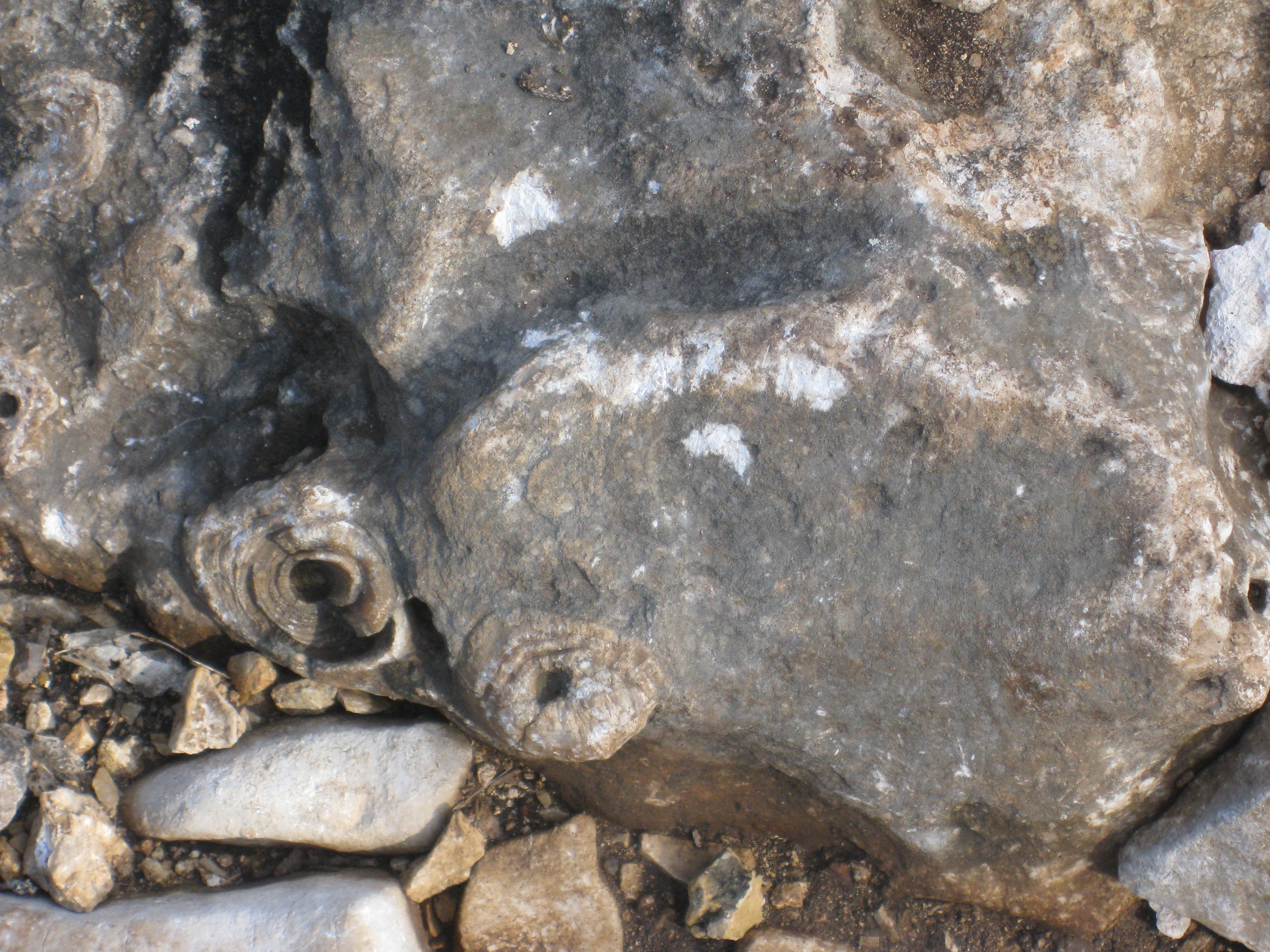
The hill was one of the limestone ridges in the Edwards Plateau, and the climb, although only a half mile, was rough and the going – well my going – was slow. That was OK. Lee kept up a constant chatter about nature’s wonders as we climbed. He pointed out evidence that the area had once been a sea bed and talked constantly about the plants along the way.

I learned, among many other things, that the blossom of the mountain laurel smelled like grape Cool-Aid and that yellow wood sorrel had a tangy lemon taste. Yes, I tasted it.

Evidence of the Edwards Plateau's past life as an ocean bed.

On the top, where a cooling breeze evaporated the sweat accumulated on my neck during the climb, we heard the black-capped vireo singing almost immediately. It took another hour before I finally got a glimpse of it very low to the ground in thick foilage beneath some juniper trees. Although my viewing was short, it was adequate for me to catch the necessary field marks that would allow me to definitely make an identification.

I was elated. So was Lee. While there are no guarantees in birding, no guide wants to disappoint their client.

On the way back down, we met two couples, one from Washington and one from New York, who were also after the black-capped vireo. Lee told them where to find it, and we later learned that both had seen a pair of the males singing out in the open.

I, admittedly, was a bit envious, but singing in the open was how I viewed my first golden-cheeked warbler. It took us off only about 10 minutes to spot it once we were down from the ridge. It stayed in place after spotted and I got to watch its not-a-plain-Jane magnificence for as long as I wanted.

Lee said it was only his second time to catch both birds on the same day.

By the time we got back to our vehicle, both our stomachs were rumbling. Lee suggested the Lost Maples Cafe in Utopia, a small town of just over 200. It was home town cooking, plain but good. The exception was the Lemon Meringue Pie, which was my idea of ambrosia, not too sweet and not too tart. Unfortunately I ordered the Chocolate Meringue, which was on the runny side. Lee took pity on me and shared his lemon delight.

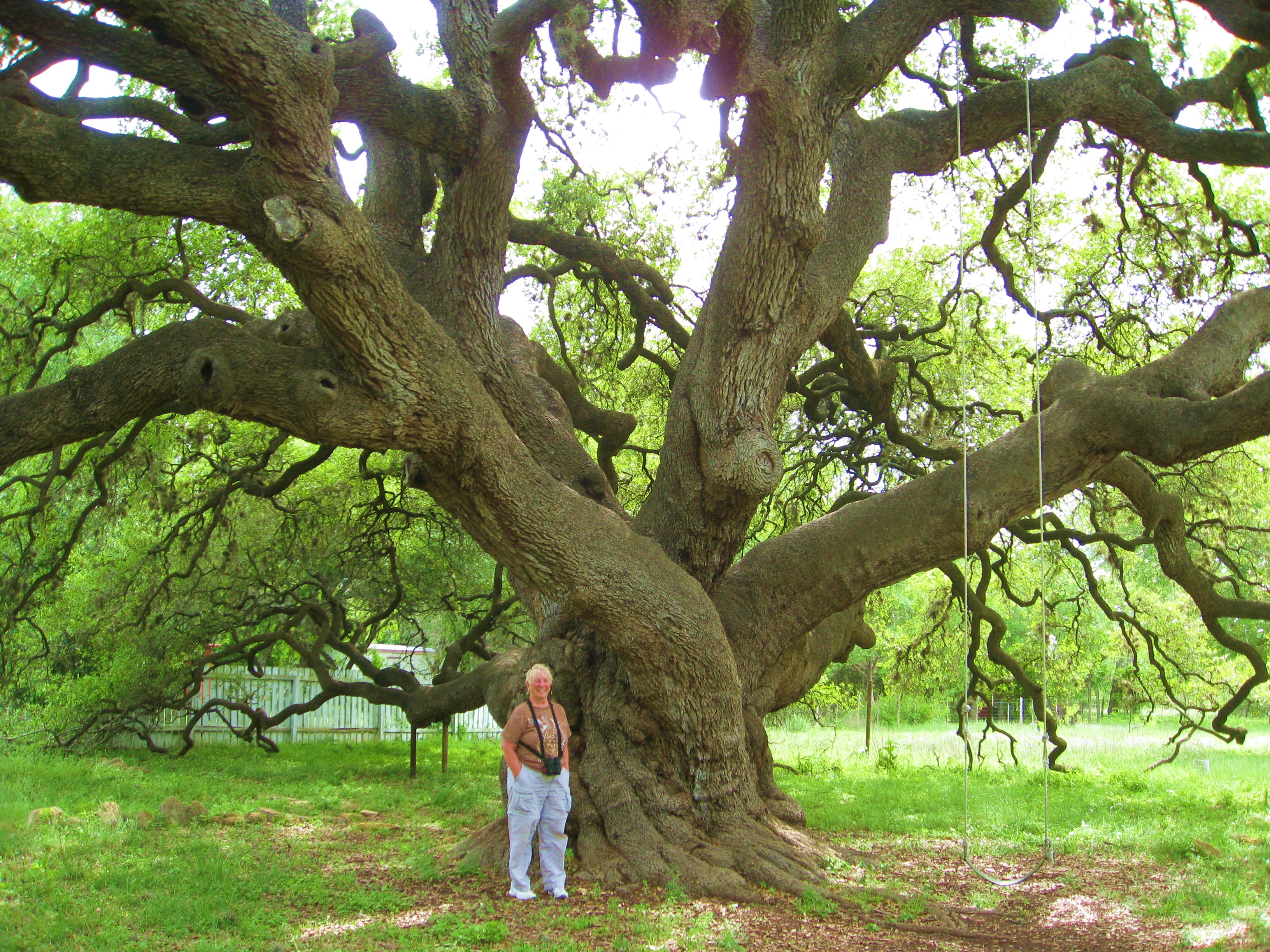
Me and the Big Tree ... photo by Lee Haile

If the day had ended right here, I would have been a happy camper. Instead, we explored the area for another two hours. Lee showed me the Big Tree, a live oak that once actually held the title, and we turned up two more lifers for me, the hooded oriole and the Bell’s vireos. Both are fairly common birds but ones that had up until this day eluded me.

I walked Maggie around the park on getting to my camp site – and gave her extra treats. She was happy and so was I. It had been a most perfect birthday.

Birds for the day: Eastern bluebird, indigo bunting, crested caracara, northern cardinal, Carolina chickadee, brown-headed cowbird, mourning dove, white-winged dove, ash-throated flycatcher, scissor-tailed flycatcher, vermilion flycatcher, blue-gray gnatcatcher, great-tailed grackle, greater white-fronted goose, northern Harrier, Cooper’s hawk, red-shouldered hawk, red-tailed hawk, ruby-throated hummingbird, blue jay (picking on a barred owl), eastern kingbird, western kingbird, ruby-crowned kinglet, purple martin, northern mockingbird, hooded oriole, osprey, barred owl, black phoebe, eastern phoebe, common raven, chipping sparrow, field sparrow, lark sparrow, Lincoln’s sparrow, vesper sparrow, European starling, barn swallow, cliff swallow, summer tanager, black-crested titmouse, tufted titmouse, wild turkey, Bell’s vireo, black-capped vireo, white-eyed vireo, yellow-throated vireo, black vulture, turkey vulture, golden-cheeked warbler, Nashville warbler, golden-fronted woodpecker, ladder-backed woodpecker, Bewick’s wren.

Photos and prose copyrighted by Pat Bean. Do not use without permission.

Read Full Post »

  Day One

“What is that feeling when you’re driving away from people and they recede on the plain till you see their specks dispersing? It’s the too-huge world vaulting us, and its good-bye. But we lean forward to the next crazy venture beneath the skies.” — Jack Kerouac

The Bridge to Nowhere, circa 1939 ... Photo by Pat Bean

The future Bridge to Nowhere ... Photo by Pat Bean

Come take a jaunt with me from Texas’s Gulf Coast to the Panhandle of Idaho. I plan to make the not-as-the-crow-flies 3,000 mile trip in about six weeks. My traveling companion is Maggie,

Maggie in her favorite spot in the RV ... Photo by Pat Bean

a 12-year-old cocker spaniel I rescued from an animal shelter. She’s a great traveler, excellent company and a comfortable foot warmer on cold nights. And she doesn’t complain when this directionally handicapped driver takes a wrong turn.

My journey today began with a crossing of the old Bridge to Nowhere that spans the Brazos River into Brazoria. Bridge to Nowhere? Yup, that’s its official name, according to a Texas Historical Marker at the site. It got the nickname in 1939 when it was built to replace a 1912 bridge that fell into the river.

Having once lived in Brazoria County, I have a fondness for the concrete and rusting steel hulk that I’ve crossed many times. The bridge, however, may soon be no more. A huge new bridge – in my opinion way too large for the traffic that now passes this way – is being constructed nearby.

Maggie has her own opinion. She woke up to bark at the rusting girders of the old bridge as my RV rumbled across it.

A landscape quilt of bluebonnets and Indian paintbrush ... Photo by Pat Bean

Roadside wildflowers brightened the drive on this overcast day that now and then dropped its load. My windshield wipers were working furiously when I passed through Bay City, canceling my plans for a brief visit to the Nature and Birding Sanctuary located on the western edge of this city where one my grandsons is employed at Texas’ first nuclear power plant.

The rain had let up, at least for a little bit, by the time I crossed Lake Texana. I briefly stopped at the state park here to bird. It’s Site No. 20 on the Texas Coastal Birding Trail. The rain may have chased the birds into hiding, however. I found only a moorhen and a great egret to add to the other birds I had seen along the way.

Back on the road, the rain picked up again and was coming down like water pouring from a pitcher when I skirted San Antonio on Loop 410. It continued until I turned off Highway 90 at Sabinal and dropped into the heart of the Edwards Plateau and the Texas Hill Country. It was as if I left one country and traveled to another.

Scissor-tailed flycatcher

 Suddenly the sun was out and scissor-tailed flycatchers sat on the utility wires, their graceful tails twitching beneath their white and salmon colored bellies, as they watched me drive past. Everything was green and lush. Many who had not been here might have thought the landscape as fanciful as the Tolkin’s imaginary Shire. Near the small town of Concan, I passed tube carrying Frio River floaters, waiting for their shuttle ride, I guessed. They looked sunburned and happy. If it had rained on them, who would care. I know. I’ve tubed.

Another few miles down the road and I pulled into Garner State Park. What a great day it had been. .

Birds seen this day: Brewer’s blackbird, red-winged blackbird, double-crested cormorant, crow, mourning dove, white-winged dove, cattle egret, great egret, snowy egret, scissor-tailed flycatcher, snow geese (a big flock flying overhead), common grackle, great-tailed grackle, kestrel,  killdeer,  eastern kingbird,  meadowlark, mockingbird, common moorhen, eastern phoebe, rock pigeon, starling, barn swallow,  black vulture  turkey vulture

Read Full Post »


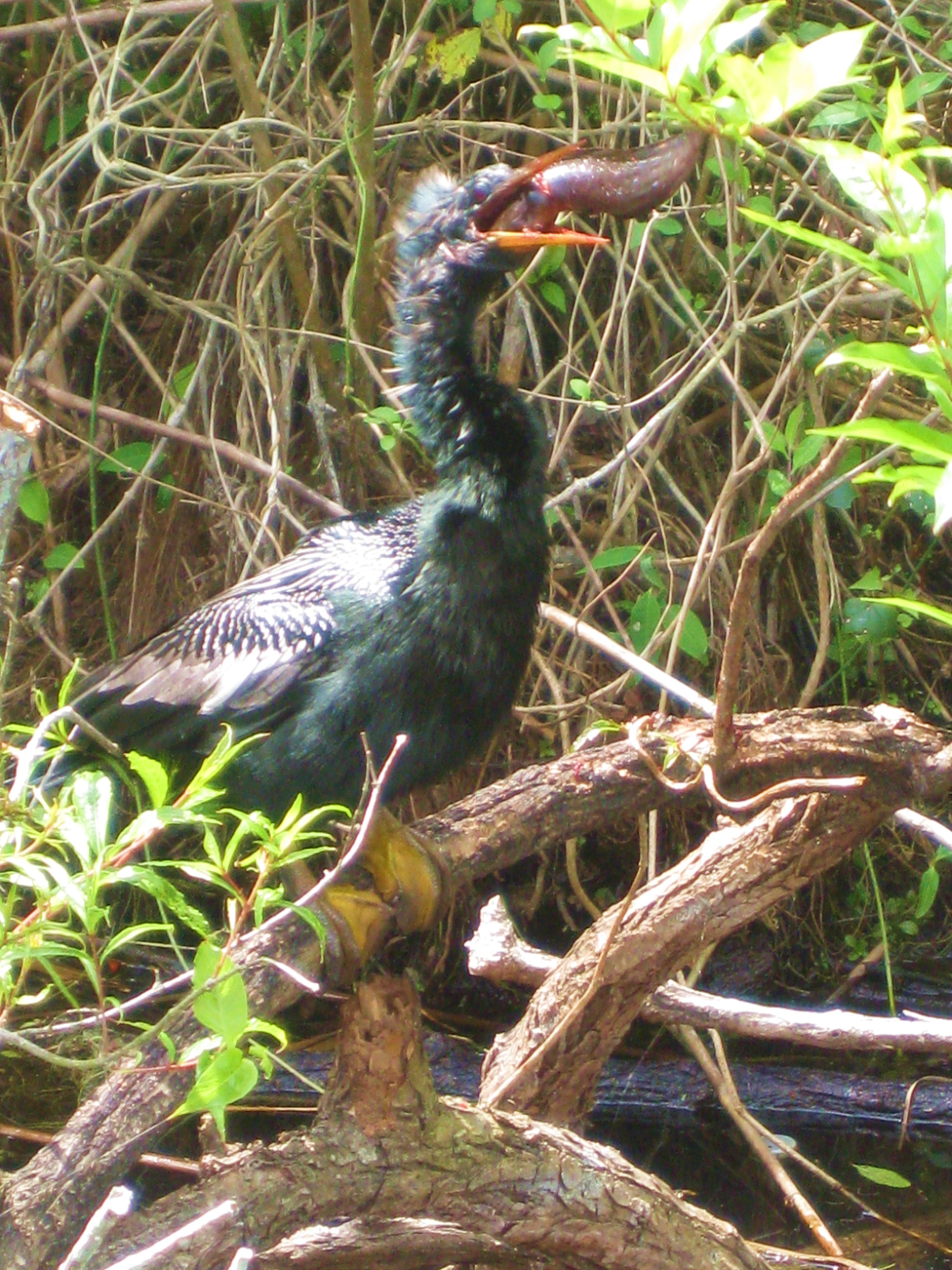
An anhinga trying to swallow a fish too large for its throat. -- Photo by Pat Bean

Letting go doesn’t mean giving up, but rather accepting things that can not be.” — Author unknown

I’m not a quitter. That’s mostly a good thing. But sometimes you have to admit you can’t reach the top of a mountain, fix a bad marriage or write a perfect piece of prose. So you come back down the mountain before you die; you move on with your life while you still have a bit of sanity left; and you send your imperfect article off to a publisher and begin a new piece of writing.

I watched an anhinga, while hiking the Anhinga Trail in Everglades National Park with my granddaughter, Keri, that might have taken this advice to heart. When we came upon the bird it was perched on a limb above a shallow pool of water trying to swallow a fish too large for its thin neck. We stood there and watched it for a full 30 minutes as it attempted this task.

Several times the fish fell back into the water. The anhinga would dive after it, spear it with beak, come back up to its perch and once again maneuver the fish head down into the opening of its throat. When Keri and I finally gave up watching and moved on, the anhinga was still at what just might have been one of those impossible tasks.

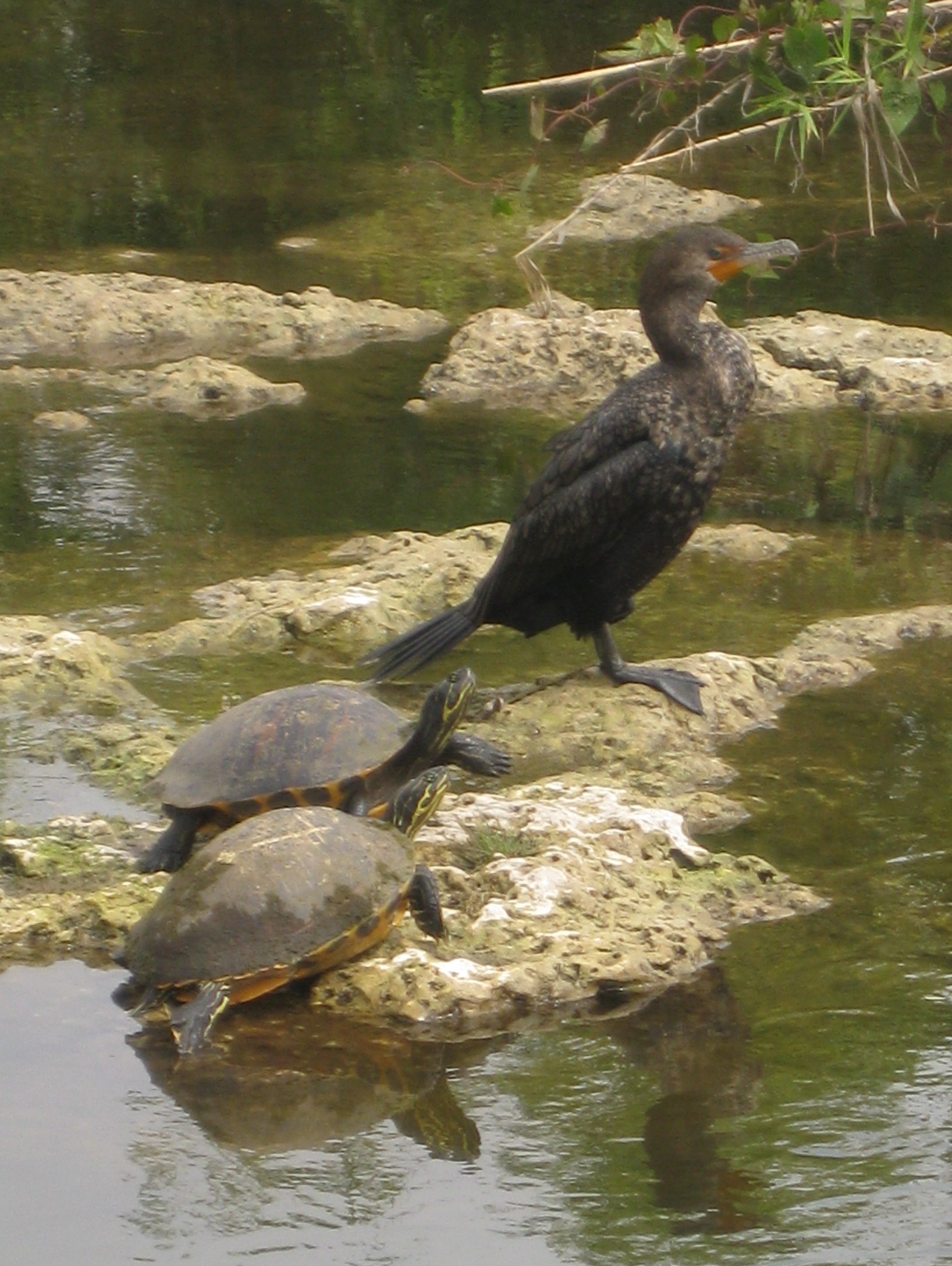
A cormorant and turtles keep a watch beside the Anhinga Trail in the Everglades. -- Photo by Pat Bean

A cormorant and turtles keep watch beside the Anhinga Trail in the Everglades. Photo by Pat Bean

There’s much to see along this popular trail that winds for nearly a mile through a sawgrass marsh full of wildlife. From the trail’s elevated boardwalk, one can almost reach out and touch cormorants, great blue herons, turtles and even alligators that call the area home.

The anhingas, which give the trail its name, are particularly populous. It is sometimes called the snake bird because its low profile in water often leaves only its long-necked head visible.

Read Full Post »

A Beautiful Day at Epcott

              “Though we travel the world over to find the beautiful, we must carry it with us or we find it not.” — Ralph Waldo Emerson 

        I had the recent opportunity to spend a day at Epcott with my oldest son

One of the many landscaped scenes at Epcott in Orlando, Florida ... Photo by Pat Bean

and his two grown children. Simply being with them was the most pleasurable part of the day. It would be the last time I would see my son until he returned from a tour of duty in Afghanistan with his Army unit; and my grandchildren are the rewards I get after overspending on my credit card – always a treat.

        It was a crowded spring break day at the theme park. Lines were long and the pavement was hard on the feet. But I don’t think a smile ever left our four faces. We took the Mission to Mars and traveled to the future in Spaceship Earth. After that, we mostly walked through the beauty around us.

       Epcott has done a fantastic job of landscaping, and its varied architect lets you briefly believe you could be in the better parts of Morocco, Africa, France, Mexico, Norway or Japan. The bratwurst, sauerkraut, schnitzel and beer at the Biergarten Restaurant, along with an Octoberfest in full swing, truly transported us to Germany for a late, feet-resting lunch.

        As we continued on, all the carefully coiffed flowers, fresh paint and enchanting structural details strangely got me thinking about the time I pulled into a crowded, non-landscaped El Paso, Texas, campground where RVs were parked on cement a mere six feet apart row on row. The setting shrank my nature-loving soul. But when I looked out the window early the next morning, I saw a line of Gambel’s quail trotting in a line across the pavement mere inches away from my motor home. It was an awesome sight to this avid birdwatcher.

        Thank you Disney for my beautiful, expensive, landscaped day at Epcott – and thank you Mother Nature for your fantastic wonders that I can enjoy daily for only the cost of awareness.

Japan at Epcott ... Photo by Pat Bean

Read Full Post »

« Newer Posts - Older Posts »