Feeds:
Posts
Comments

Archive for the ‘Birds’ Category

Canada Geese at the Great Salt Lake Nature Center -- Photo by Pat Bean

 “Poets who know no better rhapsodize about the peace of nature, but a well-populated marsh is a cacophony.” — Bern Keating

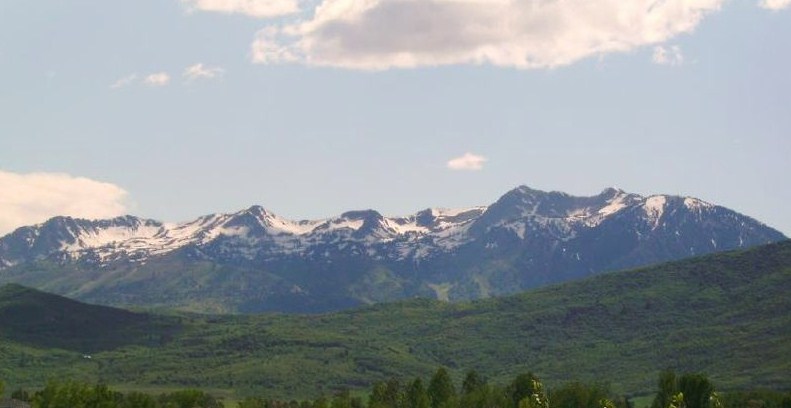
Looking across Farmington Bay at the Wasatch Mountains. -- Photo by Pat Bean

Favorite Hikes:

 One of my favorite hikes when I lived in Northern Utah was a gentle trek on a circular boardwalk found at the Great Salt Lake Nature Center. http://tinyurl.com/45jykl6

Located in the Farmington Bay Waterfowl Management Area just north of Salt Lake City, the mile and a half circular trail provides excellent views of wetlands wildlife.

 It was a trail I hiked early on weekend mornings, or in the early evenings after getting off from work. Whatever the time, however, my walk always began with a chorus of marsh wrens that was soon joined by a background of croaky frog chirps.

Hike slowly and look closely so you don't miss such things as the yellow-headed blackbird hiding in the rushes. -- Photo by Pat Bean

And there always surprises, like coming around a corner of cattail or bulrush to see coots or pied-billed grebes floating in a small bit of open water. Or climbing to the top the 30-foot observation tower to see avocets and northern shovelers off in the distance, and song sparrows and red-winged blackbirds flitting around below.

On a couple of occasions I even saw red foxes, including a den of young ones. And I almost always saw northern harriers and kestrels circling overhead. In the winter, bald eagles were a frequent sight, as were tundra swans in the spring.

Once a flock of graceful sandhill cranes flew close overhead, their rattling trumpet call echoing through the air. It was an experience that stirred my soul and made me grateful just to be alive. If you’re ever in the area, it’s a hike not to miss.

Just be sure and take some mosquito repellent with you. Mother Nature is kind, but not always considerate.
Read Full Post »

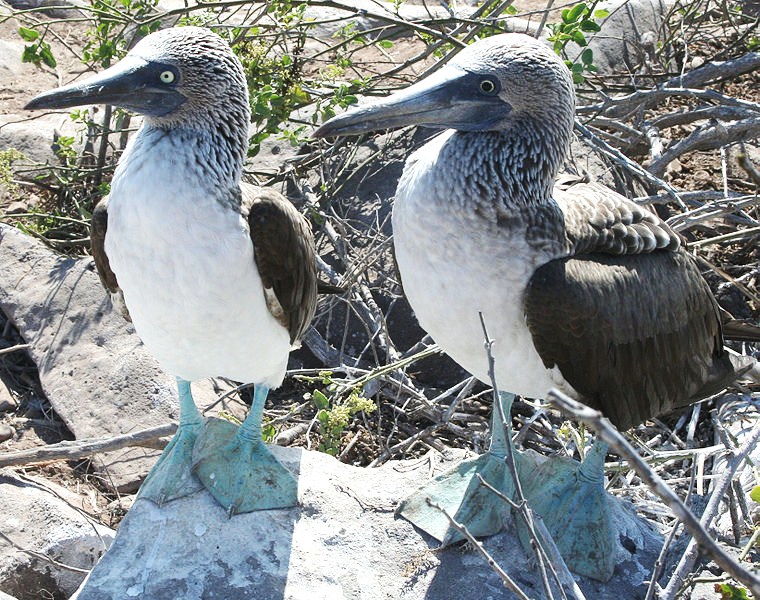
Blue-footed booby. The male is on the left. Note the smaller appearing pupil. -- Photo courtesy Wikipedia

 “Work like you don’t need the money, love like your heart has never been broken, and dance like no one is watching.” — Aurora Greenway

Journeys

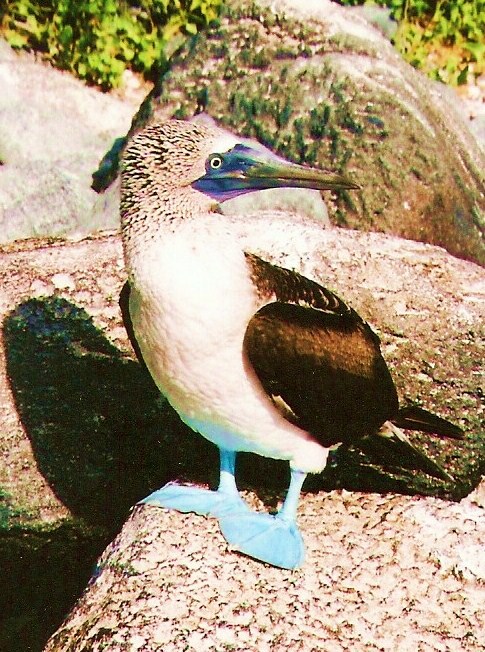
The large white and brown bird with the blue feet didn’t recognize my right to the hiking path. Its Galapagos Island home, where man has not yet imposed his predatory nature, let it assume it was my equal.

I stopped about a foot away and was quickly mesmerized as the two of us, human and bird, stared eye-to-eye. Since the pupils in its pale yellow eyes appeared smaller than that of the bird sitting on two eggs beside the path, I knew I was being confronted by a male booby.

Without taking its eyes from me, the booby blocking my path lifted his bright blue right foot. He gave me a quizzical look, then lifted his blue left foot and then his right foot again. Finally I lifted my tennis-shoe clad right food in reply.

A blue-footed booby, looking as if he was searching for a Dr. Seuss book in which to be a star.

 For the next couple of minutes, he and I did a Hokey Pokey. It probably was the same dance he used in courting his mate.  Our comedic interlude with music playing only in our heads might have gone on longer if it hadn’t been  interrupted by our group’s tour guide, who chaperoned us to keep the Galapagos wildlife safe.

“Don’t tease the bird,” he said when he saw me.

“I’m not,” I replied. “The booby invited me to dance with him.”

At the guide’s disbelieving frown, I moved on down the trail. When I turned back around for one last look at my dancing partner, he raised a blue foot as if saying good-bye.

Such unexpected moments are what travel is all about.

Read Full Post »

It's the missing part of Mount St. Helens that tells the story. -- Photo by Pat Bean

“Accuracy of observation is the equivalent of accuracy of thinking.” Wallace Stevens

 Travels With Maggie

To artists, negative space is the blankness that exists around painted objects. Such space can sometimes be the most interesting thing on a canvas. Consider Rubin’s painting of a vase that when taken away creates the image of two facing profiles.

The professor in a drawing class I once took emphasized the importance of this empty space by having us draw it instead of the solid form before us.

I’ve learned since then that missing elements can tell us as much about what we’re seeing as what’s before us.

It's the negative space that's the more important image of Rubin's vase. -- Photo courtesy Wikipedia

How can one look up at the crater on Mount St. Helen’s without understanding that part of the mountain is missing? Such a conclusion can conjure up the image of a volcano erupting and remind us of how fragile life is.

When I’m out walking and the chattering of birdsong is stilled, I know to look to the sky. There just might be a hawk flying overhead.

Hollow footprints let me know who or what has trodden a path before me.

A branch with missing leaves might tell me a moose munched as it passed by.

A New York city street where no one walks warns me I might not want to walk there either.

The missing elements of a scene remind me of a saying among communicators, like journalists: Just because you heard what I said doesn’t mean you heard what I said.

So it is that just because you’re looking at a beautiful landscape doesn’t mean the painting is complete. Look again to find what’s missing. The story before you might change

Read Full Post »

Life's "no problem" when you're cruising Jamaica's Black River. -- Photo by Pat Bean


“Yesterday is dead, tomorrow hasn’t arrived yet. I have just one day, today, and I’m going to be happy in it.” Groucho Marx

Travels With Maggie

Lonely Planet’s lead article in this month’s newsletter (http://www.lonelyplanet.com/us) features one day itineraries for five cities: Barcelona, Toronto, London, Paris and Istanbul.

I wanted to both scream and cry at the audacity of such a notion. The thought of spending so few hours in these fabulous cities, which I’ve not yet visited, made me quite sad.

Then I thought about places I’ve visited when circumstances only allowed me a single day, like Jamaica, Guayaquil, Fairbanks, Glacier National Park and Nairobi. While each of these places deserved more than a mere day to explore, there would be some big holes left in my experiences if I had missed them.

George, the alligator that responded to the Black River boatman's summons. Honest! -- Photo by Pat Bean

In Jamaica, which I visited while on a Caribbean Christmas cruise, I spent several hours in a giggley-jiggly bus with a guide explaining the sights and Jamaica’s “no problem mon” attitude, then took a float trip down the Black River where egrets ganged up in mangrove trees and an alligator named George came at the boatman’s call. Honest.

Guayaquil was the Ecuadorian starting point for my trip to the Galapagos Islands. Here I was served chicken and watermelon for breakfast at the quaint Andaluz Hotel before taking a walk on the city’s beautiful Waterfront Parkway. That night I watched the stars come out from a rooftop restaurant that overlooked the Guayas River.

In Fairbanks, Alaska, I spent a night at a quaint bed-and-breakfast and then the better part of the next day at the fantastic University of Alaska Museum before moving on to Denali National Park .

Glacier National Park in Montana was a detour when I drove the Alaskan Highway. The main event here was simply driving the awesome and scenic 57-mile Going to the Sun Highway. The frosting on the  entrée was a grizzly bear that stopped traffic. Fortunately my halt offered a good view of this magnificent creature.

Nairobi, Kenya, was the starting point for my magnificent two-week African safari. Here I stayed in the same hotel favored by Ernest Hemingway, explored the grounds of the University of Nairobi, which was just next door, and toured the home (now a museum) of Karen Blixen, alias Isek Dineson and author of “Out of Africa.”

I guess if that’s all you have, one day is quite enough. But I sure hope that if I ever get to Lonely Planet’s big five that I have more than 24 hours to linger.

Read Full Post »


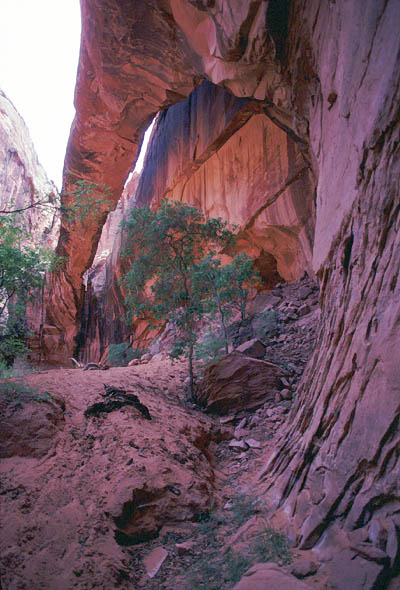
Morning Glory Natural Bridge -- Photo by Jay Wilbur

“I still find each day too short for all the thoughts I want to think, all the walks I want to take, all the books I want to read and all the friends I want to see.” John Burroughs  

Travels With Maggie

 I learned about Negro Bill Canyon Trail at the visitor center in Moab, Utah, where I asked if there was a good hiking trail on which I could take my dog.

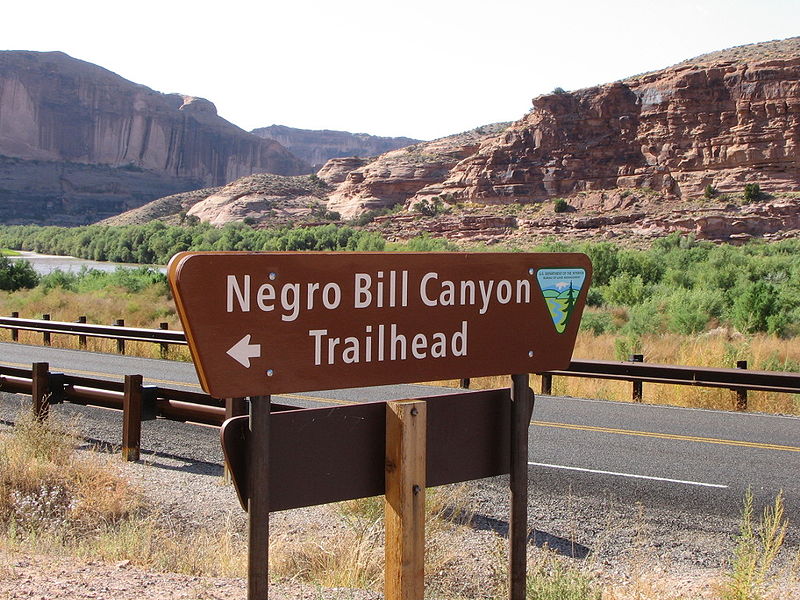
Moab is located adjacent to Arches National Park that has fantastic trails, but dogs are not allowed on them. The kindly desk clerk directed me to take Highway 191 north to Highway 128, which parallels the Colorado River, and then to look for a small parking area at the trailhead after about three miles.

It was easy to find and soon my dog and I were hiking up a narrow canyon trail that weaved across a small stream.

My hiking companion at the time was not Maggie. It was Peaches, a beautiful golden cocker spaniel who was then 15 years old. Since this was my first significant hike since foot surgery, the dawdling footsteps of her four legs and my two legs were perfectly matched.

It was actually a great pace as the trail, with its tinkling stream, red rock walls, willow groves and other wonders of nature, deserved adequate time to be properly admired. After about two miles, the trail forked. Peaches and I took the path veering to the right, which went about another half mile before ending at Morning Glory Natural Bridge, a 75-foot tall, 243 foot arch span overseeing an alcove.

Here, in this grand and peaceful setting, with a canyon wren serenading us, Peaches and I ate a leisurely lunch from my small backpack before heading back. It was the last hike Peaches and I took together.

Negro Bill Canyon Trailhead sign off Highway 128 with the Colorado River flowing past on the far side of the road.

The next time I hiked the trail, I had Maggie, a black cocker spaniel whom I had rescued from a life of abuse. She had been a year old at the time, and from her actions on the trail I realized this was probably her first off-pavement walk, certainly her first time to cross a stream. She either had to be coaxed or carried across. .

While she never became the great hiker Peaches was, Maggie’s now quite eager to get off the beaten path. In that, she and I are alike.

*Negro Bill Canyon is named after William Granstaff, a cowboy who ran cattle in the canyon in the late 1870s. While the name is not exactly politically correct, it’s more so now since the name was changed from the original “N” word.

Read Full Post »

One of the lesser goldfinches Maggie and I saw on our morning walk. -- Photo by Pat Bean

Our greatest strength as a human race is our ability to acknowledge our differences, our greatest weakness is our failure to embrace them.” — Judith Henderson

 Travels With Maggie

 Some days I wake up eager to write on a topic that burned itself into my brain as I slept, usually because the subject was on my mind before I went to bed. I consider these good days.

 On others, I wake brain-dead, wondering what in the heck I’m going to write about. This morning was one of these.

 Some days, Maggie sleeps in until 10 a.m. Others, like this morning, she wakes up early and immediately demands that I take her for a walk. Yes. I know. My children already have informed me that my canine companion bosses me around.

 But I welcomed her demands this morning, knowing that walks fertilize my brain. The birds clinging to a thistle finch bag feeder we passed did the rest.

I jumped to the conclusion that they were American goldfinches, which are extremely common all across the country. A closer inspection of the birds through binoculars, however, and I discovered my mistake. I was looking at lesser goldfinches, whose range rarely extends farther east than my current location in Central Texas.

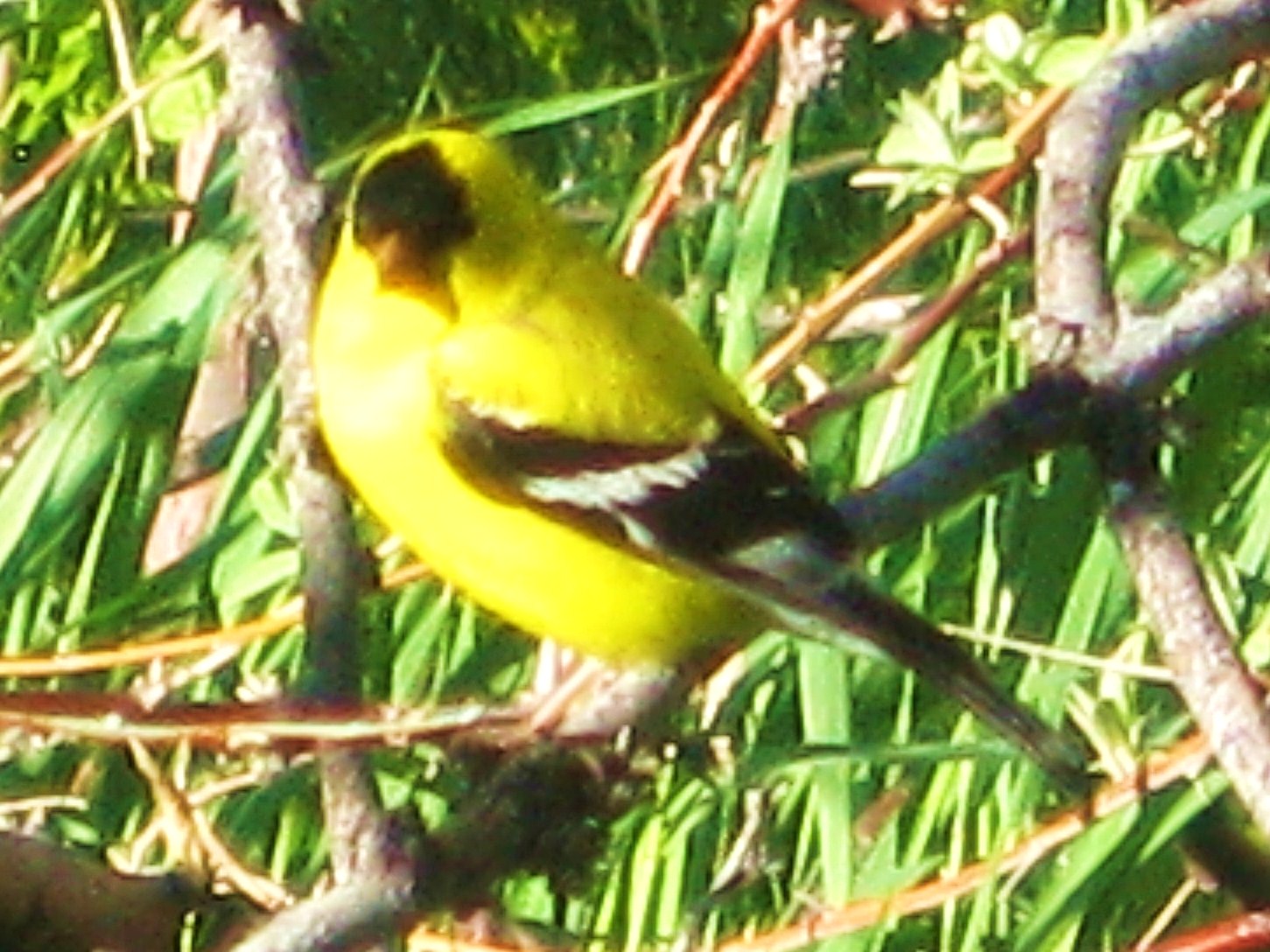
An American goldfinch -- Photo by Pat Bean

 The adult males of both species are brilliant yellow and black (females are duller and in the case of the lesser more green than yellow), but the lesser has a black head and back, while the American only wears a black cap and has black wings that contrast with a yellow back. Both species are beautiful birds.

 And that got me thinking about the assumptions people make when confronted with differences in general. I suspect that erroneous assumptions, like my confusion as to which goldfinch I was seeing, are way too common. And just like my goldfinches, most of our assumptions usually have nothing to do with right or wrong.

One kind of beauty, one color of skin or one way of thinking may be no better or no worse than another kind of beauty, a different color of skin or a second, third or fourth way of thinking.

I suspect the world could do with fewer assumptions and more appreciation of differences. What do you think?

Read Full Post »


Hundreds of cedar waxwings swooped from the sky and landed in the tree tops as Maggie and I walked past them this morning. -- Photo by Pat Bean

 “Happiness isn’t getting what you want, it is wanting what you got.” Garth Brooks

 Travels With Maggie It’s cool, damp and overcast here in Central Texas this morning. No sliver of golden sun, or even a rose-tinted cloud to brighten the day.

 The birds, however, seem to love it.

 I watched a pair of northern cardinals, a scarlet male and a yellow and red female, chase each other around a row of cedar trees outside my RV. A chatty mockingbird watched the courtship from a utility line above the trees, then flew off, perhaps in search of its own soul-mate.

The cardinals’ splash of color helped make up for the missing sunrise. But it wasn’t until later, after my dog, Maggie, finally woke and demanded her morning walk, that the day truly seemed cheery. Hundreds of cedar waxwings swooped down and settled in the tops of several trees our walk took us past.  Immediately they began calling back and forth among themselves, filling the air with bird twitter.

Cedar Waxwing -- Photo by Ken Thomas ( http://kenthomas.us/ )

 The light was such that the birds seemed little more than dark blobs against a gray sky. A look at them through my binoculars added a bit of their color, but my knowledge and imagination had to add the rest.

Cedar waxwings are striking birds with fancy crests, rosy-brown heads and yellow bellies. Red splotches on their wings, yellow on their tail tips and a black mask across their eyes make them look as if they’ve dressed in their best feathers for a masquerade ball.

 They’re actually the partying kind. I can’t recall ever seeing just one cedar waxwing.

 These birds only visit Texas in the winter. They migrate north for the summer. Smart birds. Come warmer weather, Texans will be yearning for a cool, damp, overcast morning like today.

Read Full Post »


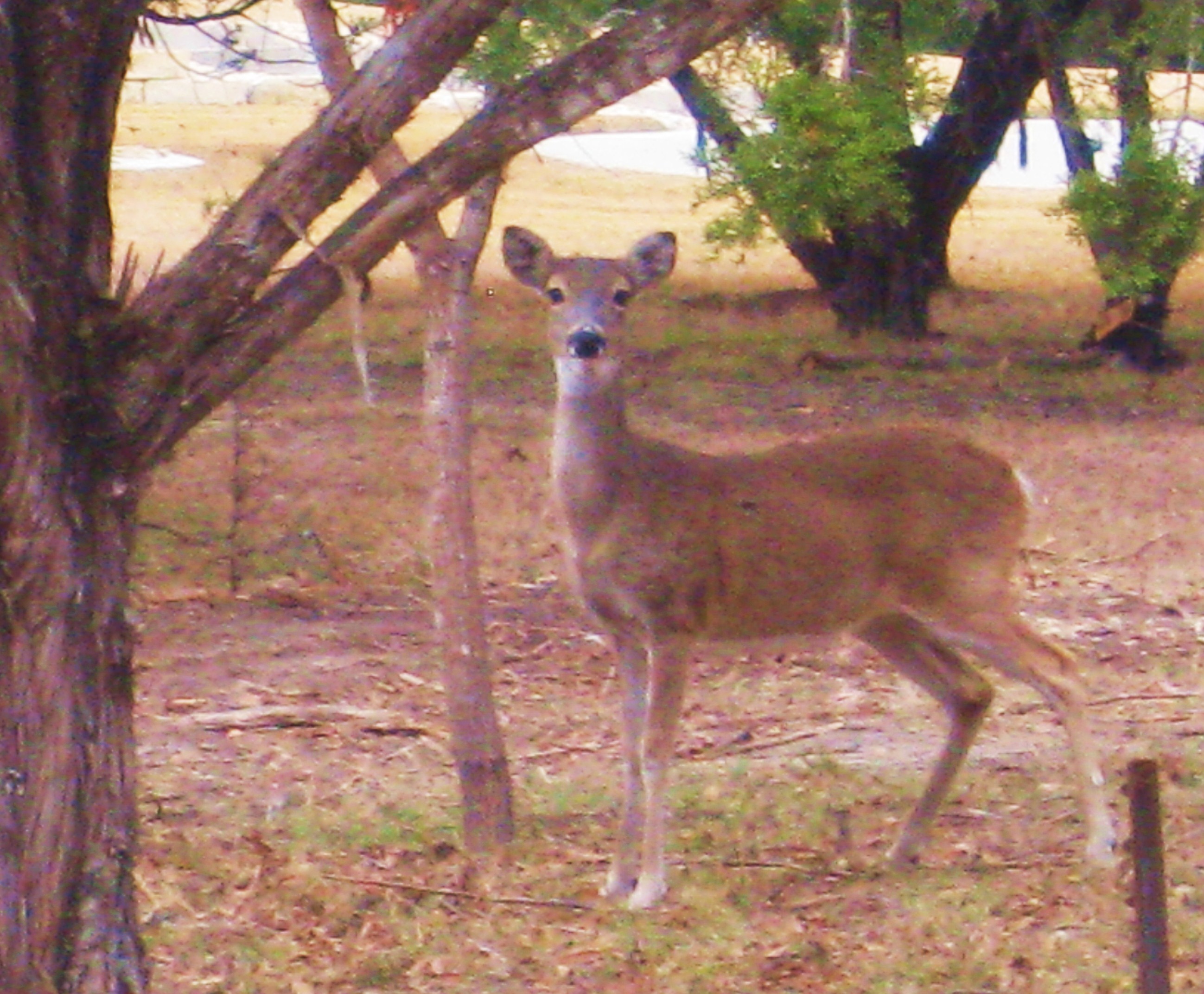
Have you ever taken the time to look into a deer's eyes. Perhaps you should. -- Photo by Pat Bean

”  Though it sounds absurd, it is true to say I felt younger at sixty than I felt at twenty.” — Ellen Glasgow, “The Woman Within”  

Travels With Maggie

 There have been many thrilling minutes in my life. When I was young, I watched my babies breathe in and out as they lay asleep, and felt the grasp of their tiny hands around my fingers. Each of their achievements – from taking their first steps to bringing home their first paycheck, made my heart sing with joy.

After my babies had flown the coop, I was free to chase other thrills, like rafting the grand canyon, going on a safari in Africa, and even jumping out of an airplane. It would not be unfair to say that I’m a bit of an adrenalin junkie.

But when I took my dog Maggie on her walk this morning, I felt more alive than I think I have ever felt before.

The sky was full of puffy rose and lavender tinted clouds that let one know the sun had risen even if it wasn’t visible this overcast day. A cool breeze stirred the hair on my bare arms, but I wasn’t cold. The caress on my skin felt like a gentle lover’s touch, one I never wanted to stop

The purple buds on this mailbox cactus appear to be straining for warmer weather so they can burst forth in joyous blooms. -- Photo by Pat Bean

.

I wasn’t alone in my enjoyment of the moment. The coolness gave Maggie, now 13, a briskness to her steps that, like mine, have begun to slow. She walked with ears flapping in the wind, and her short cocker-spaniel tail, straight up, a signal to the world that she’s in charge.

I was vividly aware of everything around me, the cedar waxwings crowding the leafless branches of an oak tree, the straining purple buds on a huge cactus in a mailbox planter, the eyes of a deer staring at me as I approached and a single dandelion in a winter brown yard.

In my younger days, I would have probably only seen the deer, and even then would not have taken the time to look into its eyes and make the connection I did this day.

While a few of the older female writers I’ve been reading lately, like Diana Athill in “Somewhere Toward the End,” spend too many of their words bemoaning what age has taken from them, I have nary a complaint.

With age has come acceptance of myself, deeper understanding of how the world works, and the wisdom to know that the simply things in life can be as thrilling as getting to the top of the mountain.

Read Full Post »

Green Jays at a feeder in Bentsen State Park in the Rio Grande Valley. -- Photo by Pat Bean

 “Hear! Hear!: screamed the jay from a neighboring tree, where I had heard a tittering for some time, “winter has a concentrated and nutty kernel, if you know where to look for it.” — Henry David Thoreau, 28 November 1858 journal entry.

 Travels With Maggie

 I was sitting here in my RV, currently parked in my oldest son’s Central Texas driveway, pondering what to write about on my travel blog this morning. The answer came to me when my daughter-in-law, Cindi, brought me an article about colorful birds that she had clipped from the Killeen Daily Herald.

 She had been awed by the photo of a green jay that accompanied the story, and knew that this avid birder would probably be awed as well. It was a bird she had never seen, and had no idea that it was quite common in Texas’ Rio Grande Valley, where South American birds hang out in the winter. 

An Altamira oriole lights up a tree branch in the Rio Grande Valley. -- Photo by Pat Bean

 If you want to see colorful birds and escape from cold weather as well, this is the place to go. Thousands of RV dwellers spend entire winters here, cozily hooked up in towns like Harlingen, Welasco, Padre Island and Brownsville.

I’ve spent a few winter weeks there myself, always coming away with new birds for my life list. This southern tip of Texas is home to Laguna Atacosa National Wildlife Refuge, where I saw my first aplomado falcons; Estero Llano Grande State Park, where last year I got my first tropical kingbird and pauraque; Santa Ana State Park where my first great kiskadee called to me from an overhead branch; and the World Birding Center at Bentsen State Park in Mission, where green jays abound at bird feeders scattered about the park and flame-colored Altamira orioles decorate the trees like Christmas lights.

 While you might not take notice of all those plain little brown birds in your backyard, the colorful ones you’ll see in the Rio Grande Valley just might amaze you.

My favorite hangout when visiting the area is the 1015 RV Park in Welasco. It’s not fancy and the sites are small, but it’s inexpensive and within easy walking distance of Estereo Llano Grande State Park, where I spent most of my time anyway.

 It’s one of those numerous Rio Grande Valley places where the birds hang out.

Read Full Post »


Mount Ogden as seen from 25th Street in Ogden, Utah. -- Photo by Pat Bean

“Climb the mountains and get their good tidings. Nature’s peace will flow into you as sunshine flows into trees. The winds will blow their own freshness into you, and the storms their energy, while cares will drop off like autumn leaves.” — John Muir

Travels With Maggie

I was born in Dallas, where the highest landmark around was a skyscraper. My first view of a mountain didn’t happen until I was 14, when my aunt and uncle took me on vacation with them to Sequoia National Park in California.

The high peaks, some still snow-covered although it was mid-summer, called out to me: You belong here, this is home. But it took another 10 years before I would visit them again, and just about as long again until I finally lived in their shadows.

I tell everybody that the only thing I miss since I sold my home, and got rid of possessions so I could live my dream of traveling the country in a 22-foot long RV, is my bathtub. That’s almost true. I miss the daily presence of the mountains, and one in particular more than any other.

Mount Ogden as seen from the backside. The far right peak was the start of the men's downhill ski race for the 2002 Winter Olympics.

Mount Ogden, which stretches 9,570 feet toward the sky, was my backyard for over 20 years. I climbed the 10-mile round-trip to its top several times with Maggie’s predecessor, a blonde cocker spaniel named Peaches. She had 10 times more energy than Maggie ever did, but so did I in those days.

I learned to ski on Mount Ogden when I was 40. Her trails offered me peace after a stressful day as a newspaper city editor and land issue fodder for stories when I was the paper’s environmental reporter.

While she blocked me from enjoying sunrises, the golden glow cast on her by the sun sinking in the west frequently warmed my heart. She provided me with birds to watch, wildflowers to smell and, rippling streams that serenaded me on hikes.

Mount Ogden’s Snowbasin ski resort was also home for all the 2002 Winter Olympic downhill events. I walked the steep runs created for them with presidential candidate Mitt Romney, who was then president of the Salt Lake Organizing Committee for the Olympics. Once, very slowly, I even skied the lower section of the women’s downhill run.

On first seeing Mount Ogden again, which I’ve done at least once yearly since going on the road seven years ago, she brings tears to my eyes, just as if she were my own mother whom I hadn’t seen for a long time. In a way that’s what she is.

Good mothers nurture their children. And Mount Ogden nurtures me.

Read Full Post »

« Newer Posts - Older Posts »