Feeds:
Posts
Comments

Archive for the ‘Birds’ Category


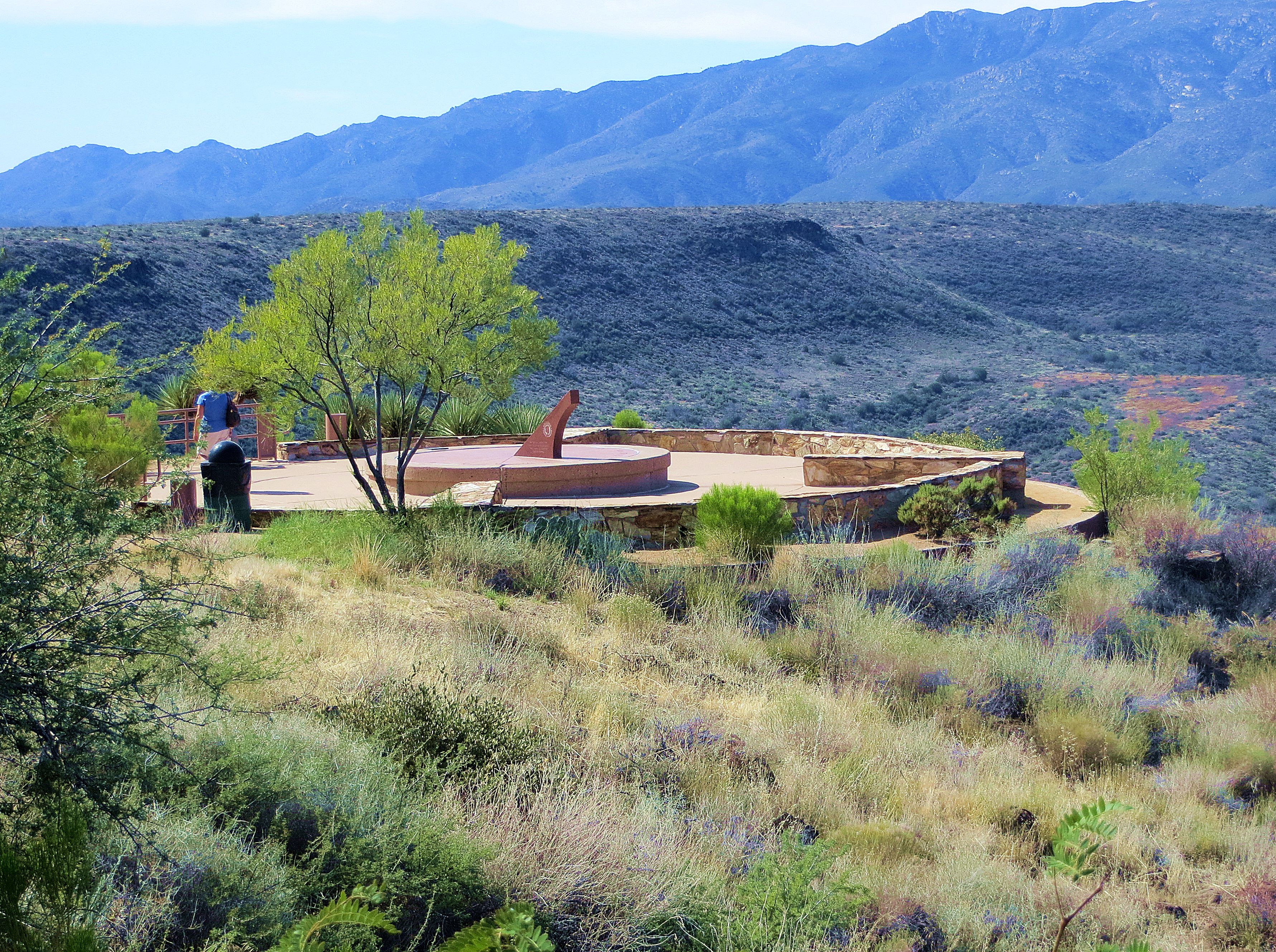
I made a brief stop at Sunset Point Rest Area north of Phoenix, but didn't stay long as it was crowded. -- Photo by Pat Bean

I made a brief stop at Sunset Point Rest Area north of Phoenix, but didn’t stay long as it was crowded. — Photo by Pat Bean

“Travel can be one of the most rewarding forms of introspection.” – Lawrence Durrell

Then Sedona Side Trip Woes

My favorite road trips include backroads. But this day’s road trip, I knew, would not include them. I had 400 miles to drive before I would lay my head to rest at a Super 8 Motel in Page, Arizona, and most of that would be on freeways.  I did expect, however, that Interstate 17, once past Phoenix, would have less traffic than Interstate 10. I was wrong, it had more.

I stopped in Sedona to enjoy the red-rock scenery, despite Cayenne's woes. Road trips are too precious to be wasted. -- Photo by Pat Bean.

I stopped in Sedona to enjoy the red-rock scenery, despite Cayenne’s woes. Road trips are too precious to be wasted. — Photo by Pat Bean.

The scenery, however, was somewhat more interesting, and during the 150-mile journey from Phoenix, where I-17 begins, and Flagstaff, where it ends. the landscapes and my journey climbed 6,000 feet in elevation.

Just outside Phoenix, my route took me through Black Canyon Recreation Area, with marked exits to such places as Horsethief Basin and Bloody Basin Road, leaving me wondering how those places had gotten their names. If I had time, I would have loved to have explored them. My mother claimed that I had inherited my grandfather’s wanderlust, and the need to explore every sideroad I came across. The only thing is there are way more sideroads these days then there were in his time – and I’ve discovered I can’t explore them all.


Cayenne, Pepper and me shortly after I bought my  Ford Focus.

Cayenne, Pepper and me shortly after I bought my Ford Focus.

On this day, I did get off the interstate to take the back route through Sedona and Oak Creek Canyon to Flagstaff. I expected to leave the traffic behind but nearing Sedona it became even more congested. And the stop-and-go 15 mph and roundabouts in Sedona brought out the worst in my 2014 Ford Focus, which has a stuttering/rattling problem when it’s in first gear, a problem that already had my car on a waiting list for the manufacturer to fix. I’m just one of many Focus owners with the default.

I believed my mechanic when he said it was OK for me to drive Cayenne, and that the problem wouldn’t leave me stranded; I just hadn’t expected it to be so grumpy and loud, but then that’s what I was when I returned to my Ford dealer back home. The mechanic drove my car when I returned to Tucson, but of course it’s didn’t misbehave as badly for him as it did for me in Sedona, where it was almost constantly in first gear.

But once past Sedona, Cayenne drove fine, with only an occasional and silent stutter in first gear, and gave me 40 mpg as well. Maybe I’ll forgive her, and Ford, too, if she drives as good as they tell me she will once she’s fixed. Too be continued …

            Bean Pat: Glenrosa Journeys http://tinyurl.com/ocb7n5n  Fall birds you might see if you live in Arizona. I especially liked the juvenile green heron photos.

Read Full Post »

“Going off the grid is always good or me. It’s the way that I’ve started books and finished books and gotten myself out of deadline dooms and things.” — Neil Gaiman

The Grid

Roseate spoonbill nest. -- Photo by Pat Bean

Roseate spoonbill nest. — Photo by Pat Bean

These photos were take in the aviary at the St. Louis Zoo in Missouri that was specially built for the 1904 World Fair.

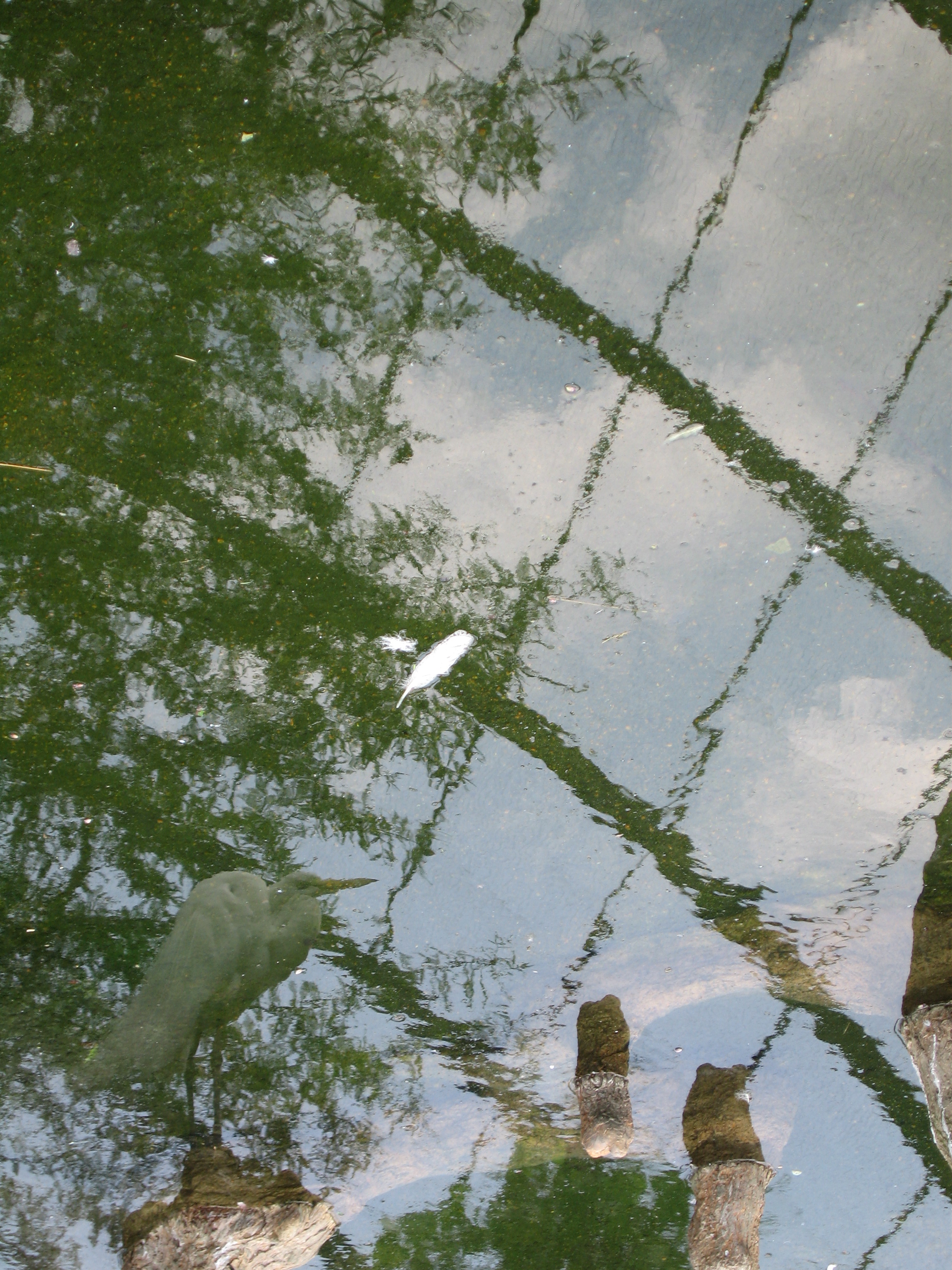
Cloud reflections through the grid and a great egret. -- Photo by Pat Bean

Cloud reflections through the grid and a great egret. — Photo by Pat Bean


Read Full Post »

The Hoopoe

“You have to know the past to understand the present.” –Carl Sagan          

A Bird from my Past — and Present

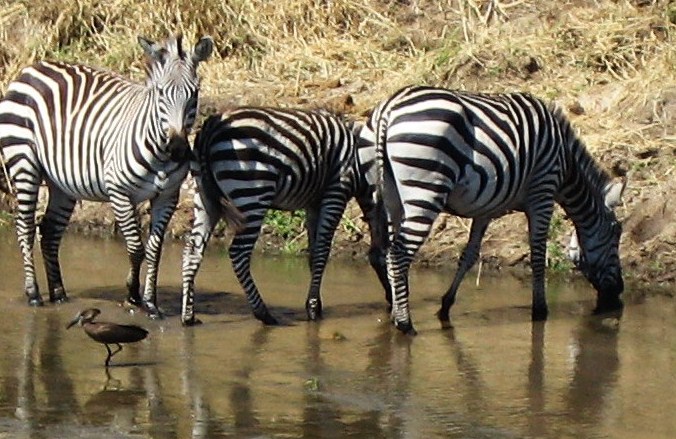
No. That bird at the feet of the zebra isn't a Hoopoe. It's a Hammerkop, and one of the 182 life birds I saw on my African safari. -- Photo by Pat Bean

No. That bird at the feet of the zebra isn’t a Hoopoe. It’s a Hammerkop, and one of the 182 life birds I saw on my African safari. — Photo by Pat Bean

I had never heard of such a thing as a Hoopoe until I read John Michener’s novel, The Source. That was a long time ago. The book was published in 1965, and if I remember correctly I read it right after it came out. I was a Michner fan back then.

This is a Wikimedia photo of a Hoopoe. Sadly I didn't get a good photo of he bird when I saw it, which is actually more normal than not. -- Wikimedia photo

This is a Wikimedia photo of a Hoopoe. Sadly I didn’t get a good photo of he bird when I saw it, which is actually more normal than not. — Wikimedia photo

He wrote 27 fictional novels – and not skinny books either – between 1947 and 2007. The first was Tales of the South Pacific, and the last was Matecumbe, published in its unpolished form a year after his death.

Of all Michener’s books, The Source was my favorite. I think it was because of how Michrner used the bird as a literary device, how described it, and how he named one of his characters Hoopoe, and then claimed he had been named after the bird.

When I read The Source those many years ago, I never expected I would ever get to see a Hoopoe. But I did, while on an African safari in 2007. That trip was one of the top two travel experiences of my life. The other was the 1991 trip when I paddled the Colorado River through the Grand Canyon. I still don’t know which trip should lead off my travel adventure tales. .

It wasn’t until 1999 that I became a passionate birdwatcher. It’s a hobby that caught me by the heart right when my 20 years of passionate white-water rafting heydays, were coming to an end. Wasn’t I lucky?

I’ve found that life always has questions and surprises – like the Hoopoe – to keep my days interesting. And these days, such surprises seem to engage my brain to make connections with my memories. Life is good. Especially since my back is no longer hurting.

Bean Pat http://tinyurl.com/o2jye94 A fascinating tale of the Hoopoe Bird.

Read Full Post »

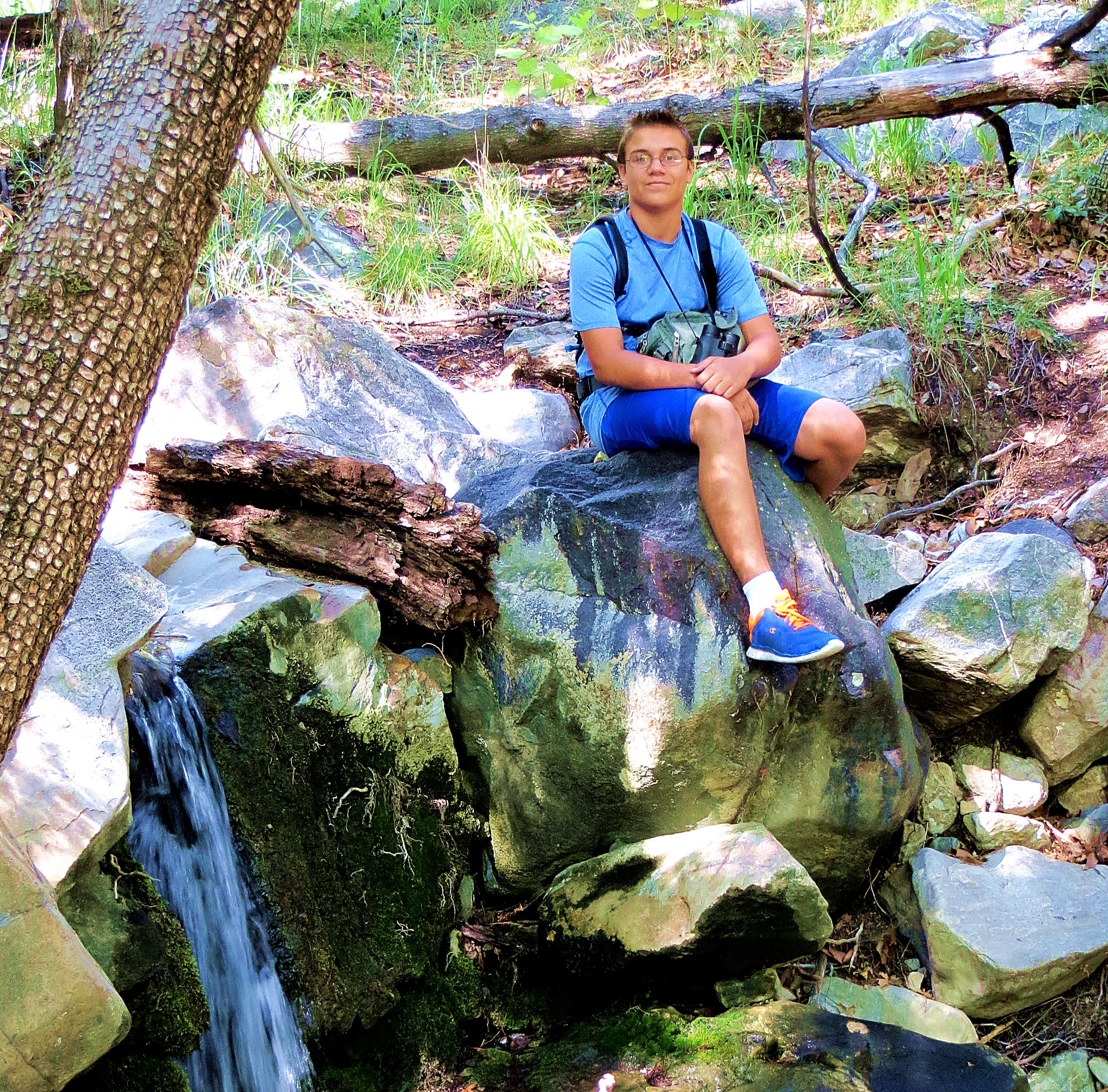
My grandson, JJ, found Ramsey Canyon a treat from the normal Sonoran Desert Landscape. So did I. -- Photo by Pat Bean

My grandson, JJ, found Ramsey Canyon a treat from the normal Sonoran Desert Landscape. So did I. — Photo by Pat Bean

Painted Redstart -- Wikimedia Photo

Painted Redstart — Wikimedia Photo

“Solitary converse with nature; for thence are ejaculated sweet and dreadful words never uttered in libraries. Ah! the spring days, the summer dawns, and October woods!” — Ralph Waldo Emerson

A Desert Oasis – And a Red-Faced Warbler         

If numbers counted, the painted redstart was the bird of the day when my 16-year-old grandson, JJ, and I hiked Ramsey Canyon this past weekend. But in my book, the bird of the day was the one in which I got a brief glimpse, just long enough to see its striking face before it resumed flittering high among the thick leafy branches of a half-dozen tall trees.

It was a red-faced warbler, and a lifer for me, the 708th bird species I have seen. While I watched it, and another, flitting about for at least 10 minutes, that one glimpse as it settled briefly on a tree limb that was in the open, was the only one in which I could identify it.

Warbler, red-faced. I saw one up Ramsey Canyon

Red-faced warbler. — Wikimedia photo

The warblers were flying with about a half-dozen redstarts, and it was impossible for me to tell which was which when they were moving. Both birds are similar in size, although the redstart is slightly larger. The two species are rarely seen outside of Southeast Arizona or Southwest New Mexico when they migrate up from Mexico and South America for the spring and summer.

I saw my first painted redstart, back in 2006, in Zion National Park, which is located in Southern Utah.

This day, in Arizona’s Ramsey Canyon, these beautiful redstarts, with their black bodies, red bellies and distinctive white wing bars, were just about everywhere along the creek-side hike. It wasn’t until the trail reached the top of the main trail, where it looped across Ramsey Creek before heading back down to the trailhead, that I saw the warblers.

My grandson and I joined a half-dozen other birders on the lookout for them after someone noted they had spotted a red-faced warbler. Thankfully, I had my binoculars focused on the branch when the only one I could identify landed briefly.

What a treat.

My grandson, however, was more excited about seeing four white-tailed deer as we hiked, and the fantastic giant trees that grew beside the creek, which laughed and gurgled its way over rocks and down small waterfalls as it made its way down the canyon.

These things excited me, too. The red-faced warbler was just the chocolate syrup on rich French vanilla ice cream, which is always good enough to eat without any topping.

            Bean Pat: A Totem Town http://tinyurl.com/nn6gqxj A great armchair travel blog. I’ve been to this town, and loved it, too.

Read Full Post »

            Don’t be fooled by the calendar. There are only as many days in the year as you make use of. –Charles Richard

This day, standing beneath a covered shelter on a bridge across a pond at Brazoria National Wildlife Refuge with my son, Lewis, was a seized day that left me with special memories. -- Photo by Pat Bean.

This day, standing beneath a covered shelter on a bridge across a pond at Brazoria National Wildlife Refuge during a storm, with my son, Lewis, was a seized day that left me with special memories. — Photo by Pat Bean.

Seize the Day

            Just a few quotations that hopefully will inspire you to not let today pass by unnoticed.

Enduring that same storm was a scissor-tailed flycatcher that I captured with my camera through the rain. -- Photo by Pat Bean

Enduring that same storm was a scissor-tailed flycatcher that I captured with my camera through the rain. — Photo by Pat Bean

Live every day as if it were going to be your last; for one day you’re sure to be right.” — Harry “Breaker” Harbord Morant

            “Go for it now. The future is promised to no one.” — Wayne Dyer

            Just FYI, I’m currently reading Dyer’s recent book, I Can See Clearly Now. His much earlier Your Erroneous Zones had a major impact on making my life better back in the 1970s. Dyer is one of my heroes.

“Every man dies. Not every man really lives.”Braveheart

            This final is a quote from the toast my son, Michael, made at his older sister’s wedding. “May you live, so that when you die, you know the difference.” It’s one of my favorite quotes.

Blog pick of the day. Check it out.

Blog pick of the day. Check it out.

Bean Pat: Eagle flight http://tinyurl.com/ng5s3ca WOW! Also, Cecil the Lion http://tinyurl.com/njcg2n2 NY Times Opinion Peace. Well said.

Read Full Post »

You are never too old to set another goal or to dream a new dream.” — C.S. Lewis   ” Every day is a good day to be alive.”– Marty Robbins

I think the alligators got me when I tried doing too many things. --Photo by Pat Bean

I think the alligators got me when I tried doing too many things. –Photo by Pat Bean

Time to Simplify I have to admit that the past two weeks have found me doing not much of anything worthwhile. I think it started when I wrote out a complete list of all the things I needed to do, should do, and wanted to do.

Anne Lamott advises writers to take things Bird by Bird in her excellent book. I think I'm going to try and follow that advise from now on. -- Photo by Pat Bean

Anne Lamott advises writers to take things Bird by Bird in her excellent book. I think I’m going to try to follow that advise from now on. — Photo by Pat Bean

After finishing the list, which took up about 50 lines in a notebook, I was suddenly too tired to do anything. For the next several days I played computer games, which prompted me to vow not to play computer games for the next 50 days. Then I watched TV programs on my computer for several days. I’m not sure what finally gave me a clue as to what my problem was, but clearly that impossible to accomplish list had mired me in a muddy pond thick with alligators. So I put the list aside, and went back to simply listing a few prioritized things that needed accomplishing on a daily to do list — and which I could reasonably complete and still have time left over for dawdling, reading and smelling the flowers. As if by magic, I recovered my energy. I don’t know about you, but sometimes I think my brain gets a kick out of playing games with me.     

Blog pick of the day. Check it out.

Blog pick of the day. Check it out.

Bean Pat: Wildlife Sighting http://tinyurl.com/q57dgvv Take an armchair trip with this photographer as he watches a cougar drag its dinner up a cliff.

Read Full Post »

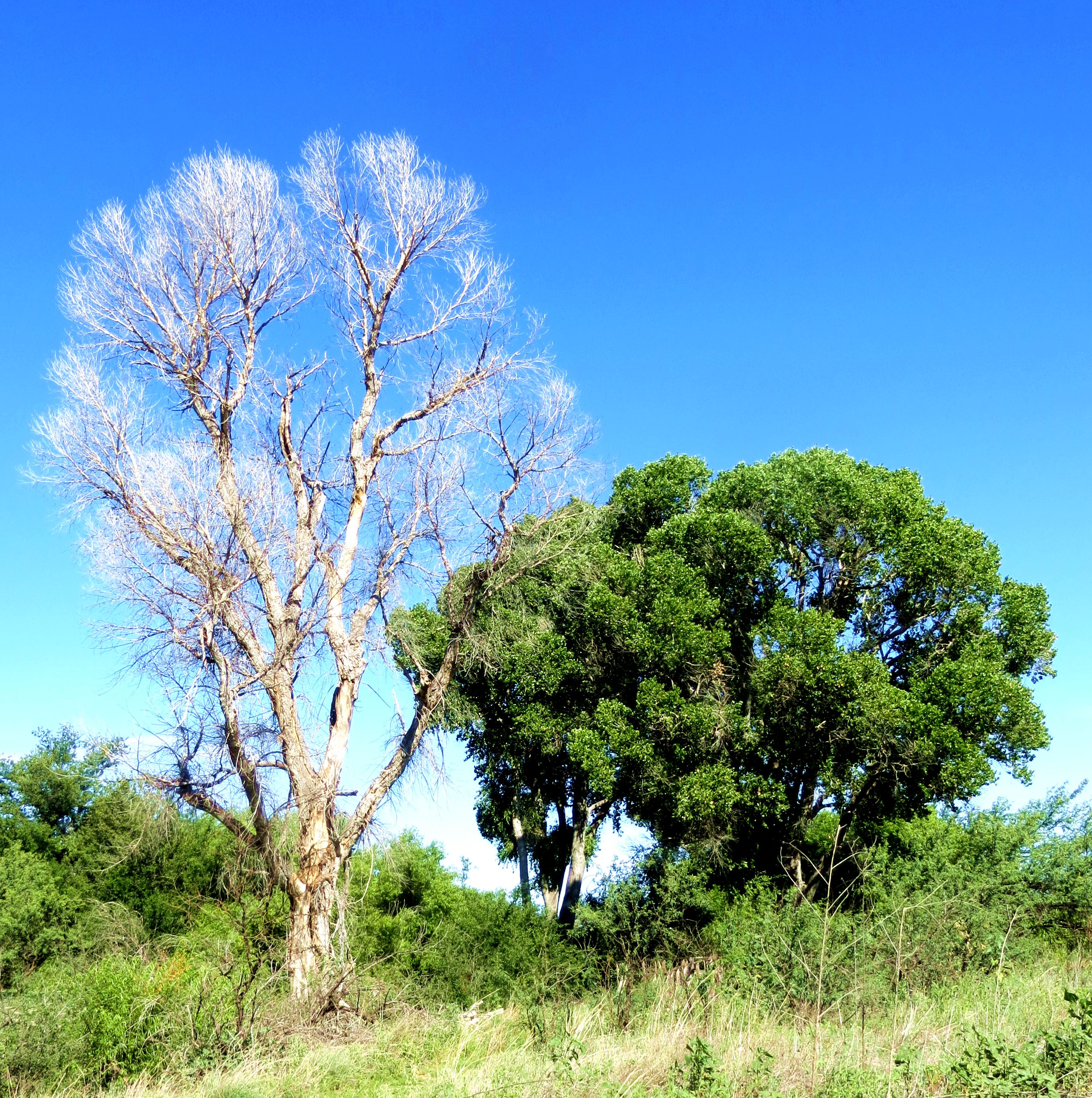
These two trees captured my attention along the Arivaca Cienega Trail because they so accurately represent the circle of life. -- Photo by Pat Bean

These two trees captured my attention along the Arivaca Cienega Trail because they so accurately represent the circle of life. — Photo by Pat Bean

I am not bound for any public place, but for ground of my own where I have planted vines and orchard trees, and in the heat of the day climbed up into the healing shadow of the woods. Better than any argument is to rise at dawn and pick dew-wet red berries in a cup. ~Wendell Berry

Birdy Backroad Heaven

I woke up restless the other morning, and solved it by reviving a weekend morning tradition from back when I was putting in 50-hour work weeks. I packed a picnic lunch, gathered up my canine companion, Pepper, and we took off looking for a backroad and hoping it took us someplace where we could be away from the crowds and in one of Mother Nature’s wondrous landscapes.

Not the best picture, but in person it was magnificent. -- Photo by Pat Bean

Not the best picture, but in person it was magnificent. — Photo by Pat Bean

I found my backroad off Interstate 19 near Arizona’s border with Mexico. It led to the small town of Arivaca 23 miles away. I passed a Border Patrol stop near the interstate, but was waved on and told I only had to stop on the way back.

Speed limit on the narrow, twisting and bumpy back lane was mostly 45 mph, but it wasn’t often I was able to go that fast. But traffic, except for a couple of pickup trucks and a half-dozen motorcyclists traveling together, was non-existent. It was exactly what I had been hoping to find.

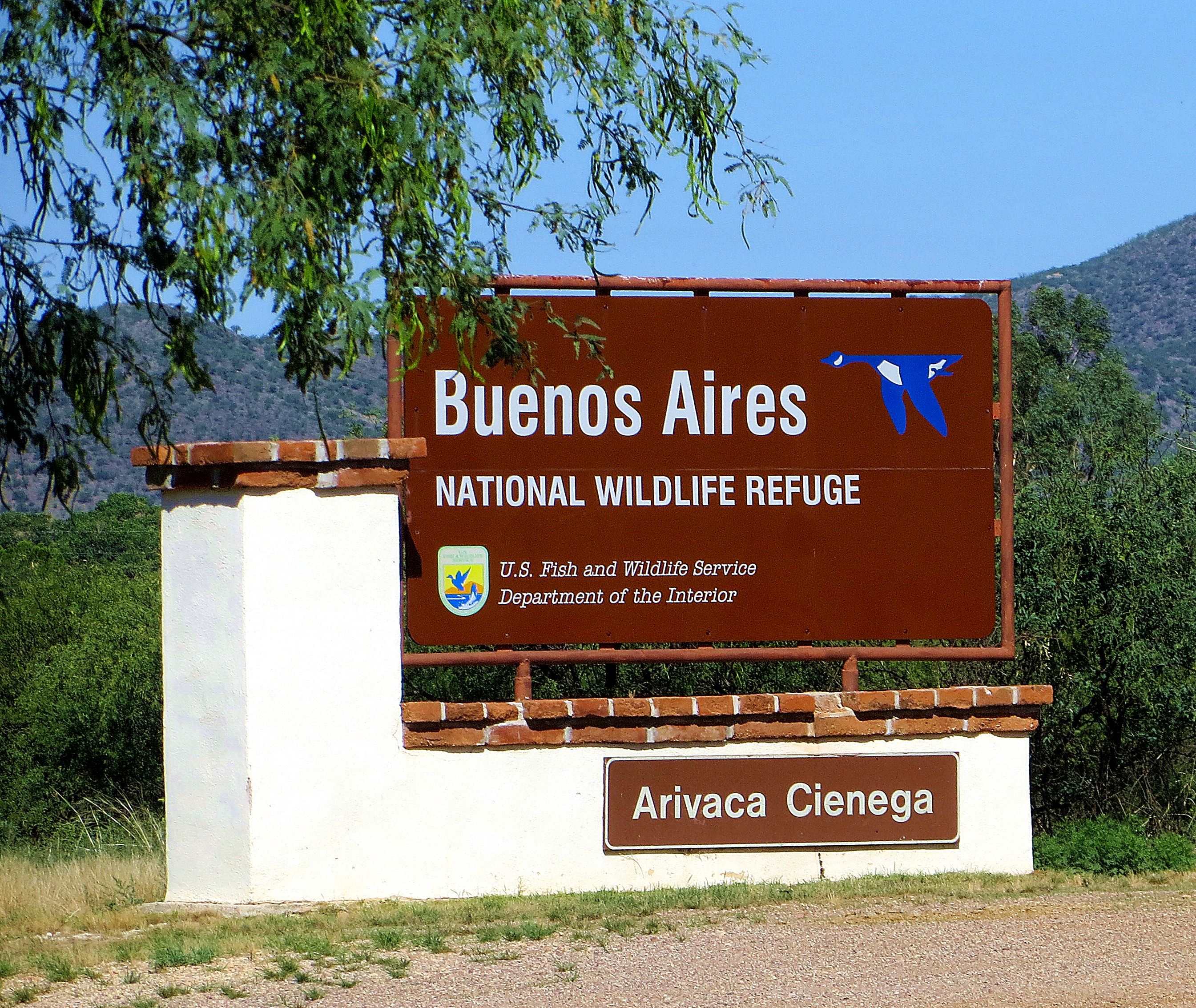
I didn't have to search hard to find this abode of Mother Nature. This sign set right beside the road just east of Arivaca. -- Photo by Pat Bean

I didn’t have to search hard to find this abode of Mother Nature. This sign set right beside the road just east of Arivaca. — Photo by Pat Bean

I found myself singing “On the Road Again.” I couldn’t belt it out with the grace of Willie Nelson but, it was good enough to put me in a yippy-I-got-away-from-the-world mood, especially when I had to dodge a greater roadrunner dashing across the road.

Just outside downtown Arivaca, which sits on the edge of Buenos Aires National Wildlife Refuge. Pepper and I stopped at the refuge’s Arivaca Cienega site, which is a designated Audubon Important Birding Area. Thankfully, leashed pets were allowed on the trail, which cut through what was clearly a marsh during the desert area’s monsoon season. Cienega, in fact, translates as swamp. Birds twittered all around us, and among others I identified song sparrows, cardinals, Bell’s vireos and western kingbirds. A deer watched us a minute or two as we rounded a bend in the trail before scampering out of sight.

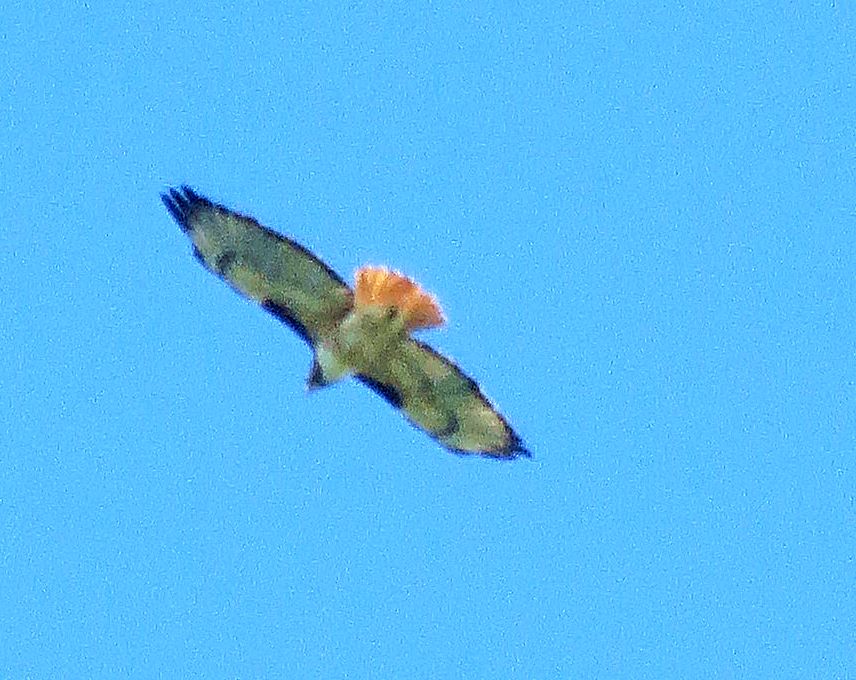
I didn’t think my morning, which was cooled by a light breeze still fresh from the desert night, could have been any more perfect. Then a pair of red-tailed hawks circled overhead and it did.

Blog pick of the day. Check it out.

Blog pick of the day. Check it out.

Bean Pat: Luckenbach Loop http://tinyurl.com/n9cgt9v One of my favorite bloggers also enjoys a backroad trip.

Read Full Post »

             “There was an old man with a beard, who said: ‘It is just as I feared! Two owls and a hen, four larks and a wren have all built their nests in my beard.’” – Edward Lear

Two of the three great horned owl juveniles now making themselves at home in my apartment complex that sits in the shadow of the Catalina Mountains -- Photo by Pat Bean

Two of the three great horned owl juveniles now making themselves at home in my apartment complex that sits in the shadow of the Catalina Mountains — Photo by Pat Bean

Treasured Moments

            Pepper and I were taking a walk late yesterday evening when we came upon two great horned owls sitting on the lawn, one no more than 30 feet away. They stopped Pepper in her tracks. She stared long and hard at them, but made no move in their direction.

The third owl mostly watched me, but this was the only usable photo I was able to take in the late evening light. The others were too blurry to redeem. -- Photo by Pat Bean

The third owl mostly watched me, but this was the only usable photo I was able to take in the late evening light. The others were too blurry to redeem. — Photo by Pat Bean

I watched for a while, and then hurried Pepper along, thinking to return her to our apartment, grab my camera and return to the owls. The light had pretty much faded by the time I did just that, but the owls were still in place. I snapped of a couple of dozen shots, but they were too far away for the flash to work, and my hands weren’t steady enough to get any good shots, although I did manage, with the help of PhotoScape, to salvage two of them.

The owl farthest away got nervous and flew away, joining a third owl sitting on the roof of one of the complex’s buildings. The other stayed put, until I got within about 15 feet of it.

This was the second time I had come across the trio. The other time was in broad daylight, when they were high up in a tree with about a dozen people ogling them. I was walking Pepper that time, too – and again did not have my camera with me. Darn it!

Earlier in the year, I had watched and listened to a lot of hooting as the owl parents had courted, chased off ravens and a red-tailed hawk, and nested here in the apartment complex for the third year in a row.

And each year, their offspring take a while to learn to fear humans, popping up unexpectedly and unconcerned about who is watching them.  It’s the same with the young Cooper’s Hawk, whose parents also like to nest in the tall trees here.

It brings to mind a song from the from the 1949 Rodgers and Hammerstein musical, South Pacific:

You’ve got to be taught To hate and fear, You’ve got to be taught From year to year, It’s got to be drummed In your dear little ear. You’ve got to be carefully taught.

You’ve got to be taught to be afraid Of people whose eyes are oddly made, And people whose skin is a different shade, You’ve got to be carefully taught.

You’ve got to be taught before it’s too late, Before you are six or seven or eight, To hate all the people your relatives hate,  You’ve got to be carefully taught!

Bean Pat: Writing Advice http://tinyurl.com/p2lkjof This is really good.

Read Full Post »

“Youth is the gift of nature, but age is the work of art.” – Stanislaw Jerzy Lec

Chicago, from the top of the Hancock Building. Jan Morris wrote about the city, as have I.  -- Photo by Pat Bean

Chicago, from the top of the Hancock Building. Jan Morris wrote about the city, as have I. — Photo by Pat Bean

Through the Eyes of Jan Morris

I picked up The World, a travel book by Jan Morris, at the library last week and am fascinated by it.  The book contains a collection of the writer’s work, beginning with the story of the 1953 summiting of Everest for the first time, and ending with an article on Britain’s relinquishment of Hong Kong in 1997.

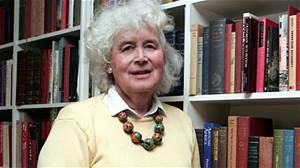
Jan Morris, who is now 88 to my 76. -- Wikimedia photo

Jan Morris, who is now 88 to my 76. — Wikimedia photo

I was 14 years old in 1953, seeing world happenings through my own eyes – well at least when I was aware of what going on around me – and thus, as I said, fascinated by seeing events and places a second time through both mine and Morris’ eyes and thoughts, veiled in the gauzy haze of half a century.

I had, over the years, read many magazine travel articles by Morris, but none of the writer’s many books, of which the most noted is his history of the British Empire trilogy, Pax Britannica. I knew little, however, about Morris’ personal life. And for some strange reason, or so I thought, I truly didn’t know if the writer was male or female, perhaps because. I knew people of both sexes called Jan.

I laughed when I discovered the answer in The World’s prologue written by Morris. Jan began life as James, completing an eight-year sex transition in 1972. So he wrote over time as both genders.  I guess my instincts were right on target.

Meanwhile, I’m simply enjoying his writing, and traveling back in time to the many eras Jan and this old wondering-wanderer broad have lived through. Morris, in his prologue, could have been speaking for me, when he sums up his feelings about the world over the years.

“I was twenty-four years old at the start of the 1950s, seventy-four at the end of the 1990s, so the passage of the globe described in this book is the passage of a life, too, from the twilight of adolescent to the dawn of senility, all its judgments, unreliable in any case, are colored by the grand change of life from youth to old age … Few of us are consistent in our opinions and values for fifty years, and we are affected not only by experience and maturation, but by moods, fickle tastes, boredom and personal circumstance.”

            Ain’t it the truth!

Bean Pat Morning song http://tinyurl.com/pzn3qla If you love to be woken by bird twitter, you’ll like this house wren’s salute to the day.

Read Full Post »

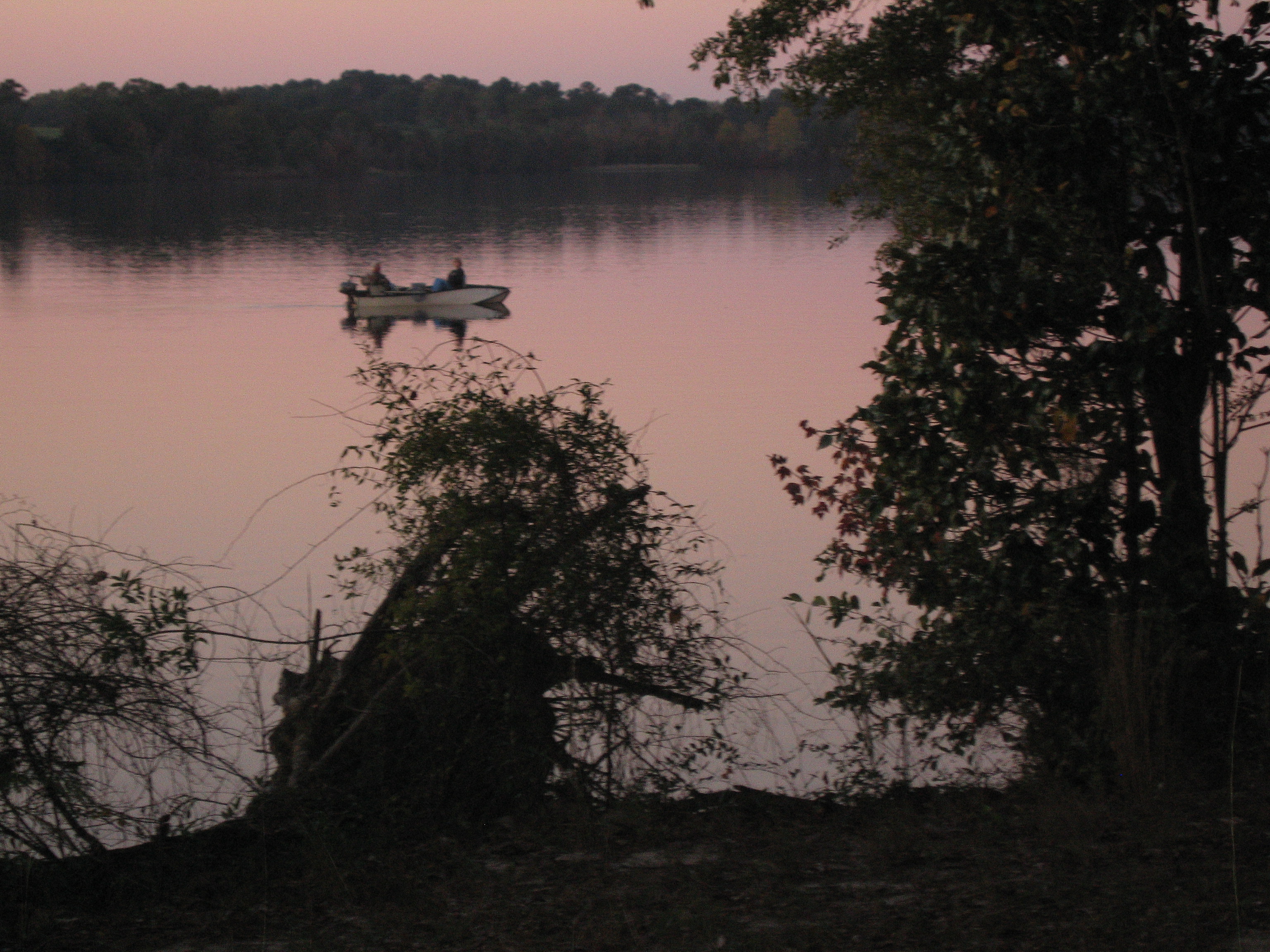
A magical moment at W.F. Jackson Park in Alabama -- at crepuscular.

A magical moment at W.F. Jackson Park in Alabama — at crepuscular. — Photo by Pat Bean

   “Every spring I hear the thrush singing in the glowing woods. He is only passing through. His voice is deep, then he lifts it until it seems to fall from the sky. I am thrilled. I am grateful. Then, by the end of morning, he’s gone, nothing but silence out of the tree where he rested for a night. And this I find acceptable. Not enough is a poor life. But too much is, well, too much. Imagine Verdi or Mahler every day, all day. It would exhaust anyone.” – Mary Oliver

My Curiosity Never Killed a Cat  

            I’m reading Luke Dempsey’s “A Supremely Bad Idea,” which I had checked out from the local Tucson Audubon Library. It’s a book along the lines of Mark Obmascik’s “The Big Year,” which is about three’s men’s obsession to see the most bird species in 1998. Bad Idea is also about three birders chasing birds. .

A tri-colored heron, once known as a Louisiana heron, spotted on the Blue Water Highway between Surfside and Galveston, Texas. -- Photo by Pat Bean

A tri-colored heron, once known as a Louisiana heron, spotted on the Blue Water Highway between Surfside and Galveston, Texas. — Photo by Pat Bean

Anyway, Dempsey mentions seeing a Louisiana heron, which sets my mind roiling. I’ve seen every species of herons this country has to offer, and I had never heard of a Louisiana heron. So off I chase to Bing it, which is the same as Googling it, only I use Bing as my internet explorer. In no time at all, my curiosity is slated. A Louisiana heron is what a tri-colored heron was once called.

The discovery left me pleased that I had learned something new. Then Dempsey used the word crepuscular, which sent back to my computer and my online dictionary. Crepuscular, I learned, means twilight, and can refer to animals that come out at twilight, and which are often wrongly referred to as nocturnal.

I don’t know about you, but I love it when writers send me to a dictionary.

Bean’s Pat: Dawn Downey’s Blog http://tinyurl.com/q3l3vvb A blog that will make you thankful for only having to walk to exercise. I also love this author’s book, “Stumbling Toward the Buddha,” which I recently read.

Read Full Post »

« Newer Posts - Older Posts »