Feeds:
Posts
Comments

Archive for the ‘Birds’ Category

  There are grander and more sublime landscapes – to me. There are more compelling cultures. But what appeals to me about central Montana is that the combination of landscape and lifestyle is the most compelling I’ve seen on this earth. Small mountain ranges and open prairie, and different weather, different light, all within a 360-degree view. Sam Abell

Page 1 of my Alaska trip journal.

Page 1 of my Alaska trip journal.

Non-Wandering Wanderer Memories

Yesterday I came across the journal I kept during my 30-day journey from Ogden to Alaska, most of which was driven on the Alaskan Highway. I thought I would blog about the trip this November as my time is precious – I’ve signed up to do NANO – that is write a 50,000 word novel in 30 days. I’m writing a bird memoir, and when I did the Alaska trip, I was just beginning my late-blooming bird-watching passion.

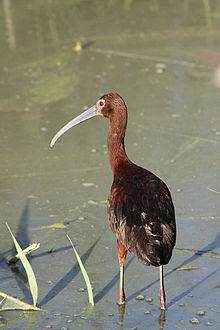
A white-faced ibis was the first bird on my Alaska trip birding list.

A white-faced ibis was the first bird on my Alaska trip birding list.

On the first day of my 2001 Alaskan adventure, I drove from Ogden, Utah, to Dillon Montana. It was July 27.

Like Ogden, where my journey began, Dillon is a railroad town. It was founded in 1880 by Union Pacific Railroad President Sydney Dillon, hence its name. Its location was selected because of its close location to gold mines then in the area, the first of which was discovered in 1862. And because of its large sheep-ranching community, Dillon, which was incorporated in 1884 and has a current population of about 4,000, was once the largest exporter of sheep wool in Montana.

The odd fact I still recall, because of research I had done prior to my journey, is that a circus elephant named Old Pitt was struck by lightning in the town in 1943, and was buried at the fairgrounds.

While I don’t remember too much else about the town, where I slept that first day on the road, I still have memories of my excitement about the coming month. And of course the birds I was going to see along the way.

Blog pick of the Day. Check it out.

Blog pick of the Day. Check it out.

Bean Pat: Pit’s Fritztown News http://tinyurl.com/z64x46l One of my favorite bloggers, who writes from Fredericksburg, Texas. Today he’s talking about Day Zero of a road trip that appealed to me, and seemed to go with my Day 1 of my trip to Alaska, which of course started with my own Day Zero.

Read Full Post »

   “The more often we see the things around us – even the beautiful and wonderful things – the more they become invisible to us. That is why we often take for granted the beauty of this world: the flowers, the trees, the birds, the clouds – even those we love. Because we see things so often, we see them less and less.” — Joseph B. Wirthlin

A male house finch sitting on the tree limb  next to my third-floor balcony. -- Photo by Pat Bean

A male house finch sitting on the tree limb next to my third-floor balcony. — Photo by Pat Bean

A Spot of Cheer

            Almost anywhere you live in North America, your day could easily be brightened by a house finch, a seemingly common name for a little brown bird, whose scarlet bib and head band worn by the male lights up any gray day. The female wears only a pale brown feather coat whose white front is brown streaked, as is the male’s lower belly. Both have a sturdy bill for their dainty size.

House finches are the most widely distributed songbirds in America. And since they love backyards and bird feeders, they’re also one of the easiest birds to identify. Here in Tucson I see them almost daily.

This house finch decided to watch me as I watched it. -- Photo by Pat Bean

This house finch decided to watch me as I watched it. It’s in full breeding colors with more red on it than usual. — Photo by Pat Bean

Because of their coloring and whistle punctuated song, these birds were once popular pets. A crackdown on keeping wild birds in this country, however, pinched off most of that activity – and also is the reason these birds can now be found in all 48 mainland states. Before 1940, when New York house finch breeders loosed their breeding stock because of the new laws, house finches were only found in the West. The freed pet birds, however, quickly dispersed, and today their North America numbers are estimated at a billion.

I only learned the bird’s history this morning, when I was reading Feather Brained by Bob Tarte, a late-blooming birder like myself. I was 60 years old before I begin fully seeing all the birds that share our spaces. Today I can’t not see birds. And that is a gift I’ve come to treasure.

Blog pick of the Day. Check it out.

Blog pick of the Day. Check it out.

Bean Pat: Ruffed Grouse http://tinyurl.com/jjfnxpm Great photo of a ruffed grouse for birdwatchers. This blog also took me back to my 2012 drive down the Skyline Drive through Shenandoah National Park, where if you look hard enough you’ll find this species of grouse.


Read Full Post »

  “A woman’s mind is cleaner than a man’s. She changes it more often.” – Oliver Herford

            “You have power over your mind – not outside events. Realize this, and you will find strength.” – Marcus Aurelius

The story of how the magpie became my animal totem would make a good first chapter  for my bird book. -- Photo by Pat Bean

The story of how the magpie became my animal totem would make a good first chapter for my bird book. — Photo by Pat Bean

It’s OK to Change One’s Mind

I’m not sure where I got it in my head that once I made a decision I had to follow through on it, but it got me in trouble in my earlier years. Young minds don’t always make the right choices.

Old minds don’t either.

But more often than not, the choices and decisions we make in life, especially those we make on a daily basis, have nothing to do with right or wrong. They are simply choices, like the one I made recently to do NANO in November, which is to write a 50,000 word novel in 30 days.

m

And I can write about my experience of seeing California condors flying free  over Zion National Park, and all the times I wrote about them when I was a reporter. -- Wikimedia phoot by Phil Armitage.

And I can write about my experience of seeing California condors flying free over Zion National Park, and all the times I wrote about them when I was a reporter. — Wikimedia photo by Phil Armitage.

Along with making that choice, I also made a decision to make my proposed book a mystery, and dedicated yesterday to working on an outline for it. Instead, I kept putting the task off and spent most of the day reading. The truth was I couldn’t come up with a good plot.

Then this morning I got to thinking. I have three completed (not sure how many uncompleted) first drafts of mysteries in my writing files, which I have no inclination to take to polished completion. I don’t think I need another.

Meanwhile, for the past year I have been outlining a book about my bird-watching experiences. I have numerous anecdotes about this late-blooming passion of mine. Why not, I thought, write my bird book for my NANO project?

The decision felt right. And suddenly I was more enthusiastic about my November writing marathon. Of course, I could change my mind again.

Learning to be comfortable with not having one’s decisions written in cement, even for life-changing choices, has made life a lot easier and more pleasant for me. Perhaps that’s because I make a lot of hummingbird-wing-quick decisions without thinking everything out fully first.

Patience simply isn’t a virtue in my mind. And while I believe, unlike Oliver Herford whose quote began this blog, that men change their minds as often as woman, I do believe I have a very clean mind.

Bean Pat: Hanging out: in Puerto Iguazu http://tinyurl.com/h6rg4vm A nice and easy day of armchair travel

Read Full Post »

A Novel Idea

“There are times when a feeling of expectancy comes to me, as if something is there, beneath the surface of my understanding, waiting for me to grasp it.” – Sylvia Plath

Laughing gulls on Mustang Island on the Texas Gulf Coast, not too far from where Ridley sea turtles have nested. -- Photo by Pat Bean

Laughing gulls on Mustang Island on the Texas Gulf Coast, not too far from where Ridley sea turtles have nested. — Photo by Pat Bean

A November Challenge

This makes the seventh year I’ve signed up to do NANO, which is short for National Novel Writing Month that takes place November. The goal is to write a 50,000-word novel in 30 days.

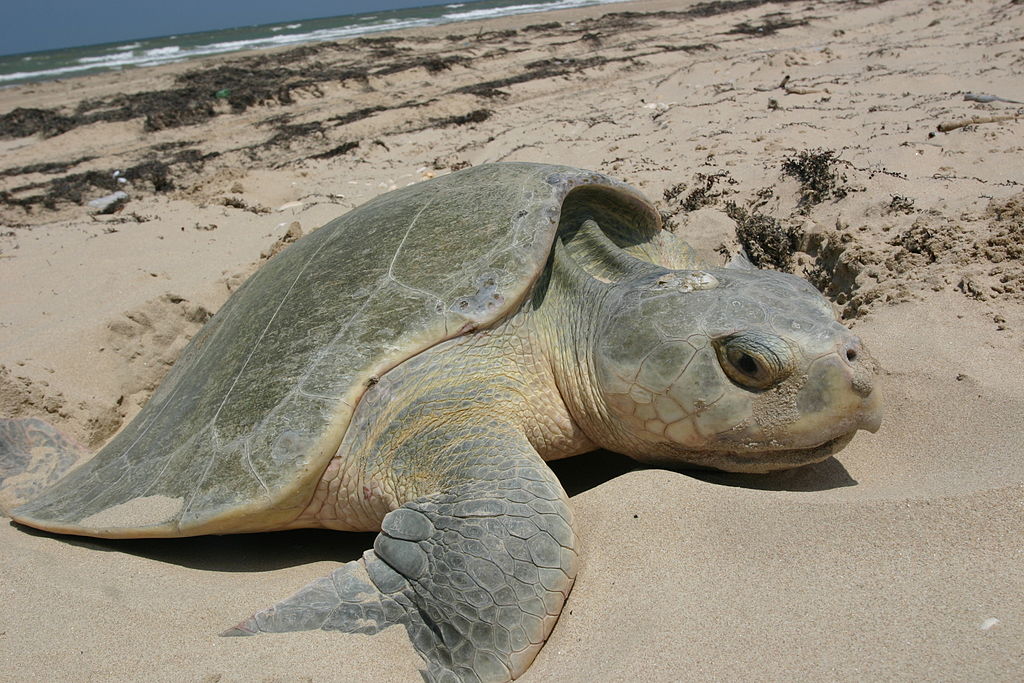
A Ridley sea turtle laying her eyes on a Texas Gulf Coast beach. -- National Park Service photo.

A Ridley sea turtle laying her eyes on a Texas Gulf Coast beach. — National Park Service photo.

I actually completed the goal, and got my certificate, once. It was a great writing exercise but I ended up with a wobbly first draft whose protagonist I had fallen out of love with, and so that’s as far as I took the project. I’m hoping to do a little better this time around, which is why I’m now working on an outline of the mystery novel I’m planning on writing in November.

The last time I flew by the seat of my pants only. I wrote a mystery the first time around as well, and am repeating the genre because I love reading mysteries – the ones that focus on who-dun-it instead of blood and gore.

A just hatched sea turtle ready to battle its way to the ocean. -- U.S. Fish and Wildlife photo

A just hatched sea turtle ready to battle its way to the ocean. — U.S. Fish and Wildlife photo

I’m going to use the things I liked from my first NANO completion, mainly the setting along the Texas Gulf Coast and the story of the endangered Ridley sea turtles, but with new characters and a new plot.

Anyone interested in joining the challenge with me can sign up at: http://nanowrimo.org/   It’s free, and not a contest. The only person you have to please is yourself.

My goal for doing the challenge, besides completing a first draft of a novel, is to get myself back into the habit of writing more consistently on a daily basis.

Blog pick of the Day. Check it out.

Blog pick of the Day. Check it out.

Wish me luck!

Bean Pat: Glassine Visions http://tinyurl.com/h7gfdxn For Dale Chihuly fans.

P.S. Re NANO: Since 2006, hundreds of novels first drafted during NANO have been published. You can check out the list at: http://nanowrimo.org/published-wrimos

Read Full Post »

“Lavender clouds sail like a fleet of ships across the pale green dawn.” – Edward Abbey. The Opposite of Bird Watching

White-winged doves to the left, mourning doves to the right. -- Photo by Pat Bean

White-winged doves on the ends, mourning doves in the middle. — Photo by Pat Bean

It is a dawn like what Abbey describes that makes me often wake before the sun rises. After watching the gray turn the landscape into a fleeting moment of golden glow, I began looking around for birds, knowing that when I return to my apartment I will note in my journal the first species of the day. More often than not it will be a dove, either a white-winged or a mourning dove.

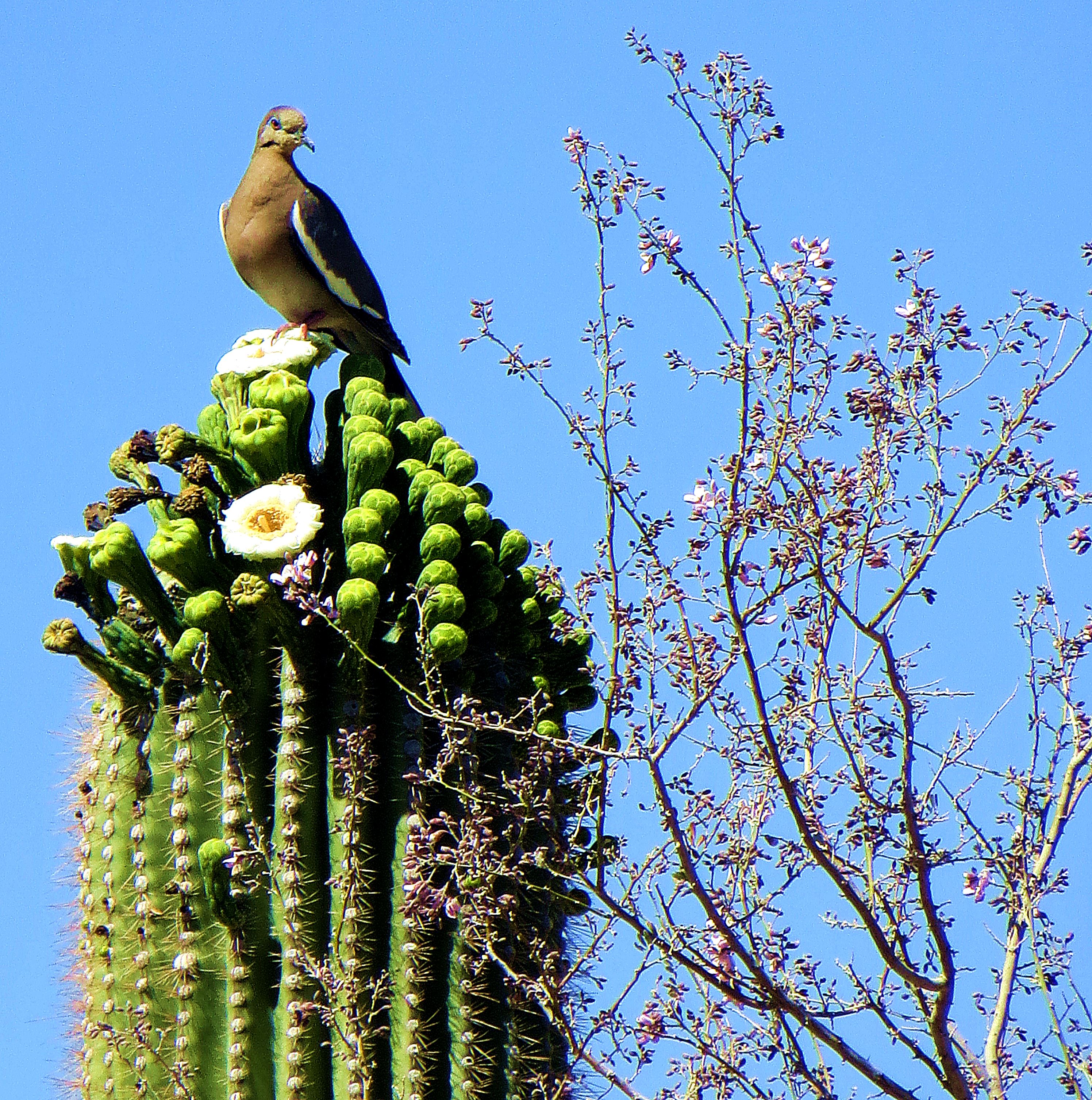
White-winged dove on top of a blooming saguaro.  -- Photo by Pat Bean

White-winged dove on top of a blooming saguaro. — Photo by Pat Bean

Both these species are as common here in the Sonoran Desert as are the saguaro, which normally can only be found in Southern Arizona or just across the border into Mexico.

You can see a mourning dove anyway in the mainland 48 states, but white-winged doves can only be found in the more southern states. Here where I live, I often see them sitting atop a saguaro, especially when it is in bloom (like the photo on the left). Mourning doves more commonly tend to flock on the ground in bunches of two to six.

If I listen, as my canine companion Pepper and I make our morning circuit, I can hear the doves murmuring to one another. It’s an interesting chatter. The mourning doves have a mellow, cooing song, which sounds like a lament, but which also is close to the sound of our resident great horned owls. White-winged doves, named for just that, also coo, but there is more variation and cheeriness to their songs. It sounds to me like they’re happy to be up and moving, while the mourning doves are bemoaning having to get up.

Recently I added a bird feeder to the nectar feeder that hangs on my third-floor apartment balcony. Both the mourning and white-winged doves have been feeding from it. They empty it way too quickly, which is why I only partially fill it each morning. There is only so much bird seed my budget can afford.

The doves, having become familiar with my custom of putting out seeds after my morning walk, often gather on the tile roof across from my apartment in anxious anticipation. I think you can call that people watching.

Blog pick of the Day. Check it out.

Blog pick of the Day. Check it out.

Bean Pat: With Less Weight in my Back Pack http://tinyurl.com/z5kco7l Sedona area landscape — and the way I feel these days.

Read Full Post »

Reflections

Weekly Photo Challenge

“There’s an unseen force which lets birds know when you’ve just washed your car.” — Denis Norden

Roseate spoonbill at Brazos Bend National Park

Roseate spoonbill at Brazos Bend National Park — Photo by Pat Bean

And for good measure, since I do so enjoy watching these pink-winged birds with the funny bill, here is another photo I snapped of roseate spoonbills.

Roseate spoonbills in the World Fair's Aviary at the St. Louis Zoo.  -- Photo by Pat Bean

Roseate spoonbills nesting in the World Fair’s Aviary at the St. Louis Zoo. — Photo by Pat Bean


Read Full Post »

A snowy egret at the Bear River Migratory Bird Refuge in Northern Utah. -- Photo by Pat Bean

A snowy egret at the Bear River Migratory Bird Refuge in Northern Utah. — Photo by Pat Bean

        “Live in each season as it passes; breathe the air, drink the drink, taste the fruit, and resign yourself to the influence of the earth.” — Henry David Thoreau

Some of my Favorite Places

There are 59 national parks, and in my lifetime I’ve been to 44 of them, mostly missing the ones in Alaska. They are some of my favorite places in the world.

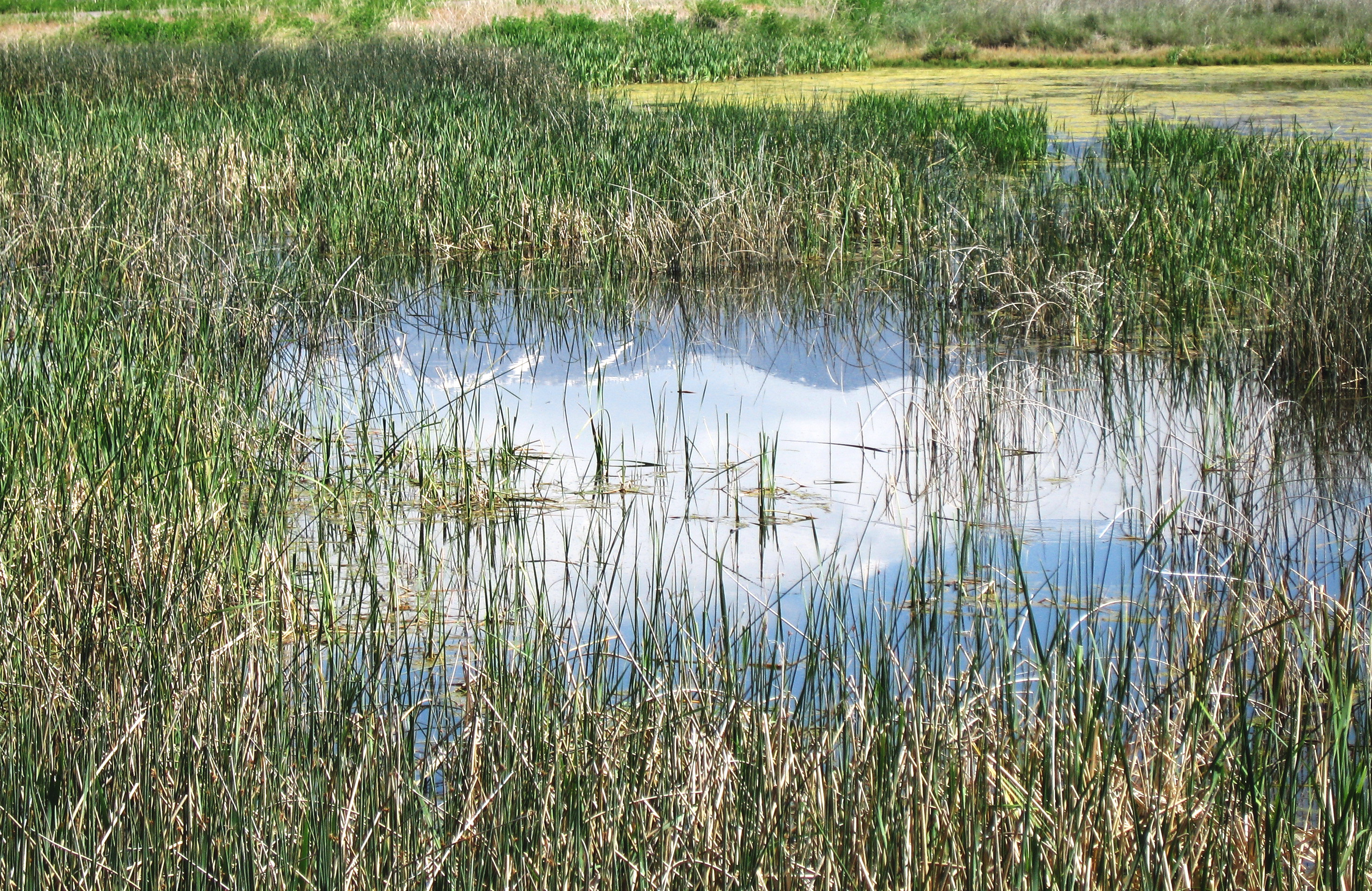
This pond captured images of the Wasatch Mountains and the clouds above them. I love it. -- Photo by Pat Bean

This pond captured images of the Wasatch Mountains and the clouds above them. I love it. — Photo by Pat Bean

On the other hand, there are over 550 national wildlife refuges. And they are also some of my favorite places – even though I haven’t kept track of the ones I’ve visited. During my nine years of traveling this awesome country, I stopped at any refuge in my vicinity, mostly to bird watch. .

Among the more memorable ones that would be on my list of the refuges I’ve explored, if I had such a list, would be Brazoria National Wildlife Refuge, located 15 minutes from my son Lewis’ Texas Gulf Coast home, and where I turned him into a birding addict like me. This refuge has added 16 birds to my life list of 710 species.

But that pales with the Bear River Migratory Bird Refuge that has given me 31 of my life birds. This refuge is very special to me because the first time I visited it was in the 1970s, when it was lush and green – and long before bird watching became one of my passions.

In the 1980s, I watched as the now 80,000-acre refuge was inundated by Great Salt Lake flood waters, whose salty content pretty much destroyed everything, including an almost new visitor’s center. I then regularly watched as the refuge, less than an hour’s drive from my Ogden, Utah, home for 25 years, made its comeback.

Pickleweed. I remember how thrilled I was when I saw the tiny beginning of this plant in a place desolate of greenery.

Pickleweed. I remember how thrilled I was when I saw the tiny beginning of this plant in a place desolate of greenery.

It started with pickleweed, one of the first plants to come back and one that helped eliminate the salt in the landscape. This was all explained to me during a tour of the damaged refuge for a newspaper story I was writing. Have I ever told you how much I loved my journalism career?

I was already retired, and traveling, but I made it to the grand opening of the refuge’s new visitor’s center in 2006. This time the center was located a good ways away from the flood zone, and next to Interstate 15 near Brigham City. The site offers visitors a convenient and quick view of a bit of what the refuge has to offer without the 10-mile drive on a rutted, unpaved road to the main refuge area.

I used to hate that rough ride – but I loved it, too. It kept the crowds away. Sometimes it seemed as if I had the whole refuge to myself, and if not, the other visitors were most likely to be nature lovers who, like me, thought the birds, animals and scenery were worth the bumpy drive.

If you’re one of us, along with visiting a national park during this year celebrating the system’s 100th birthday, you might want to also check out a national wildlife refuge. Most likely there is one not too far from where you live. https://www.fws.gov/refuges/

And if you’re interested in a good book, check out Refuge by Terry Tempest Williams. It’s much about the Bear River Migratory Bird Refuge.

Blog pick of the Day. Check it out.

Blog pick of the Day. Check it out.

Bean Pat: Living Life Almost Gracefully http://tinyurl.com/h97kl2v Chasing the Sun

Read Full Post »

             “At one time in my life, I sought logic in everything – now I know better.” – Pat Bean

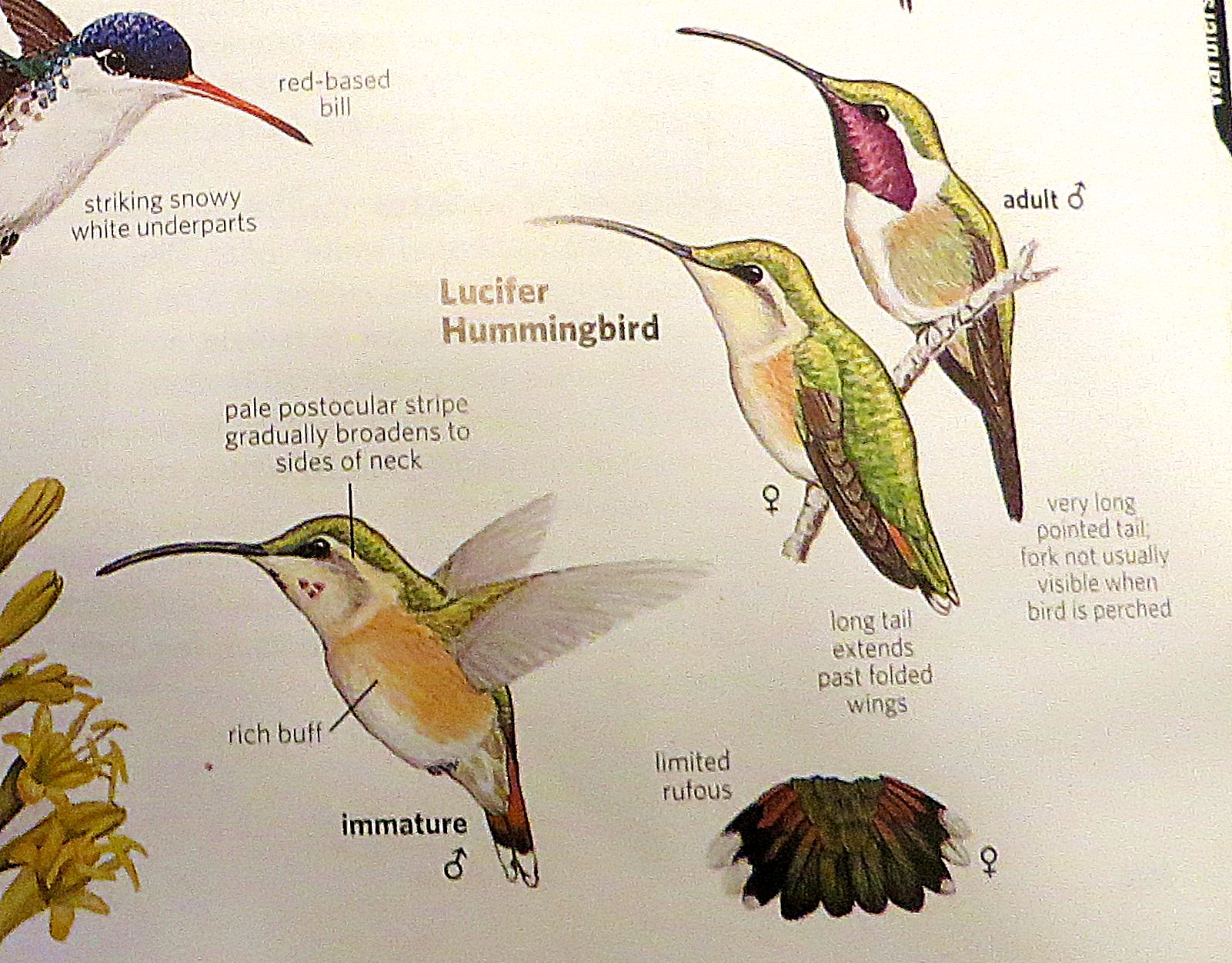
A section of a page from the National Geographic Field Guide to the Birds of North America, whichI used to identify the Lucifer hummingbird. My bird looked exactly like the lower right photo, including the purple specks on the neck. Since I'm a writer and not a photographer, I didn't get a good photo.

A section of a page from the National Geographic Field Guide to the Birds of North America, which I used to identify the Lucifer hummingbird. My bird looked exactly like the lower right photo, including the purple specks on the neck. Since I’m a writer and not a photographer, I didn’t get a good photo.

A Lucifer Hummingbird

I’ve birded all over North America and a few other places as well. I’m not quick on identifying species, like many of my birding mentors, mostly I think because I didn’t become passionate about the addictive activity until I was 60. As birding goes, I’m a late bloomer.

I did get a fairly decent photo of a house finch that was on the bird feeder hung on my balcony. -- Photo by Pat Bean

I did get a fairly decent photo of a house finch that was on the bird feeder hung on my balcony. — Photo by Pat Bean

Before 1999, I could identify cardinals and mockingbirds, the first because it was so red and distinctive, and the latter because it was the State Bird of Texas, and I saw it everywhere as a child. I also thought I could identify house sparrows because they are so common. But once I began studying bird field guides, I realized there were over 35 different sparrows in North America alone – and only some of the ones I had been seeing were house sparrows.

One of the reasons I enjoy birding is because I enjoy reading mysteries, and identifying the murderer before the last page. Identifying a bird by its field marks is pretty similar. Another reason I enjoy birding is because I’m an avid list keeper – and listing the birds I’ve seen is fun for me.

This morning I identified my 709th bird,

It was a Lucifer hummingbird, flitting about in a tree near my living room balcony. It was hard at first for me to believe it, but the curved-down bill couldn’t be mistaken. It would have been a cinch to identify if it had been an adult male, which has a brilliant purple throat, but this one was a young juvenile – but with all the right field marks, including cinnamon-colored sides and a few purple flecks on its throat.

As far as hummingbirds go, Tucson has six common species: Anna’s, broad-billed, broad-tailed, Costa, black-shinned and rufous. I’ve seen all six at my hummingbird feeder just within the past two weeks.

A Lucifer hummingbird in Tucson, however, is rare – but possible. It’s a Mexican species that occasionally flies across the border into Southeastern Arizona and Texas’ Big Bend Region. While it never came to my nectar feeder, I watched it off and on for over half an hour as it flitted about the tree next to my apartment. Each sighting more definitely confirmed my good luck.

I’m a happy birder. The Lucifer was a lifer for me.

Blog pick of the Day. Check it out.

Blog pick of the Day. Check it out.

Bean Pat: More about birds http://tinyurl.com/hgb22z9 The butcher bird, also known as the loggerhead strike. Great photos.


Read Full Post »

.           “Time passes too fast. Like a hummingbird flying by, it’s just a blur to my eyes.” – Amanda Leigh

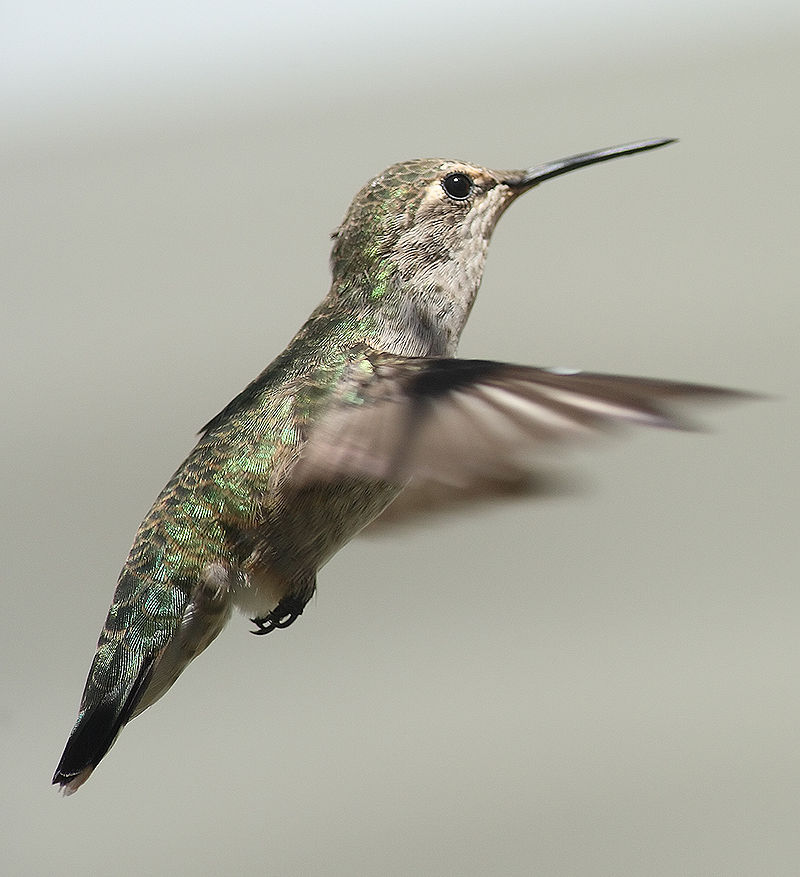
A male Anna's hummingbird. But the one I saw this morning was a less colorful female. Wikimedia photo, Brocken Inaglory

A male Anna’s hummingbird. But the one I saw this morning was a less colorful female. Wikimedia photo, Brocken Inaglory

Life is Good

Female Anna's hummingbird. -- Wikimedia photo

Female Anna’s hummingbird. — Wikimedia photo

Last night, at around 9 o’clock, I sat on my bedroom’s third-floor balcony and watched lightning flash across the sky like fireworks. Sometimes a deep rumbling followed, but mostly it was a silent event, until I moved to the living room balcony where the rumbling was more consistent. The air smelled musty with the rain that never fell, and I was awed by the deep magenta hue of the sky, wondering how that was possible.

The show was long, and so I fixed myself a Jack and Coke and settled into a patio chair to watch in leisure, afterwards falling into a relaxed sleep that held me until a sliver of light seeped through my bedroom shutters.

Broad-billed Hummingbird at the San Diego Zoo. -- Wikimedia photo

Broad-billed Hummingbird at the San Diego Zoo. — Wikimedia photo

The morning was muggy, but still cool enough here in Tucson for me to sit again on my balcony and sky watch, this time with my morning ritual of cream-laced coffee and my journal. As I watched, through my usually handy binoculars, a broad-billed hummingbird landed on a nearby tree and then zoomed straight to my nectar feeder that sat above my head. Seeing me, it zoomed away, but soon returned, and after deciding I was harmless, fed.

Then there were two hummingbirds flitting about in competition for the feeder. The second one was a black-chinned hummingbird, the species I see most often. After they had left, a third hummingbird appeared and drank. It was an Anna’s, although because it was a female, it took me a while to identify. The males, with their spectacular pinkish-purplish heads are an identification no-brainer.

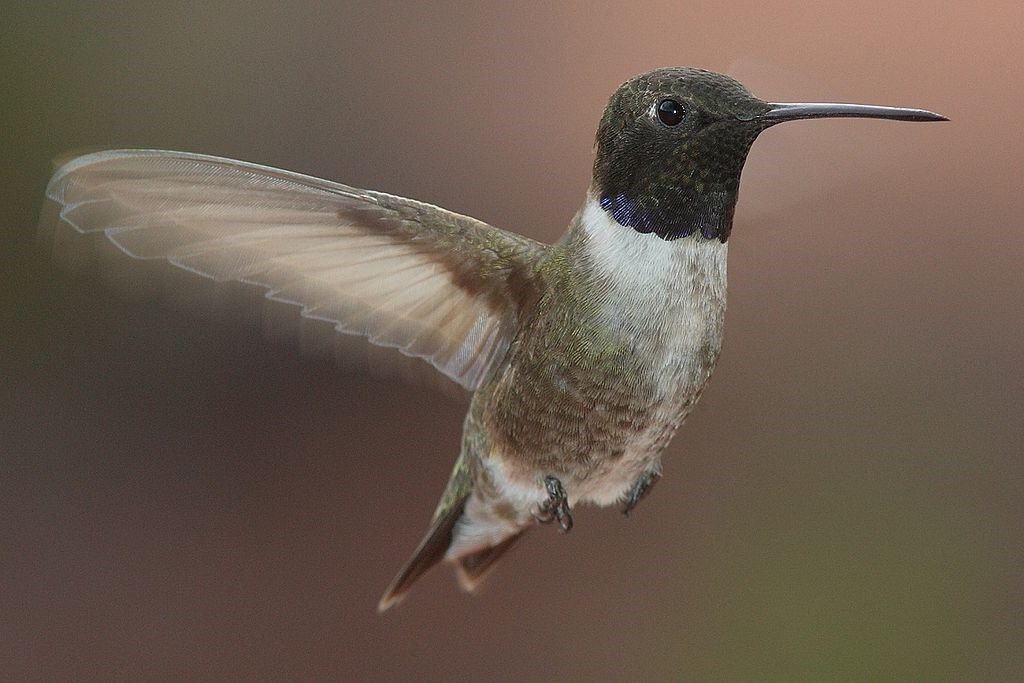
Black-chinned hummingbird -- Wikimedia photo

Black-chinned hummingbird — Wikimedia photo

Seeing these three hummingbird species took me back to the morning I awoke to find three hummingbirds flitting in my ten. It happened in 1991, during a rafting trip on the Colorado River through the Grand Canyon – before I became addicted to bird watching. I had no idea what species of hummingbirds they were at that time. I’m not sure I even knew then that hummingbirds came in different races.

While seeing those three hummingbirds flitting above my head in the tent 25 years ago thrilled me, seeing the trio this morning, and being able to identify each of them, was just as thrilling.

Life is good. And I am blessed.

Read Full Post »

It’s a Raven!

“I believed then – in a deep, easy way that is impossible for me as an adult – that there was more to this world than meets the eye. Trees had spirits; the wind spoke. If you followed a toad or raven deep into the heart of the forest, they were sure to lead you to something magical.” – Jennifer McMahon

            “I’m so sorry Jennifer. I’ve long been an adult – and I still believe.” – Pat Bean

Life outside my window. -- Watercolor by Pat Bean

Life outside my window. — Watercolor by Pat Bean

Or is it a Crow?

            Ravens didn’t live in Dallas, where I grew up. It was only after I moved West that I began seeing them. They looked just like crows to me. But being the curious person that I am, I soon wanted to know how to tell a raven from a crow.

Note the wedge-shaped tail on this raven Also, except for once during breeding season, I've never seen more than one or two ravens together. Crows, on the other hand, most often flock together. -- Wikimedia photo

Note the wedge-shaped tail on this raven Also, except for once during breeding season, I’ve never seen more than one or two ravens together. Crows, on the other hand, most often flock together. — Wikimedia photo

While ravens are larger, unless you see them side by side you can’t really identify them by that clue. But it’s easy to tell them apart if you see them flying. The raven’s tail is wedge-shaped, while the end of the crow’s tail is straight.

I see a pair of ravens almost daily here in Tucson, They land in the trees outside my windows and hop about on the roof opposite my back balcony – and they inspired my latest watercolor.

Bean Pat: Daily Echo http://tinyurl.com/hjeleff This blog so reminds me of the way I traveled and dawdled when I lived in my RV and was exploring North America. U think my wanderlust is getting to me. I need to take a road trip soon.

Read Full Post »

« Newer Posts - Older Posts »