Feeds:
Posts
Comments

Archive for the ‘Birds’ Category

The river is constantly turning and bending and you never know where it’s going to go and where you’ll wind up. Following the bend in the river and staying on your own path means that you are on the right track. Don’t let anyone deter you from that.” — Eartha Kitt

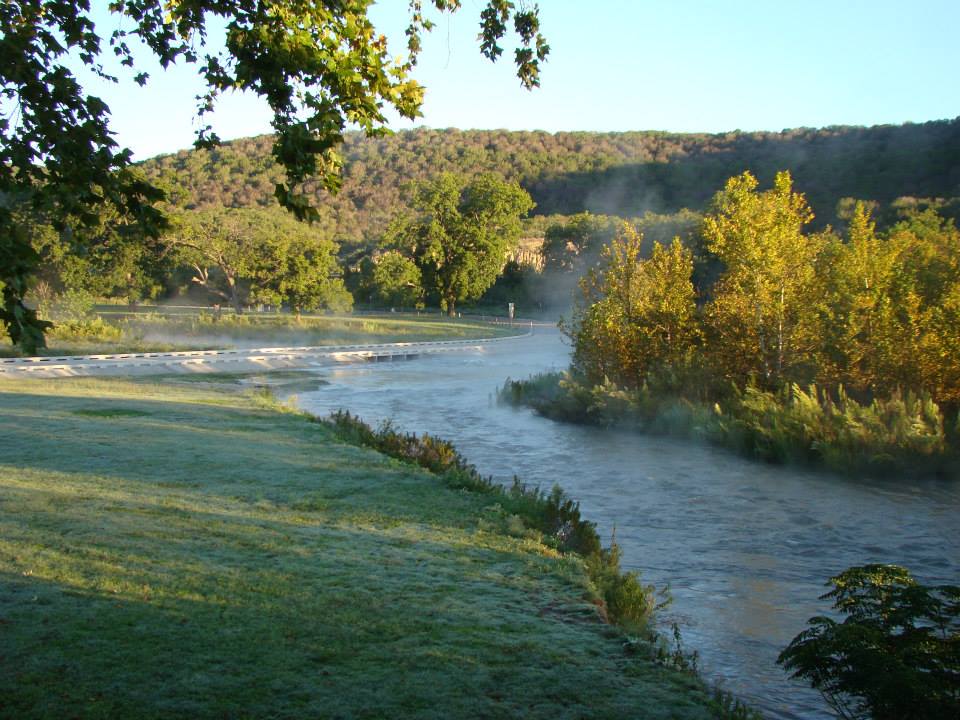
The entrance to South Llano River State Park. — Photo by Pat Bean


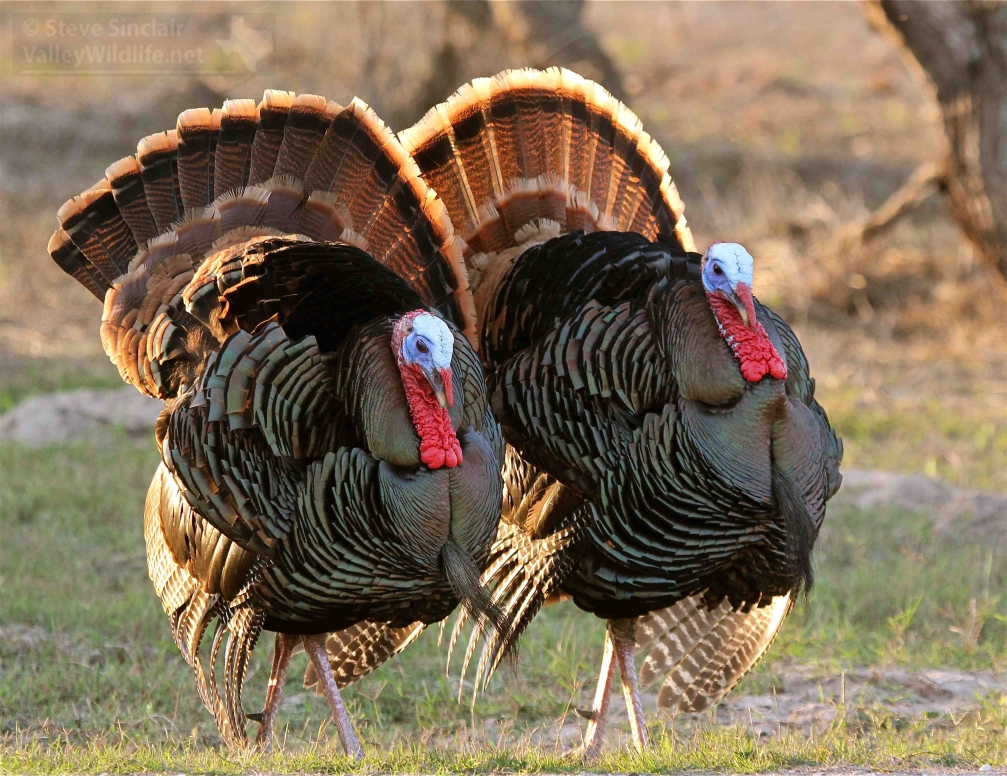
Turkeys, Wildflowers and Dark Skies

A pair of Rio Grande wild turkeys.

It was one of those days when my canine companion Maggie and I took off down the road in our small RV with no destination in mind. We were simply exploring Texas’ Hill Country. I was confident that I would come across the perfect place for us to camp before night overtook us.

As I recall, it was well before noon when I came upon South Llano River State Park, and on seeing the abundance of lavender wildflowers dominating the lawn in front of the small building near the entrance, I figured we had found the place. I brake for wildflowers the same as I do for birds.

The South Llano River, a spring-fed tributary of the 105-mile Llano River that flows through Texas’ Hill Country.

And on checking into the park, I learned that here there were both. The park’s 500 plus acres of Hill Country river bottomlands, are home to the Rio Grande turkey, as well as habitat for wood ducks, white-tailed deer, squirrels, jackrabbits, javelinas, foxes, beavers, bobcats, cottontails and armadillos. It would be nice to see an armadillo walking around, I thought, recalling the roadkill one I had passed earlier in the day.

The park also had 18 miles of hiking trails, a few miles of which I explored, and modern campsites with electricity and water to feed my RV. I stayed for several nights, one of which I stayed up late watching a sky full of twinkling stars, a bonus of the park being a designated Dark Sky site.

Wildflowers, birds and stars – life doesn’t get much better for this fan of Mother Nature.

Bean Pat: You Gotta Live:  https://theenchantedoutlook.com/2018/02/20/you-gotta-live/ T0 this great post, I add my own mantra. Live so that when you die, you’ll know the difference.

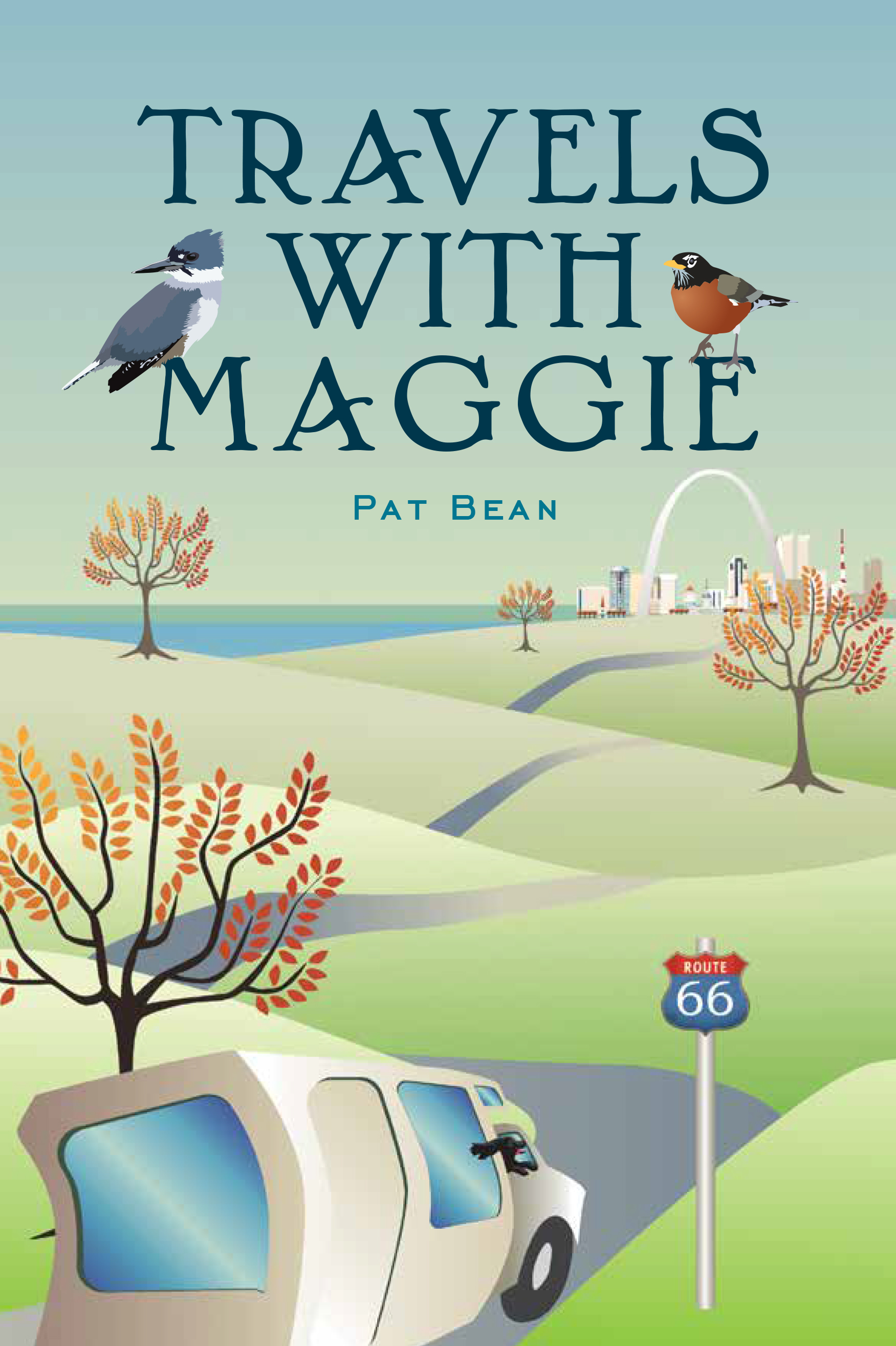
Pat Bean is a Lonely Planet Community Pathfinder. Her book, Travels with Maggie, is now up on Amazon at http://tinyurl.com/y8z7553y  Currently, she is writing a book that she is tentatively calling Bird Droppings. It is about her late-bloomer birding adventures. You can contact her at patbean@msn.com

Read Full Post »

“I think we consider too much of the early bird, and not enough of the bad luck of the early worm.” – Franklin D. Roosevelt.

I hope you already have had breakfast when you view this photo of the first California condor born in captivity. — From my 1983 scrapbook memories.

A Historic First

I was regional editor at the Time-News in Twin Falls, Idaho, in 1983, when the first California condor was hatched in captivity from an egg taken from the wild. It was a Saturday night, and the Associated Press sent out a news release of the birth, along with color separations for a photo that could be used with the story. This was before digital capabilities and when color in a newspaper, except for the comics, was not an everyday occurrence.

A bit less bloody photo of a young California condor and a parent. — Wikimedia photo

I was in charge of putting out the Sunday front page, and since it was a slow news night, I decided to use the condor wire piece as the lead story above the fold. It wasn’t hard to convince myself of the story’s significance, as it included the information that there were then less than 30 of the birds known to exist in the world.

California condors are North America’s largest bird, having a wing span of almost five feet, and weighing up to 25 pounds. The near extinction of these birds in the 20th century was caused by hunting, lead poisoning, loss of habitat, and the prolific use of DDT before it was banned.  The pesticide caused the condor’s eggs to have soft shells, which then didn’t survive to hatching.

And this is what they grow up to look like. — Wikimedia photo

Anyway, I assigned the story to the front page, wrote a headline, and informed the press room that I wanted the condor chick photo to be in color, a task they weren’t too happy to fulfill. I knew getting the color separations coordinated exactly right was tricky, but I had fallen in love with that tiny ball of ugly fluff that was the newborn condor. He was so ugly he was beautiful – at least in my mind.

I should have listened to the pressmen.

The image that greeted Sunday morning Times-News readers was anything but pretty. The color plates had dumped out an image that looked like it had been soaked in witch’s blood. Even I was appalled. And readers sent a barrage of letters to the paper complaining that the photo had spoiled their Sunday morning breakfasts.

I had barely stepped inside the newsroom on Monday morning when I was told to report to the managing editor’s office, where I found a displeased boss. I defended my choice of story as being historic – and my use of the color photo as a bad mistake.

Thankfully I kept my job. But it was too late to stop the damage to my soul – I had fallen in love with the carrion scavenging condors, and their good-news, survival story, which I have been following ever since. We humans, who almost destroyed the condors, helped made it up to these birds.

As of 2012, there were 405 known condors; in 1987, there were only 27.  Today, more than 200 of these condors are once again flying free, mostly over Arizona, Utah, California and Mexico.

I was privileged to see two of them flying wild and free near the east entrance to Zion National Park in the 1990s.

Bean Pat: The way forward https://thewhyaboutthis.com/2018/02/18/the-way-forward/#like-26548 Yes, yes and yes!

Pat Bean is a Lonely Planet Community Pathfinder. Her book, Travels with Maggie, is now up on Amazon at http://tinyurl.com/y8z7553y  Currently, she is writing a book, tentatively titled Bird Droppings, which is about her late-bloomer birding adventures. You can contact her at patbean@msn.com

Read Full Post »

The sky broke like an egg into full sunset and the water caught fire.” — Pamela Hansford Johnson

Sunset Bay State Park — Oregon State Parks photo

A Moment Not to be Forgotten 

It was a misty, early morning at Sunset Bay Park where I was staying while attending the Oregon Shorebird Festival (See previous post) held nearby.

Sunset Bay State Park near Coos Bay in Oregon. — Wikimedia photo

The Oregon coast campground oozed beauty and peacefulness as I stepped out of my small RV for the morning walk with my canine companion. We strolled down to the beach, where not another soul was yet around. The quiet swishing of the waves against the sand poured calmness into my soul and made me glad to be alive – even though I hadn’t yet had my coffee.

As I walked along the water’s edge, I saw a flock of western sandpipers in the shallows ahead, marching slowly along and constantly dipping their tiny beaks in and out of the water in search of breakfast tidbits. I watched them through my binoculars, staying far enough behind them that they wouldn’t startle and fly off. Maggie was too interested in sniffing at the water’s edge to even notice. But then something, I’m not sure what, did disturb them. In what seemed like less than a second, as a unity of one, they soared into the air, circled for a moment, then flew farther down the beach, their feathers flashing silver when catching the morning sun.

As I stood there, I recalled  a quote by Cesare Pavese that I had written in my journal: “We do not remember days, we remember moments.”  My heart told me that this was a moment I did not want to forget.

Bean Pat: A strange bird story  https://apetcher.wordpress.com/2018/02/08/ This qualifies as my learning something new for the day. The post both made me laugh, and made me sad, first for the caged bird and then for the unethical humans. I know for a fact that there are more ethical people in the world than the other way around. But boy do the rotten ones leave a bad taste in the soul.

Pat Bean is a Lonely Planet Community Pathfinder. Her book, Travels with Maggie, is now up on Amazon at http://tinyurl.com/y8z7553y  Currently, she is writing a book, tentatively titled Bird Droppings, which is about her late-bloomer birding adventures. You can contact her at patbean@msn.com
Read Full Post »

“Although our intellect always longs for clarity and certainty, our nature often find uncertainty fascinating.” – Carl von Clausewitz.

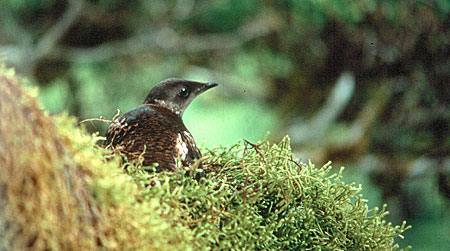
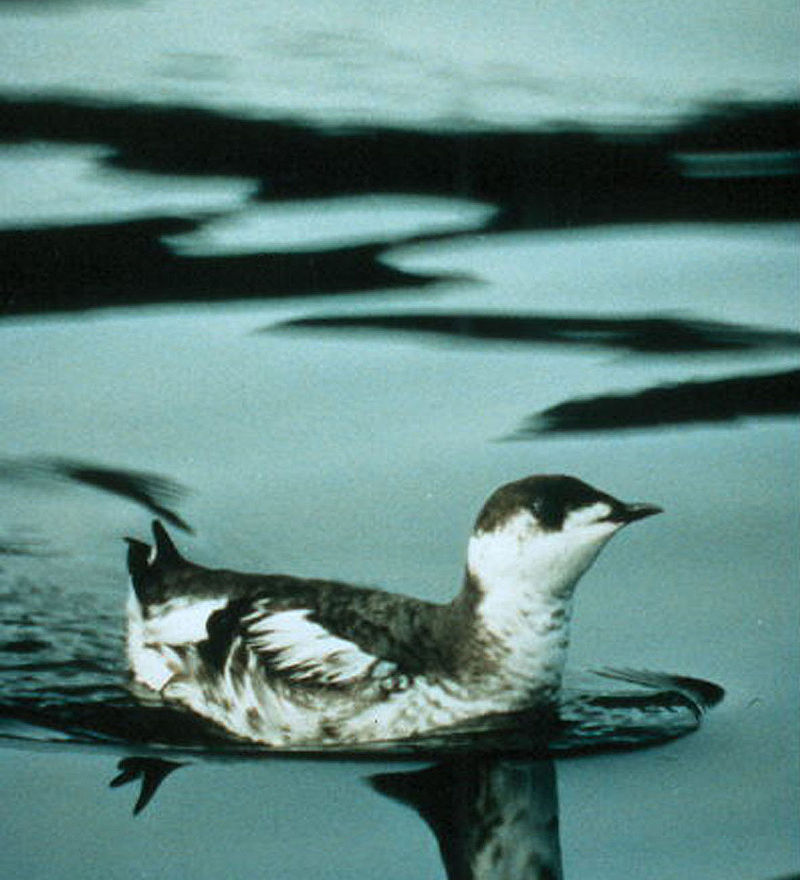
Marbled murrelet — Wikimedia photo by Gus van Vliet

Drifting Among the Waves

During the first year of living in my home on wheels, I headed to the West Coast, letting

The simple whims of the moment dictate my journey’s path. I was in Northern Idaho, when I met a couple of birders who told me about Oregon’s Shorebird Festival they had attended a few years earlier.

Marbled murrelet chick. — Photo by Alaska Fish and Game

It sounded interesting, so when I learned the year’s upcoming festival, which has been held yearly now for over 30 years, was just a week away, I recalculated my driving plans so I would arrive in the Coos Bay area in time to attend. It was a great decision as I added 12 new birds to my life list.

One of the new birds that truly excited me was the marbled murrelet, a plump seabird about the size of a robin. I was especially pleased about the sighting because, serendipitously,  I had just learned about the murrelet’s breeding habits, a mystery that had stumped ornithologists for years. And then, in the early 1970s. a tree climbing maintenance worker in Big Basin State Park, finally discovered the answer for them. He found a murrelet nest high in an inland redwood tree – and I had been standing in a majestic redwood grove when I learned the story.

The female marbled murrelet lays a single egg on a mossy branch in old growth trees. The egg is incubated for a month, then fed by both parents until it is about 40 days old, when it flies off to sea and feeds itself.

Because of logging practices and loss of habitat, the marbled murrelet is on the endangered species list, which is another reason I was excited to see one.

I made the sighting during a rainy day. The bird was on the water, with waves playing peek-a-boo with us, but a strong scope and patience finally gave me good view.

Bean Pat: Texas Tweeties  https://bobzeller.wordpress.com/2018/02/06/shooting-from-a-blind-or-in-the-wild/

Pat Bean is a Lonely Planet Community Pathfinder. Her book, Travels with Maggie, is now up on Amazon at http://tinyurl.com/y8z7553y  Currently, she is writing a book, tentatively titled Bird Droppings, which is about her late-bloomer birding adventures. You can contact her at patbean@msn.com

Read Full Post »

“I hear lake water lapping with low sounds by the shore … I hear it in the deep heart’s core.”  – William Butler Yates.

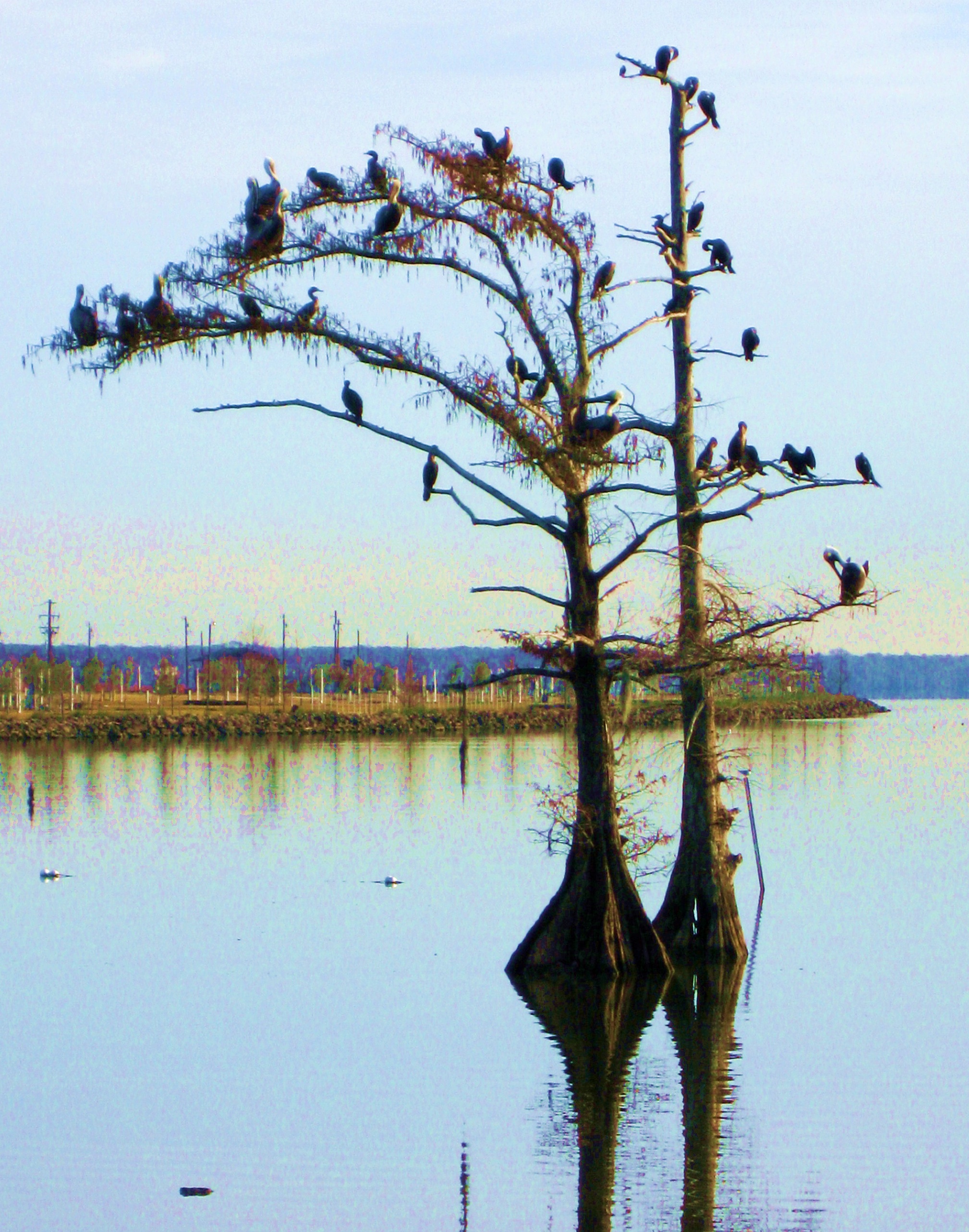
A tree full of double-crested cormorants at Lake End Campground. — Photo by Pat Bean  

Water and Birds for Double the Pleasure

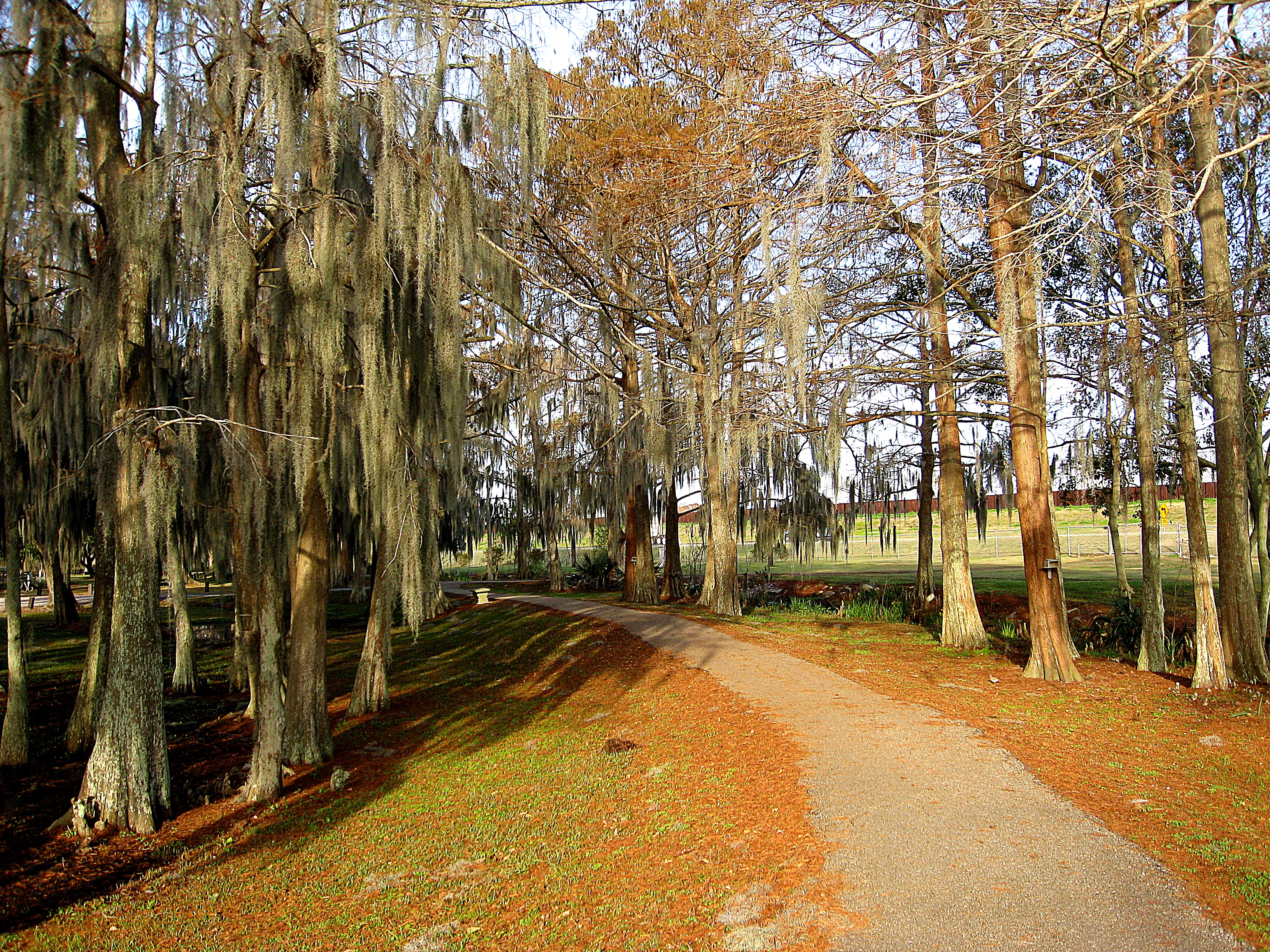
A walk among the moss-dripping trees. — Photo by Pat Bean

One of my favorite things to do when I traveled across this country in my RV was to spend the night parked where I could be lulled to sleep at night by the sounds of water gurgling, lapping and laughing. It was better than any sleeping pill, assuring me a good night’s sleep, and a morning eager to take a walk by the water.

It didn’t hurt either that lakes and ponds and oceans were also the stomping grounds of birds to feed my birdwatching passion.

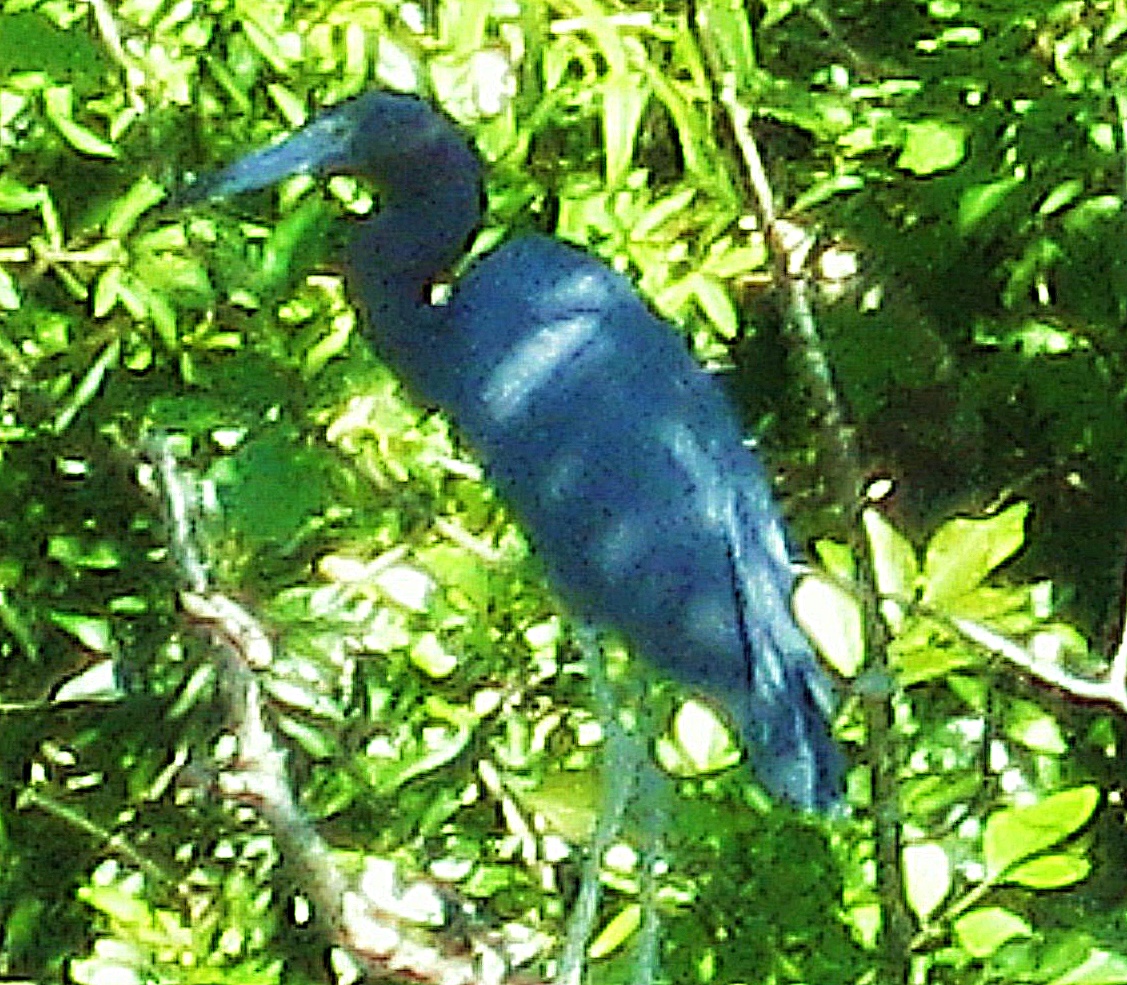
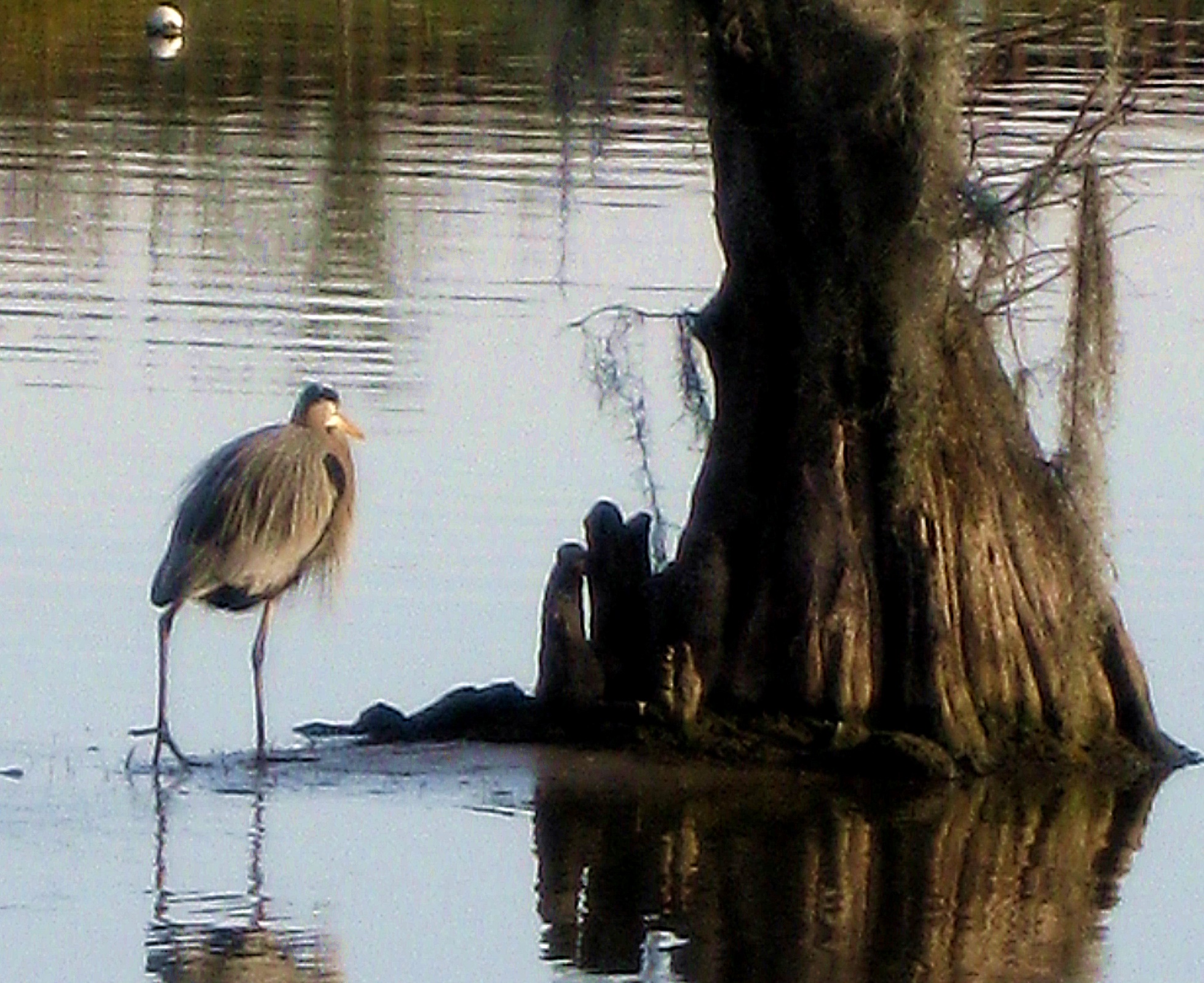
Great Blue Heron at Lake End Campground, Louisiana. — Photo by Pat Bean

So, it was that I found myself spending a few nights on the western edge of Louisiana’s Lake Palourde at Lake End Campground, sharing it with an abundance of double-crested cormorants and great blue herons. An additional bonus was its scenic walking trail.

Palourde is an 11,250-acre lake near Morgan City, Louisiana. It was originally called Lac Palourde by early French settlers, which means Lake Clam. The name came because of the abundance of clams that once lined the shore.

I didn’t see any clams, but I did see lots of birds – and I slept well.

Bean Pat:  Living outside the lines https://tinyurl.com/y9ho6t7r Be sure and listen to the music. I really loved this blog

Pat Bean is a Lonely Planet Community Pathfinder. Her book, Travels with Maggie, is now up on Amazon at http://tinyurl.com/y8z7553y  Currently, she is writing a book, tentatively titled Bird Droppings, which is about her late-bloomer birding adventures. You can contact her at patbean@msn.com

Read Full Post »

“We do not remember days, we remember moments.” – Cesare Pavese     

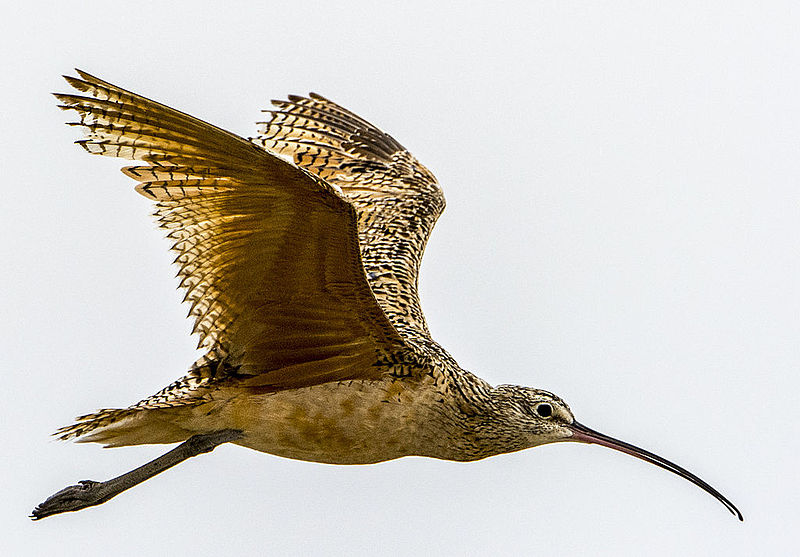
The long-billed curlew — Wikimedia photo by Jerry Kirkhart

AKA the Candlestick Bird

It was a June Day in 1998 and photographer Kurt Duce and I were on the unpaved, closed to the public, south causeway to Antelope Island. We had permission to four-wheel it on the rough passage because I was doing a series of newspaper articles on Great Salt Lake.

Long-billed curlew_– Wikimedia photo by Frank Schulenburg.

Since the road was rarely driven, a pair of long-billed curlews had built their nest right beside the one-lane passage. We stopped and got out for a better look, and several young chicks began and skittering to and fro in front of us. It was a great opportunity for me to quietly observe with my notebook in hand, and for Kort to get some rare photographs of this large shorebird and young.

We weren’t out of the car for more than about 30 seconds, however, when the two parents began dive-bombing us. It took off Kort’s hat with one pass. In less than 30 seconds the two of us were both back in our vehicle. I dare say you would have ducked for cover, too, if you got a close-up look at this bird’s wicked bill.

But it was one of those remembered moments that claim a prominent place in the file cabinets of my brain.

According to Wikipedia, the long-billed curlew was once known as the candlestick bird, and Candlestick Park and Candlestick Point in San Francisco, where these birds once inhabited, were named after this bird, which, however, disappeared from this landscape in the early 1900s.

Thankfully, however, it found other habitat and is currently not in danger of becoming extinct, as did its cousin, the Eskimo curlew, which has not been seen in over 30 years.

Serendipitously, a short time after I was dive-bombed by the angry bird parents, I heard a talk by author and conservationist Terry Tempest Williams,  who remarked: “I can’t help but believe that as long as the world supports the life of the long-billed curlew, we can be supported, too.”

I certainly agree.

Bean Pat: Watch a YouTube video of a long-billed curlew at https://tinyurl.com/y9tzvygf

         Pat Bean is a Lonely Planet Community Pathfinder. Her book, Travels with Maggie, is now up on Amazon at http://tinyurl.com/y8z7553y  Currently, she is writing a book, tentatively titled Bird Droppings, which is about her late-bloomer birding adventures. You can contact her at patbean@msn.com

Read Full Post »

“I won’t lock my doors or bar them either. If any of the old coots in the pictures out in the hall want to come out of their frames for a friendly chat.” — Bess Truman

Not Ducky at All

While that’s an interesting description Bess Truman has about coots, whom I’m assuming include our founding fathers, I’m referring to the one that flies, The American coot.

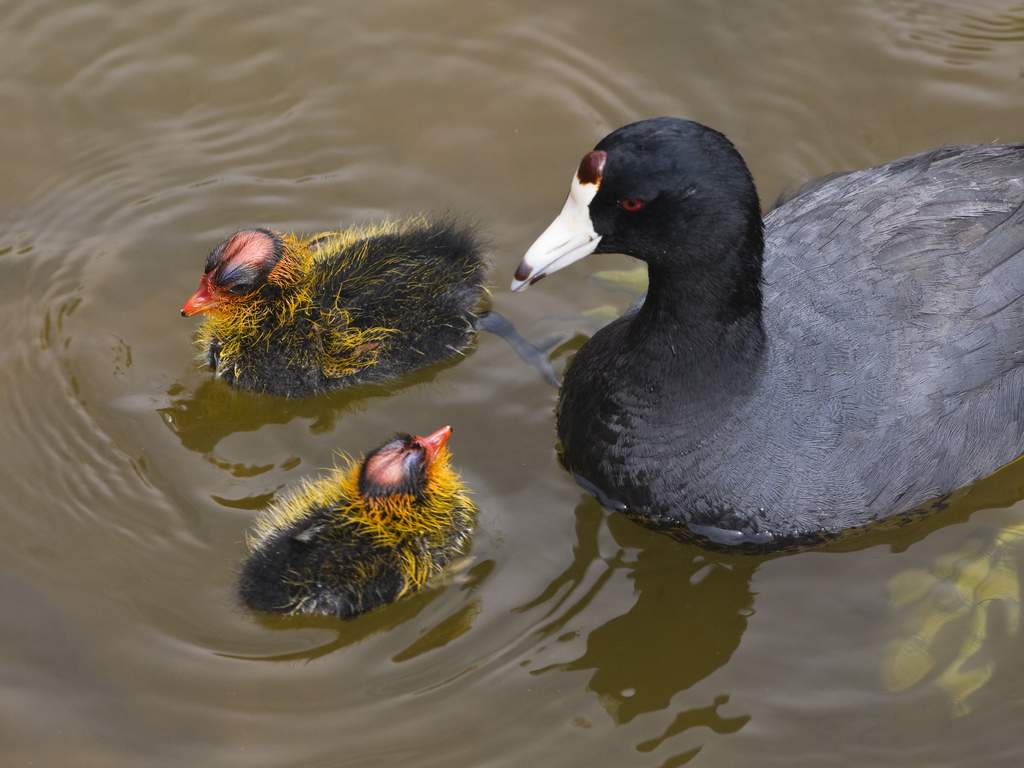
Coot with its unlikely looking offspring.

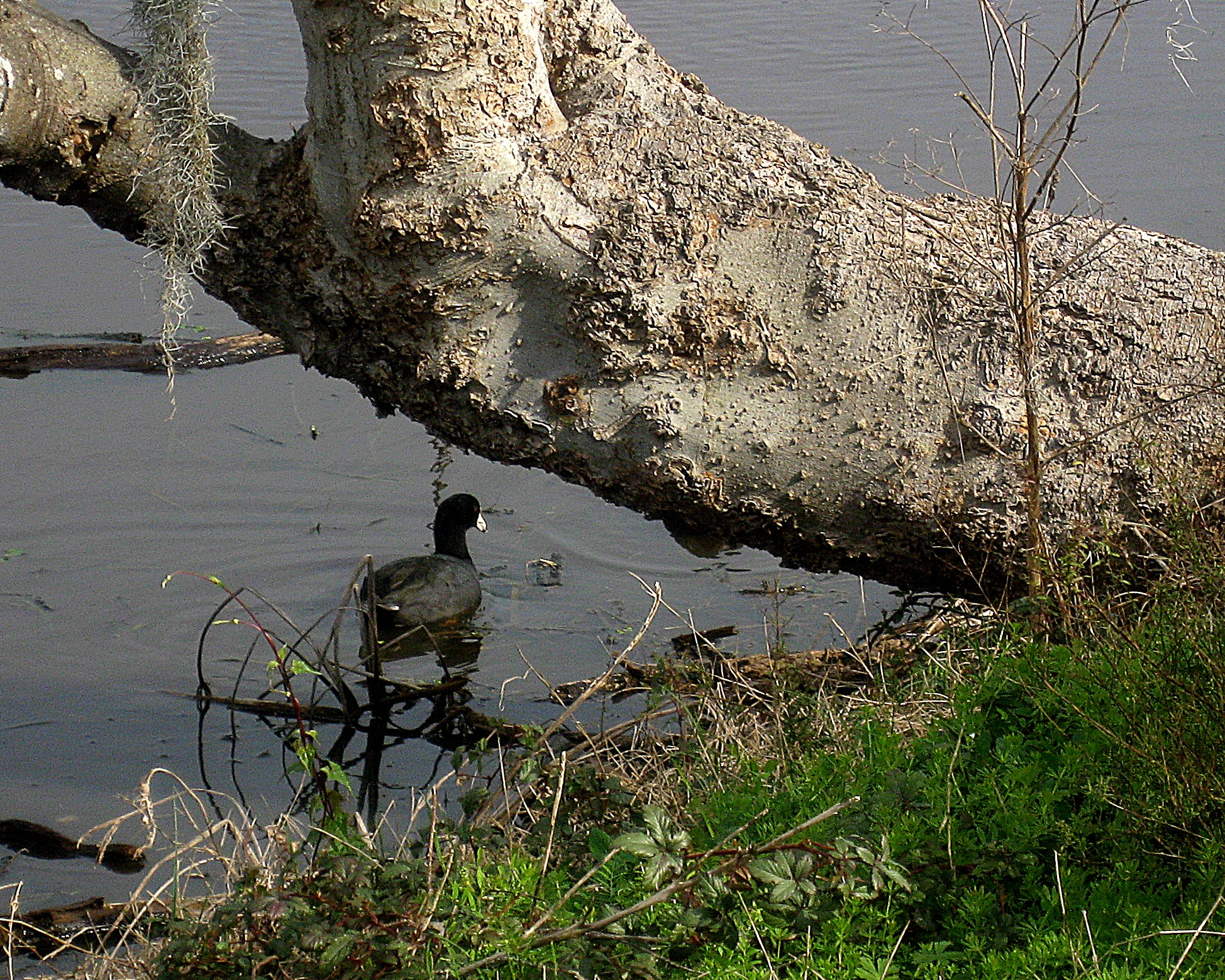
I frequently see coots when I’m out birding wetland and lake areas.  They’re so easily recognizable that I don’t spend as much time observing them as I might. They’re clunky looking birds whose feathers range from slate-gray to black. While they look kind of like ducks, coots belong to the rail family.

One of the times, when I did take the time to study them more closely, was when I saw a pair of the coots share some food with three small floating companions. The fluffy chicks, looking nothing like their parents, had bald scarlet heads and wore wiry looking orange necklaces.

According to David Attenborough, in his book The Life of Birds, the American coot tends to feed the chick first that has the most brilliant red head, which may be why a third of the coots that hatch die from starvation.

Since I only saw three chicks, and a coot mom can lay nine or more eggs, I suspected this natural selection had already taken place.

Meanwhile, during my observations of the coots, I came a little too close to the one nearest the shore. It took off like a World War II fighter plane after it had taken a few hits in the engine, giving me a view of its over-sized lobed feet, which were a neon lemon-lime in color.

There really is a lot to enjoy about these birds, I decided. You just have to give a coot.

Bean Pat: A Writer’s Path https://tinyurl.com/yd5hzned  I used to have a sign over my desk at work that read: “Just because I’m not writing doesn’t mean I’m not writing.,” which may be why I dig this blog.

Pat Bean is a Lonely Planet Community Pathfinder. Her book, Travels with Maggie, is now up on Amazon at http://tinyurl.com/y8z7553y  Currently, she is writing a book. tentatively titled Bird Droppings, which is about her late-bloomer birding adventures. You can contact her at patbean@msn.com
Read Full Post »

The sparrow that is twittering on the edge of my balcony is calling up to me this moment a world of memories that reach over half my lifetime, and a world of hope that stretches farther than any flight of sparrows.” — Donald G. Mitchell

White-crowned sparrow. — Wikimedia photo

Among the Mourning Doves

My daughter T.C’s home in Marana, just 13 miles from my Catalina Foothills apartment in Tucson, is a birder’s paradise. So, when I visit, I usually take my binoculars and try to find a little time to sit on her backyard patio and bird watch.

On my last visit, after seeing a phainopepla sitting on a tall saguaro, I focused on the flock of mourning doves beneath a seed feeder. While looking at the doves, I spotted several white-crowned sparrows. They are distinct birds, especially the adults whose crisp white crowns are set off by two black stripes.

Osprey … Wikimedia photo

I might not have noticed the sparrows if it hadn’t been for the larger doves, which reminded me of the time, 2001 in Utah, when I identified a white crown for the first time. I was taking one of my normal weekend drives along a backroad when I got sight of an osprey high on a utility pole. By then I had been braking for birds for two years, so I pulled over to the side for a better look.

The osprey, however, was skittish and flew off. My disappointment was erased, however, when I saw the white crowns in a bush beneath the pole. The ones I watched on that Sunday morning stayed in sight for about 10 minutes, whistling a sharp tune and flitting among several large bushes before they bounded out of sight.

I got back in my car to drive on, then saw the osprey back up on the pole. I guess it decided I was no threat.

Bean Pat: Things you might not have known. I did know this, because I saw one in Africa.  https://janalinesworldjourney.com/2018/01/05/things-you-probably-never-knew-about-dassies-rock-hyrax/?wref=pil

Pat Bean is a Lonely Planet Community Pathfinder. Her book, Travels with Maggie, is now up on Amazon at http://tinyurl.com/y8z7553y  Currently, she is writing a book, tentatively titled Bird Droppings, which is about her late-bloomer birding adventures. You can contact her at patbean@msn.com

Read Full Post »

“Be grateful for luck. Pay the thunder no mind – listen to the birds. And don’t hate nobody.” – Eubie Blake.

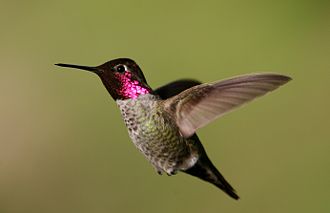
Male Anna’s Hummingbird. — Wikimedia photo

Portent of the Birding Year Ahead  

For the first four years (2000-2003) after I became a passionate birdwatcher, the first bird of the year was always a house sparrow. That’s probably because I had a generational family of them living and raising chicks in the thick cedar bush right outside my bedroom window.

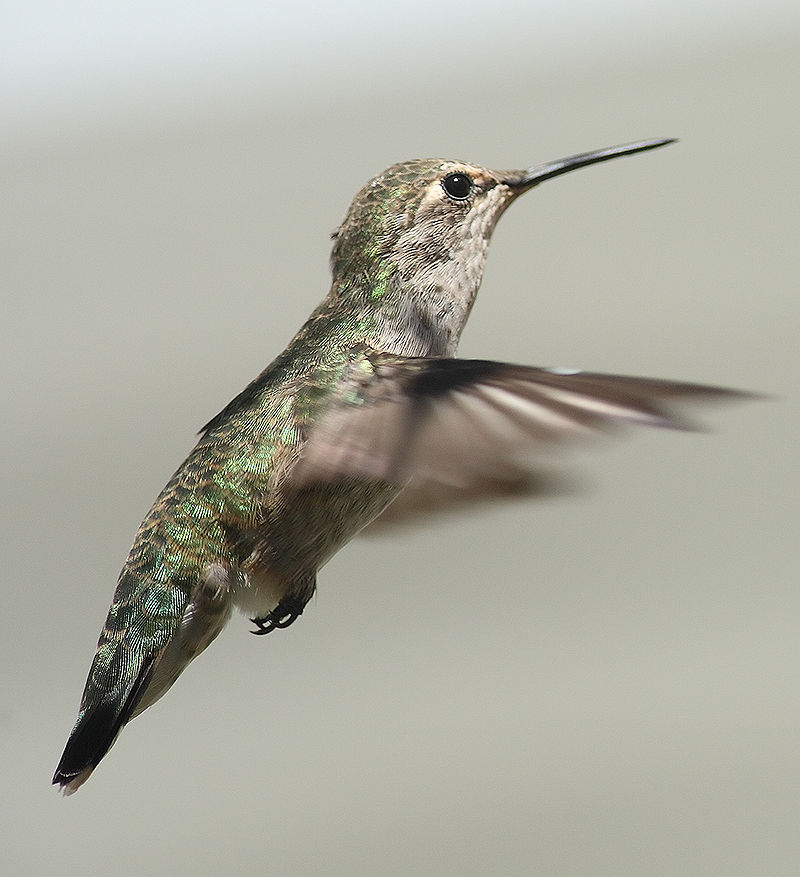
Female Anna’s Hummingbird. — Wikimedia photo

The first bird of the year, at least for a birder, is considered a portent of the year to come, which is why Noah Strycker, author of Birding without Borders, which is about his search to see 5000 birds in one year, found himself sitting in a hot tub on the deck of a ship in the Antarctic at midnight waiting for Jan. 1, 2015 to arrive. He was hoping it would be his year of the penguin.

It should have happened, but it didn’t. Nary a bird was in sight as he scanned the horizon in the midnight sun. The water soon got cold, and Noah went in, dressed, and took up his watch at the back of the ship. At 3 a.m., he finally spotted the first bird of his journey. It was a cape petrel.

While it wasn’t a penguin, “it was perfect,” Noah wrote. “Petrels, in their infinite grace, are thought to be named for Saint Peter and his habit of walking on water. With a blessing like that, the Year of the Petrel was off to an auspicious start,” he said.

In my fifth year of birding, I was on Guam, and was pretty sure this year my first bird wasn’t going to be a sparrow. And I right. But it wasn’t until about 3 p.m. in the afternoon, that I finally got my first bird of the year. Guam, I had discovered, was almost bereft of birds because of the, non-native, nasty, ugly brown tree snake that raided the island’s bird nests.

My first bird of 2004 turned out to be a yellow bittern.

            This year, my first bird of the year was an Anna’s Hummingbird, which came to the nectar feeder on my living room balcony, where I watched for it’s arrival while drinking my cream-laced coffee.

As an animal totem, the hummingbird symbolizes joy, playfulness and adaptability. I’m looking forward now to my Hummingbird Year.

Bean Pat: See Mike’s first bird of the year. https://naturehasnoboss.com/2018/01/01/everyday-blessings/

Pat Bean is a Lonely Planet Community Pathfinder. Her book, Travels with Maggie, is now up on Amazon at http://tinyurl.com/y8z7553y  Currently, she is writing a book tentatively titled Bird Droppings, which is about her late-bloomer birding adventures. You can contact her at patbean@msn.com

Read Full Post »

Some folks say big ol’ Lake Pend Oreille is Idaho’s most magnificent lake. But let’s just stick to the facts: It’s the state’s largest (43 miles long, 111 miles of shoreline). It’s the deepest (at 1,158 feet deep, there are only four deeper lakes in the nation). It’s got terrific scenery, splendid clean water, big fish, a fascinating history …” – sandpointonline.com

A Canada goose taking of from Lake Pend Orielle.  I took the photo during a Ladies Night Out boating cruise for Farragut State Park’s volunteers. — Photo by Pat Bean

It’s pronounced Pon-de-ray

I was listening to Clive Cussler’s Poseidon’s Arrow in my car while driving from Tucson  to my daughter’s home in Marana. It’s just 13 miles away, but traffic and construction detours turn it into a 40-minute drive, making the familiar route an excellent time for book listening.

An aerial view of Lake Pend Orielle. — Wikipedia Photo

I think of Cussler’s Dirk Pitt books as fantasy swashbuckler reading, not to be taken seriously, simply a time to enjoy the good guys wearing white hats and the villains all wearing black hats, which isn’t ever the case in the real world.

Anyway, after a boat/vehicle chase that led through a crowded Mexican town, the book has its protagonists landing at the Coeur d’Alene Airport in Idaho, then driving through Farragut State Park to Bayview, a small town that sits beside Lake Pend Oreille, which is pronounced Ponderay. The lake is home to a Naval submarine base, and the book’s characters talk of the place as being interesting trivia for back home in Washington D.C.

Now if you’re thinking that the idea of an inland submarine base in Idaho is all in Cussler’s imagination, you would be wrong. I was a campground volunteer at Farragut State Park one summer, have been boating on Lake Pend Oreille, and learned all about the Farragut Naval Training Station that was in operation during World War II, a part of which is still active for underwater submarine research.

One of the beauties of being a widely traveled old broad is reading books that include descriptions about places I have visited. It seems to happen regularly these days. I find such déjà vu moments, which refresh the brain, a bonus for having lived so long.

    Bean Pat: Have you ever seen an Inca tern? https://cindyknoke.com/2017/12/20/inca-tern/ Then take a look at them here. They are awesome, and so are this blogger’s photographs of them.

Pat Bean is a Lonely Planet Community Pathfinder. Her book, Travels with Maggie, is now up on Amazon at http://tinyurl.com/y8z7553y  You can contact her at patbean@msn.com
Read Full Post »

« Newer Posts - Older Posts »