Feeds:
Posts
Comments

Archive for January, 2019

Welcome sign at the entrance to Hico, Texas. — Photo by Pat Bean


 “I always wanted to be somebody, but now I realize I should have been more specific.” — Lily Tomlin

Say What?

When entering a new town while I was living on the road in a small RV with my canine companion Maggie, I was often greeted by bragging welcome signs.

My favorite was the one that greeted me as I drove into the small Texas town of  Hico: “Where Everybody is Somebody.”

If you visit Knox during Horse Thief Days, don’t forgt to buy a T-shirt.

That was much better than Knox’s claim to fame as ‘The Horse Thief Capital of the World.’ The name referred to a former resident, Sebastian “Boss” Buck, who got rich by stealing horses and printing fake money. Unashamed of its past, the Pennsylvania town holds an annual event called Horse Thief Days that is popular with residents and visitors alike.

Seven cities, meanwhile, claim to be the Watermelon Capital of the World: Cordelle, Georgia; Weatherford and Naples, Texas; Green River, Utah; Beardstown, Illinois; Rush Springs, Oklahoma; and Hope, Arkansas. Common sense says six of them are exaggerating.

Show Low, Arizona, meanwhile, proclaims itself as the only city named by the turn of a card, which occurred during a poker game between rival ranchers. The pair agreed to draw cards, and the one who got the lowest got to keep the land and start the town.

Certainly, one of the weirdest claims to fame is held by Berrien Springs. This Michigan town calls itself “The Christmas Pickle Capital of the

The Christmas Pickle

World.”  There are several tall tales about how the Christmas Pickle came to be, but the most common one is that Santa Claus saved two boys who had been imprisoned in a pickle barrel by an innkeeper who had stolen all their possessions.

Berrien Springs, located in a pickle-producing community, celebrates the pickle with an annual parade led by the Grand Dillmeister, who hands out pickles along the route. Entrepreneurs, meanwhile, hype the tradition to sell pickle ornaments, pickle earrings and even chocolate covered pickles.

I searched for my current home town’s claim to fame, but found nothing definitive. But if I had to name one, I would say Tucson is the World Capital of Saguaro Cacti.

So, what’s your town’s claim to fame?

Bean Pat: A morning walk with observant eyes https://portraitsofwildflowers.wordpress.com/2019/01/28/more-from-nature-on-december-25-2018/ 

Pat Bean is a retired journalist who lives in Tucson with her canine companion Pepper. She is a wondering-wanderer, avid reader, enthusiastic birder and is always searching for life’s silver lining. Check out her book Travels with Maggie, available on Amazon, to learn more. She can be reached at patbean@msn.com

Read Full Post »

When snow melts, the creeks do rise. — Watercolor by Pat Bean

“No matter what people tell you, words and ideas can change the world.” – Robin Williams

Remembering my Grandmother

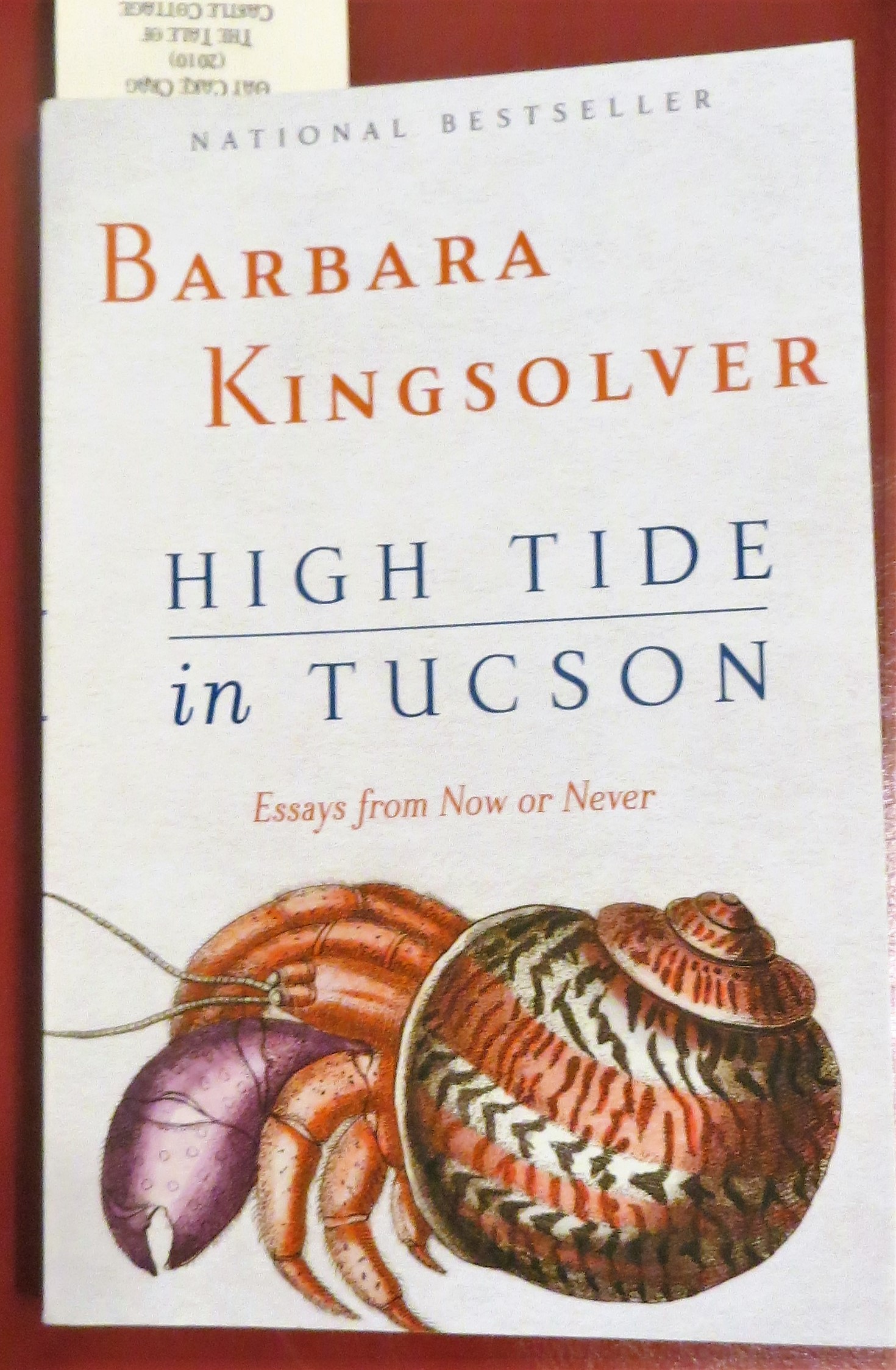
I was reading High Tide in Tucson, an essay anthology by Barbara Kingsolver who mentioned that she was often tempted to use one of her grandmother’s axioms when asked to commit to a future obligation. “Lord willing, and the creeks don’t rise,” she wrote.

My grandmother used to say exactly the same thing — and suddenly my wondering-brain was wanting to know the origin of the phrase  …  and then I was putting down Kingsolver’s book for a bit of research.

As usual, I came up with conflicting stories. One is that the phrase was first used by Benjamin Hawkins, U.S. General Superintendent for Indian Affairs between 1796 and 1818. Supposedly he used it in a letter to Thomas Jefferson requesting his presence in Washington D.C. in which he replied he would be there “God willing and the Creek don’t rise,” meaning the Creek Indians.

Barbara Kingsolver is one of my favorite authors — and I’m loving this book of essays by her.

Others believe that Creek merely refers to a stream, and that it was simply a hayseed rural term meaning if nothing stops me or all goes well. One example for this is a mock rustic speech from an 1851 Graham’s American Monthly Magazine: “Feller-citizens — I’m not ’customed to public speakin’ before sich highfalutin’ audiences. … Yet here I stand before you a speckled hermit, wrapt in the risen-sun counterpane of my popilarity, an’ intendin’, Providence permittin’, and the creek don’t rise, to go it blind!”

Another example of early use of the phrase, according to Wikipedia, is from the 1894 Lafayette Gazette: “We are an American people, born under the flag of independence and if the Lord is willing and the creeks don’t rise, the American people who made this country will come pretty near controlling it.”

It’s also said to be a sign-off tag line of the 1930s’ radio broadcaster Bradley Kincaid. My grandmother liked to listen to the radio so maybe this is where she picked it up. And finally, it has also been attributed to Abraham Lincoln and Andrew Jackson, among others, on the usual principle that attaching a famous name to a story validates it.

Well, that was enough information, if not exactly uncomplicated, to placate this wondering-brain of mine — until the next time it is wants answers. In the meantime, God willing and the creek don’t rise, I’ll go back to reading High Tide in Tucson. And in case you’re wondering about that title, Kingsolver explains it in her first essay.

Bean Pat: In tribute to Mary Oliver https://deborahbrasket.wordpress.com/2019/01/20/mary-oliver-washed-in-light/  Her words live on.

Now available on Amazon

Pat Bean is a retired journalist who lives in Tucson with her canine companion Pepper. She is a wondering-wanderer, avid reader, enthusiastic birder and is always searching for life’s silver lining. Check out her book Travels with Maggie, available on Amazon, to learn more. She can be reached at patbean@msn.com

Read Full Post »

A Week with No Internet

“If you change the way you look at things, the things you look at change.” – Wayne Dyer

I did finish this painting during my no-internet agony. Watercolor by Pat Bean

It Wasn’t Intentional

A few months ago, my Wi-Fi was down because I needed an updated modem. As a stop gap, I realized the Wi-Fi connection of my brother was near enough by so that I could use it.  It worked well and my life wasn’t interrupted while I waited for a new modem to arrive.

A few months later when the contract for my internet provider expired, I learned that the company wanted to increase the cost of my internet-only service – I don’t own a TV – from $70 a month to over a hundred dollars, I was incensed. I talked to my brother, and he encouraged me simply to cancel and use his Wi-Fi, which I already knew worked quite well for me.

The Internet lets me see my youngest great-grandchild Cora grow up, and lets others see me with this precious one when I do get to see her in person. — Photo was taken by another family member during our Christmas get-away in Florida.

Great, I thought. My limited, fixed-income budget was grateful for the brotherly love. And it was — for a couple of months. But then things began to go haywire, and after I was without internet for a couple of days, I knew I had to get my own. I found a different provider, however, one that was only going to charge me $45 a month for life –well there was another $10 for monthly modem rental and the life was only good for as long as I never moved from my current location, which I almost certainly will.

Of course, it took time to get reconnected to my own Wi-Fi, which left me almost a whole week without internet. It was agony. It made me realize how much I need and enjoy being connected to the world.

I begin my days by reading the New York Times online. I stay in touch with friends and family, getting to see my great-grandchildren who live far away grow up day by day.  I blog. I submit writing to potential publication markets and search out potential writing jobs.  I use the internet prolifically to find answers to my always questioning mind. I stream TV and movies on my computer or Kindle. I do research for my essays and blogs. I play computer games. I look at maps to see where I’m going or want to go. I shop online. I read Amazon reviews of my book Travels with Maggie online, and I download books from Amazon and the library. And I moderate a daily writing forum called Writer2Writer for Story Circle Network.

That’s a haystack made entirely of needles to this old broad, seeing as my family didn’t get a TV until I was 14 years old.

The world changed, and I guess I changed with it.

Bean Pat: First you must believe you’re a writer https://lithub.com/how-to-say-im-a-writer-and-mean-it/  A blog for writers.

Pat Bean is a retired journalist who lives in Tucson with her canine companion Pepper. She is a wondering-wanderer, avid reader, enthusiastic birder and is always searching for life’s silver lining. Check out her book Travels with Maggie, available on Amazon, to learn more. She can be reached at patbean@msn.com

Read Full Post »

Hoppin’ John: A southern recipe — Wikimedia photo

“Superstition is foolish, childish, primitive and irrational – but how much does it cost you to knock on wood?” — Judith Viorst

Black-Eyed Peas and Hoppin’ John

I had my black-eyed peas on New Year’s Day. My brother, who lives in a first-floor apartment beneath my third-floor apartment gave me some. They were good, and I am grateful. He cooked them with ham and onion. No telling how much bad luck I would have had if I hadn’t eaten them.

I’m not sure everyone knows what I’m talking about, but my southern readers almost certainly do. You eat black-eyed pea on New Year’s Day so you will have luck during the coming year. Why, you ask? Until I did a little bit of research yesterday, I would have probably answered: “Just because.”

Pepper. on right, and her best friend Dusty, enjoying a lazy day. It’s cold outside today in Tucson. — Photo by Pat Bean

But, thanks to the good ole Internet, here’s what I discovered.

“The practice of eating black-eyed peas for luck is generally believed to date back to the Civil War. At first, planted as food for livestock, and later a food staple for slaves in the South, the fields of black-eyed peas were ignored as Sherman’s troops destroyed or stole other crops, thereby giving the humble, but nourishing, black-eyed pea an important role as a major food source for surviving Confederates.”  — TripSavy

Wikipedia, which repeats but doubts the Sherman story, also suggests that black-eyed peas were a symbol of emancipation for African-Americans who had previously been enslaved, and who after the Civil War were officially freed on New Year’s Day.

My favorite black-eyed pea dish, which I also cook during the year and not just on New Year’s Day is Hoppin’ John. My version includes dried black-eyed peas cooked with ham hock, onion, and salt to taste, with rice added at the end as well as a goodly dousing of Worchester Sauce.

Bean Pat: The Value of One Chicken https://windbreakhouse.wordpress.com/2019/01/03/a-chicken-in-every-house/

Now available on Amazon

Common sense from one of my favorite writers.

Pat Bean is a retired journalist who lives in Tucson with her canine companion Pepper. She is a wondering-wanderer, avid reader, enthusiastic birder and is always searching for life’s silver lining. Check out her book Travels with Maggie, available on Amazon, to learn more.

Read Full Post »

What We See

Besides always looking — and seeing — birds, they have become my favorite subject to paint. — Great horned in a tree by Pat Bean

“You can’t depend on your eyes when your imagination is out of focus.” — Mark Twain

And What We Don’t

I was out driving around Tucson the other day with my friend Jean when she spotted a garage-sale sign.  She usually sees three or four every time we go out together while I see zero. Perhaps it has to do with the fact that she likes garage sales and I don’t.

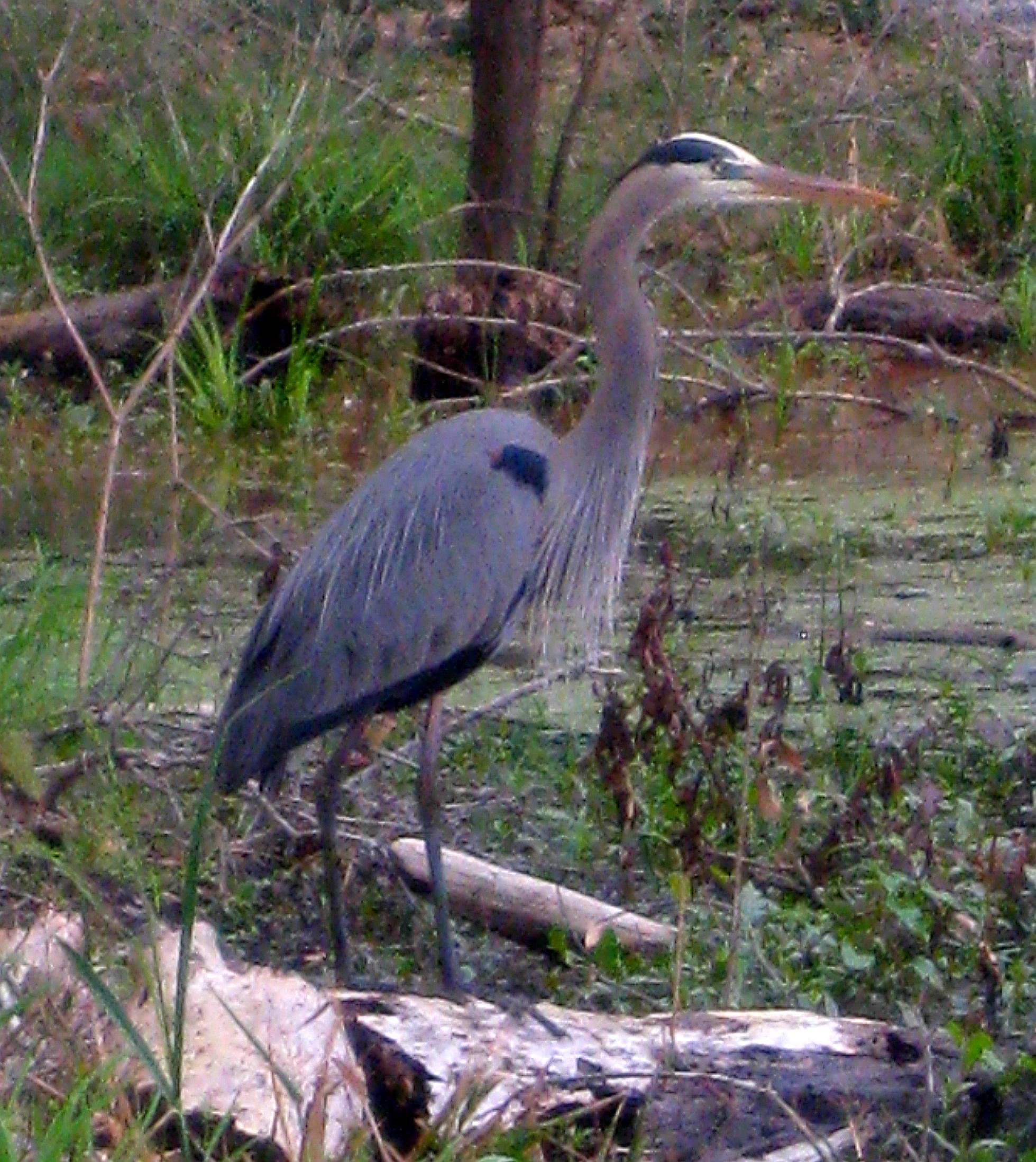
Also my favorite subject to photograph. — Great Blue Heron at Brazos Bend State Park in Texas photo by Pat Bean

My thoughts about this oddity touched my memory of a day back before I became an addicted bird watcher. I was riding in a van with seven members of HawkWatch, an organization whose goal is to protect raptors. They were going to check on hawks flying over the Goshute Mountains, and I was tagging along as a reporter doing a story on HawkWatch.

We were driving on Interstate 80 through the Bountiful Salt Flats between Salt Lake City and the Nevada border, and every few minutes one of my fellow passengers called out sighting of a bird, most often a red-tailed hawk or a turkey vulture.

This seemed strange, as I had driven this same, desolate route many times and had never spotted a bird. It then got stranger. After we left the highway for an unpaved backroad, one of the guys in the van yelled: “Stop! There’s an owl in that cottonwood tree.”

The driver stopped, and all of the guys oohed over the owl, which they had quickly identified as a great-horned. Even after one of the men pointed out to me where the bird was sitting, it took me a couple of minutes to actually see it. But when I did, its giant yellow eyes popped open and it stared straight at me. “Wow” was all I could think as we piled back in the van. I was changed forever. After that, I started seeing birds everywhere. Now I can’t not see them.

Thinking about this, as Jean suggested we might want to check out the garage sale, I realized how blind we can be to the world around us, simply because we’re not interested.

Perhaps, along with walking in another person’s shoes once in a while, we should also try looking at the world through another person’s eyes. There is no telling what we will see.

Bean Pat: Winter visitors https://cindyknoke.com/2018/12/04/the-canadians-are-coming/ From Canada.

Pat Bean is a retired journalist who lives in Tucson with her canine companion Pepper. She is a wondering-wanderer, avid reader, enthusiastic birder and is always searching for life’s silver lining. Check out her book Travels with Maggie, available on Amazon, to learn more.

Read Full Post »

“Trust in what you love, continue to do it and it will take you where you need to go.”  – Natalie Goldberg

Sometimes it’s the holes, or flaws, in our lives that are the most interesting. View of the Ajo Mountains in Organ Pipe Cactus National Monument near Tucson. — Photo by Pat Bean.

I’ve taken up a challenge to write every day, even if it is only one sentence. I’m refining the challenge, issued by Jo Hawk at https://www.facebook.com/ to mean that I write every day on a work-in-progress, as I already write almost every day in my journals.

A second resolution is to make good use of time, because as an old broad who will turn 80 in April, I realize just how precious my remaining days on earth are.

A third, and final resolution, is to be kind because my heart tells me that kindness is the one thing the world could use more of these days.

So, what are your resolutions for the New Year?

Bean Pat: Ring out Wild Bells https://middlemaybooks.com/2018/12/31/ring-out-wild-bells-by-alfred-tennyson/?wref=pil An oldie but still a great poem for a new year.

Pat Bean is a retired journalist who lives in Tucson with her canine companion Pepper. She is a wondering-wanderer, avid reader, enthusiastic birder and is always searching for life’s silver lining. Check out her book Travels with Maggie, available on Amazon, to learn more.

Read Full Post »