Feeds:
Posts
Comments

Archive for December, 2017

Some folks say big ol’ Lake Pend Oreille is Idaho’s most magnificent lake. But let’s just stick to the facts: It’s the state’s largest (43 miles long, 111 miles of shoreline). It’s the deepest (at 1,158 feet deep, there are only four deeper lakes in the nation). It’s got terrific scenery, splendid clean water, big fish, a fascinating history …” – sandpointonline.com
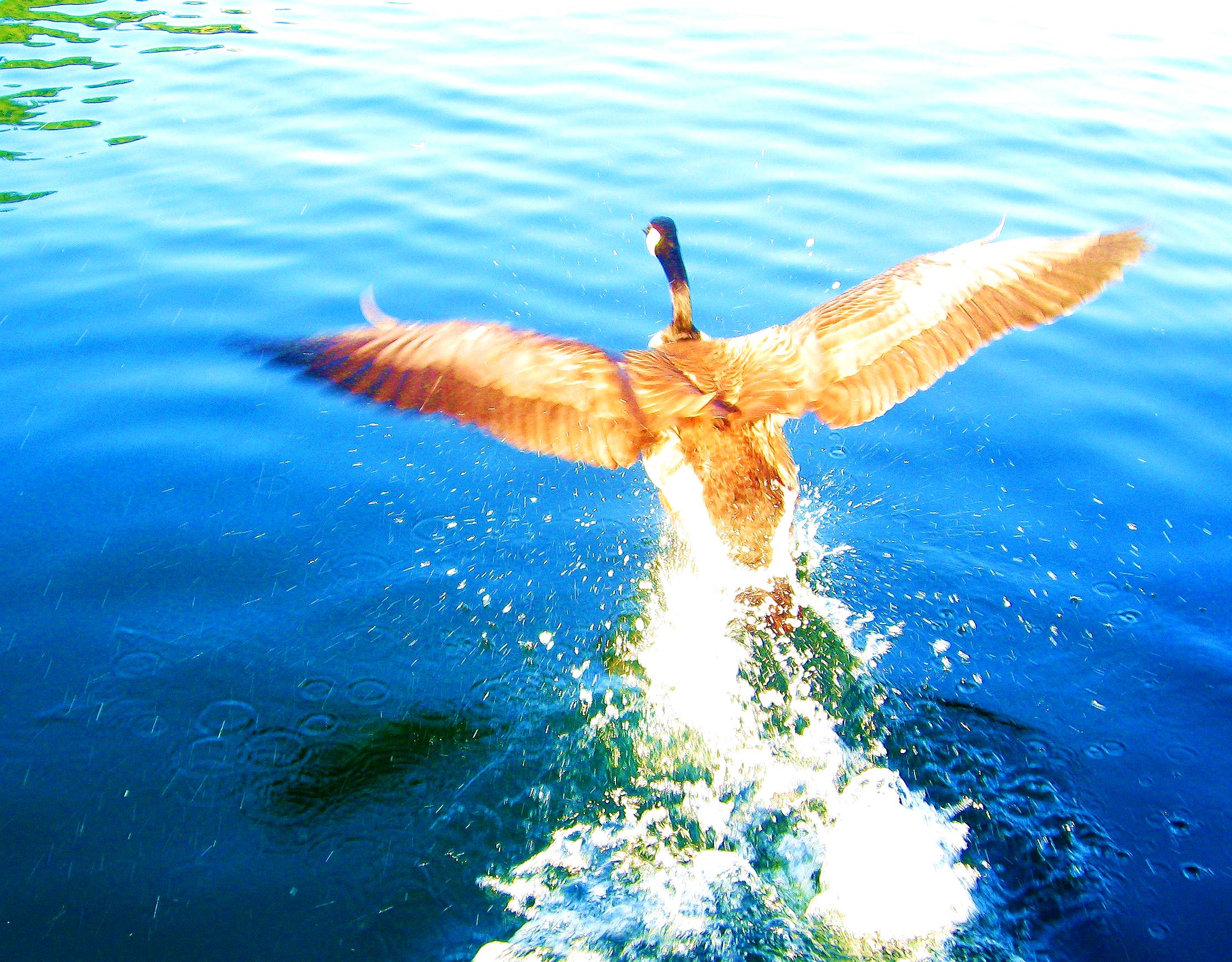
A Canada goose taking of from Lake Pend Orielle.  I took the photo during a Ladies Night Out boating cruise for Farragut State Park’s volunteers. — Photo by Pat Bean

It’s pronounced Pon-de-ray

I was listening to Clive Cussler’s Poseidon’s Arrow in my car while driving from Tucson  to my daughter’s home in Marana. It’s just 13 miles away, but traffic and construction detours turn it into a 40-minute drive, making the familiar route an excellent time for book listening.

An aerial view of Lake Pend Orielle. — Wikipedia Photo
I think of Cussler’s Dirk Pitt books as fantasy swashbuckler reading, not to be taken seriously, simply a time to enjoy the good guys wearing white hats and the villains all wearing black hats, which isn’t ever the case in the real world.

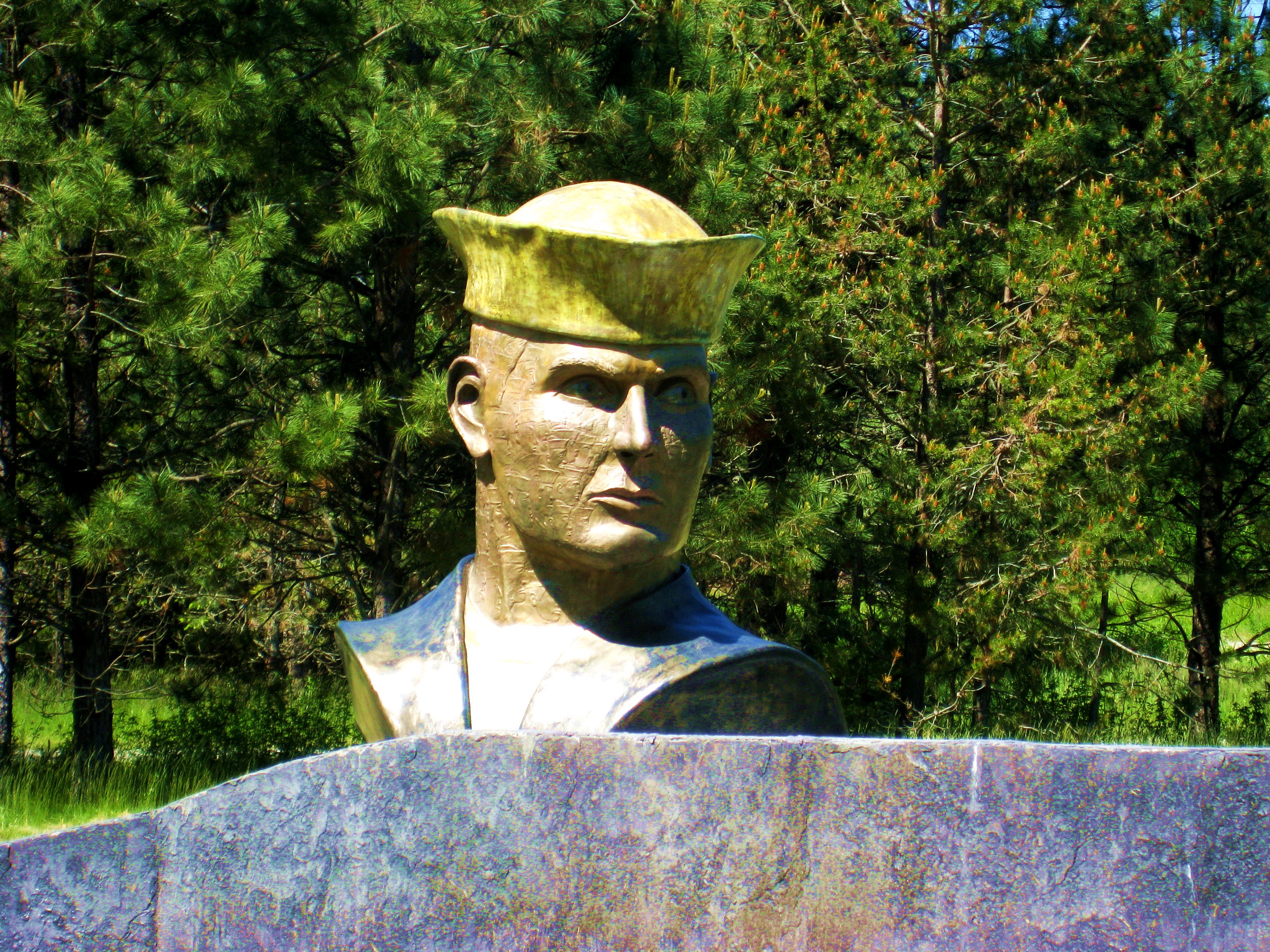
Anyway, after a boat/vehicle chase that led through a crowded Mexican town, the book has its protagonists landing at the Coeur d’Alene Airport in Idaho, then driving through Farragut State Park to Bayview, a small town that sits beside Lake Pend Oreille, which is pronounced Ponderay. The lake is home to a Naval submarine base, and the book’s characters talk of the place as being interesting trivia for back home in Washington D.C.

Now if you’re thinking that the idea of an inland submarine base in Idaho is all in Cussler’s imagination, you would be wrong. I was a campground volunteer at Farragut State Park one summer, have been boating on Lake Pend Oreille, and learned all about the Farragut Naval Training Station that was in operation during World War II, a part of which is still active for underwater submarine research.

One of the beauties of being a widely traveled old broad is reading books that include descriptions about places I have visited. It seems to happen regularly these days. I find such déjà vu moments, which refresh the brain, a bonus for having lived so long.

    Bean Pat: Have you ever seen an Inca tern? https://cindyknoke.com/2017/12/20/inca-tern/ Then take a look at them here. They are awesome, and so are this blogger’s photographs of them.

Pat Bean is a Lonely Planet Community Pathfinder. Her book, Travels with Maggie, is now up on Amazon at http://tinyurl.com/y8z7553y  You can contact her at patbean@msn.com

Read Full Post »

Antelope Island

Antelope Island from the causeway on an overcast day. — Photo by Pat Bean

“Women, like men, should try to do the impossible. And when they fail, their failure should be a challenge to others.” – Amelia Earhart

Wilson’s Phalaropes 

My newest writing work in progress, since Travels with Maggie is now published, is a book I’m calling Bird Droppings. It’s about my adventures, and that they have been, of being a late-blooming birder.

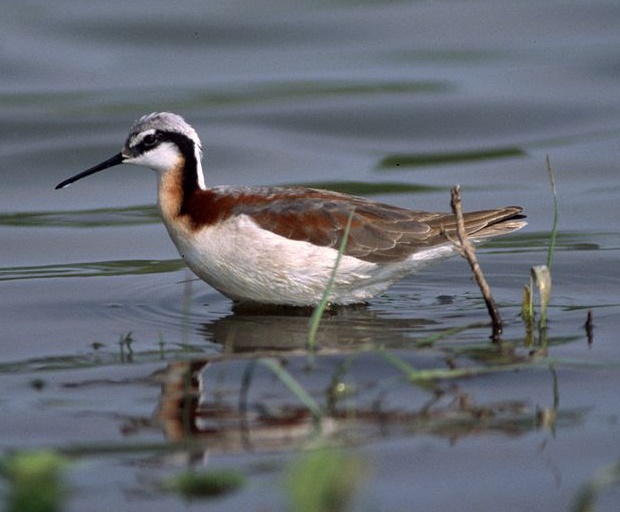
Female Wilson’s phalarope in breeding plumage. — Wikimedia photo

It’s a passion that addicted me at the age of 60, just when my body was beginning to revolt against my more strenuous outdoor activities of back-packing, white-water rafting, biking and skiing.

Recognizing the new hobby as a major blessing that kept me moving forward in my zest for life, I reveled in the new experiences. And the more I actually learned about birds, the more enamored I became with bird watching.

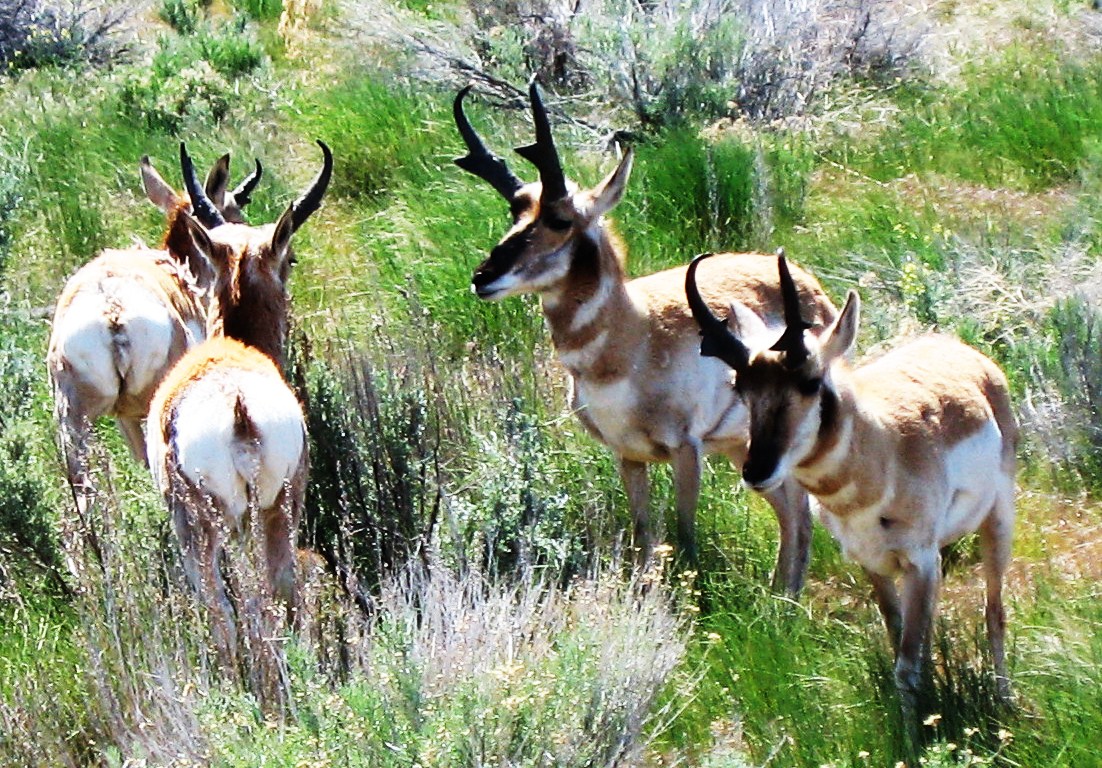
As I watched for birds on the island, I always saw other wildlife, and pronghorn antelope were frequently among them. — Photo by Pat Bean

At first, I relied on others to make identifications of birds in the field, but there came a point when I wanted to be able to be the first one to say that’s a yellow-rumped warbler or a ruddy duck. Those two, by the way are usually easy to identify. The first, also known as a butter butt, often moons you so you clearly see its golden backside, and the second has a blue bill and a stuck-up tail,

To satisfy my need to be able to identify a bird on my own, I began solo weekly visits, with field guides in hand, to Antelope Island in Great Salt Lake. I called the place my Birding 101 Lab and visited it almost weekly, throughout the seasons, for two years. I never had an outing to the island, which was reached by a six-mile causeway, in which I didn’t learn something new and fascinating.

One of the more interesting birds to me, since I’m a woman who raised five children almost entirely on her own, were the Wilson’s phalaropes. These nine-inch or so shorebirds are members of the sandpiper family. They flock by the hundreds of thousands to Great Salt Lake during the summer. I often watched them swimming around and around in circles, creating a vacuum that would bring up tiny bits of food to eat.

But the thing I enjoyed most about these birds, which I learned from my many bird books and field guides, was that they switched roles. The female had the brightest colored feathers, courted the males, and then left the egg sitting and rearing the young to the gentlemen as well.

As a mom who changed cloth diapers for five children without any help, I couldn’t help but admire the female phalaropes.

            Bean Pat: Refuge https://www.birdnote.org/show/terry-tempest-williams-reads-refuge One of my favorite authors reads a short piece in her soothing voice. This is a real treat, and less than 2 minutes long.

Pat Bean is a Lonely Planet Community Pathfinder. Her book, Travels with Maggie, is now up on Amazon at http://tinyurl.com/y8z7553y  You can contact her at patbean@msn.com
Read Full Post »

Hem and Haw

“I saw myself sitting in the crotch of this fig tree, starving to death, just because I couldn’t make up my mind which of the figs I would choose. I wanted each and every one of them, but choosing one meant losing all the rest, and, as I sat there, unable to decide, the figs began to wrinkle and go black, and, one by one, they plopped to the ground at my feet.”  —  Sylvia Plath, The Bell Jar

I hemmed and hawed about continuing on the trail when I saw this baby guarding it. Wisely I reversed my direction. — Photo by Pat Bean

Huh and Um

I have this idea list of blog topics. Every time something pops into my mind that intrigues me, I add it to the list, which by now is several pages long.

This morning, sitting in front of a blank page on my computer screen with a mind that seemed to have nothing to say, I got out the list. As I skimmed through it, I came to the words hem and haw. I had no idea where this idea came from. It must have been on my list a long time.

Not sure where it would lead me, but I decided to give it a shot.

According to the Oxford English Dictionary, hem is an interjectional utterance like a slight half cough, used to attract attention, the same sound depicted by the interjection “ahem. The verb “to hem” dates to the 15th century. “Haw,” which dates back to the 1600s, is another case of a word imitating a sound, in this case “as an expression of hesitation.

The dictionary went on to note that today we are more likely to say “uh,” “huh,” or “um” when faced with a sudden decision, but the feeling is the same.

Briefly, that’s it, and now you know as much as I do about hemming and hawing, which evidently is what I was doing trying to come up with a blog topic.

Or perhaps you know more. If so, this writer who loves words and is always curious as a cat, would like to know, too.

Blog pick of the Day. Check it out.

Bean Pat: Santa Clause and Bruce Springsteen This should put you in the mood for Christmas. It did me.  https://theimmortaljukebox.com/2017/12/13/christmas-alphabet-s-for/

Pat Bean is a Lonely Planet Community Pathfinder. Her book, Travels with Maggie, is now up on Amazon at http://tinyurl.com/y8z7553y  You can contact her at patbean@msn.com
 

Read Full Post »

A Morning Hoo

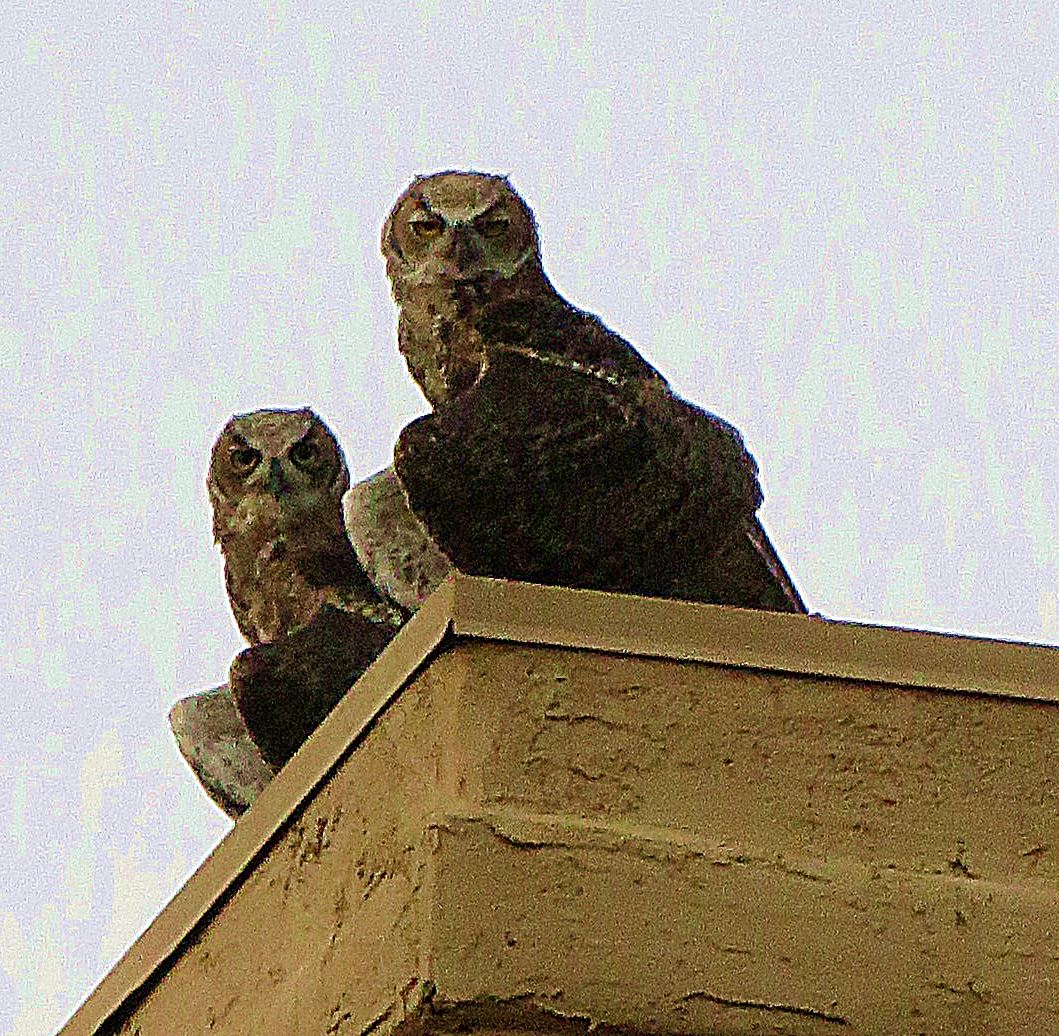
A pair of juvenile great horned owls from two years ago sitting n top of one of my apartment complex’s roof. — Photo by Pat Bean

Old friends pass away, new friends appear. It is just like the days. An old day passes, a new day arrives. The important thing is to make it meaningful: a meaningful friend – or a meaningful day.” — Dalai Lama

Great Horned Owls

It’s still dark when I walk Pepper at 6 a.m. this time of year. Sometimes I try to sleep in, but my beautiful canine companion will have none of that, and so it’s 6:15 when we take our walk – but it’s still dark then, too.

Great owned owl in all its glory. — Wikimedia photo

It’s quiet, too, Mostly. There’s the one guy who walks his cat on a leash the same time I walk Pepper, a couple of people leaving for work, and a clanging gate when one of them forgets to close the gate quietly when they exit.

But it’s silent and peaceful enough that I can enjoy the hoo-ing calls of our resident great horned owls. It’s an eerie sound coming from above, soft and full of nature’s wild things.  Here in the middle of Tucson, I often go to sleep with the yipping of coyotes, and then, more mornings than not, my first greeting of the day is that soft hoo, hoo, hoo from my owl friends.

On a morning like this, which is exactly how I welcomed this day, I can forget for a few minutes that all is not right with the world. And that’s a good thing, don’t you think?

            Bean Pat: A snowy owl https://tinyurl.com/y7pssdek Just another owl tidbit.

Pat Bean is a Lonely Planet Community Pathfinder. Her book, Travels with Maggie, is now up on Amazon at http://tinyurl.com/y8z7553y  You can contact her at patbean@msn.com

Read Full Post »

“You do not have to be good. You do not have to walk on your knees for a hundred miles through the desert, repenting. You only have to let the soft animal of your body love what it loves. Tell me about despair, yours, and I will tell you mine. Meanwhile the world goes on. Meanwhile the sun and the clear pebbles of the rain are moving across the landscapes, over the prairies and the deep trees, the mountains and the rivers. Meanwhile the wild geese, high in the clean blue air, are heading home again. Whoever you are, no matter how lonely, the world offers itself to your imagination, calls to you like the wild geese, harsh and exciting – over and over announcing your place in the family of things.” – Mary Oliver

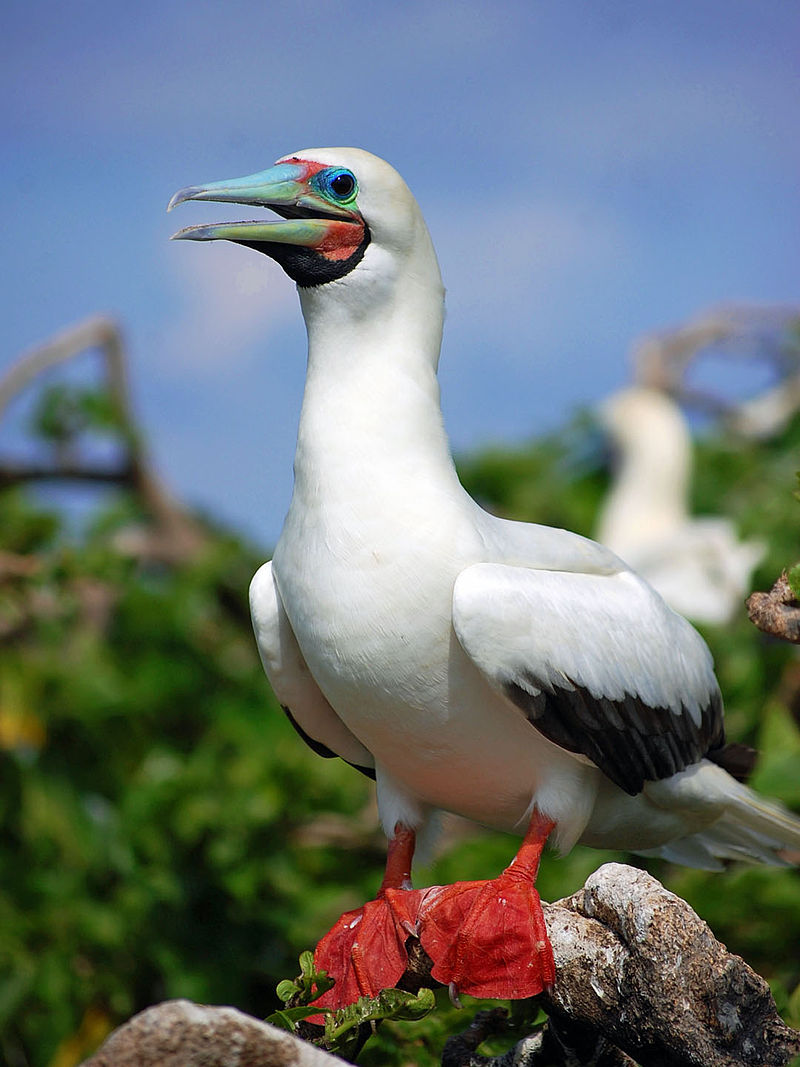
Red-foted booby — Wikimedia photo

And Yellow Feet, Too

            Nothing makes me feel more content than being out in nature. I want to be able to put a name to every wildflower, every tree, every bug, every rock formation and since living in the desert, every cactus that sits along the paths I walk or drive. Did you know there are over 1,500 species of cacti? Finally, I settled on learning to identify and name birds. North America only has about a 1,000 of them. Of course, that’s only about a tenth of the species world-wide.

A dancing blue-footed booby. — Wikimedia photo

I’ve managed, since 1999, which includes nine years of full-time travel across this country, to see a bit over half of them. And a bit of travel to distant lands has added about 200 more to my life list of birds.

The boobies, which are among the latter, are some of my favorite birds. And seeing them for the first time was magical.

The red-footed beauties came first. There were hundreds of them, and I gasped in delight as I watched them, from a walkway above a sheer cliff, circling in flight as they headed out to fish in the Pacific Ocean.

I was at a bird sanctuary on Rota Island, just 35 miles north of Guam, where I was visiting my daughter, Trish. She had treated me to a flight to the island after I had been so disappointed about the lack of birds on Guam. The birds there had been decimated by the brown tree snake, a non-native invader. On Rota, where there were none of these nasty snakes, birds were everywhere.

From my high perch, and lower down on the cliff than the red-footed nests, I spied a few brown boobies, whose feet are yellow. It was a grand day to remember.

Just as grand was the day I danced with a blue-footed booby, my favorite of the three boobies.

I saw hundreds of these birds when I cruised the Galapagos Islands in a 16-passenger catamaran. We had along an official guide, which let us visit places where larger groups were not allowed. It was a birder’s paradise, as here the birds had never experienced human predation, and so weren’t afraid of us.

A hooded mockingbird landed on my shoe one day.  And on another I was kissed by a baby seal as I stepped off a small raft and onto the island, The touch made me feel special, unlike the next lady onto the island. That same small seal decided to see if she tasted good.

The rule for us humans was we couldn’t touch the animals, but there was no rule about them touching us.

My dance with the blue-footed booby happened when I came across the large bird blocking my way along a narrow path. He lifted one-foot and then the other to show off his blue feet, which how the male boobies court females. I lifted one foot and then the other in response. We both repeated the motion several times until our guide came around the corner. Stop teasing the booby,” he said.

I skirted around the bird, and when I looked back he lifted one foot , and then the other and our eyes locked. I imagined that he was saying, “Thanks for the Dance.

Bean Pat: A Woman of Worth  https://tinyurl.com/y825f58s   Telling HerStories: The Broad View is sponsored by Story Circle Network, which is an organization that supports female writers. I’m a member and it is the best support I’ve ever had as a writer.

Pat Bean is a Lonely Planet Community Pathfinder. Her book, Travels with Maggie, is now up on Amazon at http://tinyurl.com/y8z7553y  You can contact her at patbean@msn.com

Read Full Post »