Feeds:
Posts
Comments

Archive for July, 2011

 “The very idea of a bird is a symbol and a suggestion to the poet. A bird seems to be at the top of the scale, so vehement and intense his life … the beautiful vagabonds, endowed with every grace, masters of all climes, and knowing no bounds – how many human aspirations are realised in their free, holiday lives – and how many suggestions to the poet in their flight and song.” – John Burroughs
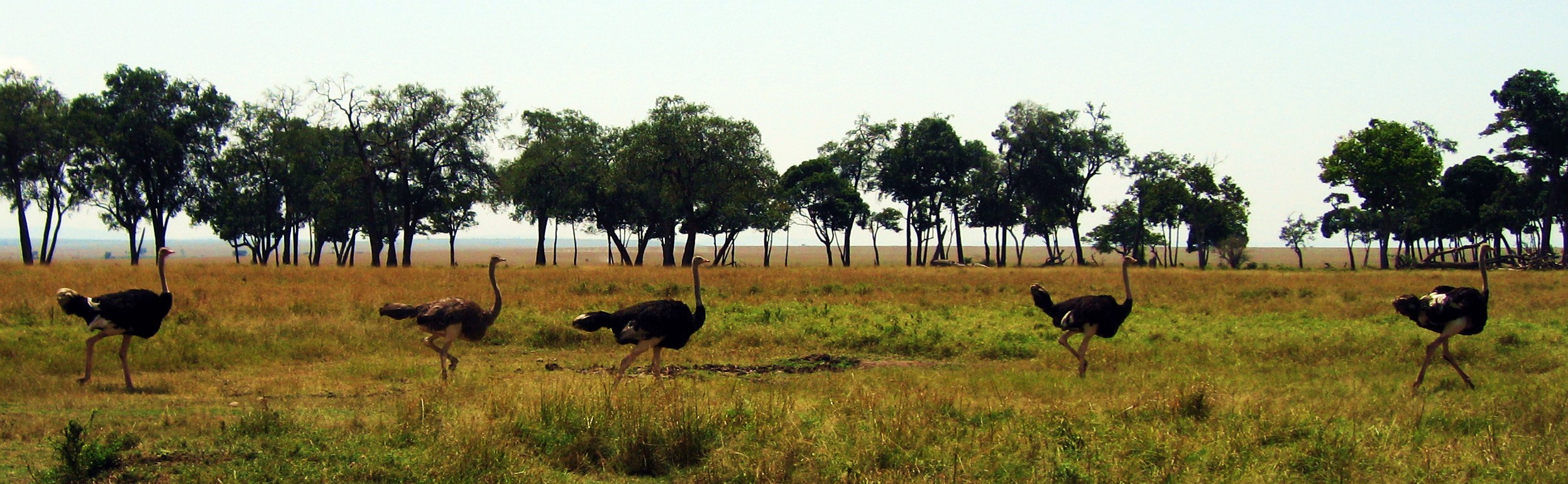
They say ostriches stick their heads in the sand. Maybe so. But the ones we saw in the Serengeti preferred to stretched out their legs and run. It made for a glorious parade. -- Photo by Pat Bean

African Safari: Colorful Birds
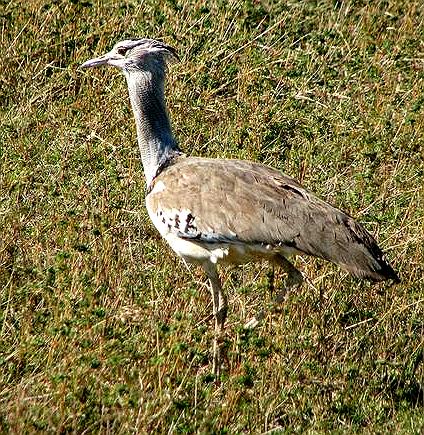
Kori bustard -- Photo by Kim Perrin

The drive from Lake Manyara to the Serengeti was one of the most exciting bird-watching days in my life. I saw my first free roaming ostriches. Much bigger than I imagined, and boy could they run.

We passed a Kori bustard, which strutted across the grasslands like it owned them. We were close enough for Kim to even get a great photograph. This was a big bird, standing over three-feet tall.

There was this great big red-faced fellow, a lappet-faced vulture. he made ugly look beautiful, well at least to the addicted birder.
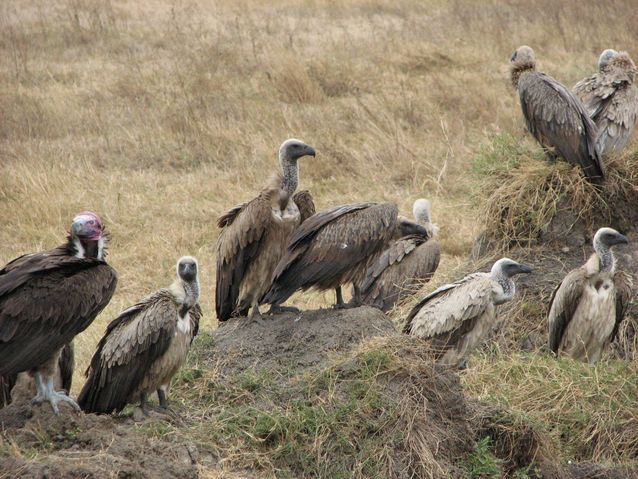
A flock of Ruppell's griffin vulture, with a lone lappet-faced vulture on the far left. -- Photo by Kim Perrin

A face only a mother could love, or not. -- Photo by Kim Perrin

And then there were the secretary birds,  so named because someone thought the stiff neck feathers looked like the quill pens secretaries used to stick behind their ears. it hunts its prey — small mammals, snakes, lizards, young birds, on the ground.

Secretary bird: Do you think this bird's neck feathers look like quill pens? -- Wikipedia photo

Like the bustard, the secretary bird we saw was strutting across the savannah as if it owned it.  
Next : the Serengeti’s Sopa Lodge

Read Full Post »

 “Daylight follows a dark night.” – Maasai proverb

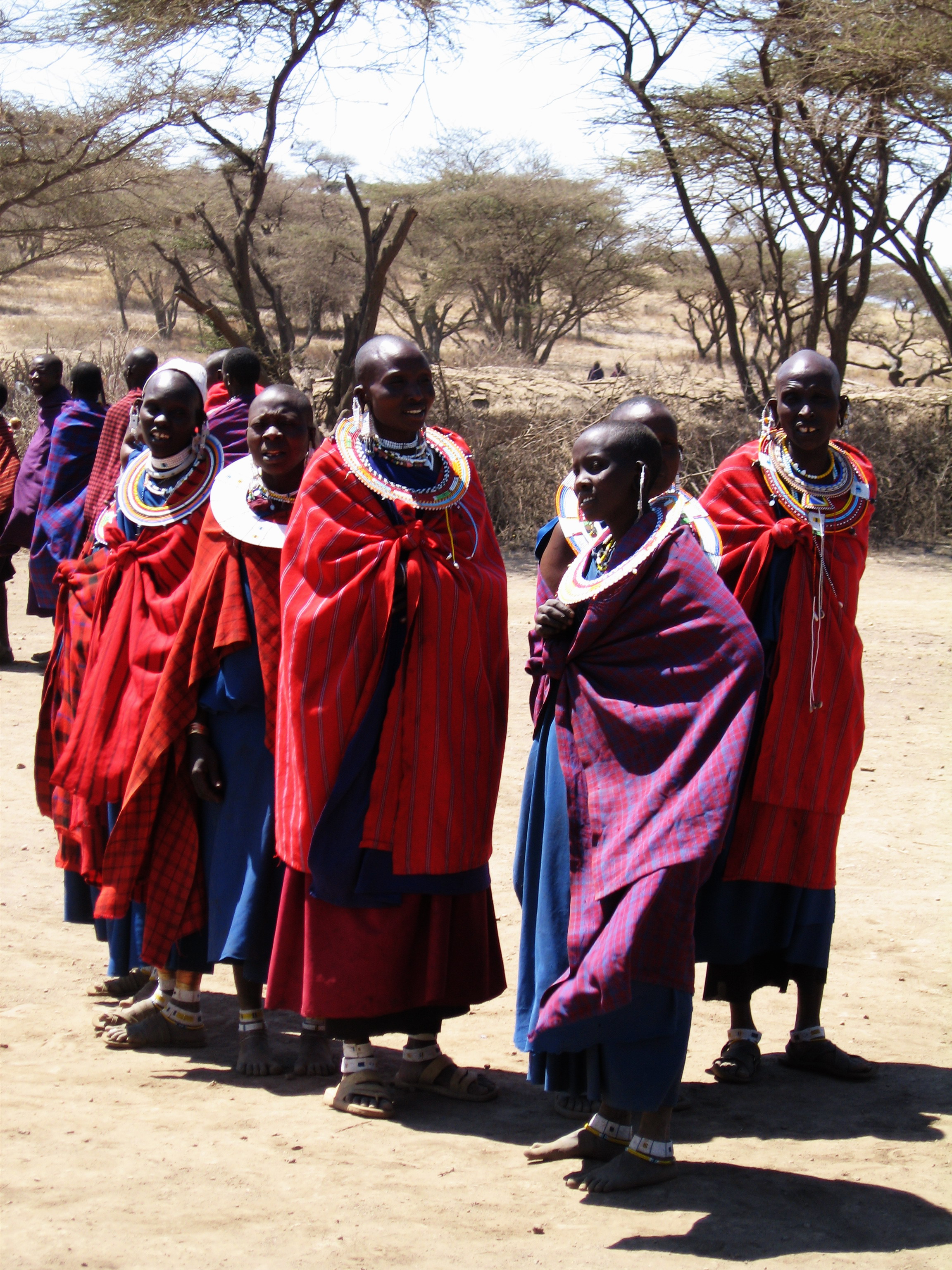
A group of Maasai women getting ready to dance for us. They live in a model Maasai community set up for tourist visits. -- Photo by Pat Bean

African Safari: A Hard Life for Women

It was the opportunity to see African wildlife, lions, leopards, elephants, giraffes and all the rest, that brought me to Africa. Kim and I came, or so we have been told, just in time to get at least a tiny glimpse of the continent as it once was.

The poachers, the developers, the fur trade, the masses of humankind are fast changing Africa, with many animals pushed to the brink of extinction – just as the buffalo, wolf and other wildlife numbers came near extinction as settlers moved west across America.

And just as our country finally and wisely set aside land to protect American’s spectacular landscapes and wildlife, Tanzania and Kenya have created national parks to do the same. But the conservation efforts have had a devastating effect on the Maasai, a nomadic tribe that formerly lived and grazed their cattle on what is now protected lands.

The Maasai were once famed warriors of legend who fought all comers – both to maintain their hold on their lands and to capture more. Their downturn began at the beginning of the 20th century when the British reduced their holdings by 60 percent to make way for their own settlers.

And in the 1940s, most of the Maasai’s remaining fertile cattle-crazing lands were confiscated and set aside as wildlife sanctuaries – conservation efforts I applaud. .

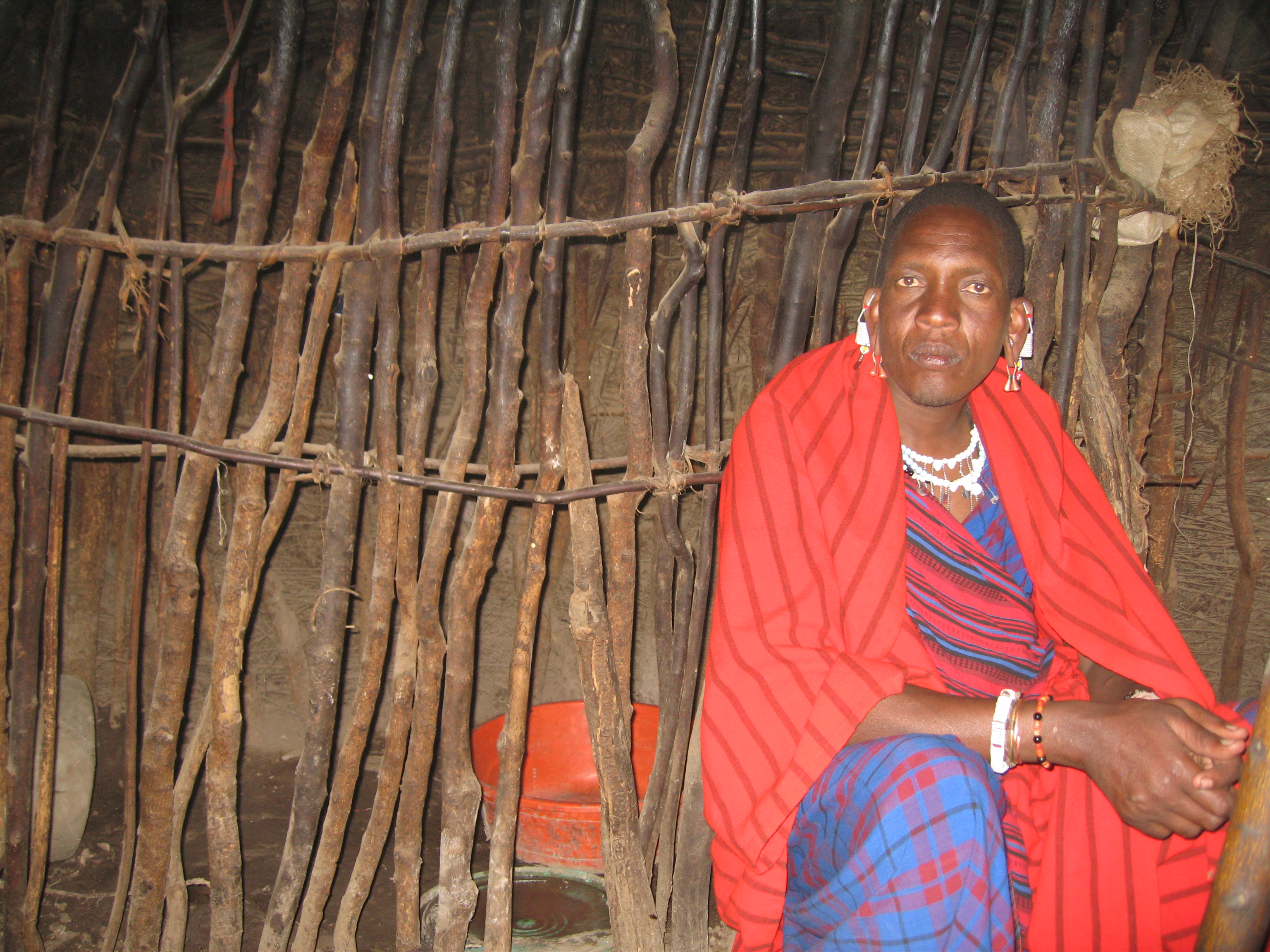
The Maasai leader of the model community sitting in his home of sticks and dung as he explained the Maasai lifestyle to Kim and I. -- Photo by Pat Bean

But I also feel said for the the Maasai fallout, which appears to me very similar to what happened to our own native Americans when white settlers moved in and began to dominate our own landscape.

The solution to the Maasai problem, as proposed by the Kenya and the Tanzania goverments, is for the Maasai to give up their nomadic way of life and assimilate with the rest of the country. While it seems a bit heartless, based on what we saw of the Maasai lifestyle, I agree.

Kim and I often saw many Maasai men wandering aimlessly along the roadsides in the Serengeti, and many very young boys herding a few cattle or goats as we traveled. The women, however, were left to build their stick and dung homes, gather firewood unprotected in lands where lions roam, transport water long distances, and to do everything else necessary to maintain a very meager hold on life.

Not only is the Maasai infant death rate high, many women die in childbirth as well because of the primitive conditions in which they give birth, and because of the lack of medical help. .

Bilal was uncharacteristically outspoken about the “lazy Maasai men,” and frequently expressed concern for the Maasai women. Kim and I certainly felt the same way about them.

I know it’s presumptuous of me, who spent only two weeks in Africa, and most of that wildlife watching in the national parks, to comment on such an emotional ethnic issue. But it was part of the experience. And I feel strongly that it should be shared. .

Recalling those observations, and the emotions that even now they continue to stir, I unashamedly weep for my Maasai sisters.

Next: Bird sightings on the drive from Lake Manyara and the Serengeti

Read Full Post »


It's easy to see that giraffes are what help give the umbrella acacias their shape and name. -- Photo by Kim Perrin

“Each day I live in a glass room unless I break it with the thrusting of my senses and pass through the splintered walls to the great landscape.” – Mervyn Peake

African Safari: Runners, Wildlife and Thorns

When I travel from place to place in my native America, I try extremely hard never to get on a boring freeway. In Tanzania, Kim and I never had to worry about our driver, Bilal, taking such a wide interstate from place to place. There were none, or at least none in the areas we traveled.

We were lucky if the roads were paved. Their roughness prompted Bilal to joke that along with being our driver, he was giving us a free massage.

Which was perfectly fine with me. The bouncy ride was part of the adventure. And the slower we were forced to go, the more time it offered for sightseeing.

And there was plenty to see this morning as Bilal transported us from Lake Mayara’s Serena Lodge to the Sopa Lodge in the Serengeti. The drive took us from wide-open Wyoming like scenery through a misty jungle that brought images of Jurassic Park floating though our brains.

Wildebeest and morning mist on the Ngorongoro Crater escarpment. -- Photo by Pat Bean

One of the populated areas we passed through was Karatu, which Bilal told us was the home of many great marathon runners. Watching the area’s slim, black men brought to mind images of the Boston marathon and other long-distance races I had seen in which racers with such physiques were always frontrunners.

The misty jungle scenery came near the top of the Ngorongoro Crater, which was formed seven million years ago when the land was pushed up by volcanoes, then collasped. At the crater overlook, a Maasai salesman was immediately upon us, but Bilal suggested that we wait to shop somewhere that would benefit an entire Maasai community.

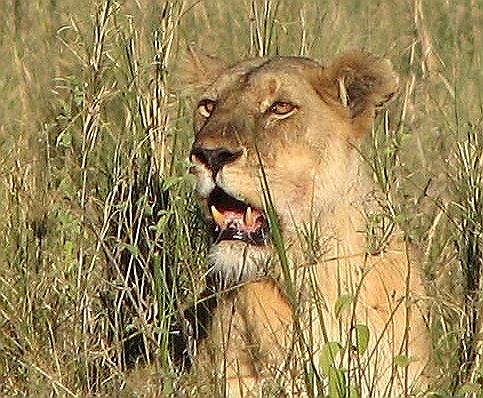
This hungry simba had his eye on a tommy (Thompson's gazelle). -- Photo by Kim Perrin

Zebra, cheetahs, lions, gazelles, monkeys, giraffes, gazelles, and other African wildlife were also on the sightseeing agenda this morning. We lingered the longest to watch a mother cheetah with four young cubs that stayed mostly hidden in the grass while the mother kept a look out.

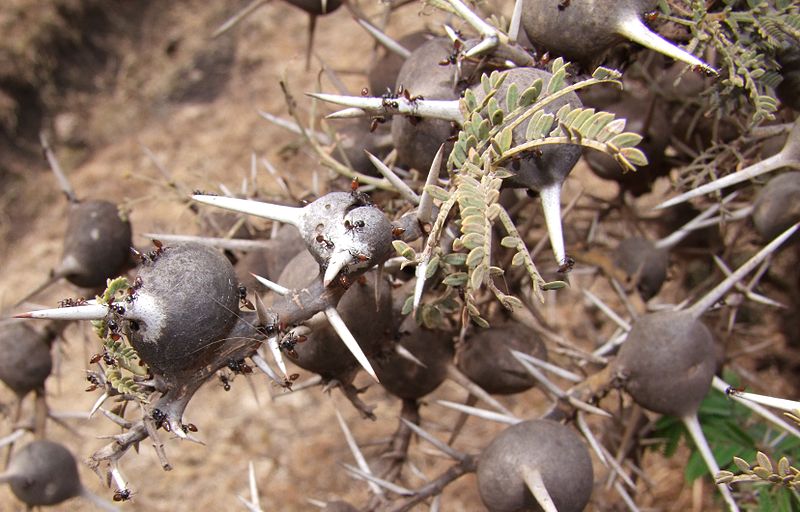
Bilal stopped to show us the whistling acacia tree, on which grow hollowed nodes favored by ants. The ants create holes in these bulbous growths and when the wind blows over them the produce a whistling sound.

Despite the thorns, giraffes find this plant a delectable meal.

Whistling acacia

I found this information fascinating, but once again, our sight-seeing put us behind schedule. And so Bilal again put the pedal to the metal to get us to the Serengeti lodge in time for our scheduled lunch. Kim and I just hung on – and smiled.

Next:  The Homeless Maasai

Read Full Post »

Slow down and enjoy life. It’s not only the scenery you miss by going too fast – you also miss the sense of where you are going and why.” – Eddie Cantor

Lake Manyara sunset was the first of many Africa gifted Kim and I. -- Photo by Kim Perrin

African Safari: Lake Manyara Continued

I know I said we were going to drive to the Serengeti today, but I decided to linger a bit longer at Lake Manyara to share some of Kim’s photos with you.

She took hundreds, if not thousands, compared to my relatively few, and sent me a slide show of the best of them shortly after we returned from Africa. But they were in a format that I couldn’t download onto my computer.

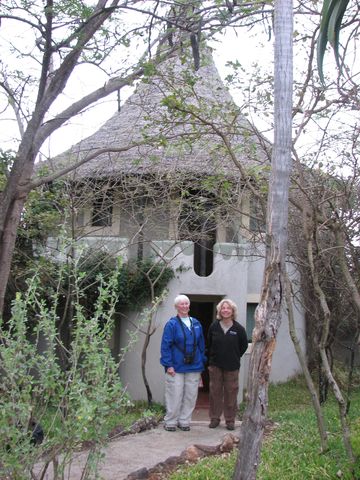
Kim and I in front of our Serena Lodge rondeval. -- Photo by Kim Perrin, using timer and tripod

An orchid growing around the lodge. -- Photo by Kim Perin

Finally, last night, she found a way to send me the originals that I can copy and use for this recap of our 2007 African safari. It would seem a shame to waste her efforts, and all my efforts downloading them this morning, to skip showing you at least a few of them.

I hope you enjoy. And tomorrow, I promise, we’ll drive to the Serengeti.

In addition to lions and elephants, Kim and I also took time for smaller things, like this awesome chameleon we watched as we ate our lunch. -- Photo by Kim Perrin

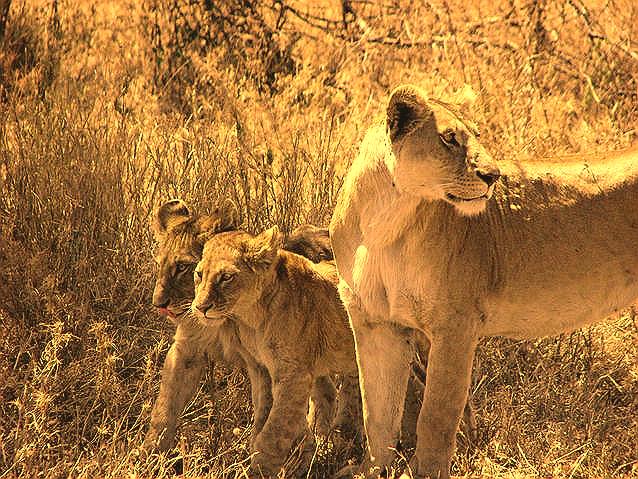
A mama lion and two cubs in Lake Manyara National Park. — Photo by Kim Perrin
 

Read Full Post »

 A Wild Race to Lake Manyara’s Park Gate

This was our first truly close-up look at an elephant. There would be many more before the trip ended. -- Photo by Pat Bean

“…nature has ceased to be what it always had been, what people needed protection from. Now nature tamed, endangered, mortal, needs to be protected from people.” – Susan Sontag

African Safari: The Ugly Poaching Business

There is no nighttime wildlife viewing in Tanzania’s national parks. That’s when the poachers come out, Bilal told us.

It used to be, he said, that the poachers made war on the park rangers, but now the park rangers are shooting back. And Tanzania doesn’t want tourists caught in the crossfire.

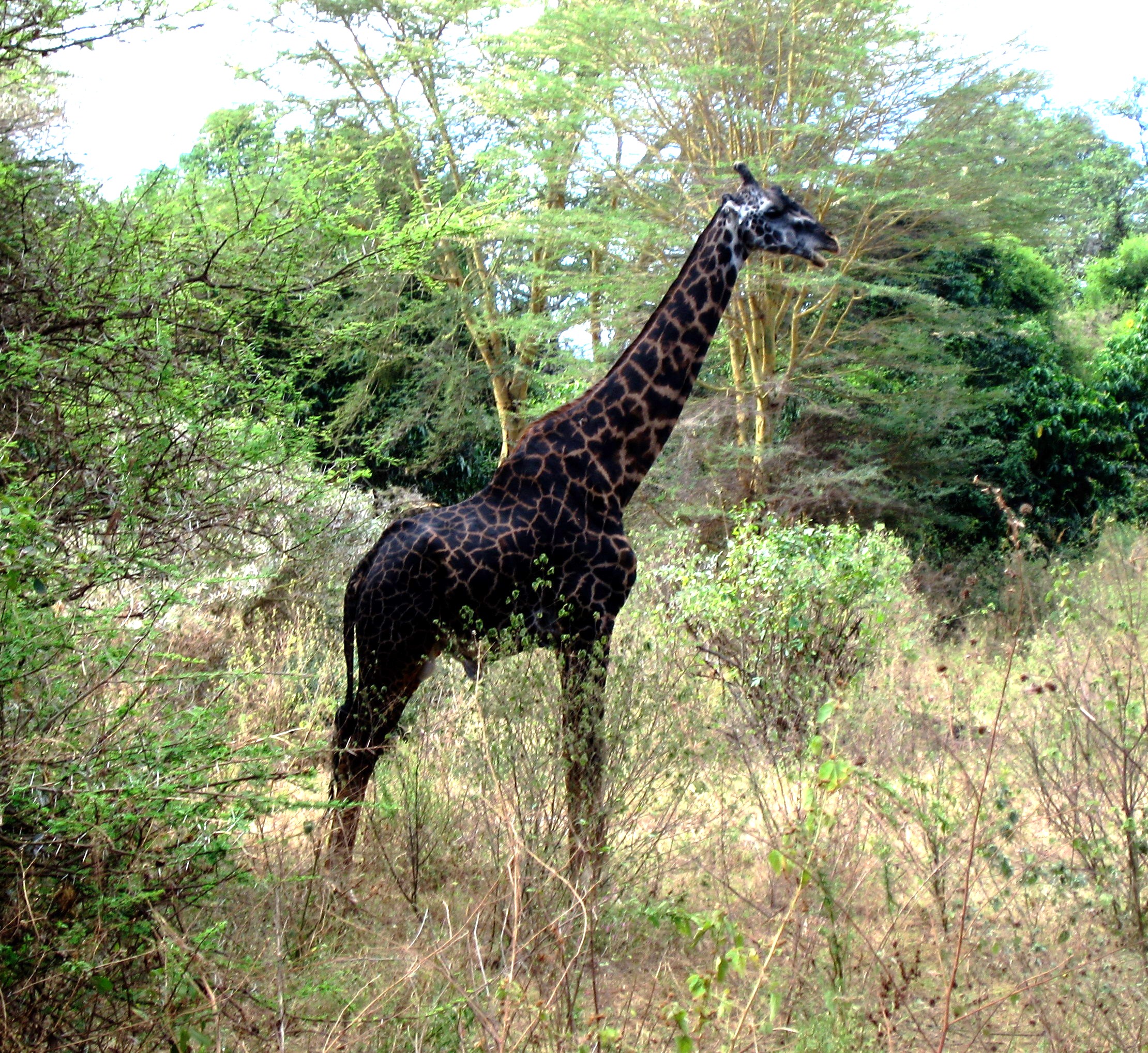
This is a Masai giraffe, the largest of the several subspecies of giraffe found in Africa. It is a bit darker than the other subspecies, has jagged spots and tuft of hair on its tail. -- Photo by Pat Bean

But despite the government’s crackdown, according to several recent news articles that I’ve read, poaching is still a major problem in Tanzania, as well as some other African countries, and in some areas is even increasing.

What Tanzania’s official crackdown on the illegal activity meant to us in 2007 was that the park closed its gates at 6:30 p.m. – and there was a big fine for not checking out of it by that time.

Perhaps because of some great last-minute sightings of an elephant dusting herself off and a mother giraffe with a young one that were too terrific to pass up, Bilal may have lost track of time. That was one of the great things about our guide. He always seemed as excited at watching wildlife as we were – well unless it was small, nondescript birds.

Anyway, all of a sudden Kim and I found ourselves being

Yellow-billed oxpeckers. We would see these on the backs of giraffes and water buffalo. -- Wikipedia photo

bounced around in the back of the Land Rover, holding on tightly but with grins on our faces, as a worried Bilal put the pedal to the metal in a race to get back to the entrance before the deadline. It was a deliciously wild ride that added a touch of adventure to our already full day.

We made it with two minutes to spare, and we could audibly hear Bilal exhale a sigh of release, and see the smile return to his face.

He slowed down for the drive back to our Lake Manyara Serena Lodge, and stopped to let us photograph our first spectacular African sunset.

Blacksmith plover: We would see many of these during our drives across Kenya and Tanzania's grasslands. -- Wikipedia photo

I’ve heard artists and photographers talk about Africa’s great light, and now I was getting to see it for myself.

What a great day.

Bird Log of New Lifers: Little egret, white stork, sulphur-breasted bush shrike, common bulbul, tawny eagle, white-rumped swift, emerald-spotted wood dove, blacksmith plover, grey-headed kingfisher, Egyptian goose,

African spoonbill -- Wikipedia photo

black-headed gull, grey-headed gull, great cormorant, lesser flamingo, great white pelican, yellow-billed egret, yellow-billed stork, black-winged stilt, African spoonbill, pied avocent, two-banded courser, southern ground hornbill, yellow-billed oxpecker, fish eagle, long-tailed fiscal, silvery-cheeked hornbill, crowned plover, marsh sandpiper, Hilderbrant’s francolin, helmeted guinea fowl, dark-capped yellow warbler, great reed warbler, cliff chat , August 22 afternoon drive in Lake Manyara State Park.

Next: Drive to Serengeti National Park

Read Full Post »

 “We all should know that diversity makes for a rich tapestry, and we must understand that all the threads of the tapestry are equal in value ..” – Maya Angelou

One of Lake Manyara National Park's famed tree-climbing lions. -- Wikipedia photo

African Safari:Where the Wild Things Are

At the entrance to Lake Manyara National Park is a sign that reads: “Take nothing from the park but nourishment for the soul, consolation for the heart and inspiration for the mind.”

The next few hours would provide Kim and I with plenty of all three.

As a normal rule, lions don’t climb trees. But if we were lucky, we were told, we would see some tree-climbing lions in Lake Manyara National Park.

Southern ground hornbill.

We were lucky.

And along with lions sprawled out on tree limbs, we saw oxpecker birds gleaning insects from the backs of giraffes, watched the comical antics of baboon families, including one small one that would taunt his bigger cousins then rush back to his big male papa for protection.

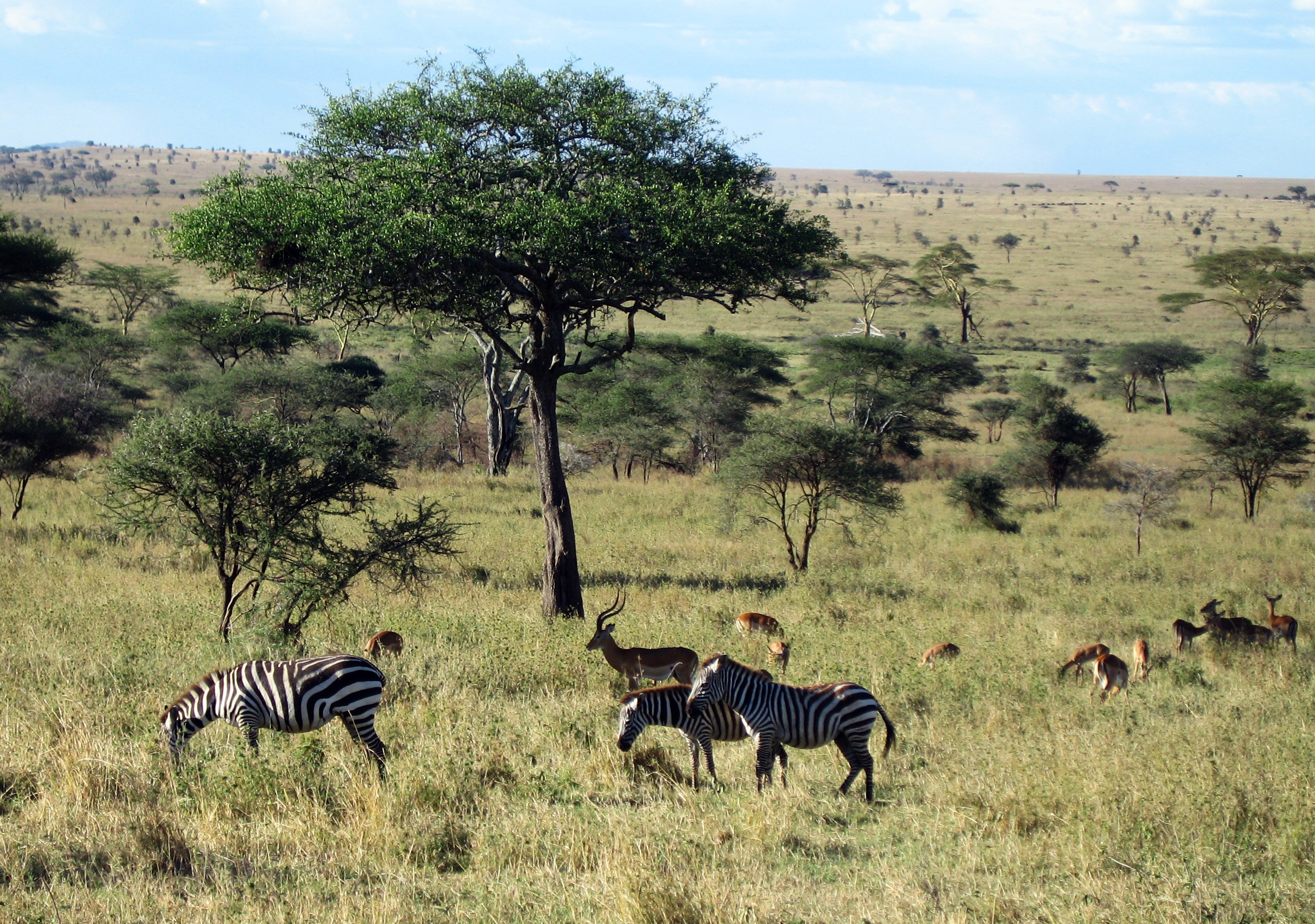
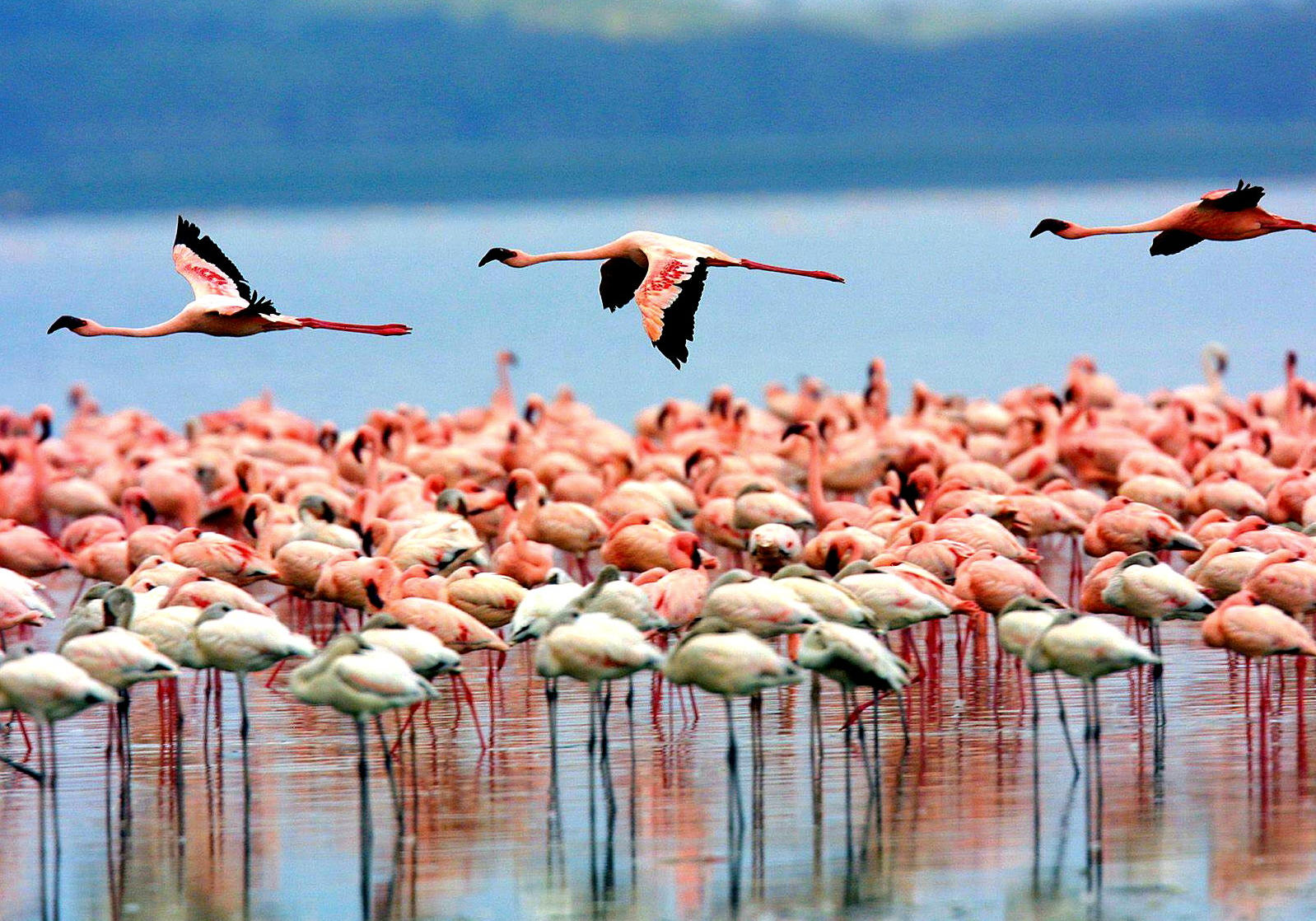
We saw a few lingering flamingos of the millions that feed on the lake before migrating elsewhere, and dozens of colorful birds. And we came across zebra and gazelles dining together, with a few keeping watch for lions and cheetahs that wanted them for dinner.

Zebras and gazelles dining together in a grassy plain area of the park. -- Photo by Pat Bean

In fact, I don’t think there was even a single moment during our afternoon game drive when we were out of sight of wildlife going about their business. So accustomed to Land Rovers were they, that we were totally ignored, which would not be the case, Bilal warned us, if we were on foot

Lake Manyara, named after the Masaai word manyara for a plant that is used to grow stockades for livestock., has a quite diverse habitat, which accounts for its broad range of species. The landscapes go from lake to jungle, and includes an acacia woodland forest, open grassland, and a swamp.

Lesser flamingoes at Lake Manyara -- Kuru Travel photo

At one of our stops, we had southern ground hornbills strutting around on one side of us, giraffes on the other side of us and both elephants and water buffalo nearby.

I didn’t know which way to look, but I think the hornbills got the majority of my attention. These large black and red birds have voices that some say sound human.

And according to a Masaai  folk tale, their conversation is as a man speaking to a woman. He says: I want more cows, and she replies: You’ll die before you get them.

Next: A wild race to the park gate

Read Full Post »


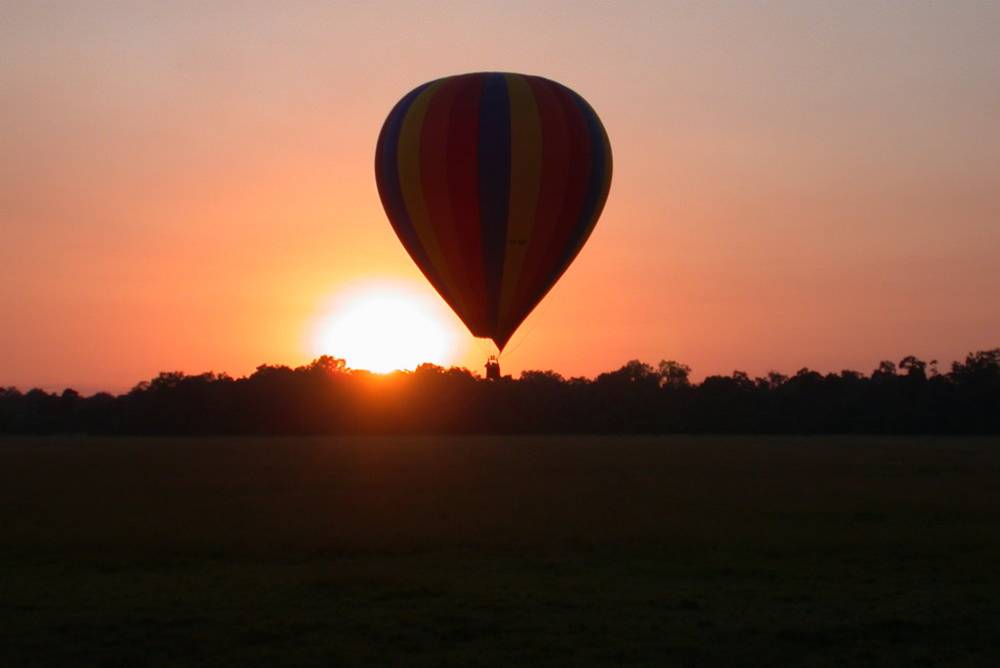
Early morning balloon ride over the Serengeti toward the rising sun.


Read Full Post »

Overview of Lake Manyara -- Wikipedia photo

There are no foreign lands. It is the traveler only who is foreign.” – Robert Louis Stevenson.

African Safari: A Morning of Firsts

These tall fellows that eat leaves shape the acacia trees so they look like umbrellas. -- Photo by Pat Bean

Our morning agenda, according to the carefully arranged plans detailed in the booklet of our journey prepared by the African Adventure Company, was a two-hour drive to the Serena Lodge at Lake Manyara for lunch.

Such a terse description now seems obscene.

On our way there, we saw our first lions, a mating pair, which made the sighting more special, even if it also made us voyeurs. We also got our first view of giraffes and cheetahs, the later being a mom with three youngsters.

New life birds, meanwhile, were coming into view so fast that I truly couldn’t keep

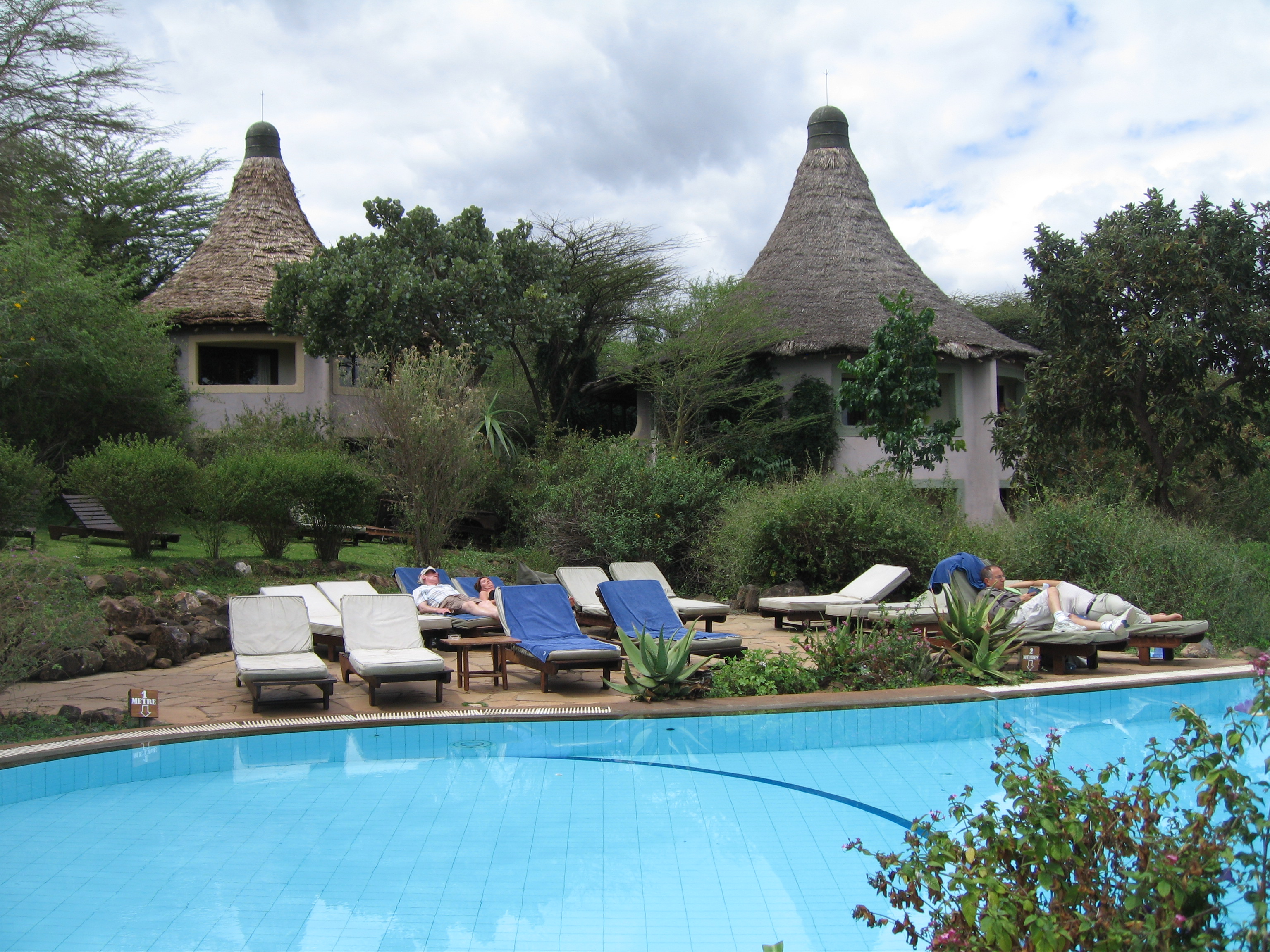
The Serena Lodge as viewed from the compound's pool. -- Photo by Pat Bean

up with identifying them. Bilal helped, but I later realized that while he was great at putting a name to the larger and more common birds, he was not quite as good at the smaller, obscure birds of interest only to crazily addicted birders like myself.

Lake Manyara, located along an escarpment of the great rift, and called “the loveliest … setting in Africa” by Ernest Hemingway, provides habitat to over 400 bird species, including marabou storks, which when I saw a flock of them in some overhead trees thought were the ugliest birds I had ever seen.

White-headed buffalo weaver -- Wikipedia photo

They were hanging about an outdoor market just outside the Serena Lodge compound. As we passed it, my attention was taken away from the birds to an exhibit of colorful African paintings. When I expressed interest in them, Bilal quickly cautioned us not to visit the market unescorted.

As we passed through a fence and guards to get to our accommodations, I realized that our safety was important not just to Bilal, but the country’s entire tourist interests. Harm to any one safari participant would mean bad publicity for business.

As beautiful as this superb starling is, it soon list its glamour because it was so common. We saw them everywhere. -- Wikipedia photo

The Serena Lodge, where we were to spend the night, was owned by India businessmen and staffed by local natives – as were most of the places we stayed at during our trip. It was a grandiose eye-popper.

Our rooms were circular, situated in tall, white-washed roundavels with thatched roofs. The structures sat on a cliff that provided panoramic views of the landscapes and wildlife below. A large swimming pool went right up to the edge of the escarpment.

Taita fiscal -- Wikipedia photo

Lunch was served in an outdoor setting, with birds frequently flittering about. It made for very distracted eating, but a perfect meal, especially with the bottled Coke we ordered to go with it. It was so much tastier than the ones we get in America.

Everything about the Serena Lodge was delightful, and everyone catered to our slightest needs. But the real Africa, both Kim and I knew, lay outside this guarded sanctuary where Bilal didn’t want us to go without him.

I had that decadent feeling again – but I was enjoying every minute of it.

Bird log of New Lifers: Augur buzzard, gray heron, yellow-necked spurfowl, black-shouldered kite, white-headed buffalo weaver, African gray hornbill, superb starling, northern white-crowned shrike, taita fiscal and marabou stork. (August 22, drive from Arusha Coffee Lodge to Serena Lodge near the main entrance to Lake Manyara National Park).

We also saw lots of cattle egrets, is a bird now common in North America, having first migrated to the United States from Africa in the 1940s. I would see many more of them on our wildlife outings while in Africa.

Next: An Afternoon in Lake Manyara National Park.

Read Full Post »

“Let your mind start a journey thru a strange new world. Leave all thoughts of the world you knew before. Let your soul take you where you long to be … let your spirit start to soar, and you’ll live as you’ve never lived before.” Erich Fromm

Bilal, in an unguarded moment. He was a bit camera shy. -- Photo by Pat Bean

African Safari: Bilal

Breakfast the next morning was interrupted by a black and white bird strutting around on the open-air dining room floor. I chased it out to the pool, East Africa guide book in hand, before finally identifying it as an African pied wagtail. Cute little black and white bird.

This interruption of meals for bird and other wildlife watching would become a common, and delightful, routine for the next two weeks.

After breakfast we met up with Evans, a Ranger Safaris supervisor who carefully went over our arranged itinerary with us, and then introduced us to Bilal, our native guide and driver for the rest of our stay in Tanzania.

“Bilal’s our best guide, but don’t let him push you around,” Evans said.

I figured Evans said that about all the guides when introducing them to their clients. As for pushing us around, well both Kim and I are assertive women not prone to letting anyone direct our actions.

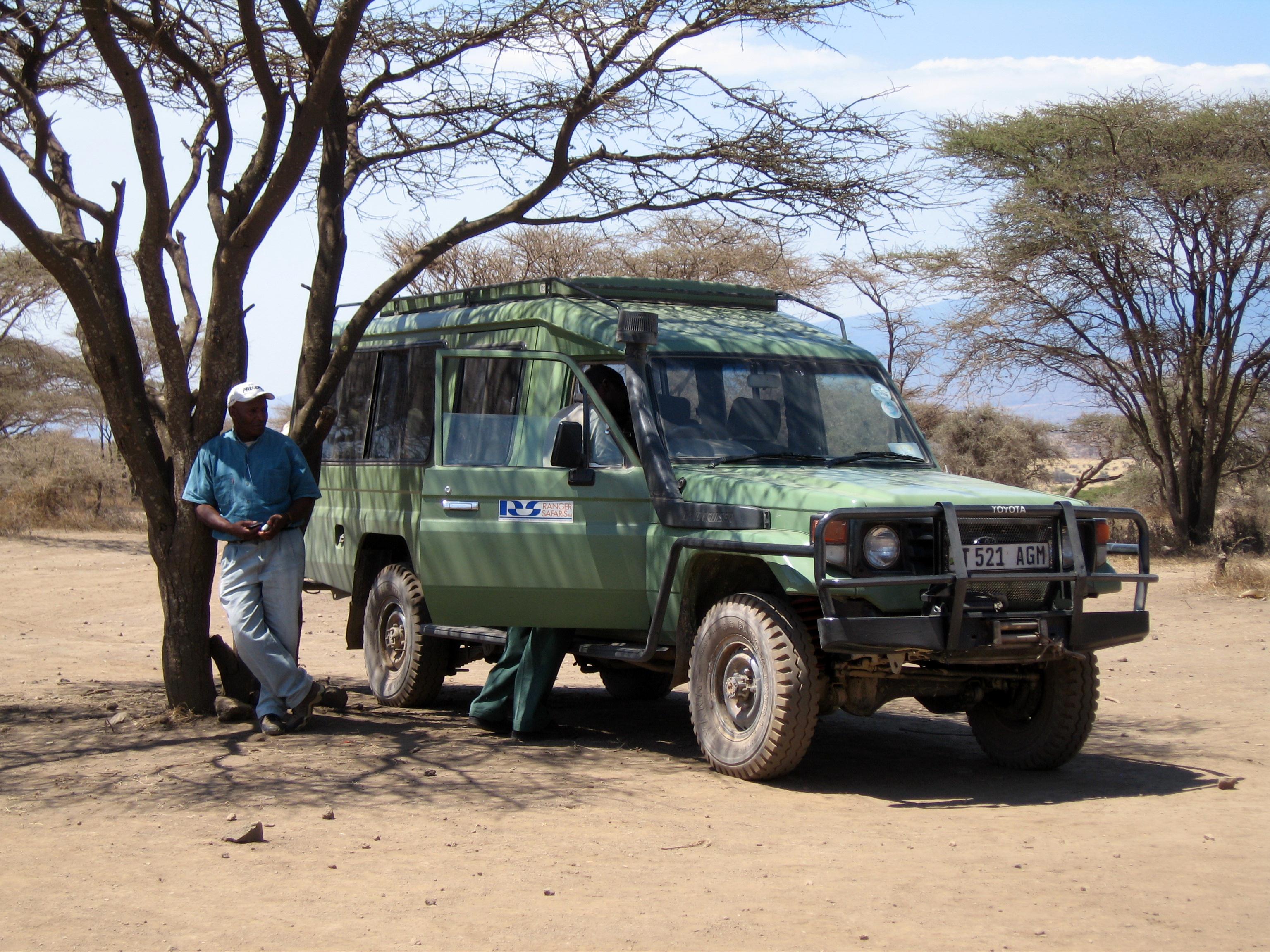
Bilal standing beside his Land Rover, whose top and sides were removed for our sight-seeing pleasure as he bounced the two of us across the African landscape. -- Photo by Pat Bean

Bilal actually did try to push a few times, but it was always only out of concern for our safety. Mostly we let him, but a few times we didn’t. As to him being the best guide, Kim and I quickly came to the conclusion that Evans had spoke the absolute truth.

Bilal, who was older and looked out after some of the younger guides working in our general area, spoke very good English, drove his Land Rover down rutted roads and rough off-road terrain with great skill, and always knew where to find wildlife.


African pied wagtail -- Wikipedia photo

Some of the best moments of my time in Africa were spent standing up and bouncing around in his Land Rover – overjoyed at the lack of seat-belt rules – as Bilal rushed to a lion, cheetah or leopard sighting.

Kim and I finally discovered that Bilal was divorced. While he expected his son to look out for him in his old age – he worried that we also had sons to take care of us in our later years – it was his daughter, who had recently presented him with a grandson, whom he talked with regularly on his radio

Like Africa, Bilal was a bundle of contradictions. But then aren’t we all.

Next: The drive to Lake Manyara

Read Full Post »

« Newer Posts