Feeds:
Posts
Comments

Archive for July, 2011

Coke from the bottle is how we were always served it in Africa, and it tasted so much better than it ever did in America. -- Photo by Kim Perrin

All the pathos and irony of leaving one’s youth behind is thus implicit in every joyous moment of travel: one knows that the first joy can never be recovered, and the wise traveler learns not to repeat successes but tries new places all the time.” – Paul Fussell
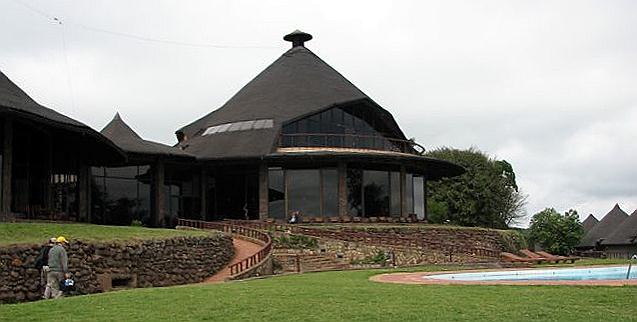
Ngorongoro Sopa Lodge's main building. Our suite was at the end of a long row of rooms barely visible on the right. -- Photo by Kim Perrin

African Safari:

Besides having a marvelous morning visiting the site where human life may have begun, and dancing with the Maasai women in the afternoon, I still had time to watch for birds – and to add another dozen birds to my life list.

Bilal was happy because I had seen more than the 100 new life birds that he had promised he would find for me. Of course I was pleased, but I kept telling him I wanted 200.

“No, no,” he said. “I only promised 100.”
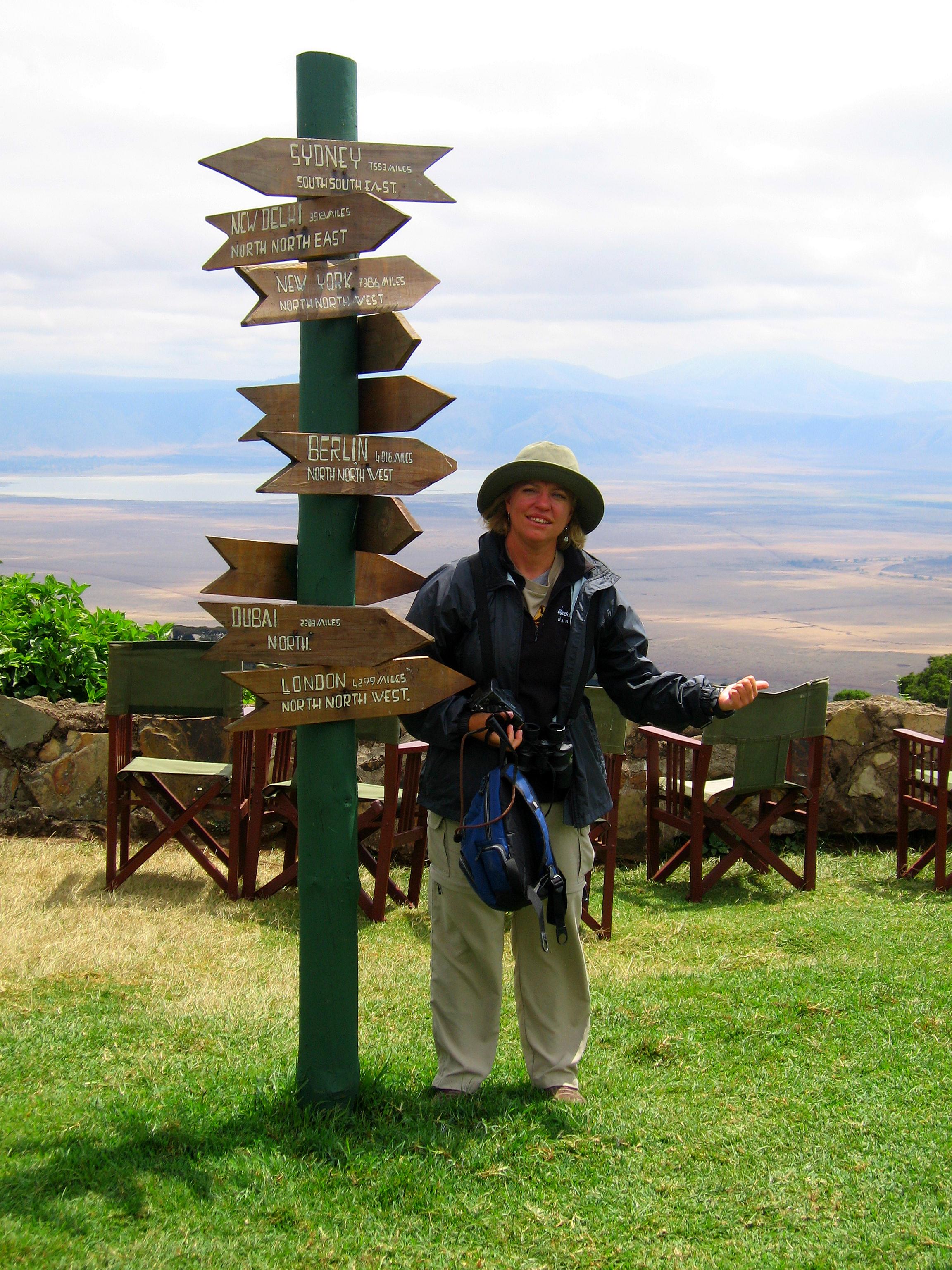
Kim hamming it up in front of a mile-marker on the lawn of the Ngorongoro Sopa Lodge that overlooks the Ngorongoro Crater and its vast herds of wildlife. -- Photo by Pat Bean

. We ended our day at the Ngorongoro Sopa Lodge, which sat on the rim of the Ngorongoro Crater, with each of its suites having a glass-enclosed porch for wildlife watching.

We were told when we arrived at the lodge that buffalo were in the area and that we shouldn’t wander. As an extra precaution, a guard walked us to and from our rooms. His weapon, however, was just a thick night stick. Kim and I saw only two guns our entire stay in Africa.

As we did each night, we dressed for dinner, and had a nice rum and Coke to go with it. The Cokes, which came in bottles, were much better tasting than the ones we get in America. While we never had more than a couple of selections of meal choices, I was never served anything I didn’t like.

Cardinal woodpecker

 Of course we were not eating standard African fare. The five-star luxury lodges that were part of our arranged safari had gourmet cooks I’m sure. Dinners always began with a delicious soup, then a main entree that was often beef, and usually something chocolate for dessert.

It was a far cry from the bologna sandwiches, faded canvas tent and quilt sleeping bags that were part of my very first traveling adventures.

Bird Log of New Lifers: Northern anteater chat, yellow-rumped seedeater, black-lored babbler, Kendrick’s starling, common drongo, cardinal woodpecker, grey-headed sparrow, Speke’s weaver, green-capped eremomela, white-throated robin shining sunbird, cape robin chat, Aug. 24, 2007, Serengeti and Ngorongoro Crater.
Read Full Post »

 “No journey carries one far unless, as it extends into the world around us, it goes an equal distance into the world within.” Lillian Smith.

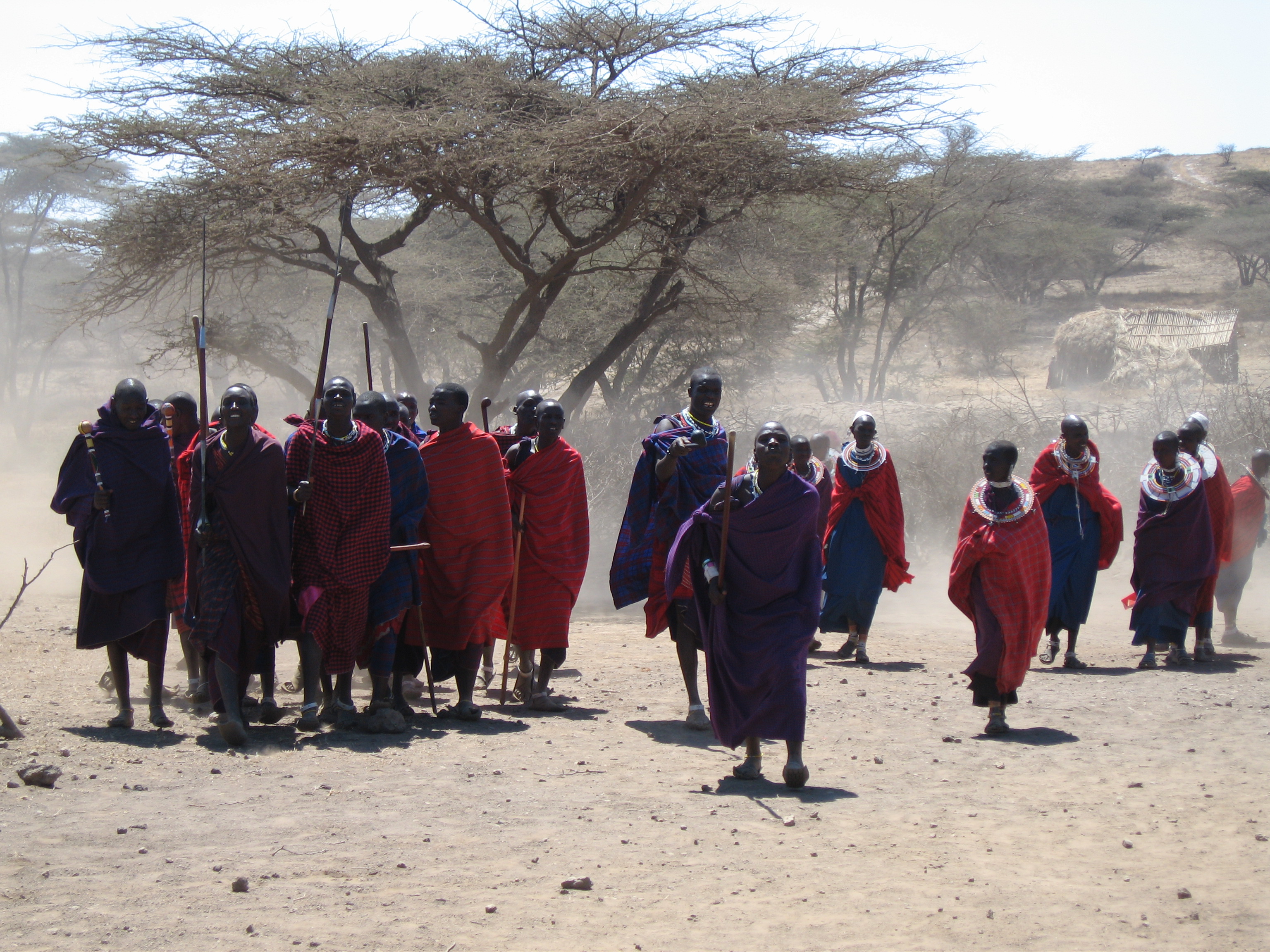
A Maasai community -- one set up to show tourists how the Maasai live -- welcomed us with a dance. -- Photo by Pat Bean

African Safari :

There’s a scene in the 1962 John Wayne movie, “Hatari,” in which co-star Elsa Martinelli, dances with Maasai women. In the dance, the women jump up and down making their wide, bead collar necklaces bounce.

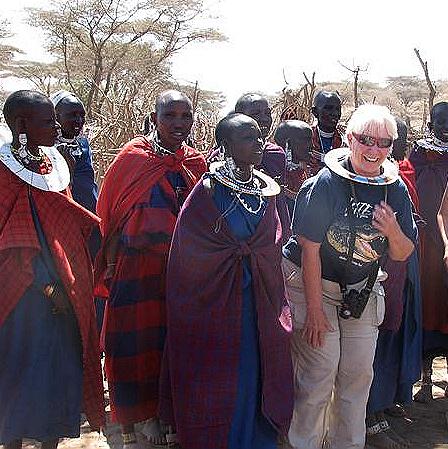
Graceful I was not, but one of my best memories of Africa was getting to dance with my Maasai sisters. -- Photo by Kim Perrin

I had long thought that would be a fun thing to do. In what was pretty much a recreation of the movie scene, Kim and I watched a group of Maasai women dance and jiggle their bead collars for us when we visited a model Maasai community as part of our guided tour activities. .

The native leader of the small group, which lived in traditional, dark, dung and twig huts built by the women behind a barricade of thorn bushes to keep out wild animals, asked if someone wanted to dance with them. And then he approached Kim.

I was crest-fallen because he hadn’t approached me. .

But Kim, who has never been quite the ham that I am, shook her head and stepped back. Before he could ask anyone

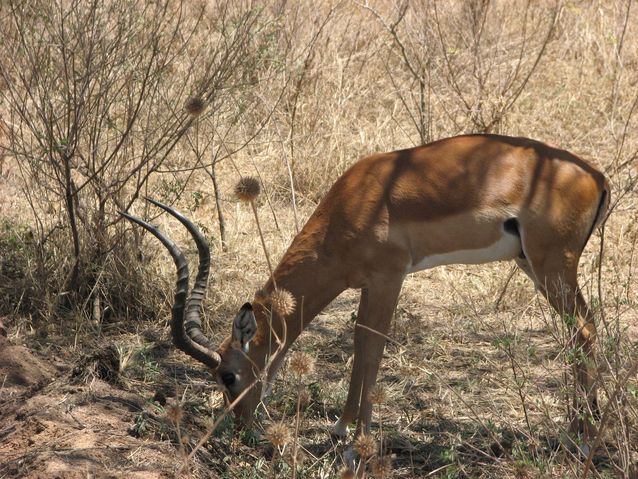
An impala quietly grazes near the Maasai village. -- Photo by Kim Perrin

else, I eagerly stepped forward and volunteered.

What had looked so easy watching the women get that necklace bouncing wasn’t easy at all to accomplish. My collar ornament barely moved at all.

But then the beautiful bald-headed woman standing next to me gave me a quick lesson, and soon my necklace was bouncing up and down, too – although not with quite the rhythm and grace as those of my African sisters.

After the dance, I bought one of the collar necklaces that was handmade in the village by one of the women. It was the only souvenir I bought for myself on the entire trip.

It was such moments as dancing with the Maasai women, along with watching a leopard stalk a gazelle, adding new birds to my life list, and gazing at Africa’s amazing sunsets at the end of a long day, that drilled a piece of Africa into my heart.

That piece, now four years old, is still there and shining bright with memories.

Read Full Post »

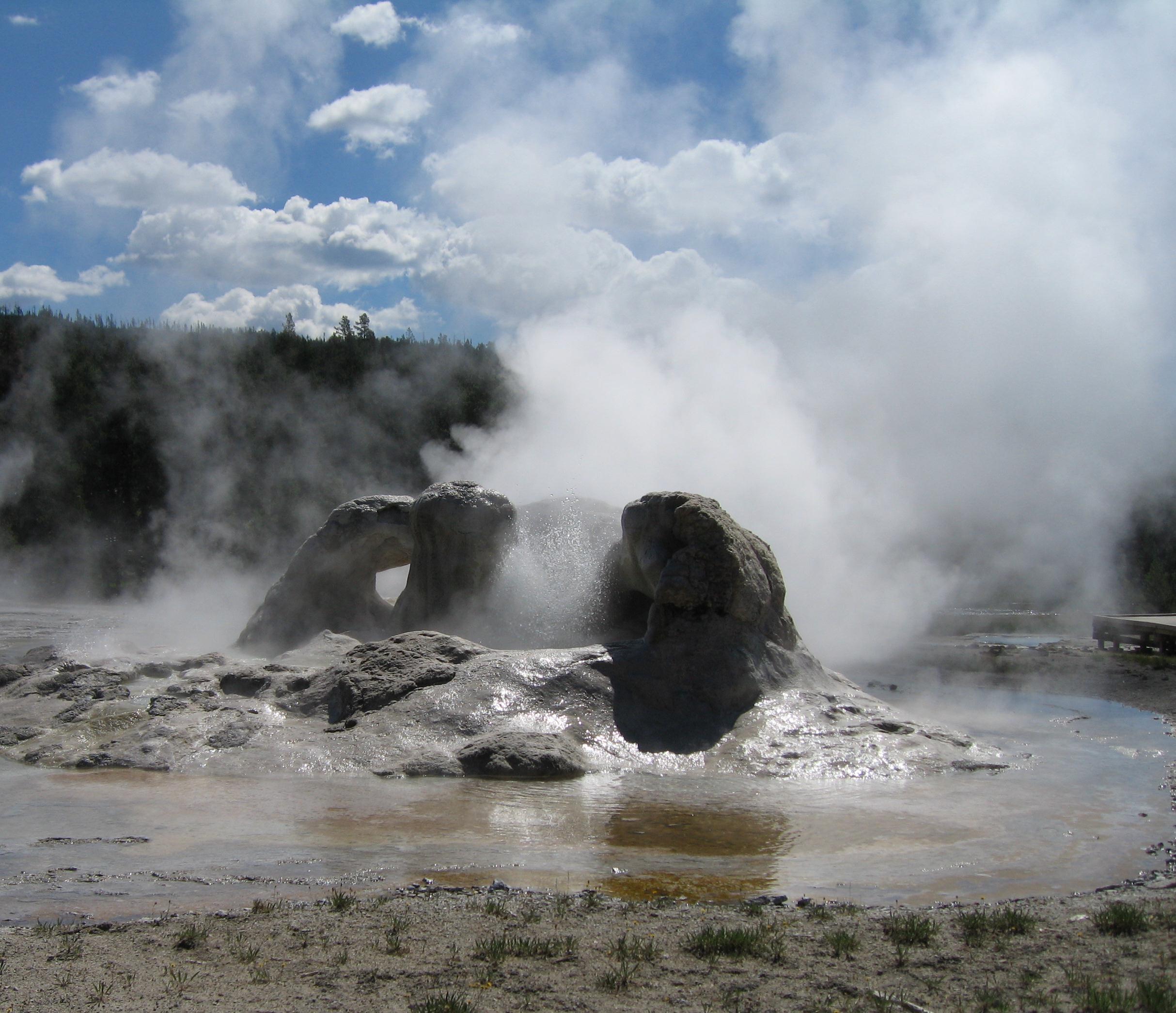
Earth's hot breath: Grotto Geyser in Yellowstone National Park -- Photo by Pat Bean

 “Earth leaps like a geyser for those who drill through the rock of inertia.” Alexis Carrell

Read Full Post »

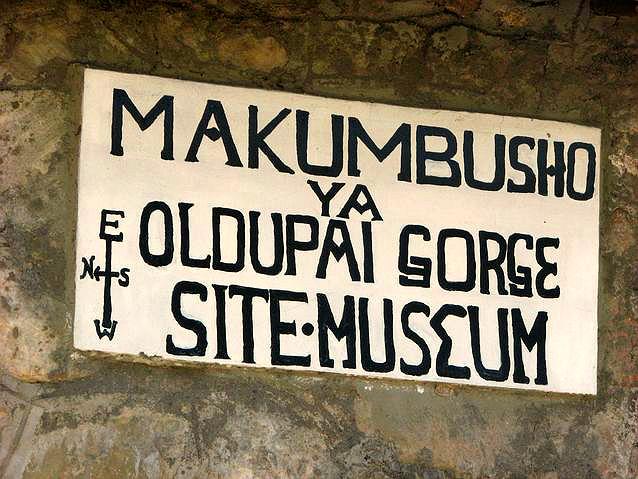
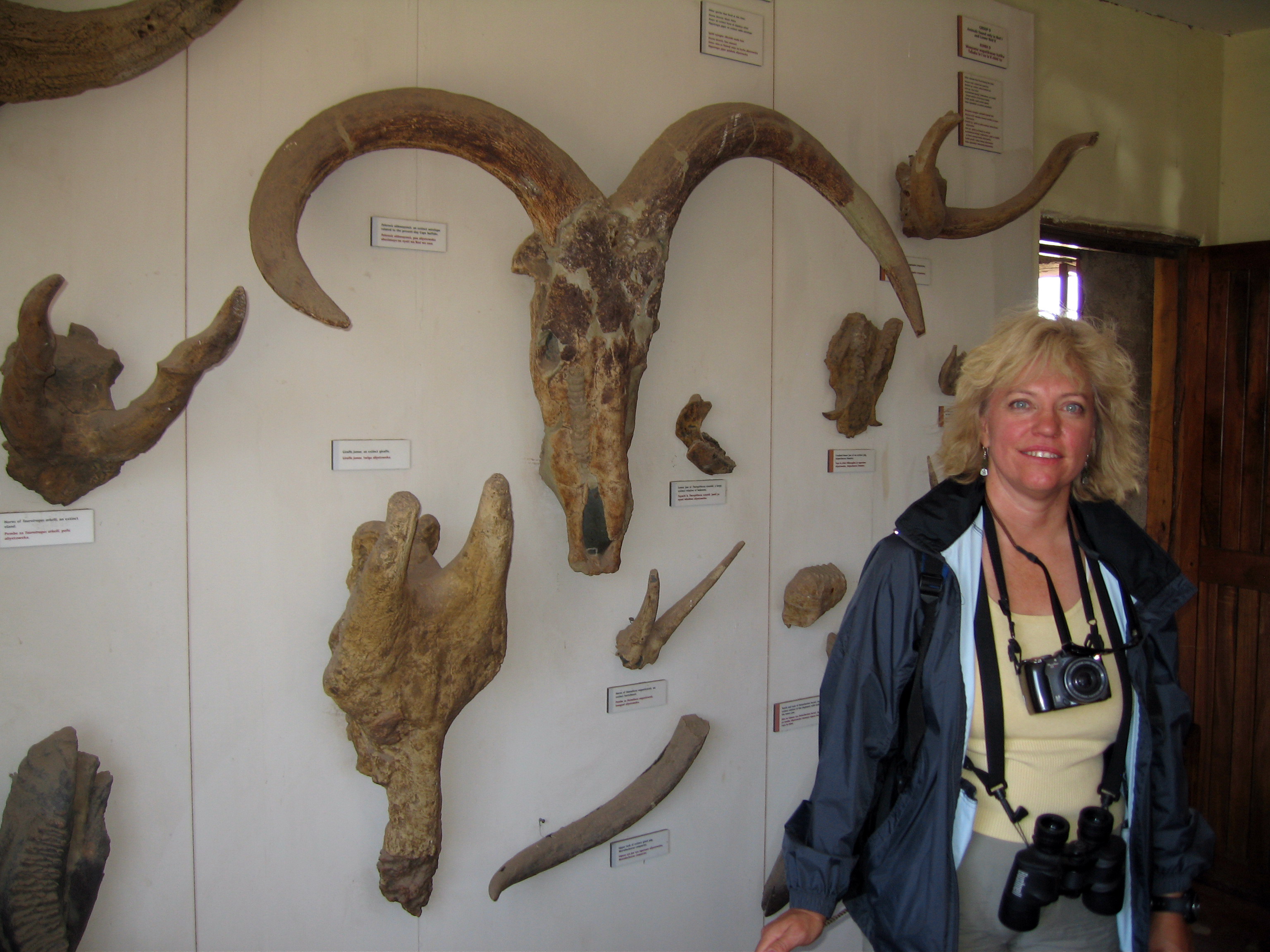
Museum sign

 “We are the only beings on the planet who lead such rich internal lives that it’s not the events that matter most to us, but rather, it’s how we interpret those events that will determine how we think about ourselves and how we will act in the future.” Anthony Robbins

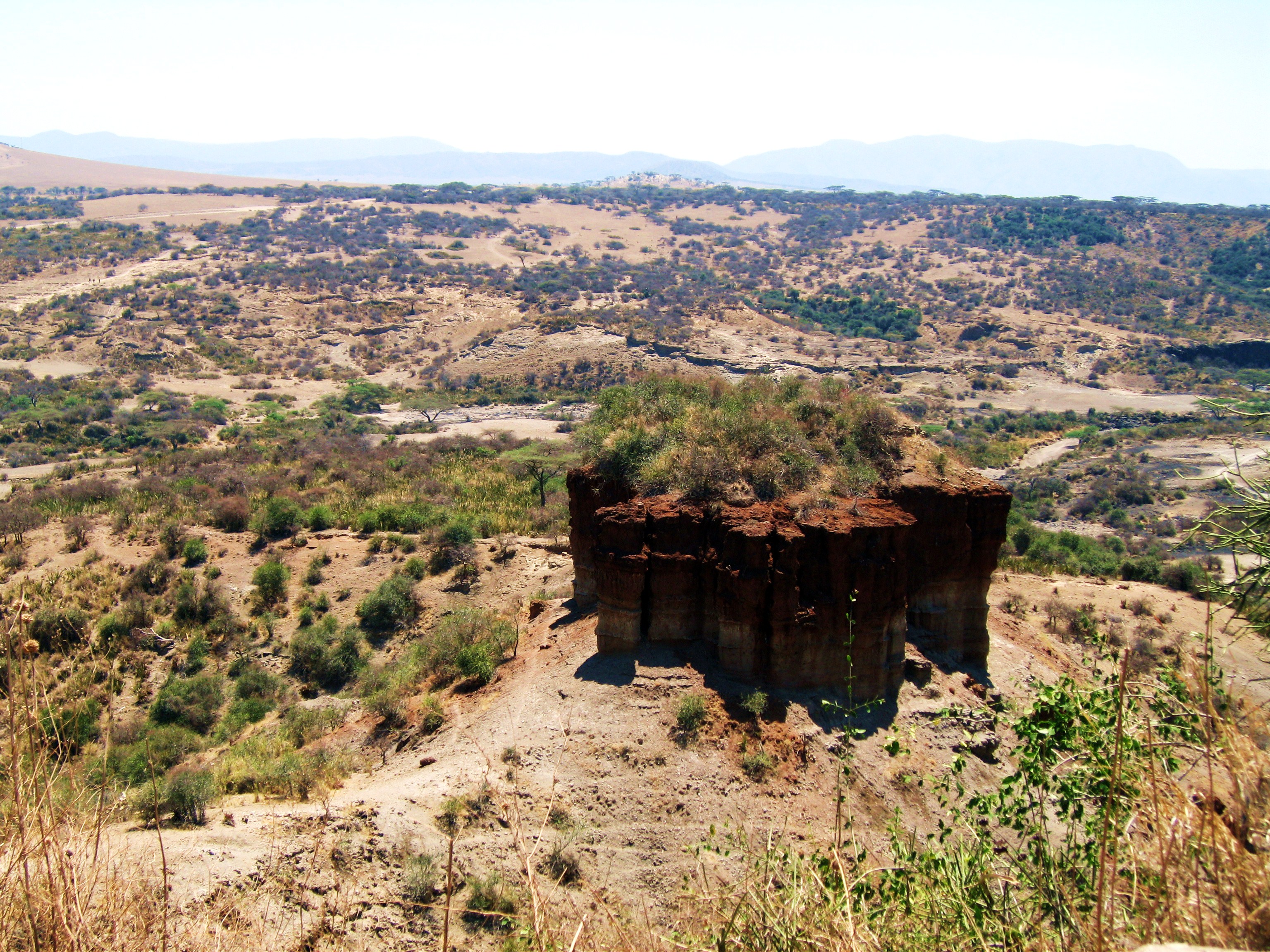
The monolith in Oldupai Gorge, the view behind the young man who told us the story of the landscape here. -- Photo by Pat Bean

African Safari: A Place of Beginnings

Places call to me. Africa called twice. The second call was for the wildlife safari adventure Kim and I enjoyed for two weeks in 2007, which also answered the first call.

I had long had a desire to see Africa’s Great Rift, where human life is thought to have begun. I had read much about the anthropology discoveries of Mary and Louis Leaky in Oldupai (also called Olduvai) Gorge in Tanzania, and wanted to see this place for myself.

The rift, a continuous geographic trench, stretches across Africa for over 3,000 miles, but the section in Tanzania’s Ngorongoro Crater is where the most important discoveries about our human beginnings have been made.

It was why, of the many safari choices offered of Africa, I had chosen the one that brought us to Tanzania.

And now I was here, looking out over the spot where in 1975 Mary Leakey had discovered a series of footprints showing our pre-human ancestors walking upright over 2 million years ago. .

Kim standing in front of some non-human remains found in Oldupai Gorge. -- Photo by Pat Bean

I even got to see a replica of these footprints in the small Leaky Oldupai Museum – after listening to a young man, whom I assumed was an anthropology student, explain the wonders found in this landscape.

I could hardly understand his heavily accented English, but it was accompanied by a theatrical performance that filled in the details of the words I missed. It was one of the most unusual, and delightful, lectures I ever sat through.

It was given on a high overlook of the gorge, beneath a thatched shelter for shade, looking out at

landscape that once was a lake. The lake was covered by a succession of volcanic ash; then, about a half million years ago, seismic activity diverted a stream that cut down into the sediments, revealing seven layers of the past. In doing so, it created an awesome research lab for the Leakeys and other anthropologists.

The site was used as the first monolith in the movie “2001: A Space Odyssey.” And the small Oldupai Museum here reminded me of those one used to find, and occasionally still does, while traveling across America on Route 66.

It’s both strange and wonderful how all of life seems to connect.

Read Full Post »

 “It’s a strange world of language in which skating on thin ice can get you into hot water.” – Franklin P. Jones

Duma -- Photo by Pat Bean

African Safari: The Power of Words  

In Swahili, the national language of both Kenya and Tanzania, the word for hello is jambo. It was a word we heard frequently, and one we spoke in reply, accompanied by a nod of the head.

I liked the word, and the acknowledgment of human recognition it implied between two people who did not speak a common language.

But on our third morning in Africa, one polite man used two words in greeting me.

“Jambo mama,” he said. Then turned to Kim and simply said: “Jambo.”

I asked Bilal later what that was all about. And he said “mama” was a term used to show respect to elders. While my vanity was a bit hurt, the respect offered me was appreciated. After that Bilal started calling me Mama, too, while Kim remained Kim.

I guess she couldn’t help it that she was 21 years younger than me and still a “hottie.”

Another Swahili word I was already familiar with was simba, meaning lion.


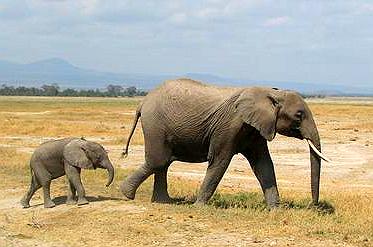
Big tembo and little tembo -- Photo by Kim Perrin

Other than those three words, Bilal’s radio conversations in Swahili while talking to other guides out in the field, was a lot of mumbo jumbo, which is a good old English phrase for confusing and meaningless.

Since all our guides spoke excellent English, I never had any reason to use any of the other Swahili words listed in my African travel guide, such as:

Duma, meaning cheetah

Twiga …giraffe

Impala … swala

Elephant … tembo

Kiboko -- Photo by Pat Bean

Mister … bwana

Hippopotamus …  kibuko

Rhino … kifaru

Then there is choo, the word for toilet, and chui, the word for leopard.

I already have a Texas twang that can sometimes be misunderstood, so I can easily imagine myself mispronouncing these two words, and telling someone that I had to use the leopard.

The Swahili word for beer, meanwhile, is prombe.  Kim and I, however, learned to call it Tuskers.


Read Full Post »

 “There is just something spectacular about seeing wildlife in its natural environment that thrills us … Arun Kejriwai

We were too late to catch our leopard up in a tree, but I couldn't resist sharing this Wikipedia photo of this magnificent one out on a limb.

African Safari: A Day to Remember

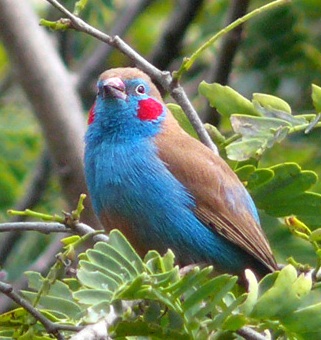
I welcomed my first morning in the Serengeti from the balcony of our spacious Sopa Lodge suite, breathing in Africa’s morning light that left me eager to start the day. Red-cheeked cordon bleus – what a strange name for a bird – welcomed the morning with me.

After breakfast, and more great African coffee, Bilal picked Kim and I for a full day of wildlife viewing.

Red-cheeked cordon bleu

The day’s fantastic wildlife started as we exited the lodge compound’s gate – beginning with a green wood- hoopoe (another strange bird name) and a troop of baboons that included several babies being lugged around on an adult’s back – and never let up.

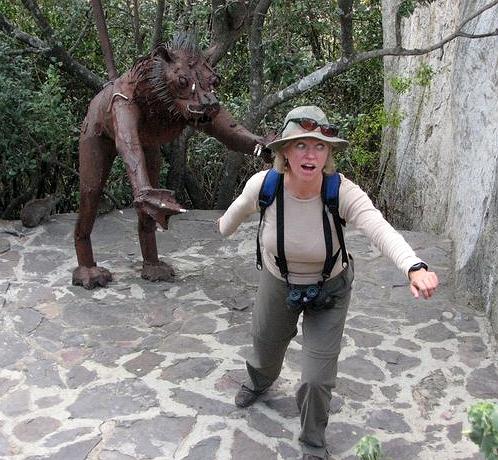
We saw impalas, water buffalo, hippos, lions, cheetahs, ostriches, dik-diks, zebras, wildebeest, Nile crocodiles and of course many species of birds – all before we stopped for a nature hike in a developed tourist area where the wildlife were sculptures, well except for the monkeys, one of which tried to steal Kim’s box lunch.

Kim being funny during our nature walk among the wildlife sculptures. -- Photo by Pat Bean

After lunch, I wandered around doing my usual bird hunting until Kim came rushing up telling me to come quick.

Back at the Land Rover, Bilal said “Come on mama,” and then we were off on yet another wild ride.

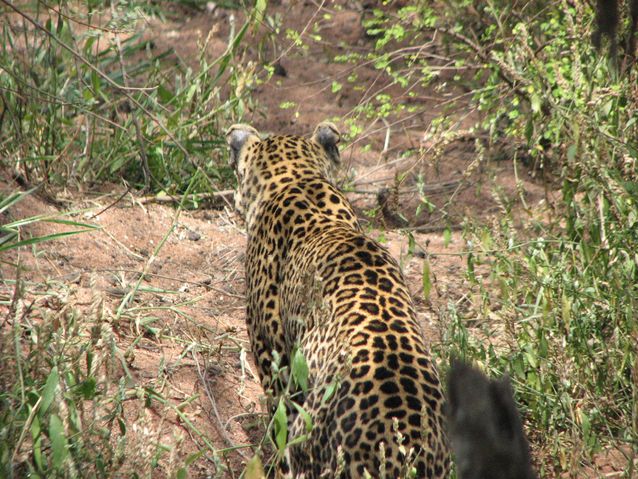
This time we were racing toward a leopard sighting, which Bilal had learned about while talking Swahil on his radio with other guides. We weren’t the only racers. Only about one in five visitors to Tanzania are lucky enough to see a leopard, we had been told.

Our leopard intently watching a Grant's gazelle. -- Photo by Kim Perrin

It was like a traffic jam at the sighting site when we got there, and learned the leopard had just jumped out of a tree and disappeared.

Then suddenly, as all binoculars were turned toward the distant landscape trying to find the animal, it walked right in front of our Land Rover. Our spot in the traffic turned out to be the best one for leopard watching.

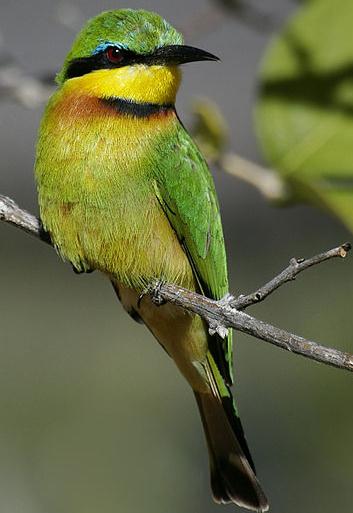
Little bee-eater

Ignoring all the human fuss going on around it, the leopard stayed in the area for the next 30 minutes or so, patiently stalking a Grant’s gazelle. The gazelle finally spotted it, however, and was off and running, while the leopard simply slunk out of sight.

For once, I forgot to look for birds.

Bird Log of New Lifers: Red-cheeked cordon bleu, green wood-hoopoe, red-billed oxpecker, spotted redshank, brown snake eagle, lilac-breasted roller, black crake, sooty chat, blue-capped cordon bleu, speckled-fronted weaver. Verreaux eagle owl, Hilderbrandt’s starling, speckled pigeon, grey-capped social weaver, purple grenadier, lesser masked weaver, wood sandpiper, yellow-breasted apalis, white-headed vulture, hoopoe, little bee-eater, white-bellied bustard, bare-faced go-awaybird, white-browed coucal, Aug. 24, 2007, Serengeti National Park, Tanzania.

Next: Swahili

Read Full Post »


My mind's eye saw this young Maasai girl as one who will face the future unafraid. --Photo by Pat Bean

“A good question is never answered. It is not a bolt to be tightened into place but a seed to be planted and to bear more seed toward the hope of greening the landscape of idea.” – John Ciardi.

African Safari: A Conversation With Bilal

Kim asked Bilal if there were any female guides.

“Some of the other guides do, but I don’t,” he said.

“Huh?” Kim replied.

It seems Bilal thought she had asked him if he ever “visited” girls in the local villages in the evenings when he wasn’t driving us around Tanzania.

His answer when he finally understood the actual question was: “Oh no. They would be too afraid.”

Both replies were telling, I thought.

Our conversations with Bilal revealed a lot more about Africa than what could be seen with the eyes. Of course, we two “uppity” women tried to open Bilal’s eyes as well.

I suspected we were unsuccessful when he laughed in disbelief after Kim told him about our friend, Janice, and my daughter-in-law, Karen – two American women who both hold martial arts’ black belts.

Of course, there are things in life to be afraid of, like hippos that are at the top of the list of Africa's most dangerous mammals. -- Photo by Kim Perrin

“Now those are two women who could even kick your butt,” Kim had said.

But while respectful of our opinions, and us, we could see that Bilal didn’t believe her.

Later, when we were in Kenya, we visited a local Maasai tribe where a couple of the men demonstrated a game played with stones. This time I asked the question: “Do women also play the game?”

The stone game -- played only by men. -- Photo by Kim Perrin

“Oh no. They can’t understand it,” was the response given through our Swahili translator.

My tongue hurt from biting back the retort. We were, after all, guests in another country.

It wasn’t until the Maasai men were demonstrating to us how high they could jump from a standing position that I could once again smile.

A gaggle of young boys were imitating the men – as was one young girl.

She was with the women off to the side, and jumping despite the gentle hand on her shoulder, laid there by one of the women to try to get her to desist.

Perhaps, I thought, she will grow up to be a guide. There was certainly no look of fear in her face.

Read Full Post »

Common mullein just starting to blossom -- Photo by Pat Bean

“Oh, grey hill,
Where the grazing herd
Licks the purple blossom,
Crops the spiky weed!
Oh, stony pasture,
Where the tall mullein
Stands up so sturdy
On its little seed!”
– Edna St. Vincent Millay

Travels With Maggie

Beautiful walk this morning here at Lake Walcott, where the mullein’s tall stalks are just beginning to fill with yellow blossoms.

As the weather has turned warmer – although not into the triple digits my family and friends back in Texas have been enduring – things have become to pop out. I see something new every morning when I take my walk with Maggie.

Mullein with the park and lake in the background. -- Photo by Pat Bean

This morning was especially nice, and so I decided to take a break from my African Safari to share it with you.

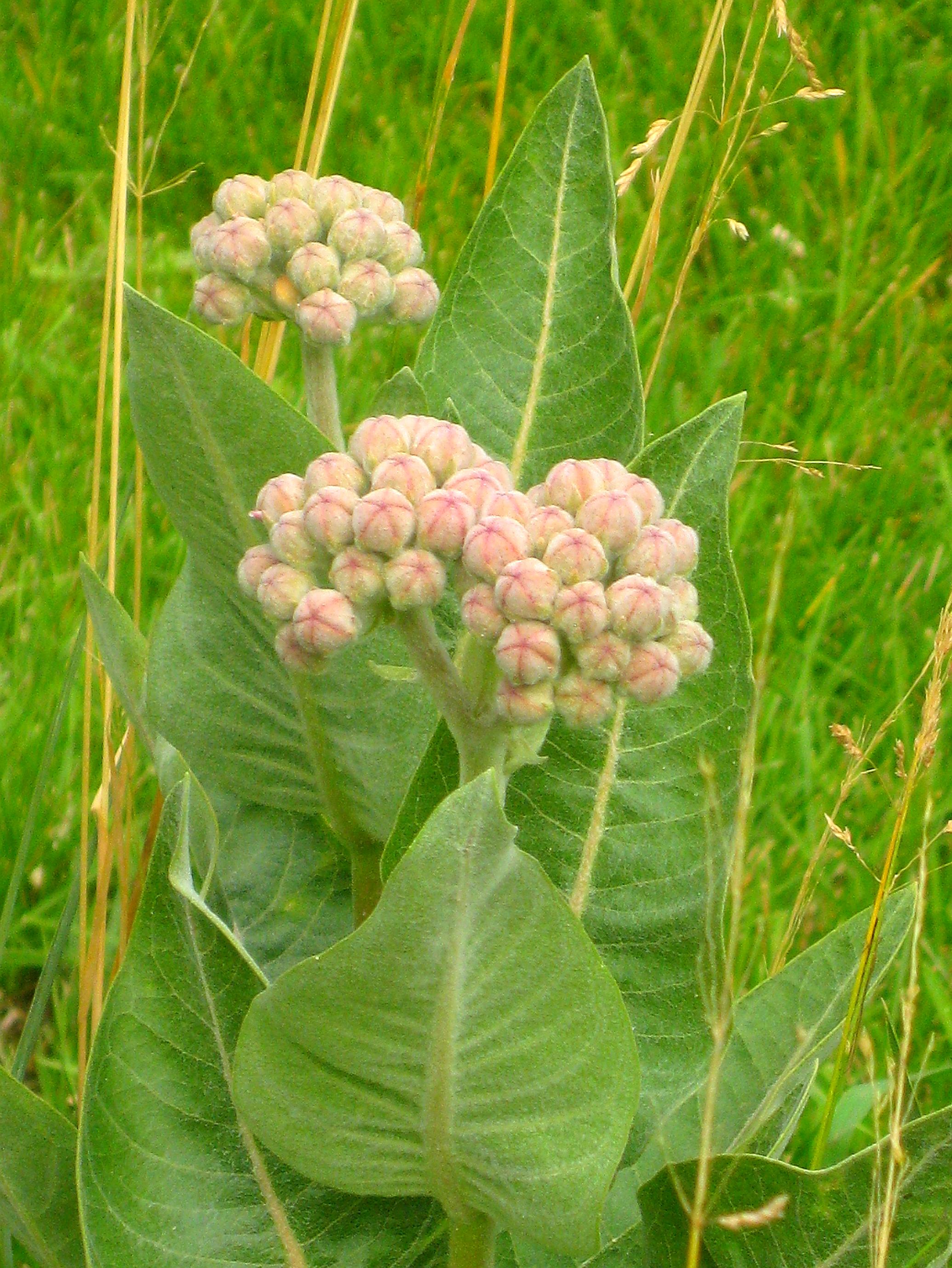
I’m not sure what the wildflower below is, although I think it may belong to the onion family. Perhaps one of you wildflower experts can identify it. I hope so because I really do like to know the proper names of things.

Meanwhile I’ll be back later today with more recap of Kim and my African Safari adventures.

Who can name this plant? -- Photo by Pat Bean

Read Full Post »

 “Adventure is a path. Real adventure – self-determined, self-motivated, often risky – forces you to have firsthand encounters with the world. The world the way it is, not the way you imagine it. Your body will collide with the earth and you will bear witness. In this way you will be compelled to grapple with the limitless kindness and bottomless cruelty of humankind – and perhaps realize that you yourself are capable of both. This will change you. Nothing will ever again be black-and-white.” – Mark Jenkins

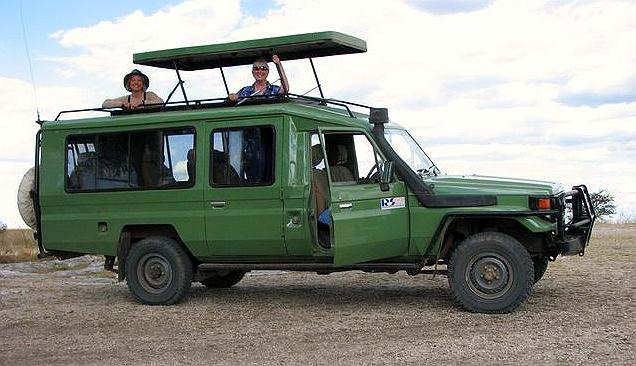
Bilal always had our Land Rover swept and washed when he picked up us each day for our wildlife adventures. Above are Kim and I in our regular wildlife-watching positions. -- Photo by Bilal

African Safari: Afternoon in the Serengeti

Mating lions -- Photo by Kim Perrin

Bilal picked us up after lunch for an afternoon game drive in Serengeti National Park, one of the largest wildlife refuges in the world.

Meaning endless plain, the Serengeti is spread out over 5,700 square miles and ranges in elevation from 3,120 to 6,070 feet. The park provides habitat for over 500 birds and hundreds of mammal species. USA Today lists it as one of the seven wonders of the modern world.

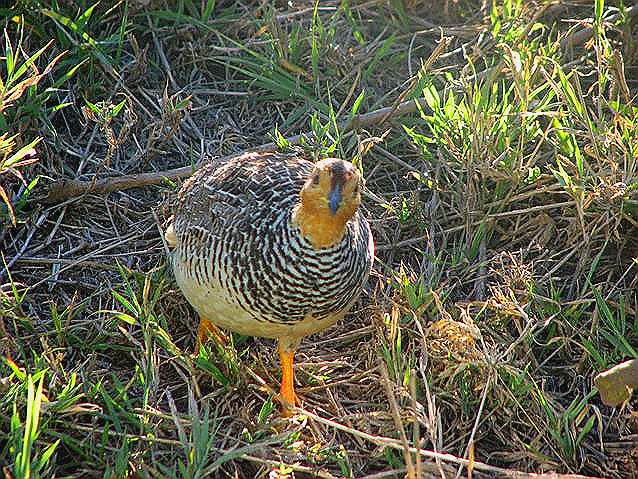
A Coqui francolin posed for us beside the road. -- Photo by Kim Perrin

A Coqui francolin posed for us beside the road. -- Photo by Kim Perrin

It was with great anticipation that Kim and I looked forward to seeing it. And Bilal, with his knowledge of where to find animals didn’t disappoint us.

Our list of mammal sightings included Thompson’s and Grant gazelles, hartebeests, topi, waterbuck, elephants, giraffe, cheetahs, baboons, zebras, lion, and of course lots of birds, including many of those already one my life list and new ones to add to it.

Because I often saw birds before other wildlife, the running joke soon became "Oh, there's an animal beneath that bird." In this case it's a water buffalo with an yellow-billed oxpecker on its back. -- Photo by Kim Perrin

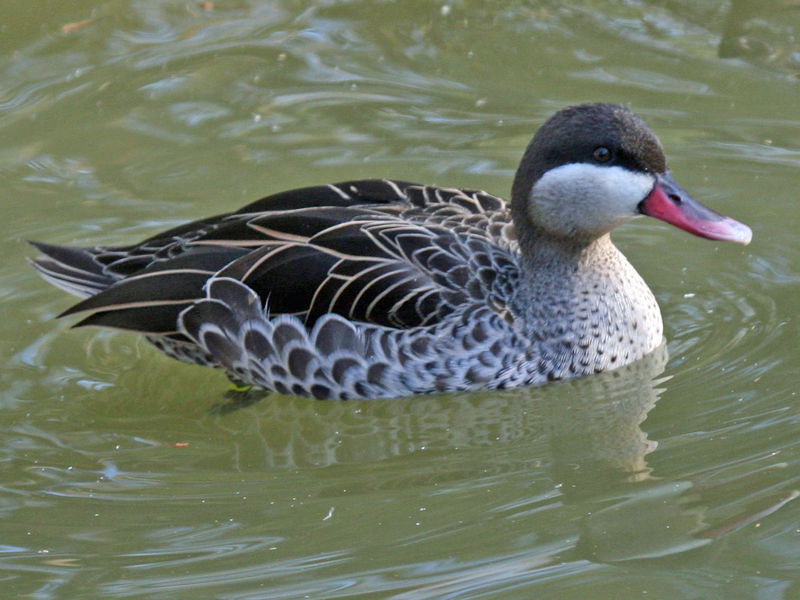
One of our stops was even at a small lake where we saw quite a few water birds, including a family of cute red-billed teal.

On the grasslands, we watched a secretary bird stomp across the plains, then stop to wrestle with a snake of some kind, its favorite meal.

One voyeur viewing was of a pair of lions mating, which Bilal said they would do every 15 minutes or so for about three days. There was a lot of quiet ignoring in between the love sessions, and a lot of snarling during it.

Lion dads, while sometimes aloof around young cubs, do stick around to help protect them after they are born. Cheetah dads, meanwhile, go AWOL and leave all the raising of his offspring, to mom. Most of the cheetahs we saw this day, and for the remainder of our safari, had three or four young ones in tow.

Red-billed teal -- Wikipedia photo

Meanwhile, it continued to amaze me at how the animals acted as if our Land Rover was no threat. Of course we weren’t. Bilal said they just considered us a metal beast that wasn’t good to eat – thankfully.

Way too soon it was time to head back to our lodge for the night, where after dinner in the main lodge, we were walked back to our rooms by a guard. He told us to sure and keep our balcony doors closed against a baboon invasion.

Sleep that night, beneath mosquito netting in our luxurious two-bed suite, was accompanied by a hyena chorus, while our morning wake-up call was served up by howling baboons. It was all awesomely different from our regular routines – and we loved it.

Bird Log of New Lifers: Ruppell’s long-tailed starling, red-necked spurfowl, African white-backed vulture, Coqui francolin, red-billed teal, three-banded plover, Kttlitz’s plover, four-banded sandgrouse, little stint and little grebe, Aug. 23, afternoon drive in the Serengeti.

Next: A feminist conversation with Bilal.

Read Full Post »

A colorful lizard roaming around the lodge swimming pool. -- Photo by Kim Perrin

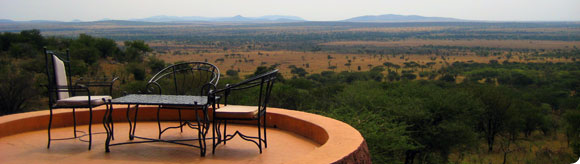
The view of the Serengeti landscape from a Sopa Lodge patio was awesome.

Plans to protect air and water, wilderness and wildlife are in fact plans to protect man.” Stewart Udall

African Safari: Serengeti Sopa Lodge

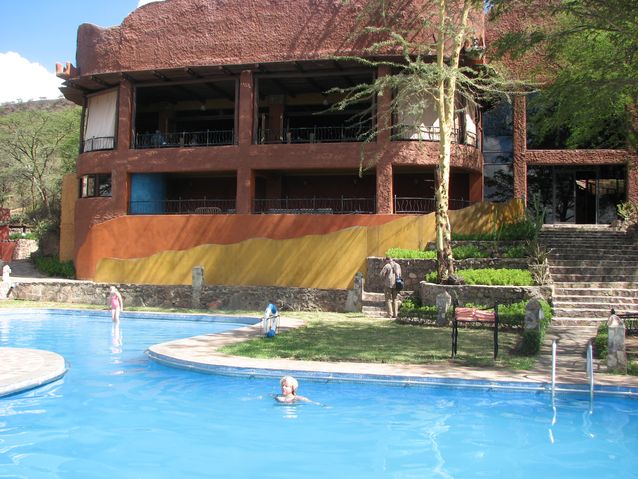
Kim in the pool in front of the Serengeti Sopa Lodge. -- Photo by Pat Bean

The wildlife viewing didn’t stop when we reached the Serengeti Sopa Lodge, another five-star hotel compound in the middle of nowhere, and again where we were treated like the royalty we were not. This was quite a new experience for this budget traveler. I loved every minute of it.

Meanwhile, not only did the lodge prove cliff-top views of the surrounding Serengeti landscape, but it also overlooked a man-made waterhole where we watched everything from monkeys to hyenas come in for a drink.

There was also smaller, quite colorful wildlife running all about the lodge compound.

Von der Decken's hornbill -- Wikipedia photo

After yet another delicious lunch, including a pumpkin soup that I came home and tried to duplicate in my tiny RV kitchen, Kim wandered out to the pool for a swim so I could take a picture of her with the Serengeti landscape in the background.

Afterward, she chased a red and purple lizard around to take its photo.

I, meanwhile went back to looking for birds. My best find was an strikingly handsome yellow-eyed fellow that I finally identified as an arrow-marked babbler. It would be the only one of its kind I would see on the trip, although I did see other babbler species and understand why they are so named. These birds are quite boisterous vocalizers.

And was being quite successful at it. By the time we met up again with Bilal for our afternoon game drive, my list of new lifers had grown to 67. Below are the ones I added to the list so far this day.

Front of the Sopa Lodge that sits in the middle of nowehere in the Serengeti. -- Photo by Kim Perrin

Bird Log of New Lifers: Common ostrich, common fiscal, white-browed sparrow weaver, kori bustard, red-billed buffalo weaver, yellow wagtail, Rufous sparrow, banded parisoma, lappet-faced vulture, secretary bird ( Aug. 23, drive from Lake Manyara’s Serena Lodge to the Serengeti’s Sopa Lodge), Von der Decken’s hornbill, rock martin and arrow-marked babbler (Aug. 23, at the lodge.).

Read Full Post »

« Newer Posts - Older Posts »